Which beads can handle everyday bracelets?
We set the everyday-bracelet cutoff at Mohs 7, because dust contains quartz that will scratch softer beads. That makes sapphire, spinel, many garnets and quartz-family gems solid daily choices. Stones below 7 can still be beautiful on the wrist with design care, but they pick up wear faster.
Here is how we group the stones we carry, with links to our guides for quick reference.
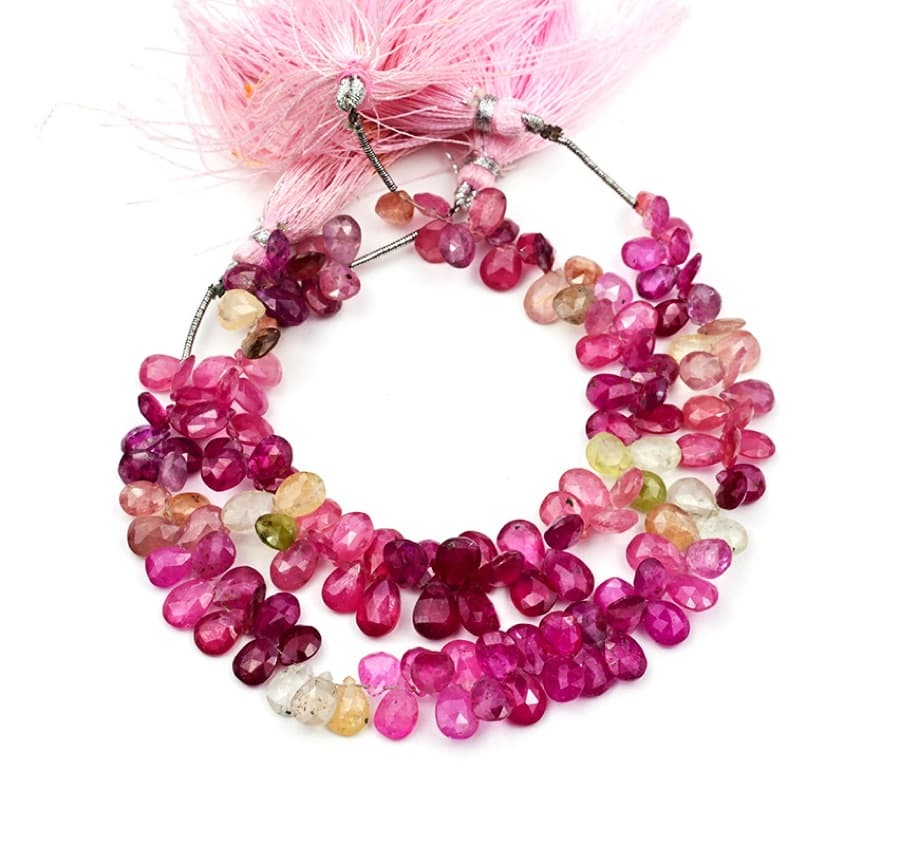
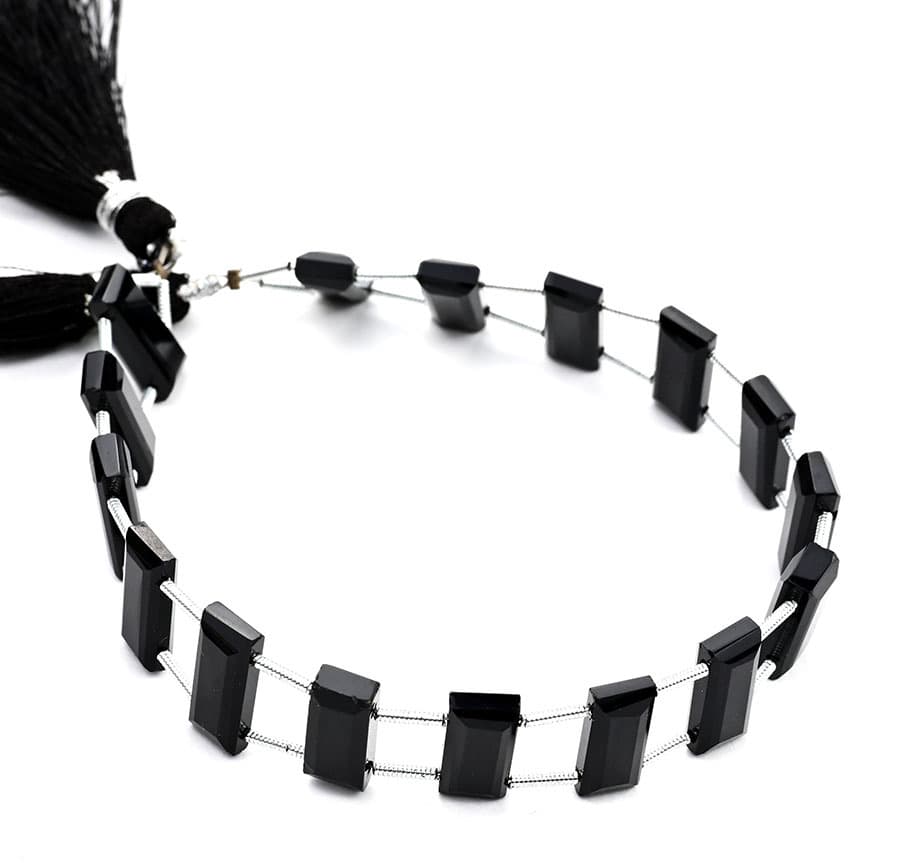
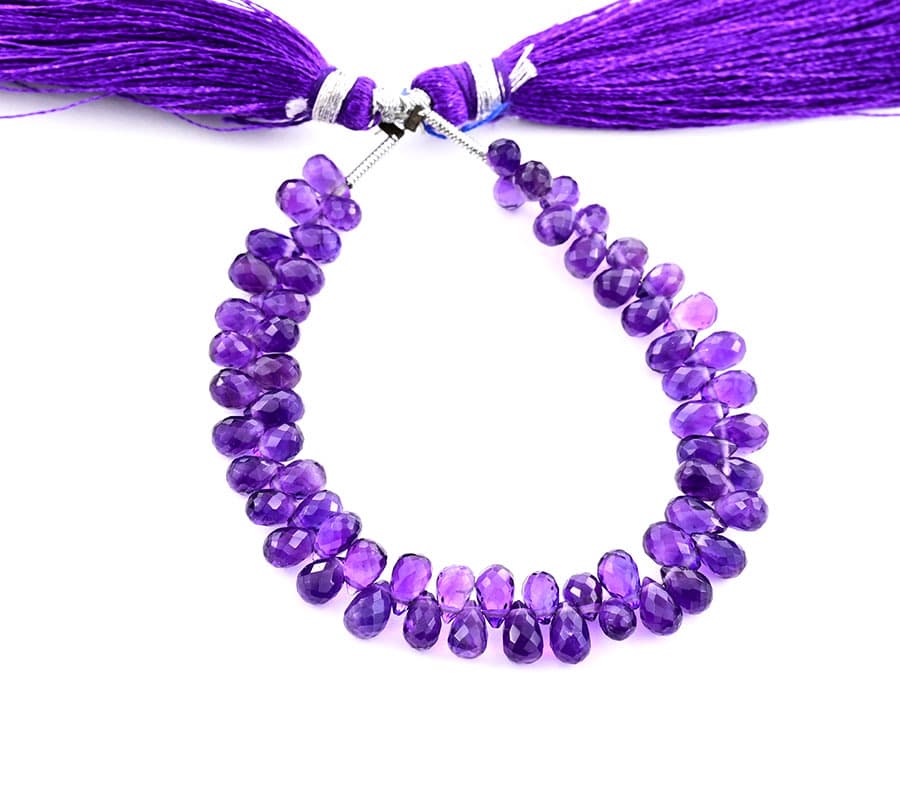
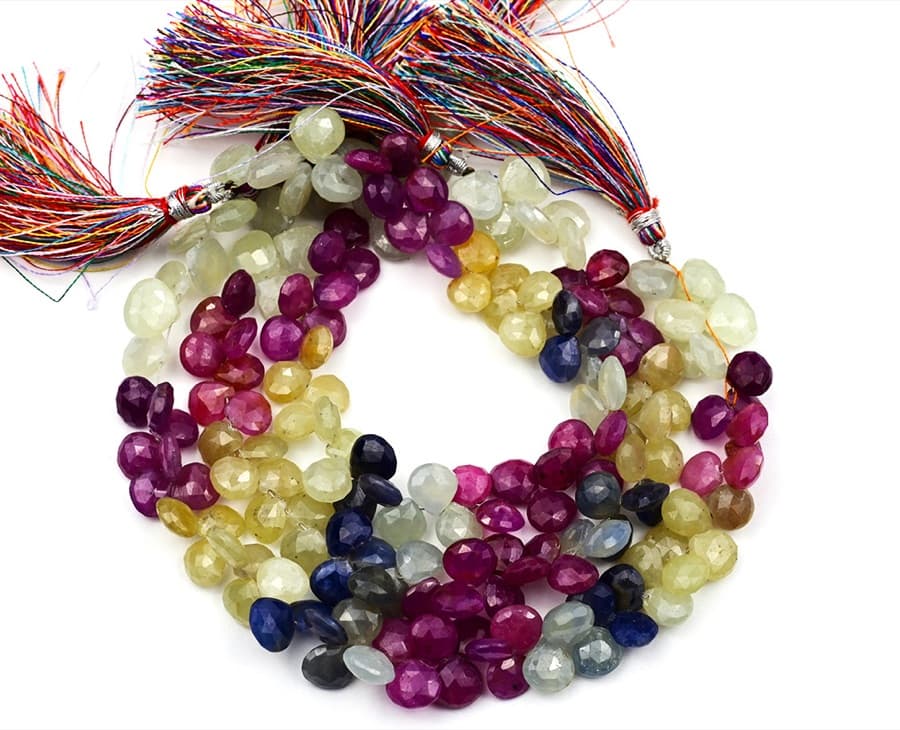
- Everyday bracelets (Mohs 7+): Sapphire (9), Black spinel (8), Red Mozambique garnet (7 to 7.5), Amethyst (7).
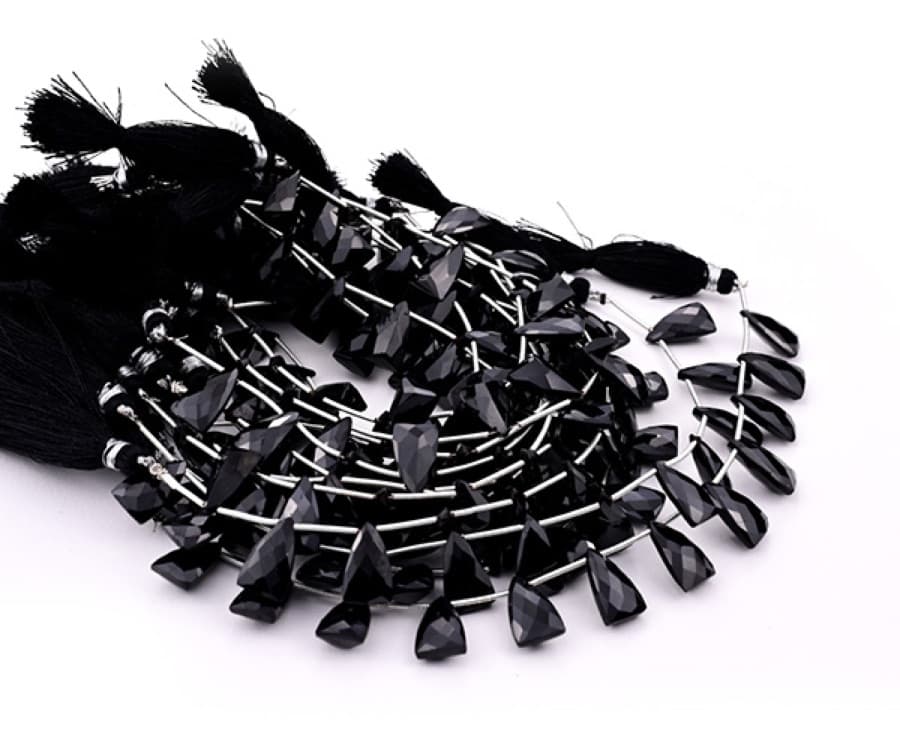
- Careful bracelets, borderline hardness: Black onyx (6.5 to 7).
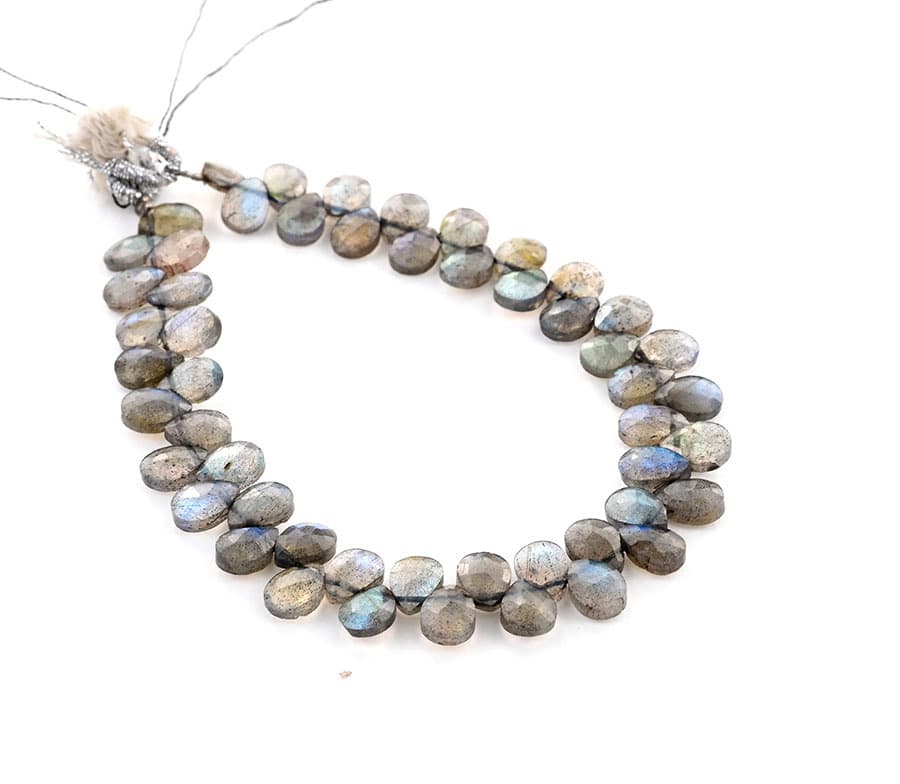
- Careful bracelets, cleavage or structure: Labradorite (6 to 6.5, cleavage), Lapis lazuli (5 to 6).
- Occasional bracelets: Pyrite (6 to 6.5, brittle), Ethiopian Welo opal (5.5 to 6.5), Turquoise (5 to 6), Freshwater cultured pearl (2.5 to 4.5), Kyanite (directional hardness, cleavage).
How many 6 mm beads do I need for a 7.5 inch bracelet?
Plan for about 1.5 inches of clasp and findings, so bead length is roughly 6 inches. On a 15 to 16 inch strand, 6 mm rondelles average about 65 to 70 beads, 8 mm about 48 to 52, and 4 mm about 95 to 100. Lay out 6 inches on your board, then count that many from the strand to match your wrist and spacer plan.
- Standard cutter strands run 13 to 16 inches.
- Finished bracelet length is commonly 7.5 inches.
- Leave room for clasp, crimps, and guards.
- Allow about 1.5 inches for findings.
 New
New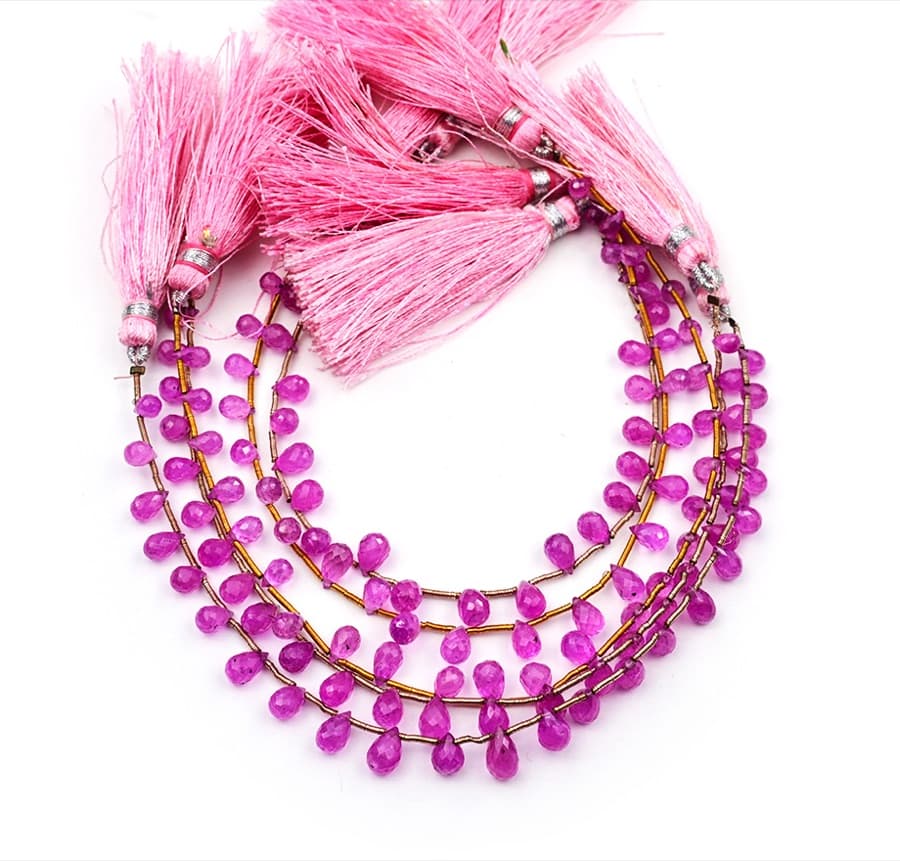 New
New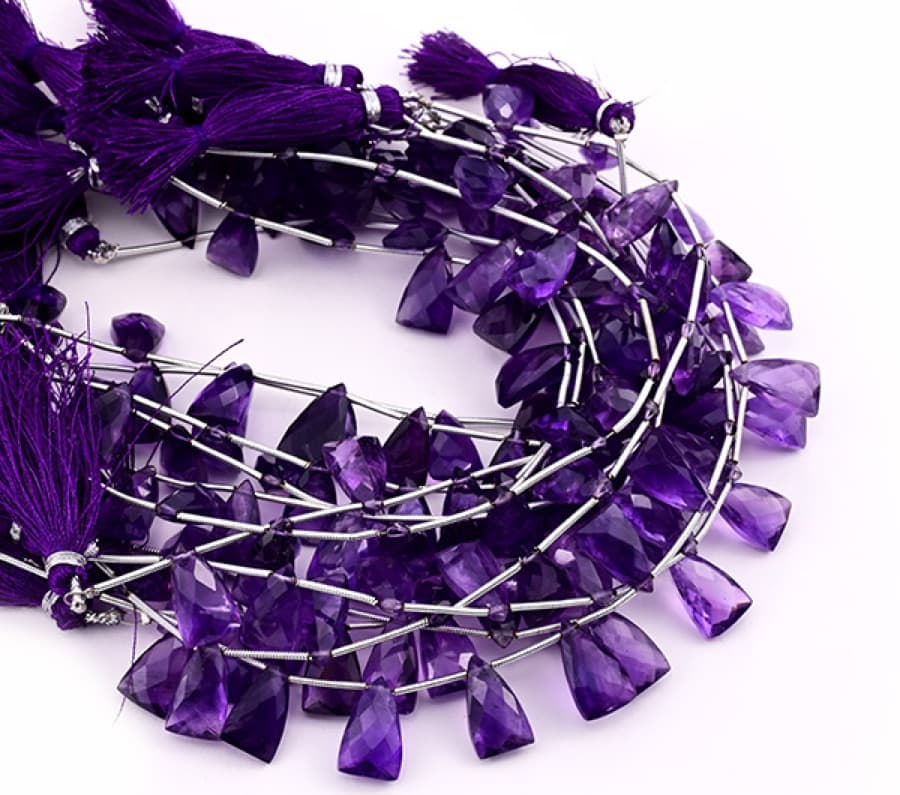
Which bead shapes last longer on wrists?
Rounded profiles wear best. Smooth rounds, rondelles, and heishi slide past sleeves and desk edges with less chipping. Sharp corners, tall facets, pears, marquise, and dagger points will show wear and can catch on knits.
We stock many shapes. Hearts and pears in sapphire are durable gems, but their points still need care on a bracelet. Faceted pyramids like our Amethyst 9x15 mm and Black Onyx 9x15 mm make striking accents, and they sit safer as spaced stations than as edge-to-edge beads.
Can softer stones work on a bracelet?
Yes, with design choices that limit abrasion and impact. Use metal spacers to keep beads from grinding on each other, and place the soft stones as stations away from the underside of the wrist. Caps or rondelle buffers at the ends of each bead help protect drill holes.
Reserve the most delicate stones for going-out stacks rather than all-day wear. Kyanite, opal, turquoise, pearls, and pyrite look great as charm drops near the clasp where they see less rubbing.
What stringing materials should I use for durability?
For bracelets, we favor flexible beading wire with a nylon sheath rather than thread, because wrists see constant flex and rub. Make a secure double-crimp, add wire guards, and use closed jump rings where you can. Knot covers or crimp covers protect against snags.
For stretch builds, match elastic to the hole, pre-stretch, and fully seat the knot inside a larger bead or cover. Avoid hard edges at the clasp area by adding small rounds as buffers.
How should I clean and store bracelet beads?
Mild soap, water, and a soft brush suit most bracelets. Ultrasonic is fine for sapphire and spinel; amethyst is usually fine. Avoid ultrasonic or steam for labradorite, opal, turquoise, and pearls.
Wipe pyrite dry after wear and store in a dry box with silica gel. Direct sun can fade amethyst, so store away from windows. We are happy to look over your design choices at our next InterGem dates, which are listed on our show schedule.