Amethyst
Mohs 7. Bead material: Brazil and Uruguay for volume, Zambia for deep "African" grades.
At a glance
| Hardness (Mohs) | 7 |
|---|---|
| Family | Quartz |
| Where it is mined | See description |
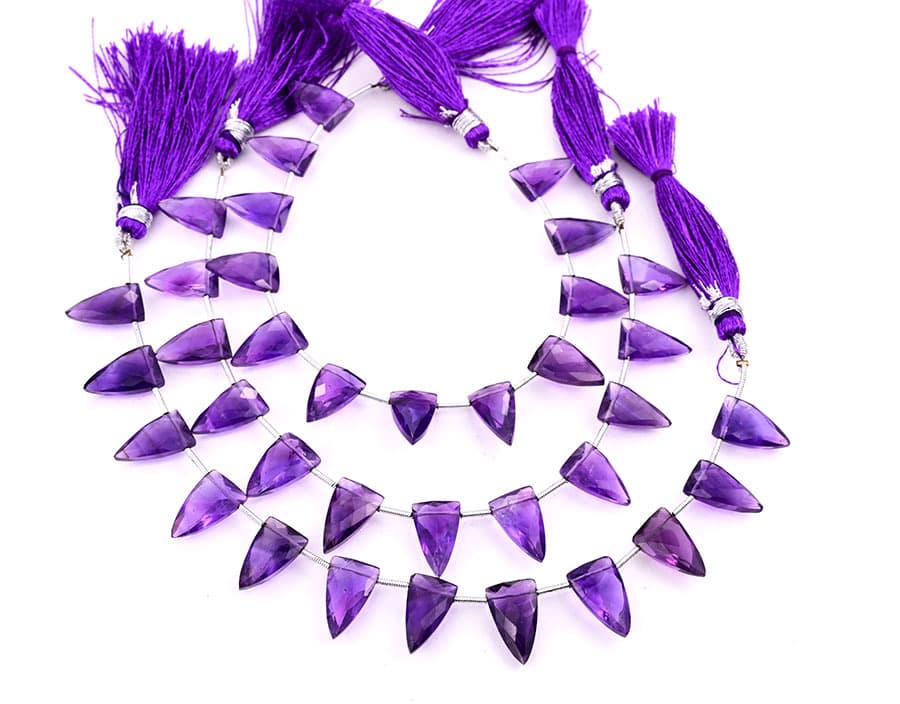
| Shapes we carry | Arrowheads, Half moons, Hearts, Pyramids, Tear drops, Trilliants |
| Strands listed | 8 |
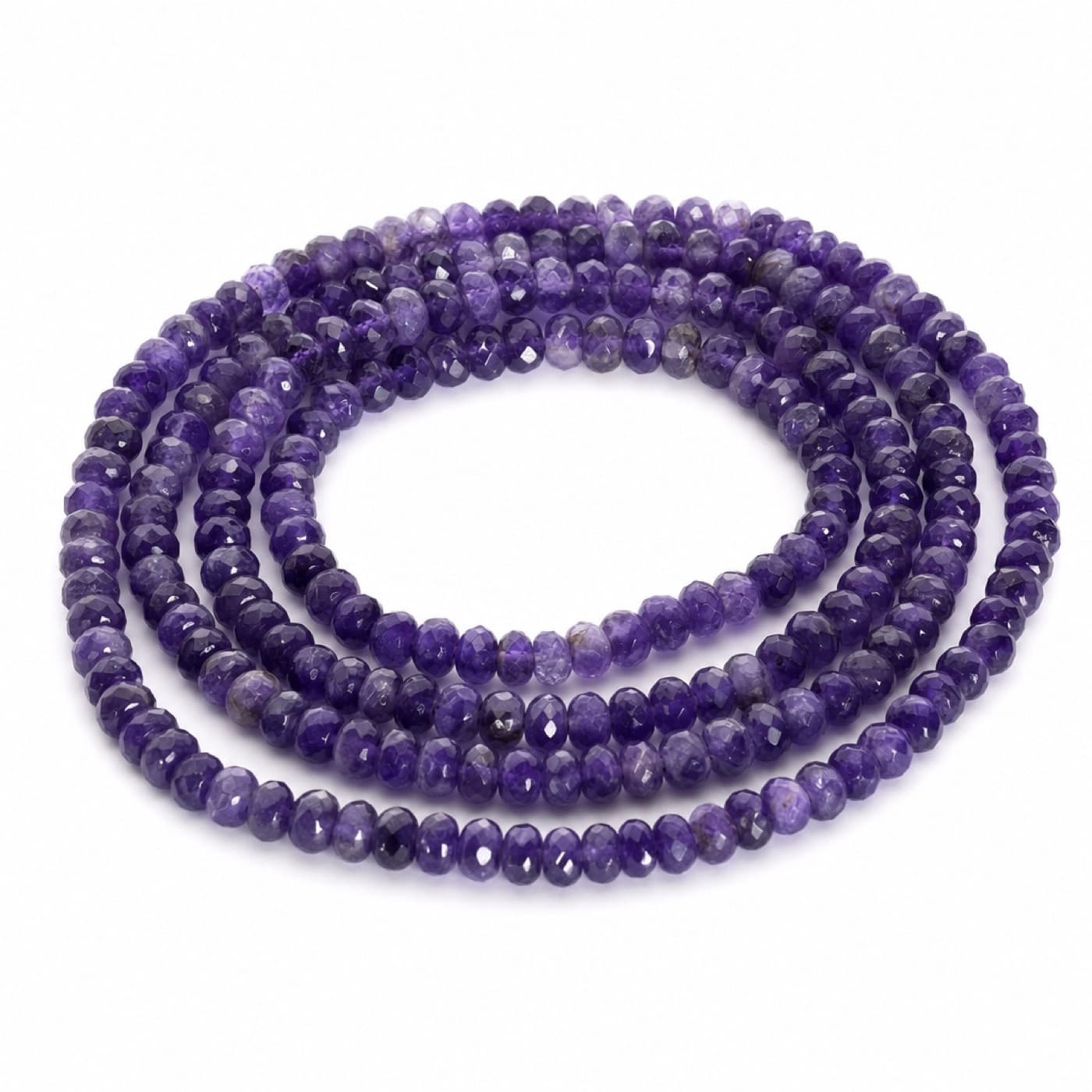
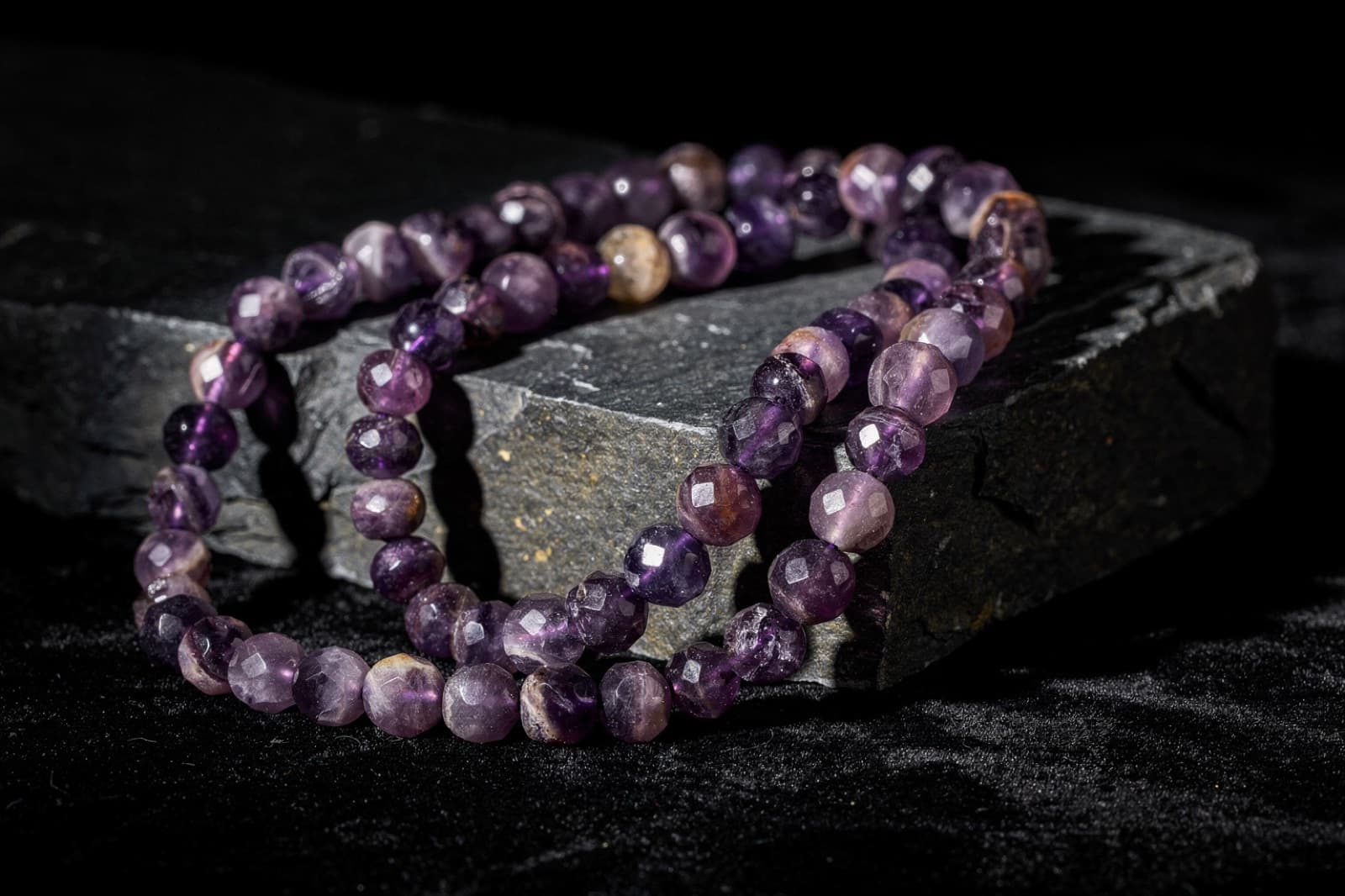
Film and illustrations are AI renders. Strand listings below show photographs of the actual material.
How to judge it
Medium to dark purple with red or blue flash is the top; pale, zoned or brownish the bottom. Zambian is darker and more included, but in small rondelles inclusions vanish. Look-alikes: glass (bubbles, no color banding), purple fluorite (Mohs 4, a steel pin scratches it).
What it's like to work with
The February birthstone workhorse for earrings, bracelet stacks and mixed strands. Small rondelles sell best; pears for earrings.
Care
Everyday durable. Warm soapy water; ultrasonic usually safe; no steam. Direct sun can fade it.
February birthstone; by tradition a sobriety stone (Greek amethystos, "not drunk").
Purple quartz with an old story
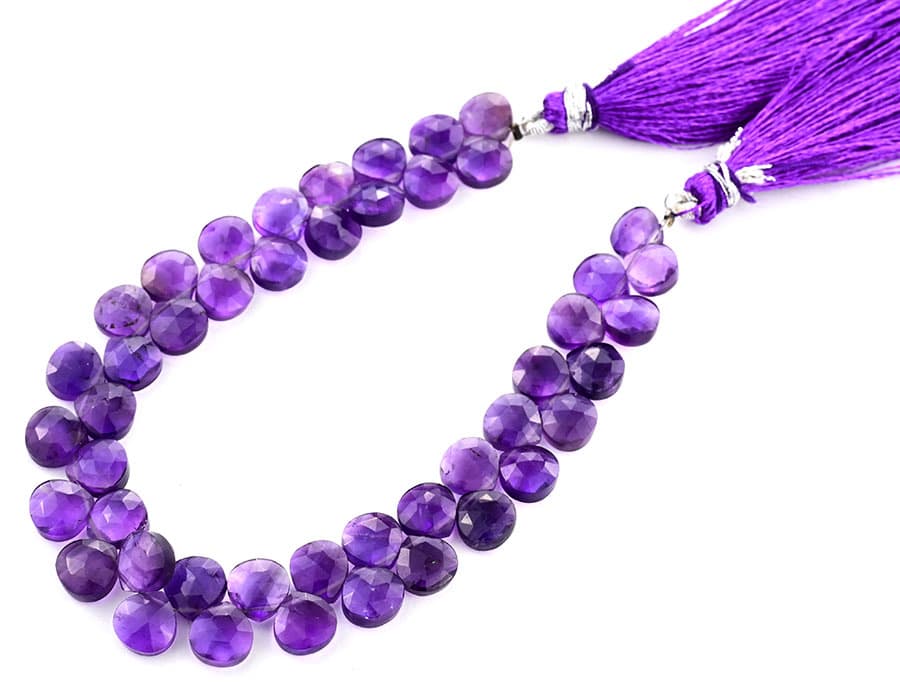
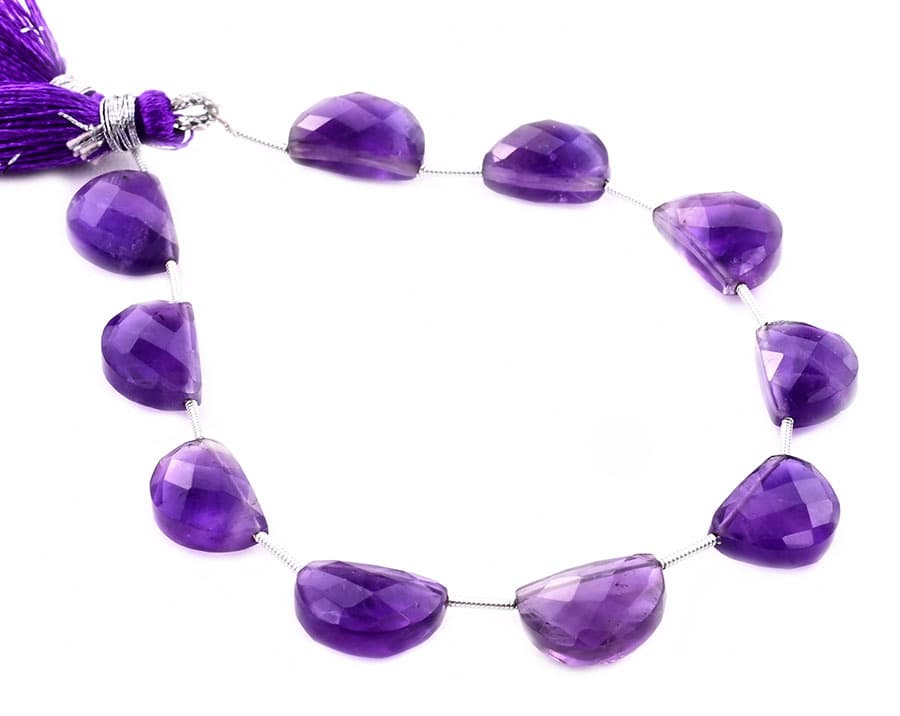
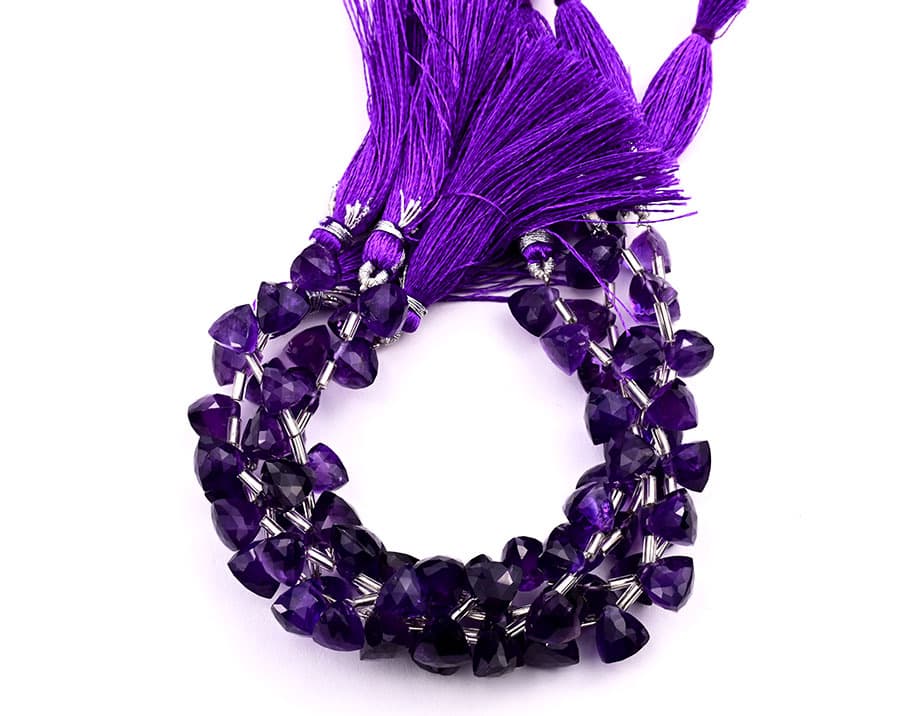
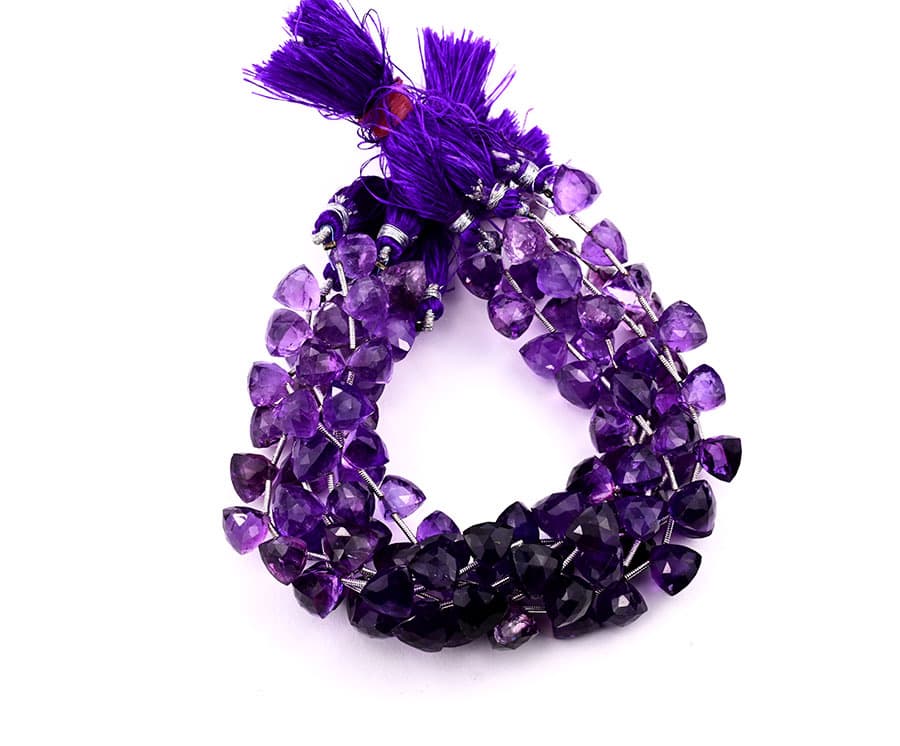
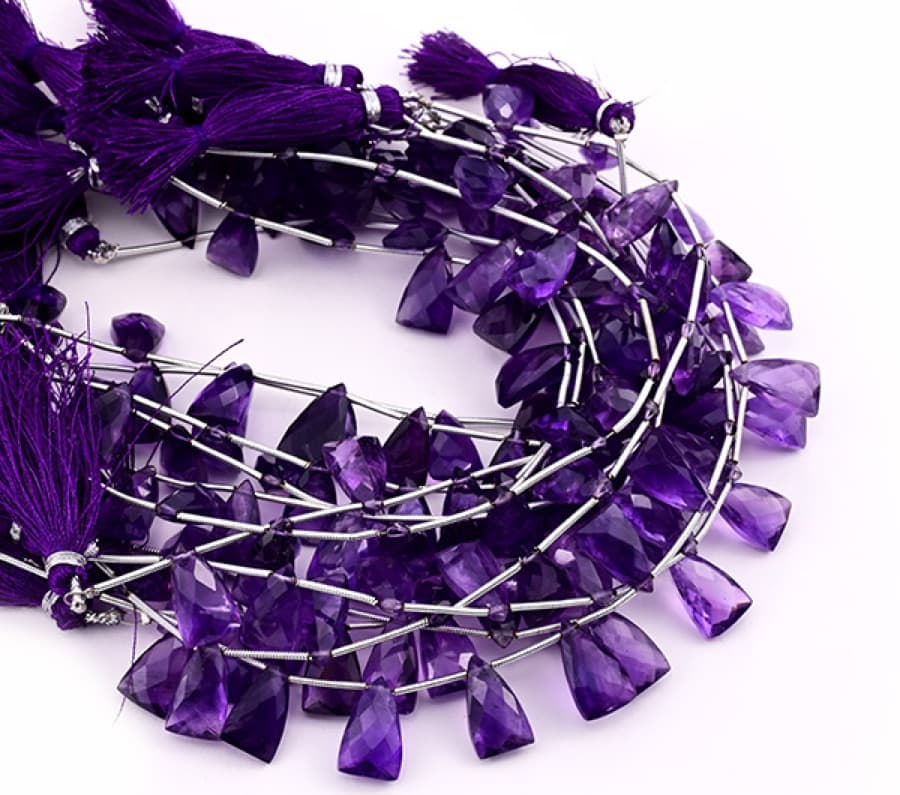
On the strand, amethyst settles into medium to dark purple, bead after bead. Tip it to a window and a red or blue flash shows. The color reads from across the room and still feels easy up close. Small faceted rondelles make tight, even lines. Pears and hearts throw a clean sparkle in earrings. Dark African material looks almost inky indoors, then opens in bright light.
Where it comes from
Amethyst is quartz, Mohs 7, worn for more than two millennia. A necklace with amethyst beads dates to 2000 BCE, and the center stone bears an inscription in a South Arabian script from the 8th century BCE. Ancient Greeks wore amethyst and carved drinking vessels from it, and Romans linked it to Bacchus. It was as expensive as ruby and emerald until large deposits in Brazil were found in the 19th century. Today Brazil and Uruguay supply much of the volume, while Zambia is known for darker African material. Zambian material can show more inclusions, though in small rondelles they disappear to the eye. We cut our beads in Jaipur, India, and choose them strand by strand in Cupertino, California.
What tradition says
In crystal tradition, amethyst is the sobriety stone. The name comes from the Greek amethystos, "not drunk." Legends tie it to Dionysus, called Bacchus by the Romans, and people long said it kept the mind clear and quick in battle and in business. Greeks wore it and carved drinking vessels, saying it would ward off drunkenness. It is also the birthstone for February, and by custom the gem for the 6th and 17th wedding anniversaries. One old note says the patron of romantic love wore an amethyst ring carved with Cupid.
These are beliefs people have held about the stone, told as tradition. They are not claims, and not advice.
How makers use it
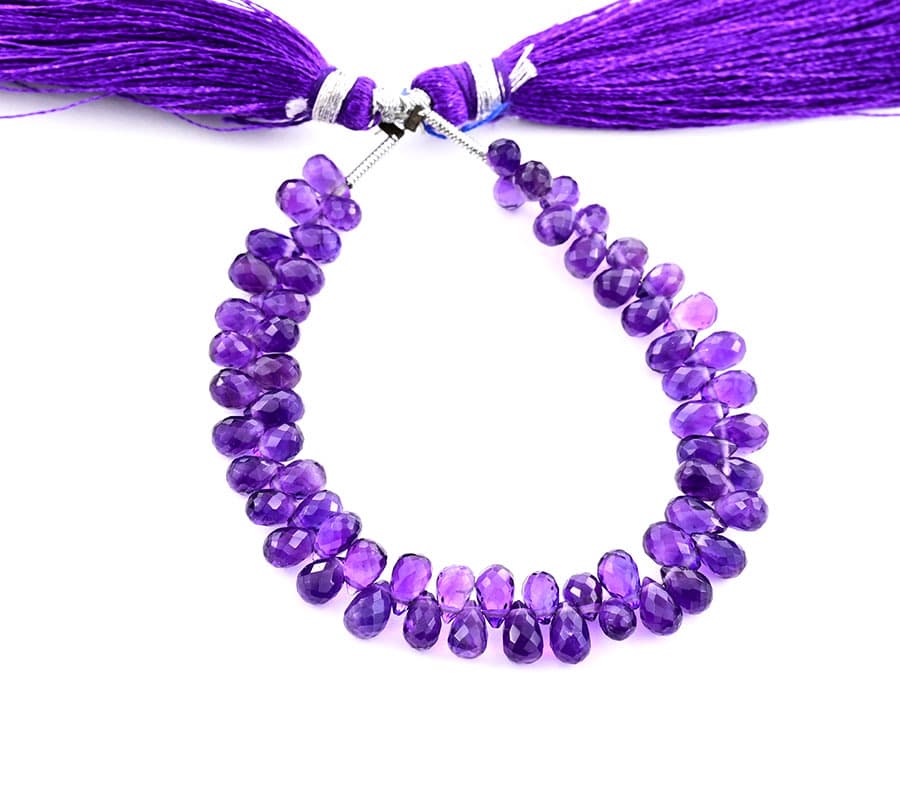
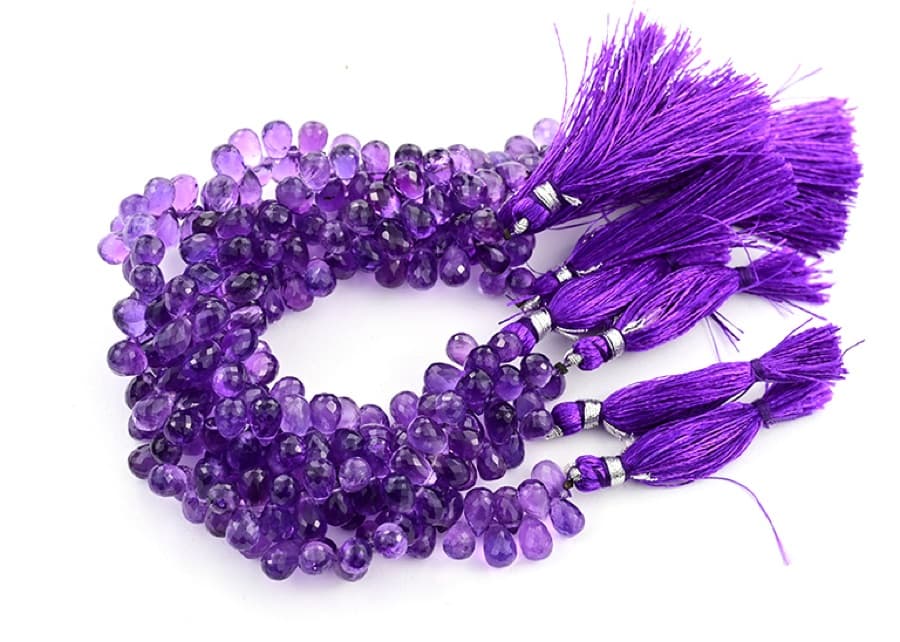
We keep it working in everyday pieces. Small faceted rondelles build bracelet stacks and mixed strands with steady color. Pears make clean, bright earrings; hearts add a friendly center to a pendant. We stock 3x5mm rondelles for tight spacing and 9x15mm pears when a single drop is enough. A stronger red or blue flash shows in the top color; hold it to the light to see it. Dark African material is cut small to keep the eye on color. Our strands are faceted in Jaipur and chosen here in Cupertino.
Looking after it
Amethyst wears well every day. Clean with warm soapy water and a soft cloth. An ultrasonic is usually safe, but skip steam. Keep it out of direct sun, since strong light can fade the color over time.
Sources: Amethyst History and Lore - GIA, Amethyst Gemstone | Amethyst Stone - GIA, Amethyst - Wikipedia, Amethyst: The most popular purple gem, February birthstone
Amethyst strands
Related stones
From the blog
All posts Care and durability
Which gemstone beads are hard enough for an everyday bracelet
Use Mohs 7 as the everyday-bracelet line because household dust contains quartz around 7. For daily wear, we recommend sapphire, black spinel, red Mozambique garnet, and amethyst beads. Black onyx sits on the line and needs a gentle finish. Labradorite, lapis, pyrite, turquoise, Ethiopian opal, pearls, and kyanite are better as careful or occasional bracelets.
Buying guidesHow much do gemstone bead strands cost and why prices vary
Strand price is set by five things, in order: the stone species, the color grade, the bead size, the cut quality, and the strand length. In US retail, amethyst and labradorite rondelles sit in entry to mid bands. Ethiopian Welo opal small smooths run mid to upper mid. Fine sapphire, especially hand‑faceted briolettes, sits high.
 Buying guides
How to tell if gemstone beads are real stone or glass
Use quick checks: temperature (stone stays cool longer), a loupe for round gas bubbles or a mold seam at the drill hole, and natural bead-to-bead variation in color and inclusions. Glass warms fast, shows bubbles, and looks identical. Plastic feels light. Price matters too: a way-below-market strand for the stated stone and size is a red flag.