Ametrine
Bicolor quartz, amethyst purple and citrine yellow in one crystal (iron in two oxidation states), Mohs 7. Nearly all natural ametrine comes from one mine, Anahí, in Bolivia.
At a glance
| Hardness (Mohs) | 7 |
|---|---|
| Family | Quartz |
| Where it is mined | See description |
| Shapes we carry | Ask us |
| Strands listed | 0 |
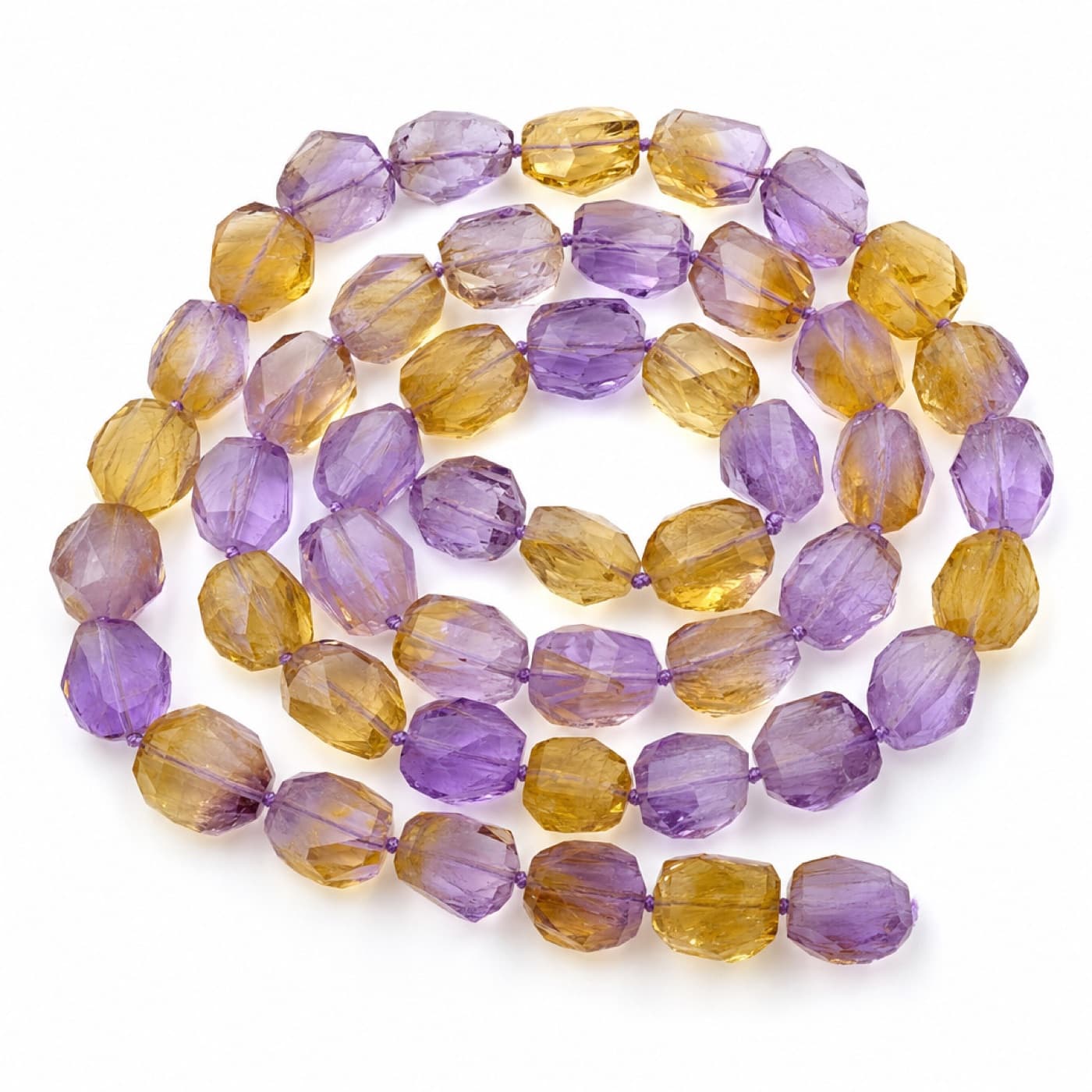
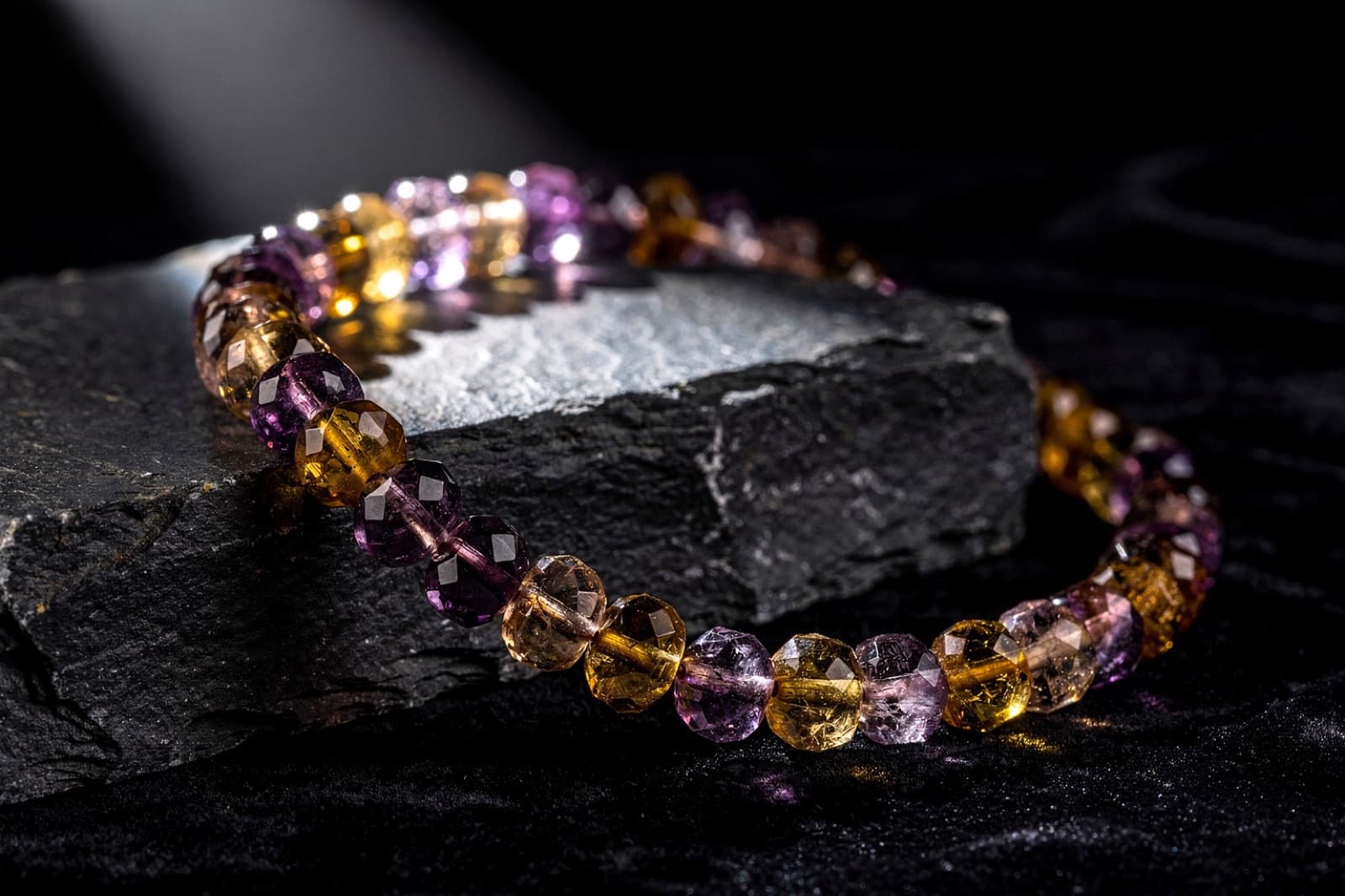
Film and illustrations are AI renders. Strand listings below show photographs of the actual material.
How to judge it
Both colors clearly present on most beads with a sharp boundary; muddy tan-purple is the low grade.
What it's like to work with
Two-tone designs without mixing strands; autumn and jewel-tone palettes. Step-cut nuggets are the shape people buy.
Care
Everyday durable. Warm soapy water; ultrasonic usually safe. Avoid heat.
Purple and gold in a single quartz crystal.
On a strand, ametrine shows clean planes of violet and honey that switch as the bead turns. One face reads amethyst; the next shows citrine. The meeting line can look straight as a window edge. Makers reach for it when they want two tones without two strands. Purple and gold share the same bead. One crystal, two moods. Autumn palettes sit easily with saturated jewel tones. The look stays crisp and orderly.
Where it comes from
Ametrine is bicolor quartz with zones of amethyst purple and citrine yellow sharing a single transparent crystal. The name joins amethyst with citrine, and the gem is also called amethyst-citrine, trystine, golden amethyst, and, in trade, bolivianite. Quartz occurs worldwide, and people have used it in jewelry for thousands of years. By contrast, ametrine is a relative newcomer to the trade, available in small quantities for just a few decades. Its only commercial source is the Anahí mine in Bolivia, which yields the material in commercial amounts. In this quartz, iron in two oxidation states produces the purple and yellow sectors, often divided by a crisp boundary. It is considered rare, with a finite supply reported from that single source. The striking contrast of two hues in one crystal carried it into modern jewelry.
What tradition says
In crystal tradition, ametrine is spoken of for two hues sharing one clear stone. People have long believed that it blends amethyst's calm with citrine's optimism for balance. It is said to steady attention and support clear intention. Writers in the crystal world often use the name amethyst-citrine, and they point to the visible line where purple meets yellow as a sign. Turn it a little and the leading color flips. A small reminder, in that telling, to pause and choose with care. Some also speak of mental clarity and gentle confidence, held in one gem.
These are beliefs people have held about the stone, told as tradition. They are not claims, and not advice.
How makers use it
We use ametrine when a design needs two tones from one strand. The switch from purple to gold shows best in faceted step-cut nuggets, and in smooth ovals for softer lines. Clear boundary. Strong contrast. Strands with muddy tan-purple read quieter. It suits autumn palettes and deeper jewel tones. Our strands are cut in Jaipur, India. We choose them strand by strand in Cupertino, California. One well chosen strand can set contrast through a bracelet or a simple necklace, the color flipping as each bead turns.
Looking after it
Ametrine, Mohs 7, handles everyday wear. Warm, soapy water works well for routine cleaning, and ultrasonic cleaning is usually safe. Avoid heat during wear and storage. Keep finished pieces away from high temperatures, and store them in a dry place out of direct heat.
Sources: Ametrine Gemstone | Natural Ametrine Stone - GIA, Ametrine: A Bicolor Gemstone of Amethyst and Citrine, Ametrine, Ametrine Value, Price, and Jewelry Information - Gem Society
Ametrine is in the stock room
We carry ametrine at shows and it is not all listed online yet. Tell us the shape and size you want and we will send photos of what is in stock.
Ask on WhatsApp