Prasiolite
Green quartz, Mohs 7. natural green quartz (Poland) is not what the bead trade sells.
At a glance
| Hardness (Mohs) | 7 |
|---|---|
| Family | Quartz |
| Where it is mined | See description |
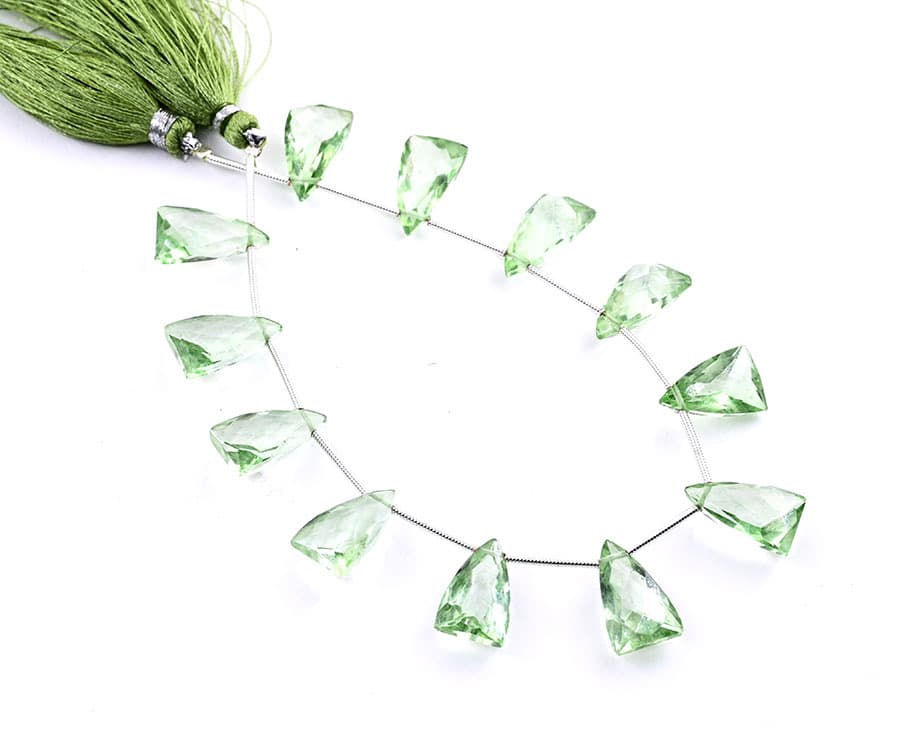
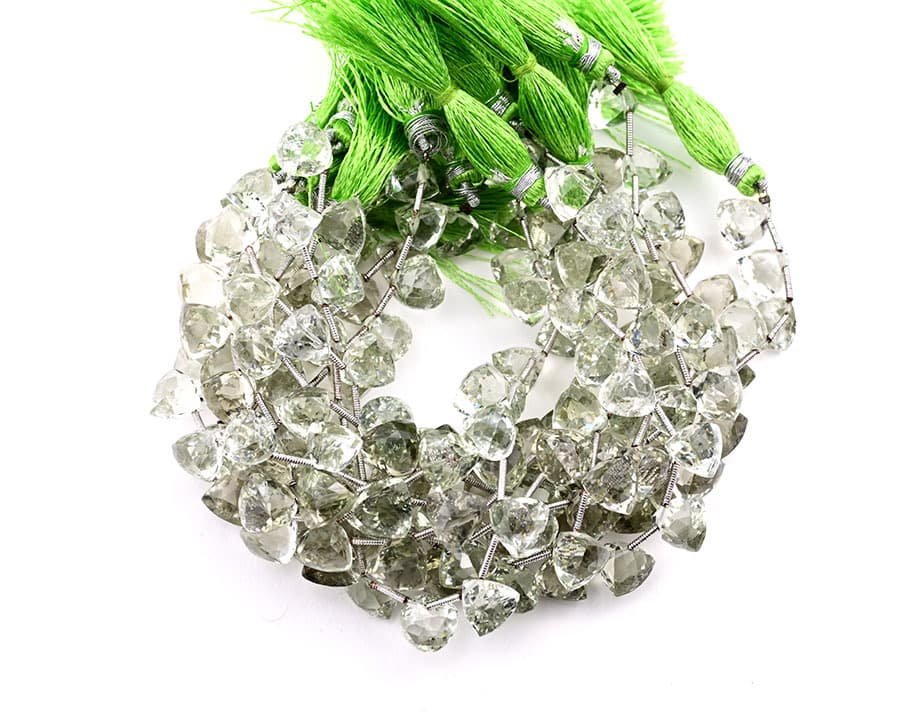
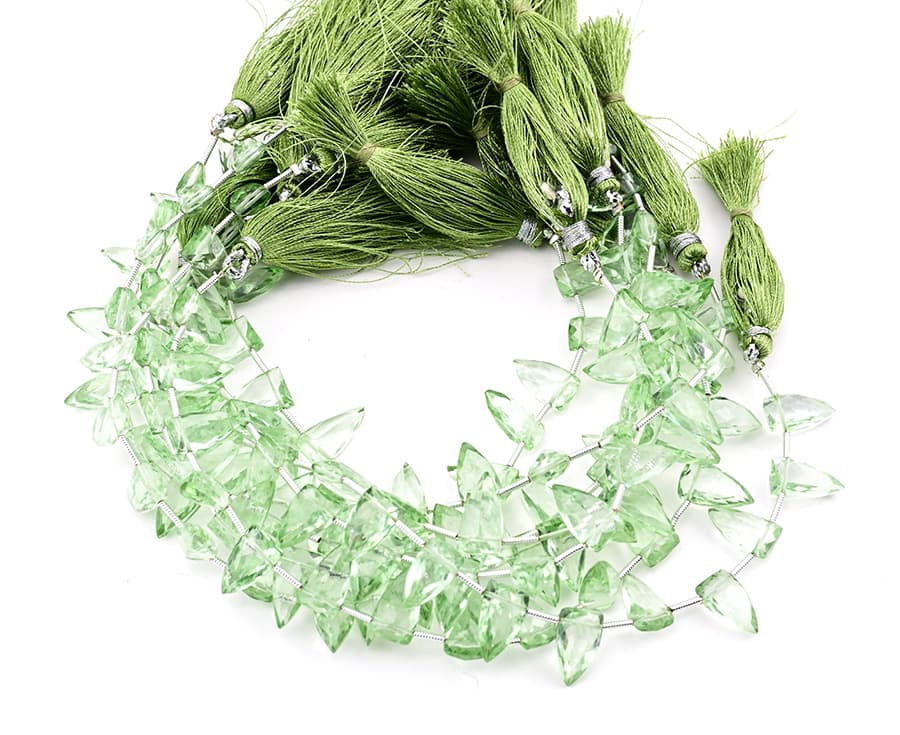
| Shapes we carry | Arrowheads, Pyramids, Trilliants |
| Strands listed | 4 |
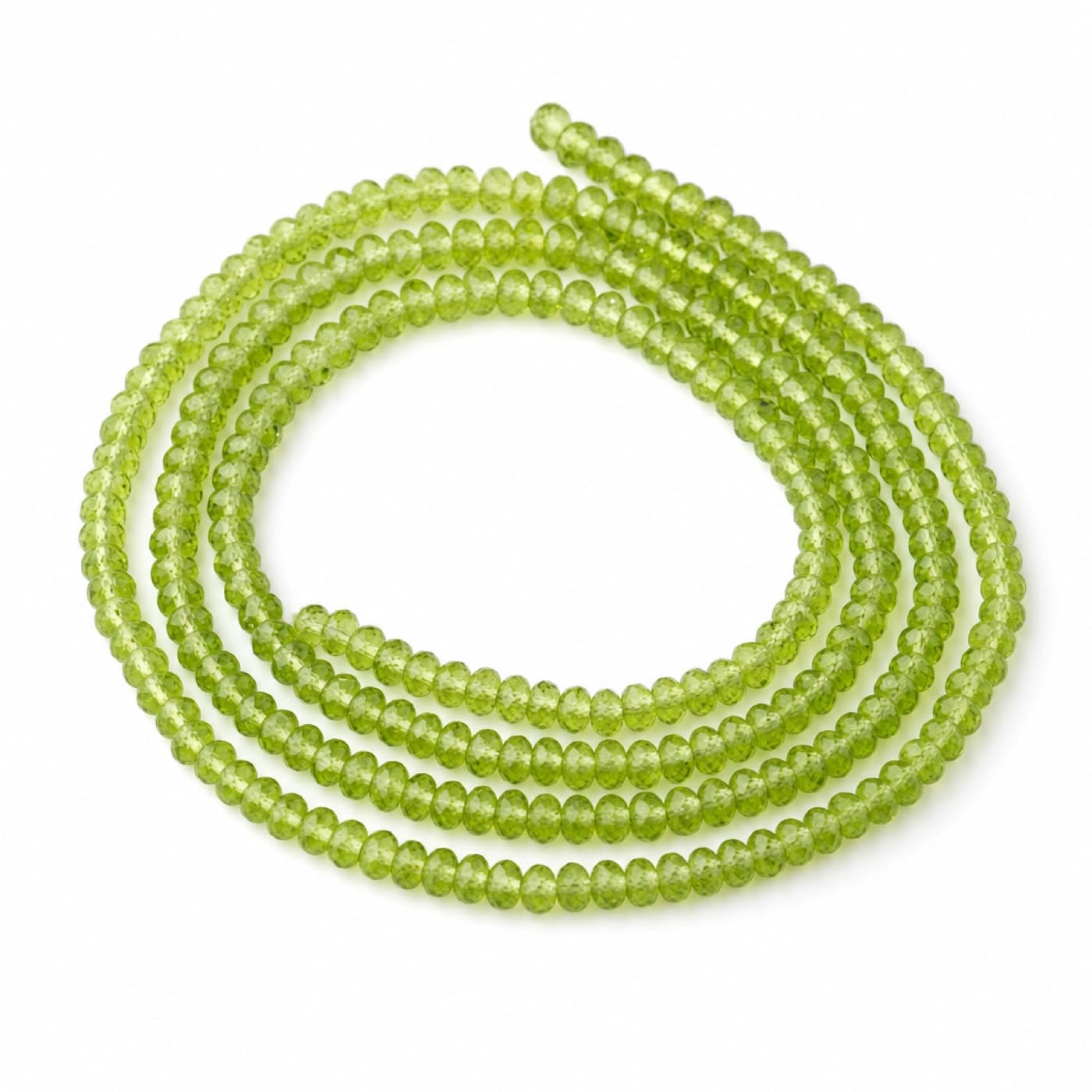
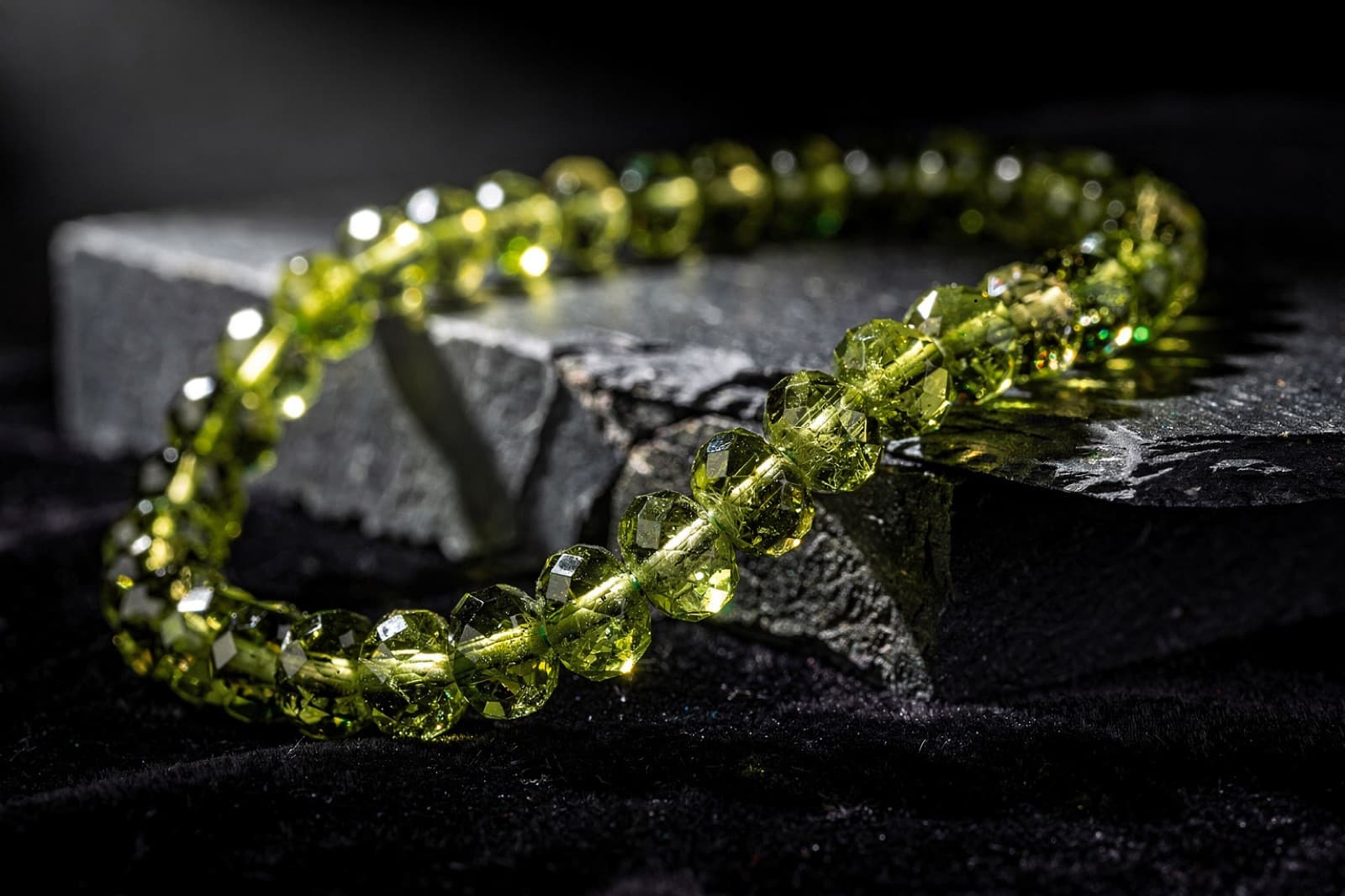
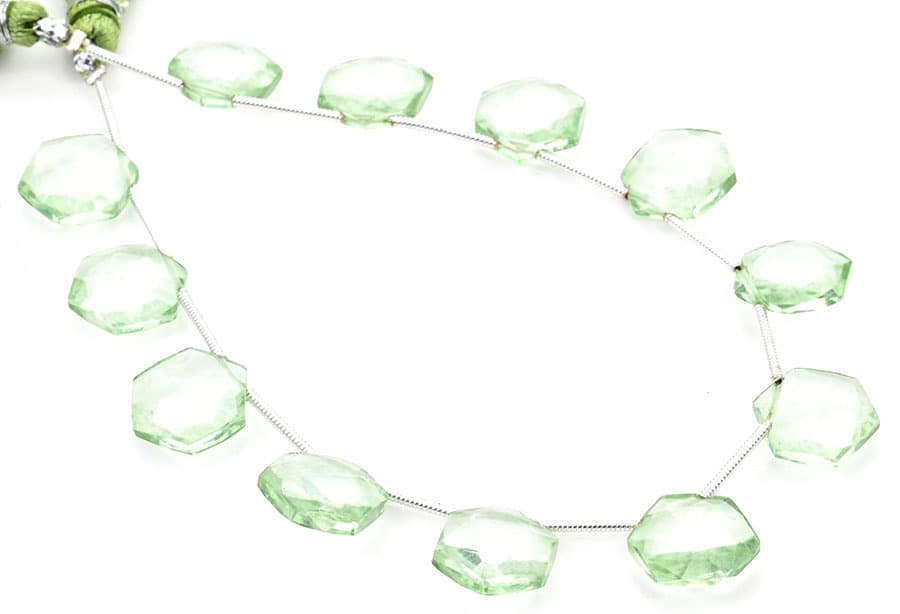
Film and illustrations are AI renders. Strand listings below show photographs of the actual material.
How to judge it
Pale, clean, slightly yellowish green with good transparency is correct; vivid or bottle-green is suspect. Look-alikes: hydrothermal "hydro" quartz and glass (both too even and clean; glass shows round bubbles), green fluorite (Mohs 4).
What it's like to work with
Spring palettes and "peridot without the price" designs. Long ovals for stations; melons for statements.
Care
Everyday durable. Warm soapy water; ultrasonic usually safe. No steam or torch nearby.
No birthstone; tradition borrows amethyst's calm.
Soft mint quartz, clear and quietly bright.
On the strand, prasiolite shows a soft mint, pale and slightly yellowish green, with clear light passing through. It reads quiet and fresh and lifts open, airy designs. We reach for strands that are clean yet natural, not too even. Vivid or bottle green sets off alarms. Lookalikes often appear overly perfect; glass may show round bubbles. In hand, the beads feel cool and easy. That gentle color is why makers come back to it.
Where it comes from
Prasiolite is a green, transparent variety of quartz. The color has been linked to Fe2+ in the crystal structure. Natural prasiolite is rare. It was first reported in the early 19th century in Lower Silesia, Poland, with only a few other deposits noted. Material from Brazil has supplied the trade, and prasiolite is commonly cut into faceted stones for jewelry. Many people have not heard the name, which is one reason it is less common in store cases. The word prasiolite comes from Greek for leek green, and the stone has also been called green amethyst and vermarine. Like other quartz, it sits at Mohs 7, so it stands up well in daily wear. Today you will see it as matched bead strands and as center stones, carrying a pale, yellowish green that suits light metal and open settings.
What tradition says
In crystal tradition, prasiolite borrows amethyst's calm. People who work with stones often keep the link in mind through the older trade name green amethyst. The thought is simple: if amethyst is held for quiet and ease, this clear green quartz is said to carry a similar steadiness with a lighter touch. The gentle, leaf-toned color is part of the association in lore, and many place it beside amethyst in meaning. Stories in the trade lean on that kinship more than on separate claims for prasiolite itself. As always with folklore, these are held as beliefs about mood and presence rather than promises.
These are beliefs people have held about the stone, told as tradition. They are not claims, and not advice.
How makers use it
Prasiolite suits spring palettes and peridot-without-the-price designs. We carry faceted long ovals and carved melons, cut in Jaipur and chosen strand by strand in Cupertino. Long ovals make balanced station necklaces and quiet line earrings. Melons give a single bold note on a chain or at the collarbone. We like two sizes for most work: 7x13 mm for stations and 11 mm when a bead needs presence. Faceting shows a calm, pale green that stays clear in simple layouts and leaves room for light.
Looking after it
Quartz at Mohs 7 is everyday durable. Use warm soapy water and a soft cloth. An ultrasonic cleaner is usually safe. Skip steam. Keep the strand away from a torch or high heat at the bench. Store it separate from softer stones to avoid scuffs.
Sources: Prasiolite, Prasiolite and Green Amethyst, Prasiolite gemstone information, Prasiolite: Mineral information, data and localities.