Citrine and lemon quartz
Yellow to orange-brown quartz, Mohs 7. Natural citrine is uncommon.
At a glance
| Hardness (Mohs) | 7 |
|---|---|
| Family | Quartz |
| Where it is mined | See description |
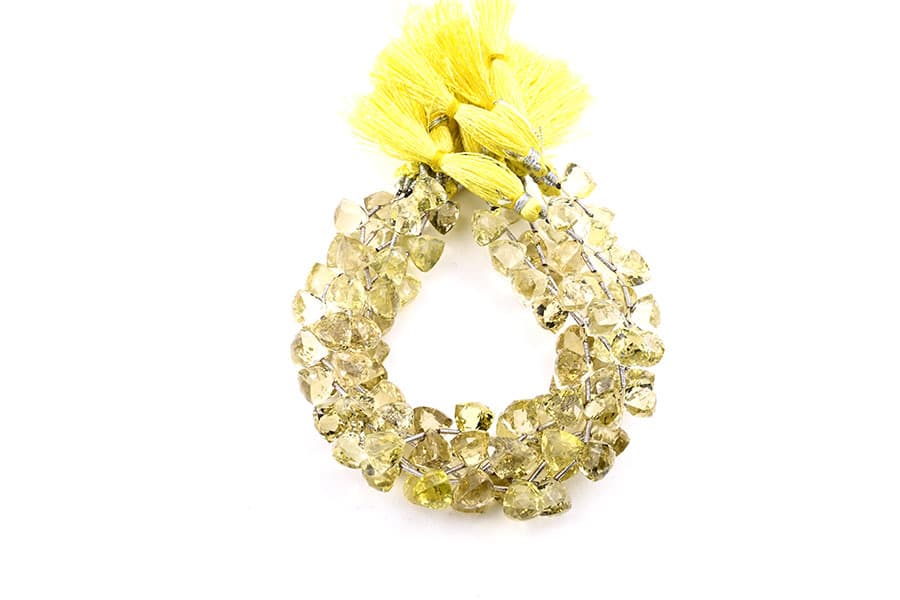
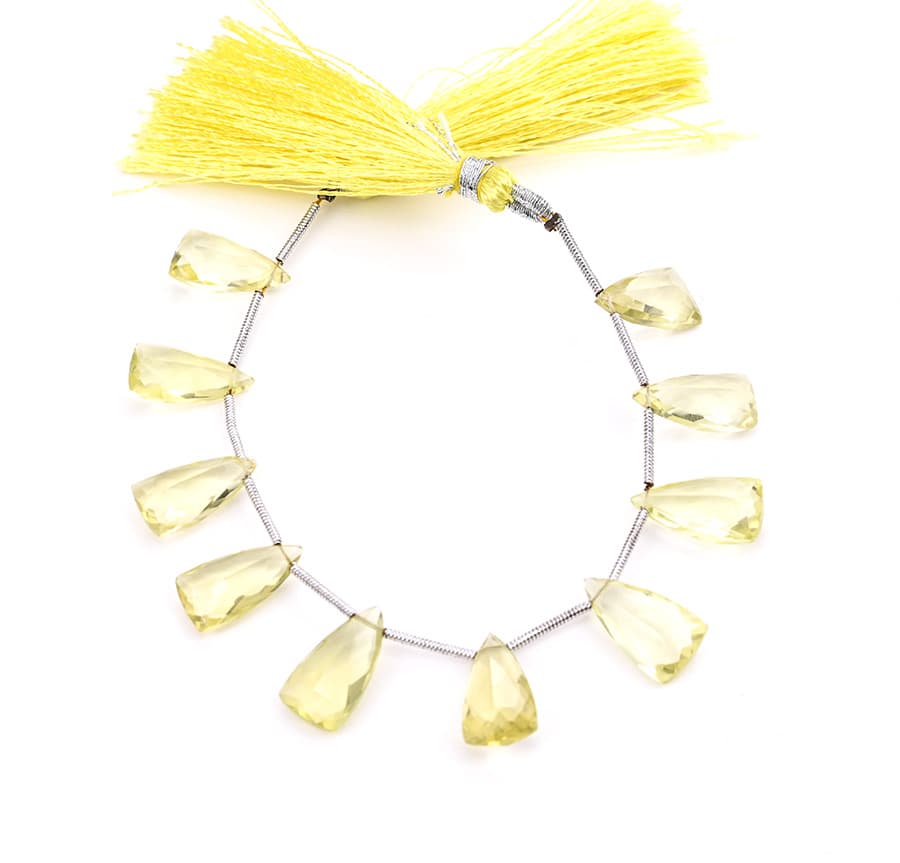
| Shapes we carry | Pyramids, Tear drops, Trilliants |
| Strands listed | 3 |
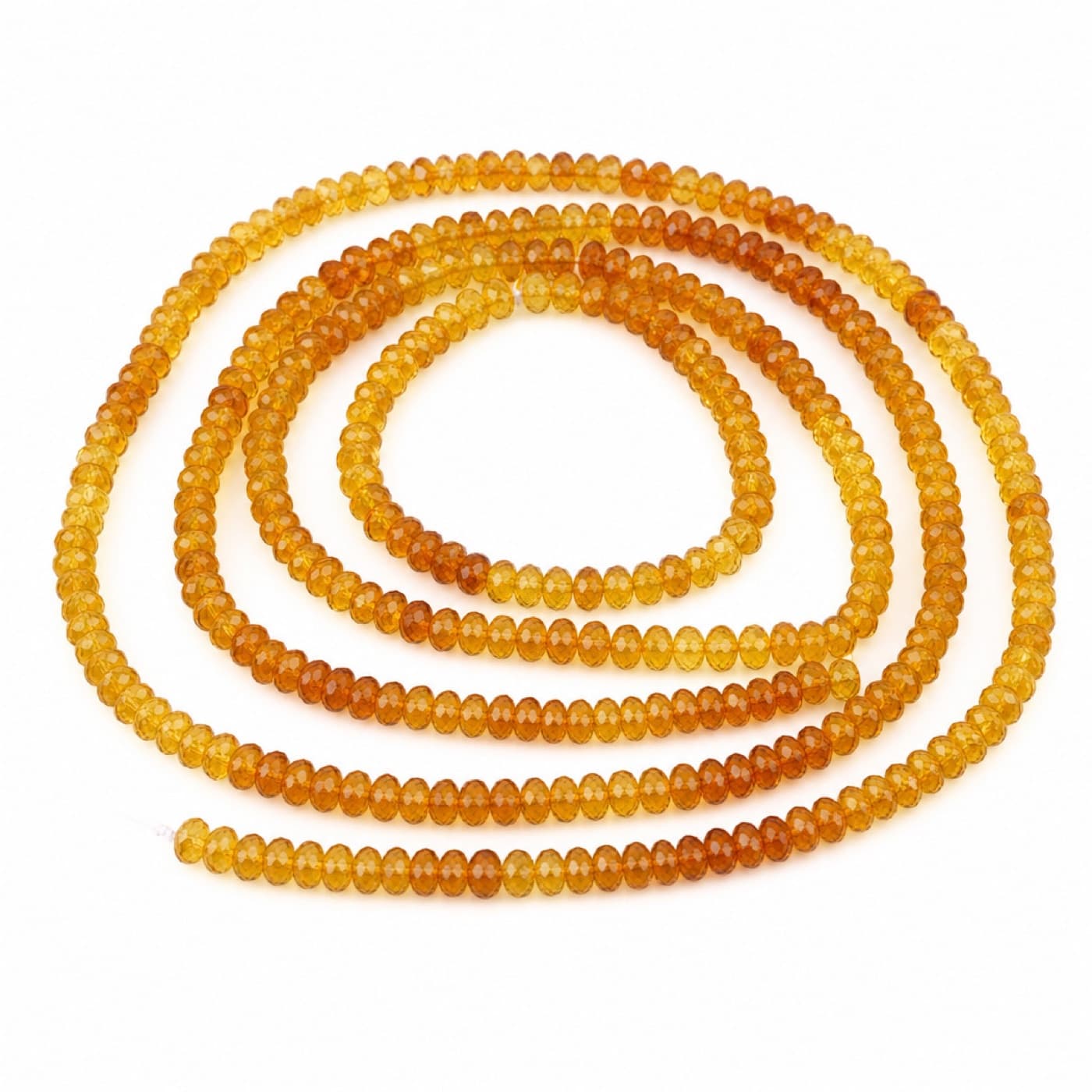
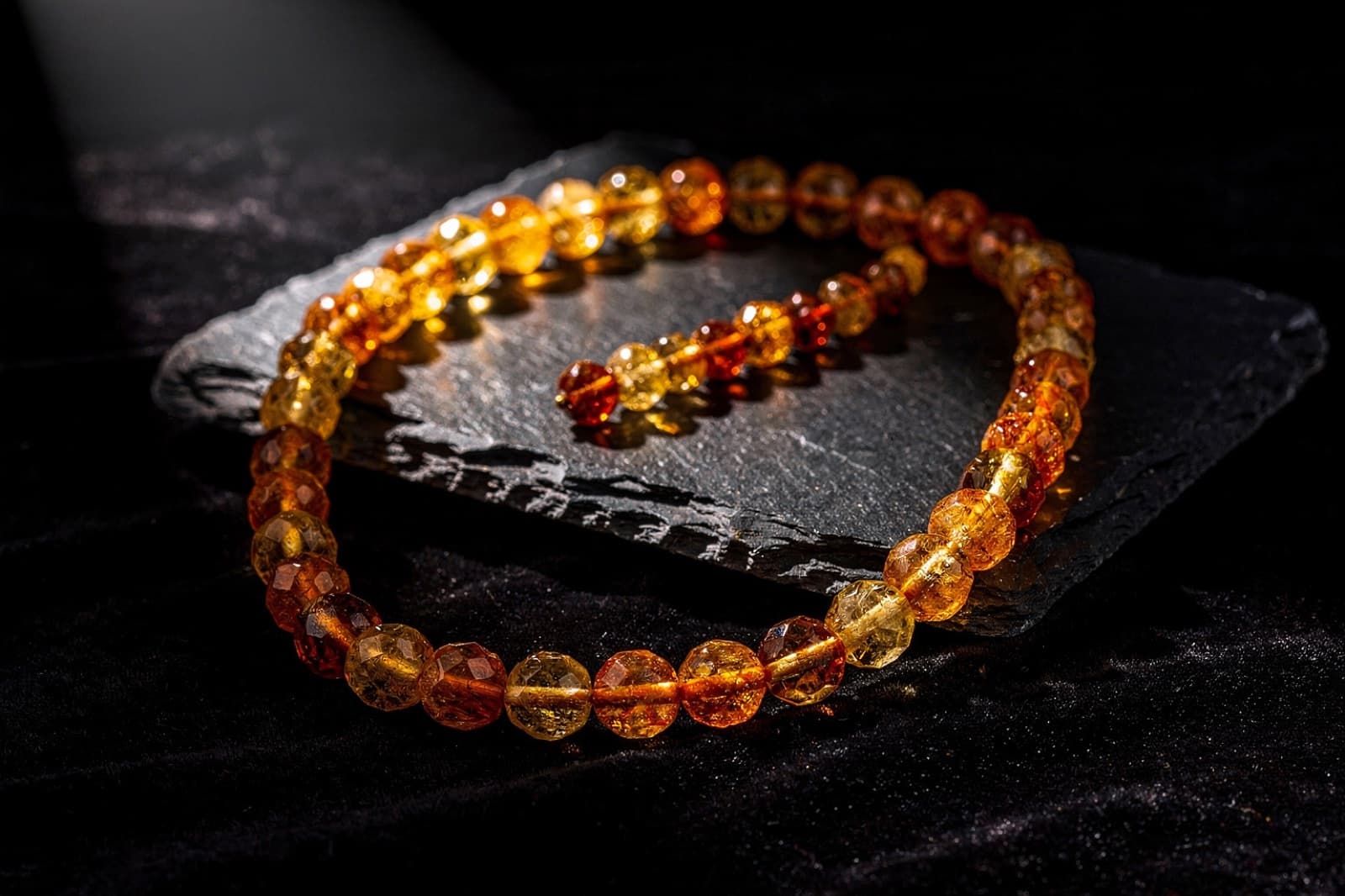
Film and illustrations are AI renders. Strand listings below show photographs of the actual material.
How to judge it
Madeira should be saturated orange-brown with no muddy zones; lemon a clean, cool yellow. Look-alikes: glass (bubbles), yellow fluorite (soft).
What it's like to work with
November-birthstone work, autumn palettes, lemon quartz for summer brights. Rondelles and briolettes.
Care
Everyday durable. Warm soapy water; ultrasonic usually safe. Lemon quartz can fade in prolonged sun.
November birthstone; by tradition the "merchant's stone".
Cider orange at one end, cool lemon at the other.
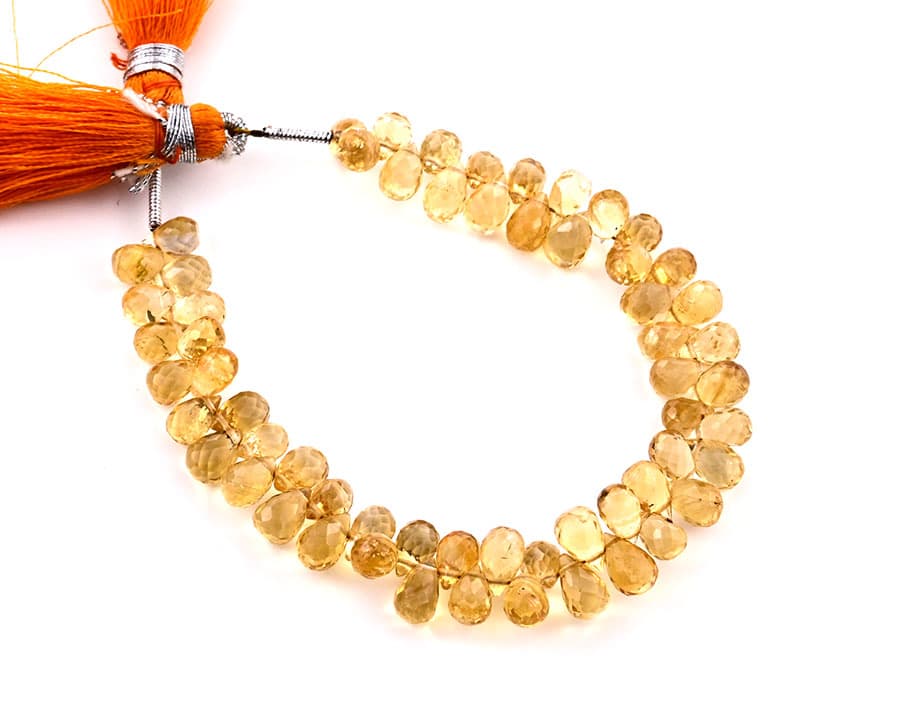
On the strand, Madeira citrine reads like cider held up to a lamp, orange-brown and warm at the core, with the little facet flats catching light along the drill line. Lemon quartz sits at the other end of the family: a cool, clean yellow, closer to the peel than the juice. People reach for both because the color carries across a room without turning heavy, and because quartz at Mohs 7 takes daily wear without much thought.
Where it comes from
Quartz has been worked into jewelry for thousands of years. Egyptians gathered striped agates from the shore and carried them as talismans, the Greeks carved ornaments from rock crystal, and Roman pontiffs wore rings set with large purple amethysts. Citrine belongs to that same mineral family, the yellow to brownish orange end of it. The name comes from the Latin citrus, the citron tree, by way of the French citrin and citron, for lemon. Egyptian jewelers used the stone early. Later, before modern gemology sorted one yellow gem from another, its tawny color was often confused with topaz, and it was sometimes sold under names borrowed from topaz. Pieces from the Victorian era still surface. Natural citrine is uncommon, yet color, durability and a fair price have made it the best-selling yellow to orange gem. Our strands are cut in Jaipur, India, and chosen strand by strand in Cupertino, California.
What tradition says
In crystal tradition, citrine carries a second name: the merchant's stone. The name points toward trade and prosperity, and those who keep the tradition like to have a piece somewhere near their work rather than shut away in a drawer. What the stone is said to bring the wearer follows from that, a sense of good fortune in dealings and exchange. Along with topaz, citrine is a birthstone for November, which is why so much of it turns up in autumn gifts. It is also the gem given to mark a thirteenth wedding anniversary. Believe as much or as little of that as you like; the color is reason enough to wear it.
These are beliefs people have held about the stone, told as tradition. They are not claims, and not advice.
How makers use it
We carry faceted rondelles in Madeira and shaded citrine and in lemon quartz, small at 3 to 4mm, which suit spacing between larger stones or a continuous strand knotted onto silk. The pear briolettes are the ones makers hang: one at the center of a chain, or a graduated row across a collar. Larger drops at 9x15mm read well against oxidized silver and against warm gold both. Look for saturated orange-brown with no muddy zones in Madeira, and a clean, cool yellow in lemon quartz. A stronger strand throws an even flash from every bead rather than one or two.
Looking after it
Citrine and lemon quartz are hard enough for everyday wear. Wash with warm soapy water and a soft brush, then dry before storing. Ultrasonic cleaning is usually safe. Keep lemon quartz out of long hours of direct sun, since prolonged light can pull the yellow down over time.
Sources: Citrine History and Lore, Citrine Gemstone | Natural Citrine Stone - GIA, Citrine: The yellow to orange birthstone of November, Citrine | Healing, Jewelry, Birthstone | Britannica