What am I paying for on a strand?
We price and buy in a fixed order: stone species first, then color grade, then size, then cut, then length. That sequence explains most price gaps you see in the case. A bright, even color in a sought‑after stone, in a larger size and a labor‑intensive cut, will always sit higher than a smaller, mixed‑grade machine round. Length is the last multiplier.
- Stone species: rarity and demand.
- Color grade: hue, saturation and uniformity.
- Size: carat weight per bead and per strand.
- Cut: hand‑faceted vs machine, shape difficulty, yield.
- Strand length: how many inches you are buying.
Where do common stones sit by price band?
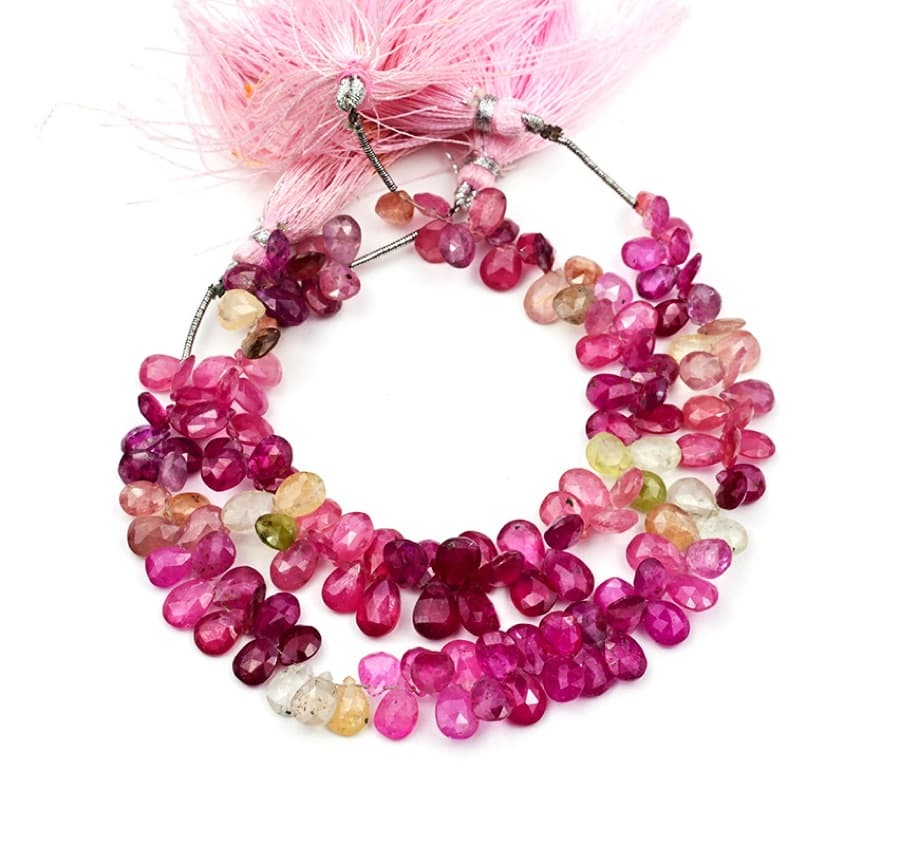
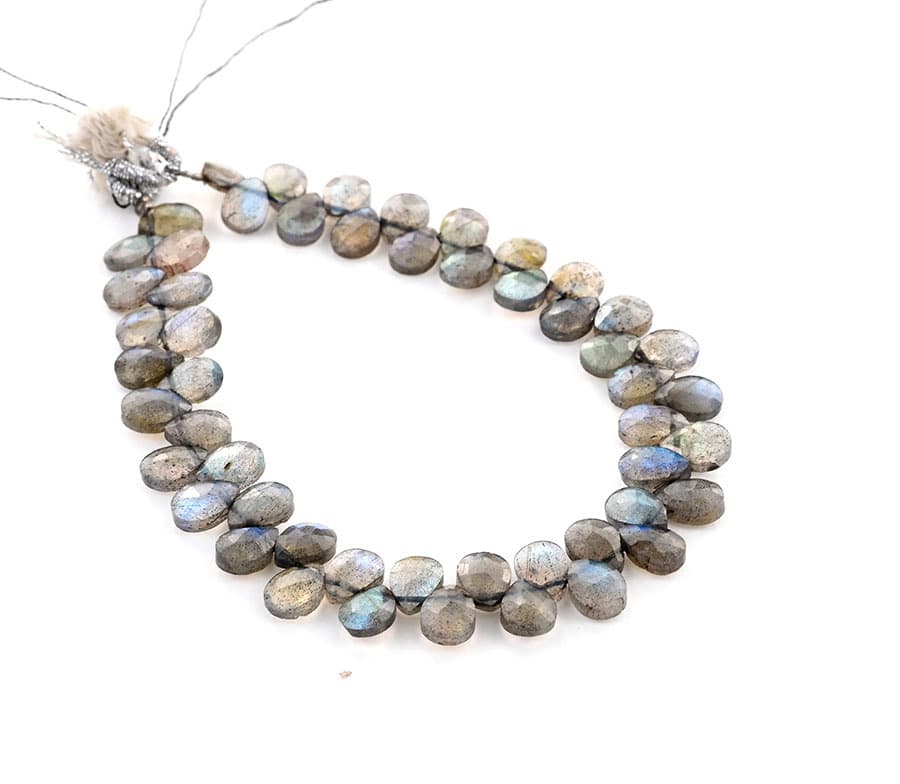
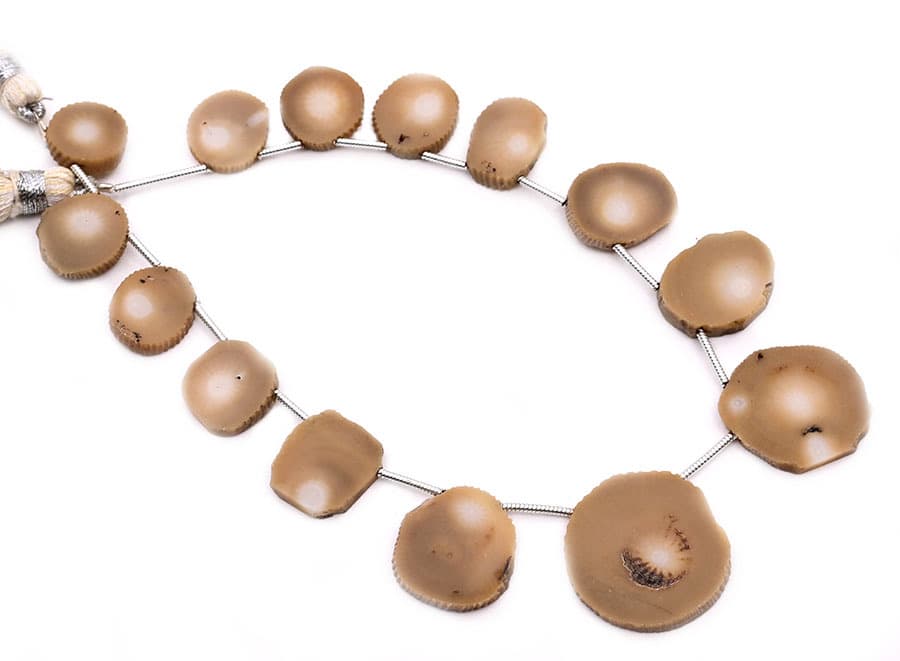
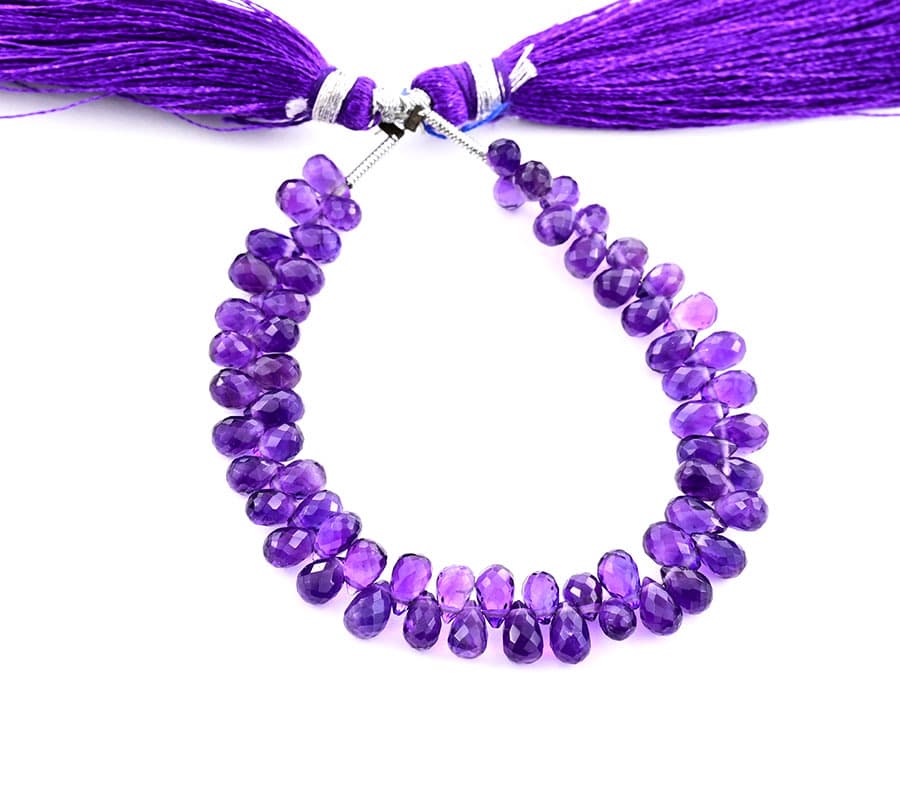
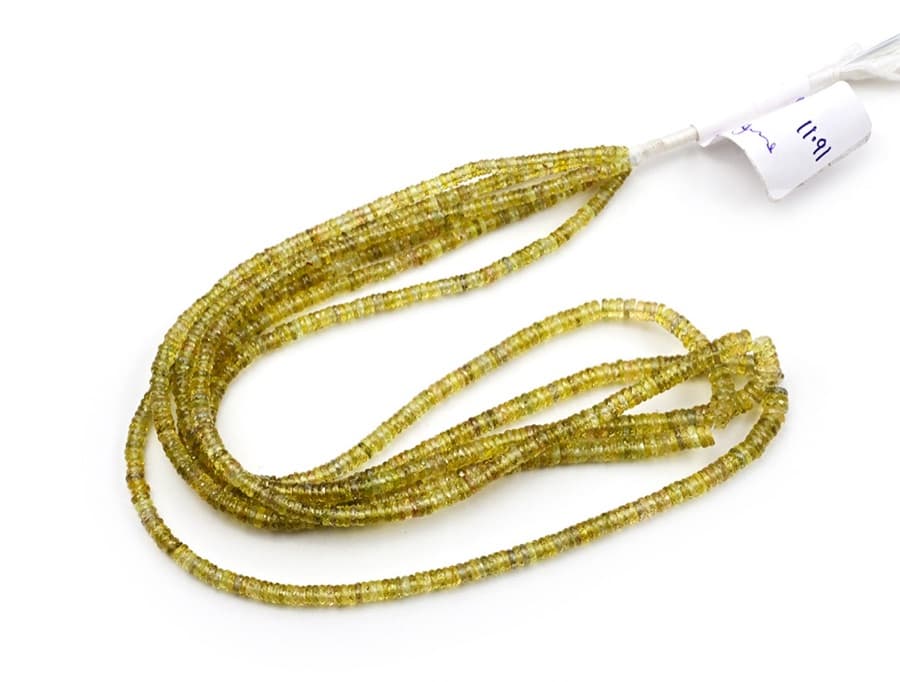
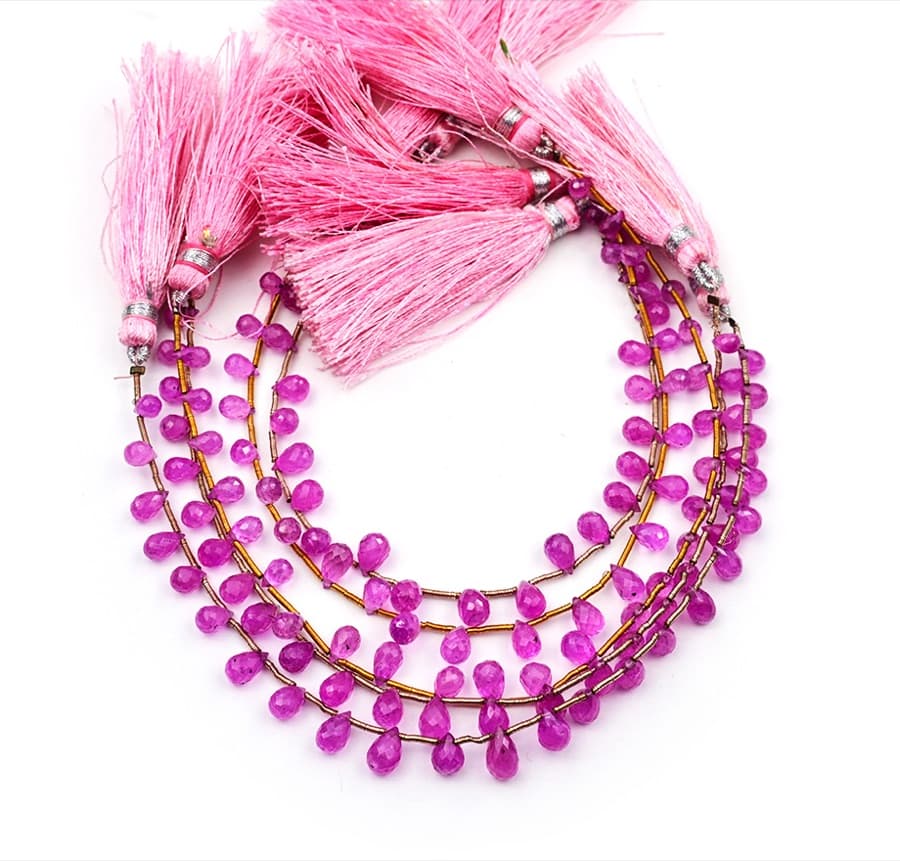
In our experience, amethyst and labradorite rondelles usually land in entry to mid bands, with prettier color and flash pushing them higher. Ethiopian Welo opal in small smooth rondelles typically falls mid to upper mid, while bright drops can climb. Sapphire spans the widest range, from mixed‑color everyday strands to high, especially in fine briolettes and calibrated smalls.
If you want to study what grades look like, our guides help. See amethyst, labradorite, Ethiopian Welo opal, and sapphire.
 New
New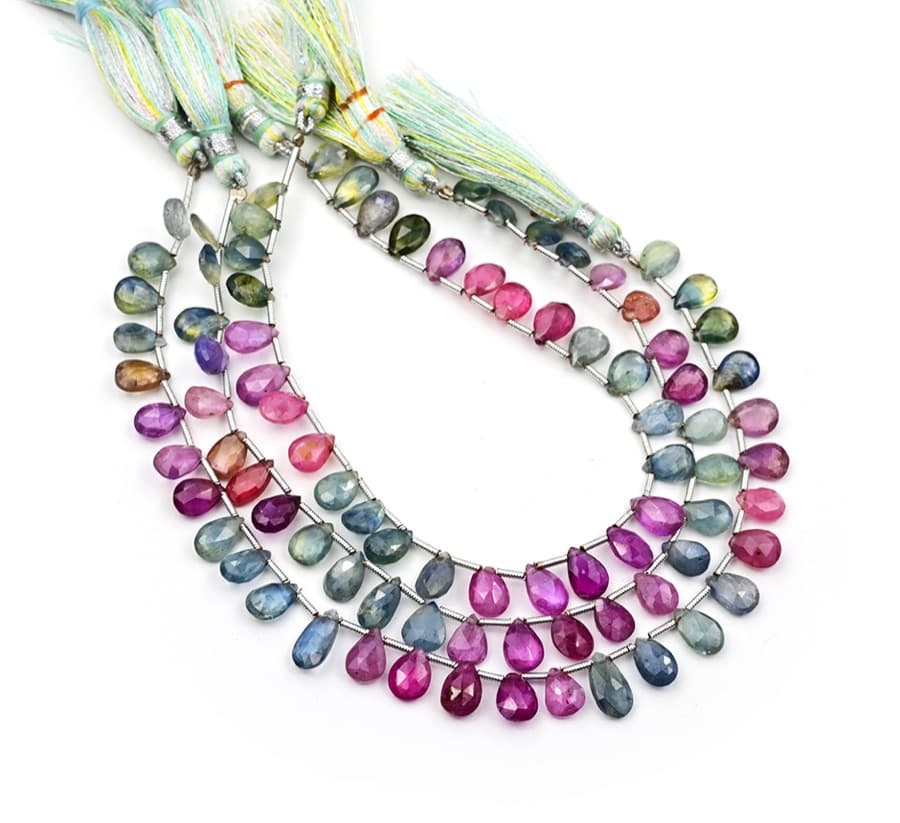 New
New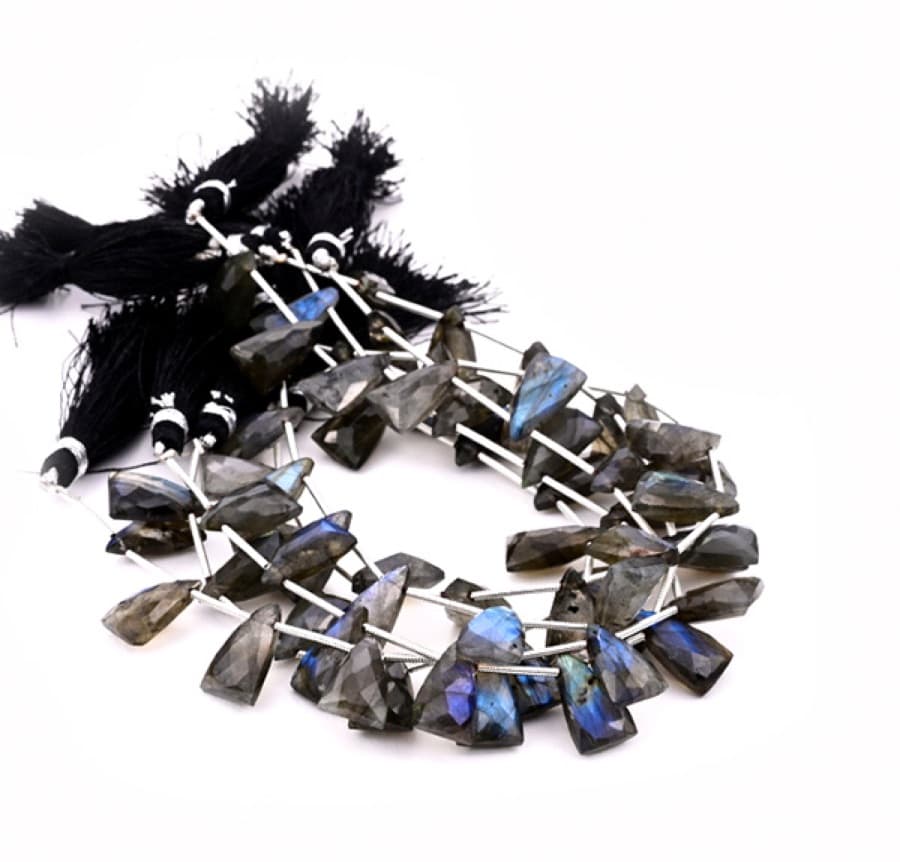
Does bead size change cost a lot?
Yes, because carat weight rises fast as diameter grows and the cutter loses more rough to reach clean material. Larger beads also require better starting rough and more time at the wheel. That compounds cost even when the stone and color grade are the same.
On a 15 to 16 inch strand, 6 mm rondelles average about 65 to 70 beads. At 8 mm you get roughly 48 to 52, and at 4 mm about 95 to 100. Fewer, larger beads means more cost concentrated per bead.
Why does hand faceting cost more than machine rounds?
Hand faceting in Jaipur takes time, skill and a higher rejection rate to keep symmetry and polish consistent bead to bead. Shapes like pears, hearts and heishi waste more rough and slow production compared with simple rounds. That labor and yield difference shows up in the price.
We stock both for different design goals. Machine rounds stretch budgets for long strands, while hand‑faceted drops and fancy shapes add sparkle in short runs for earrings and pendants.
How long is a strand and how does length affect cost?
Cutters typically string 13 to 16 inches. You are paying for the inches on the thread, so price scales with length and the bead size on that length. Many categories in the trade are quoted per 16 inches, and some shapes or statement pieces are quoted per 8 inches.
Our listings always state the inches and the exact size range. You can browse by shape, like rondelles, or visit us at shows listed here: show schedule.
How many beads do I need for bracelets and necklaces?
Common finished lengths are bracelet 7.5 inches, choker 16 inches, princess 18 inches and matinee 22 inches. Allow about 1.5 inches for clasp and findings when you plan. A 15 to 16 inch strand of 6 mm rondelles has about 65 to 70 beads, so a bracelet usually uses close to half a strand.
Smaller rondelles pack more beads per inch and can stretch a budget. Larger rondelles or big shapes eat inches quickly, so plan for extra strands on longer necklaces.