Sapphire
Corundum, aluminum oxide (Al2O3); every color but red is sapphire. Mohs 9. Bead grades: Sri Lanka, Madagascar, Tanzania (Umba, Songea), India, cut in Jaipur.
At a glance
| Hardness (Mohs) | 9 |
|---|---|
| Family | Corundum |
| Where it is mined | See description |
| Shapes we carry | Hearts, Heishi, Nuggets, Pears, Rondelles, Tear drops |
| Strands listed | 90 |
Film and illustrations are AI renders. Strand listings below show photographs of the actual material.
How to judge it
Under a 10x loupe, silk and angular zoning confirm natural corundum; a perfectly clean, uniform strand at $2/ct is glass or synthetic. Glass shows round bubbles; sapphire scratches a quartz bead.
What it's like to work with
Gold-fill fine-jewelry makers, bridal and birthstone sellers. 2 to 3mm rondelles on wire-wrapped chain are the volume item; pink briolettes for earrings.
Care
Daily wear, ultrasonic fine. Store apart from softer stones.
September birthstone; tradition links it to wisdom and loyalty (tradition, not fact).
Hardness 9, cut small: the strand a granddaughter still wears.
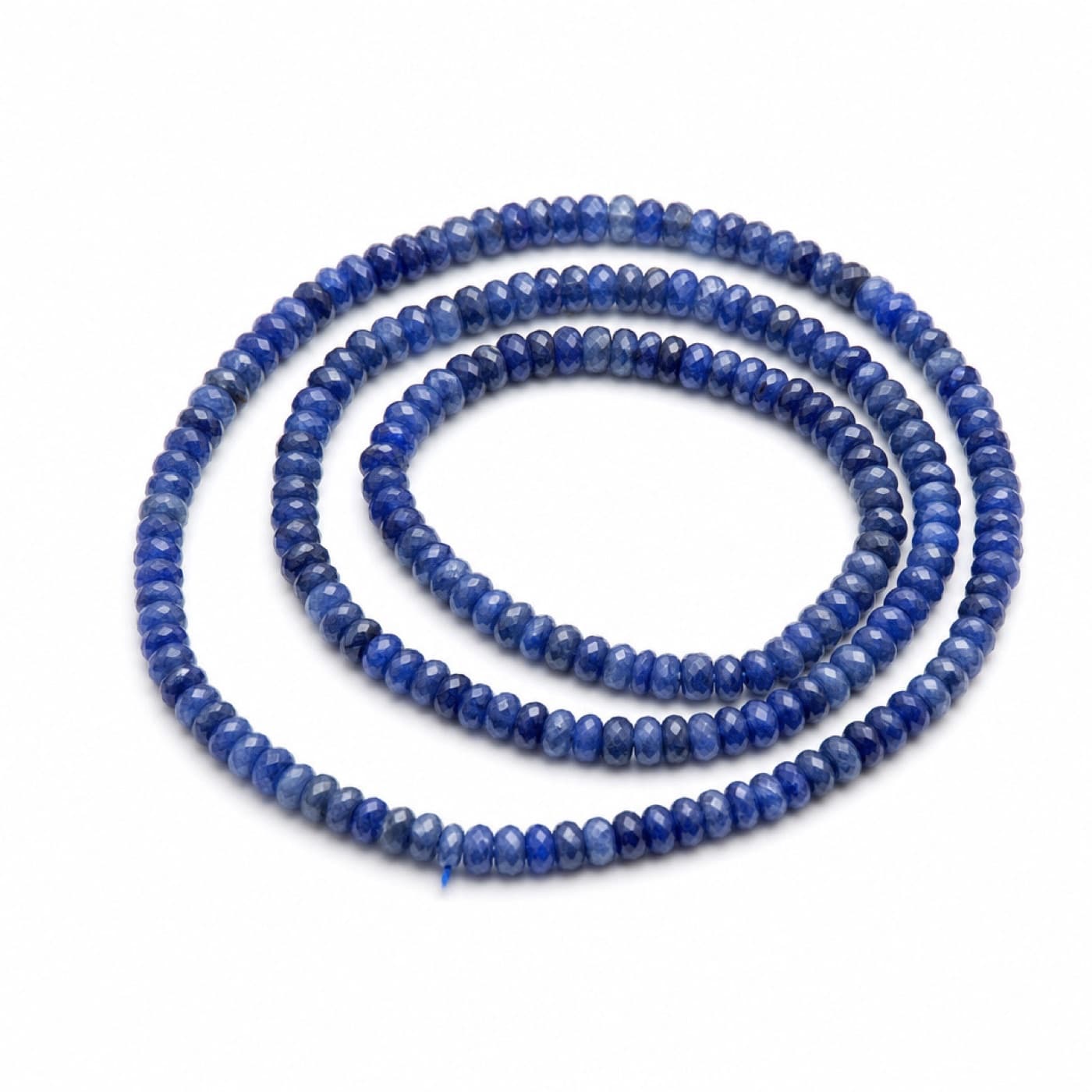
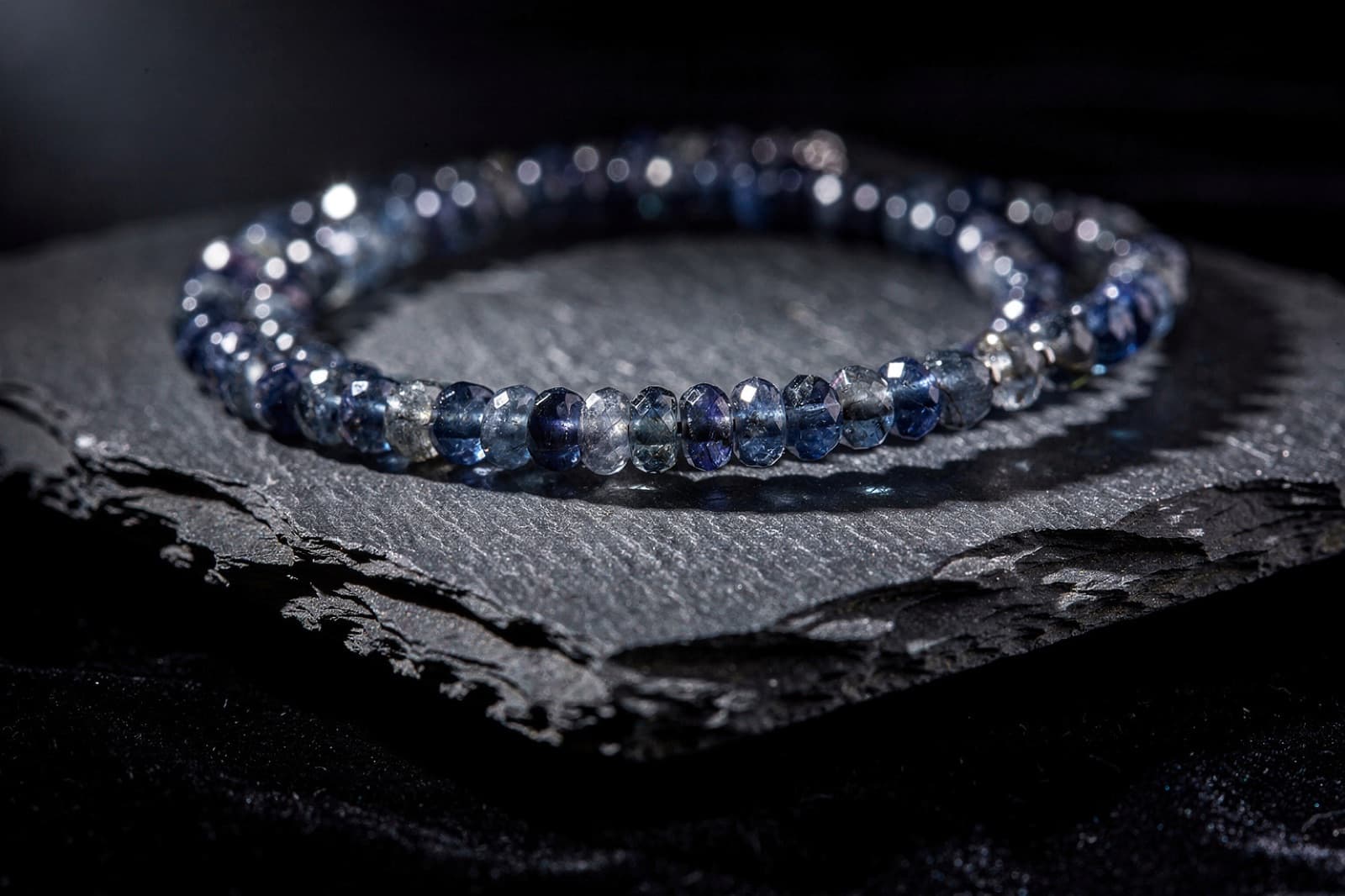
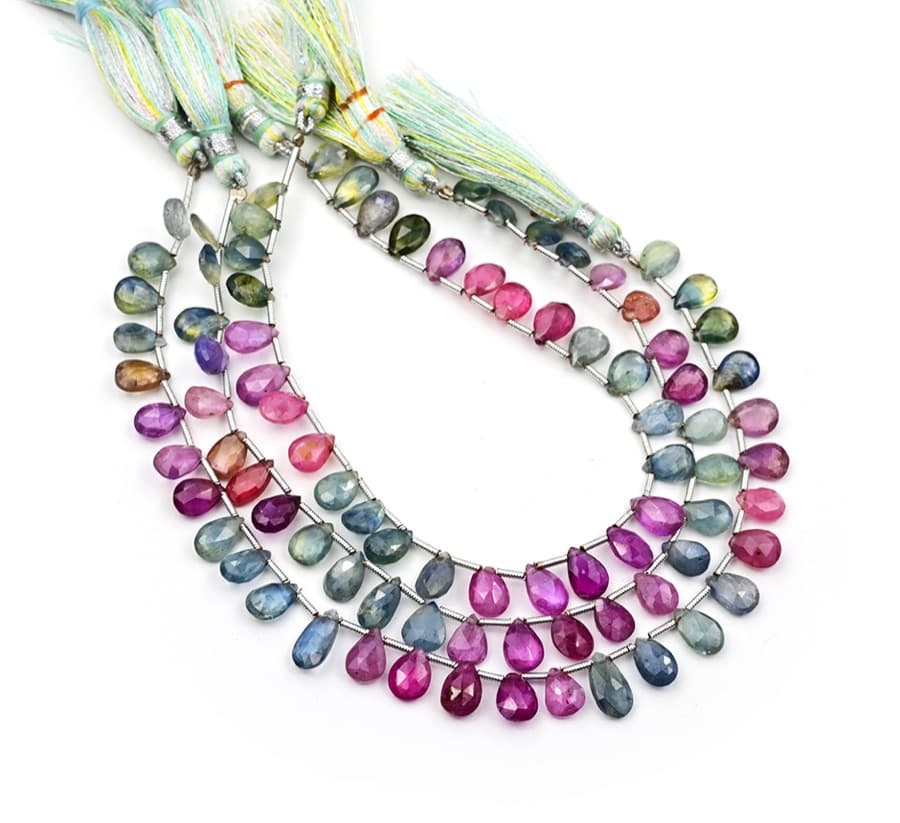
Hold a strand of 3mm rondelles to a window. The color moves bead to bead: ink blue in one, slate gray in the next, one almost violet. Facets this small give back light in hard points rather than a broad shine. On the pink strands the color sits somewhere between raspberry and dusty rose. Makers reach for these because it is the same mineral that goes into a ring stone, only cut small and sold by the inch.
Where it comes from
Sapphire is corundum: aluminum oxide, with traces of iron and titanium. Every color but red carries the name. Red corundum is ruby. The word arrived through the Latin sapphirus, from the Greek sappheiros, a name of Semitic origin that once pointed at lapis lazuli. For centuries the stone decorated the robes of royalty and clergy, and its blue became the standard against which other blue gems, from topaz to tanzanite, get measured. Romance came back into the story in 1981, when Prince Charles gave a blue sapphire engagement ring to Lady Diana Spencer; she wore it until her death in 1997. Bead grades come out of Sri Lanka, Madagascar, Tanzania including the Umba valley and Songea, and India. Cutting happens in Jaipur. We choose the strands one at a time here in Cupertino, California.
What tradition says
Sapphire is the September birthstone and the gem of the fifth anniversary. Wisdom and loyalty attach to it in tradition. Older writing links it to nobility and truth, puts sincerity and faithfulness on the same list, and holds that the stone stands for fidelity and for the soul. For centuries people believed a sapphire worn on the body guarded its owner against poison and fraud, which is part of why it sat in the rings of kings and bishops. Star sapphires drew legends of their own. None of it is fact. It is still why a blue bead gets picked for an engagement piece, or for a gift marking a long marriage.
These are beliefs people have held about the stone, told as tradition. They are not claims, and not advice.
How makers use it
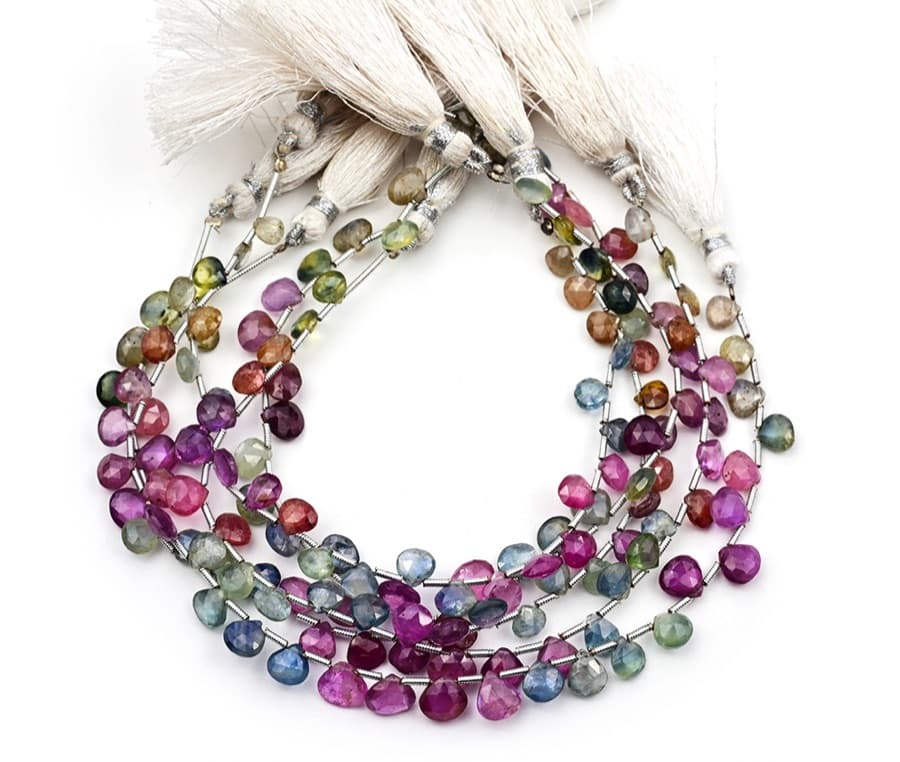
Micro-faceted rondelles at 2 to 3mm are the volume item, wire wrapped onto gold-fill chain for bridal work and September birthdays. Pink pear briolettes make quick earrings. Nuggets come organic cut rather than faceted and sit softer next to gold. Ninety strands are listed. Blue leads, and pink across a dozen lots. Green and yellow. Umba banded and confetti, and Umba orange with olive and lavender and honey. Songea in gray and black, in brown and mauve. Sold by the 8 inch and the 16 inch, about 20 carats per 8 inches at 3mm. A stronger strand throws color back at every facet instead of reading flat and dark.
Looking after it
At Mohs 9 sapphire takes daily wear, and an ultrasonic gives it no trouble. Care is mostly about what sits beside it in the bead box. Store these strands apart from softer stones. A sapphire bead will scratch a quartz bead, so give it a pouch of its own.
Sources: Sapphire History and Lore - GIA, Sapphire, Sapphire Gemstone | Sapphire Stone – GIA, September Birthstone | Sapphire Birthstone History & Location | GIA
Sapphire strands
All 90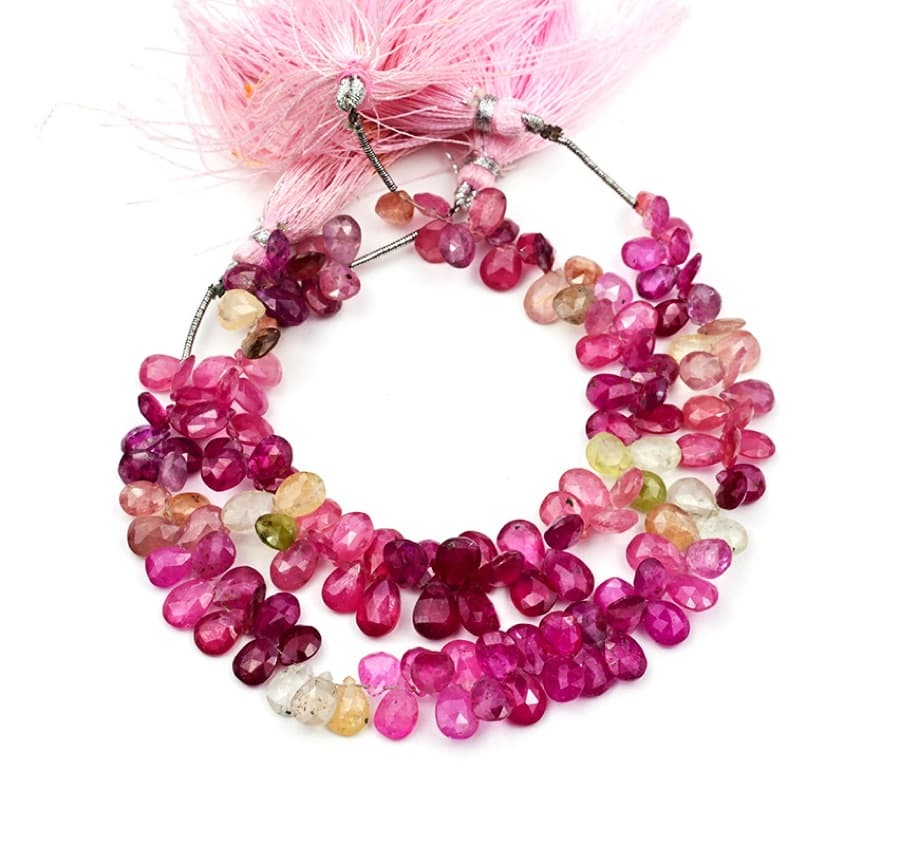 NewRepresentative photo
 New
New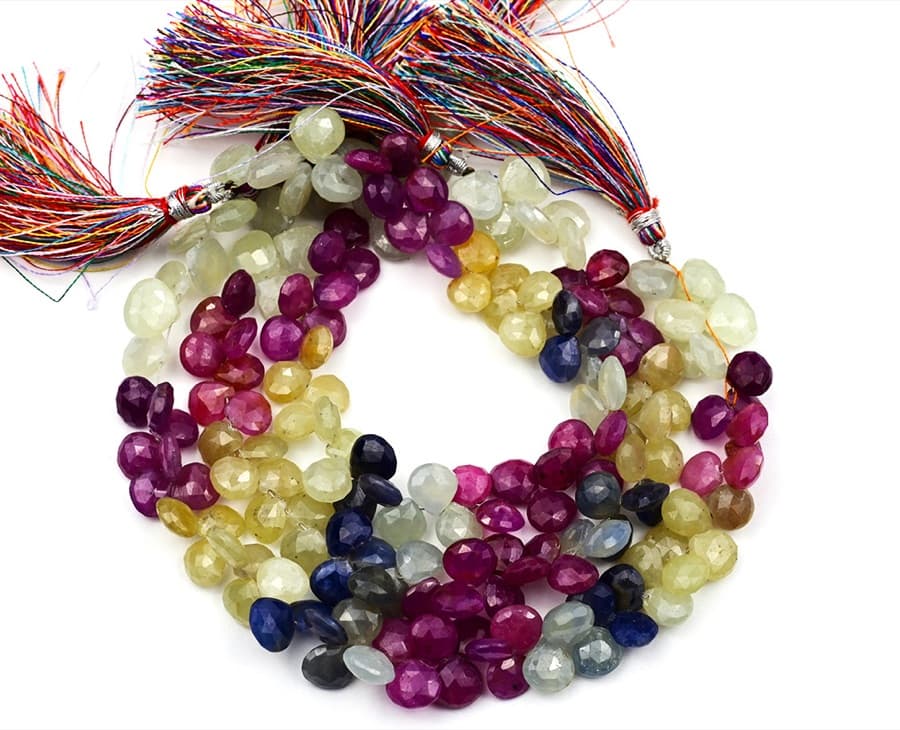 NewNew
 New
New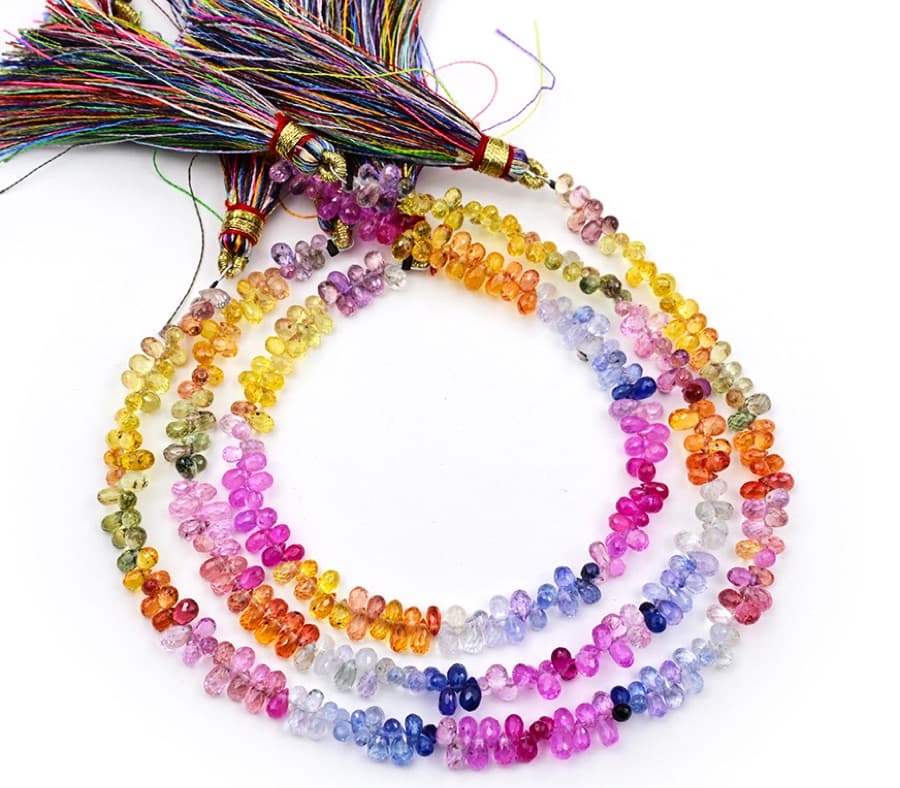 NewSold out
 New
New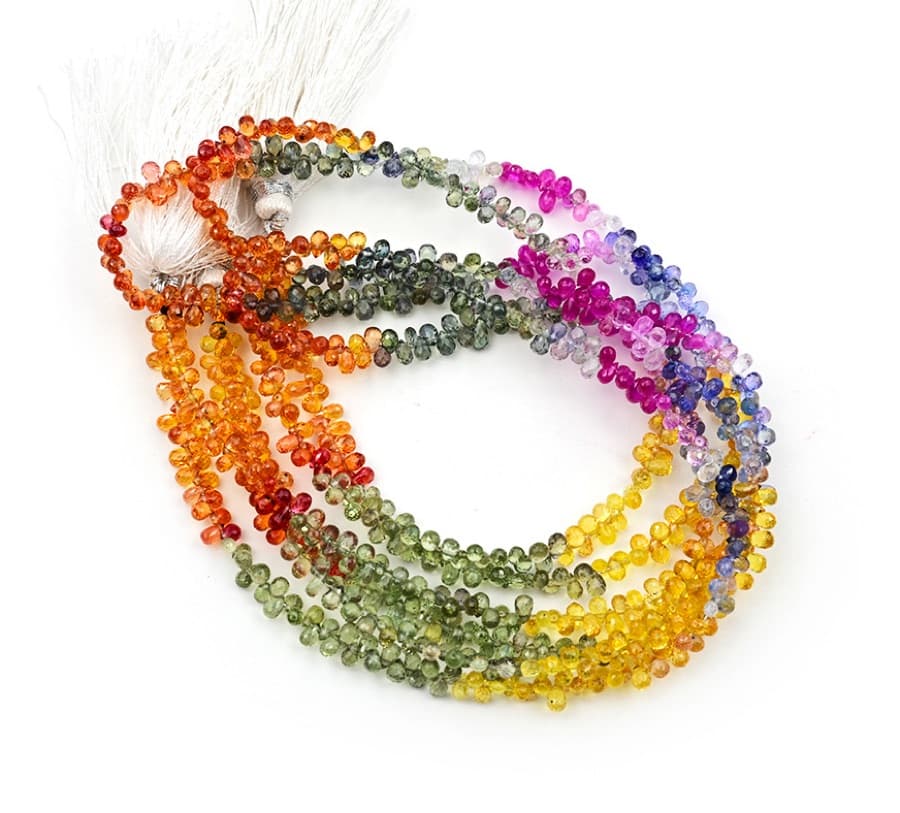 New
NewRelated stones
From the blog
All posts Making with beads
Should I string sapphire beads on wire or silk?
String faceted sapphire on flexible multi-strand beading cable sized to fit your bead holes, because facet edges can cut thread during wear. Use silk only for pearls and other smooth beads you want knotted between each bead. With cable and proper crimps you get strength, clean drape and dependable finishes for daily wear.
Making with beadsWhat can I make with pear shaped gemstone beads
Pear-shaped gemstone beads work for quick drop earrings, bold fringe or bib necklaces, clustered pendants, Y designs, charm bracelets, ear climbers and ring accents. Most are top- or center-drilled, so they hang cleanly. We stock pear strands in sapphire and tourmaline, plus emerald and moonstone, sold by the strand for stringing or wire work.
Care and durabilityWhich gemstone beads are hard enough for an everyday bracelet
Use Mohs 7 as the everyday-bracelet line because household dust contains quartz around 7. For daily wear, we recommend sapphire, black spinel, red Mozambique garnet, and amethyst beads. Black onyx sits on the line and needs a gentle finish. Labradorite, lapis, pyrite, turquoise, Ethiopian opal, pearls, and kyanite are better as careful or occasional bracelets.