What can I make with pear shaped gemstone beads?
Make drop earrings, fringe necklace, graduated bib, charm bracelet, pendant cluster, Y-necklace, ear climbers, ring stack. Pears are rounded drops, measured width by length, and they hang point-up or point-down depending on the drill. See how pears are drilled and used on our pear shape page. We sell strands online and at InterGem shows.
We sort strands so you can pull matched pairs from the ends and longer centers for focal work. That layout speeds earring pairs and clean graduation for symmetrical designs. We import Jaipur-cut strands and sell strands of beads only. Order online or find us on the show schedule.
How do I make drop earrings quickly?
Pick two pears of similar width and length from the strand ends. For top-drilled pears, make a tight wrap at the point and connect to ear wires. For center-drilled pears, use a bail or a short wire link so the bead faces forward. Keep the wrap small so the drop swings freely without twisting.
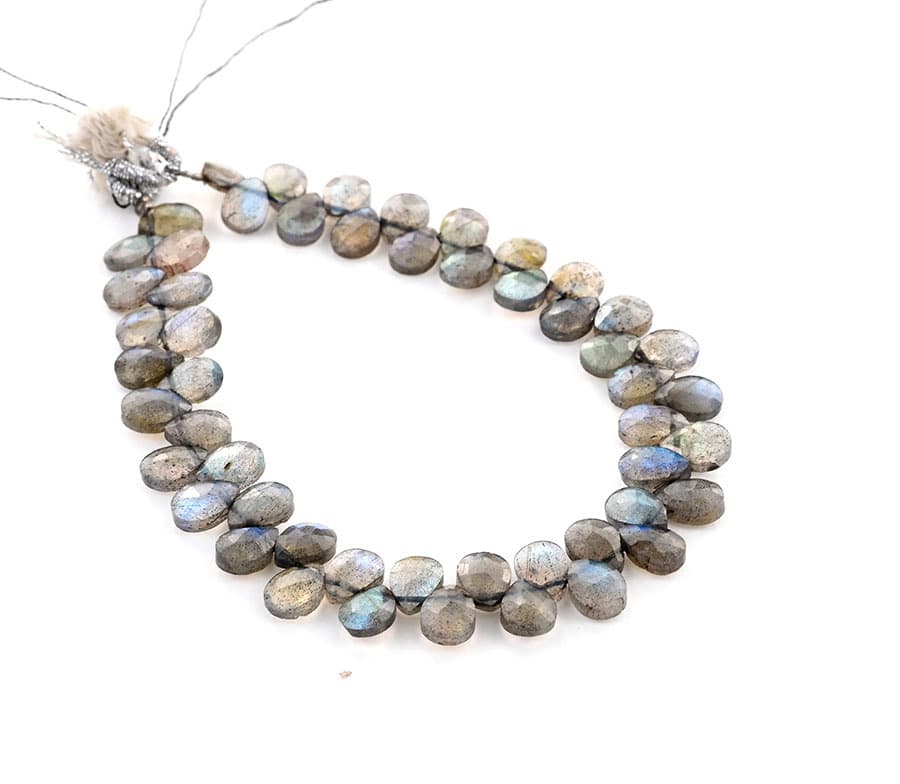
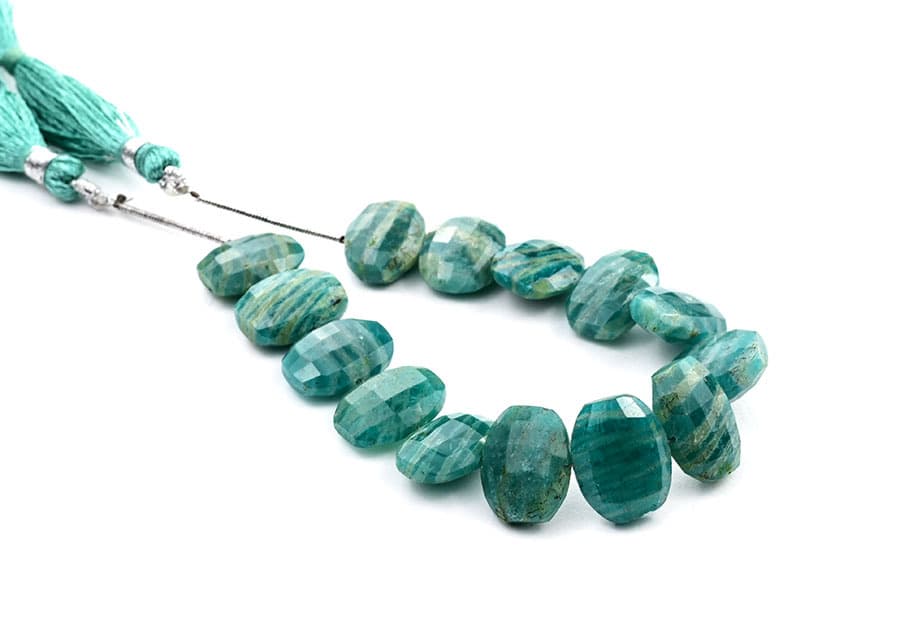
Softer stones suit earrings. Labradorite pairs well with silver. Moonstone or amazonite also shine and avoid daily knocks common on rings or bangles. Read stone notes for labradorite and moonstone.
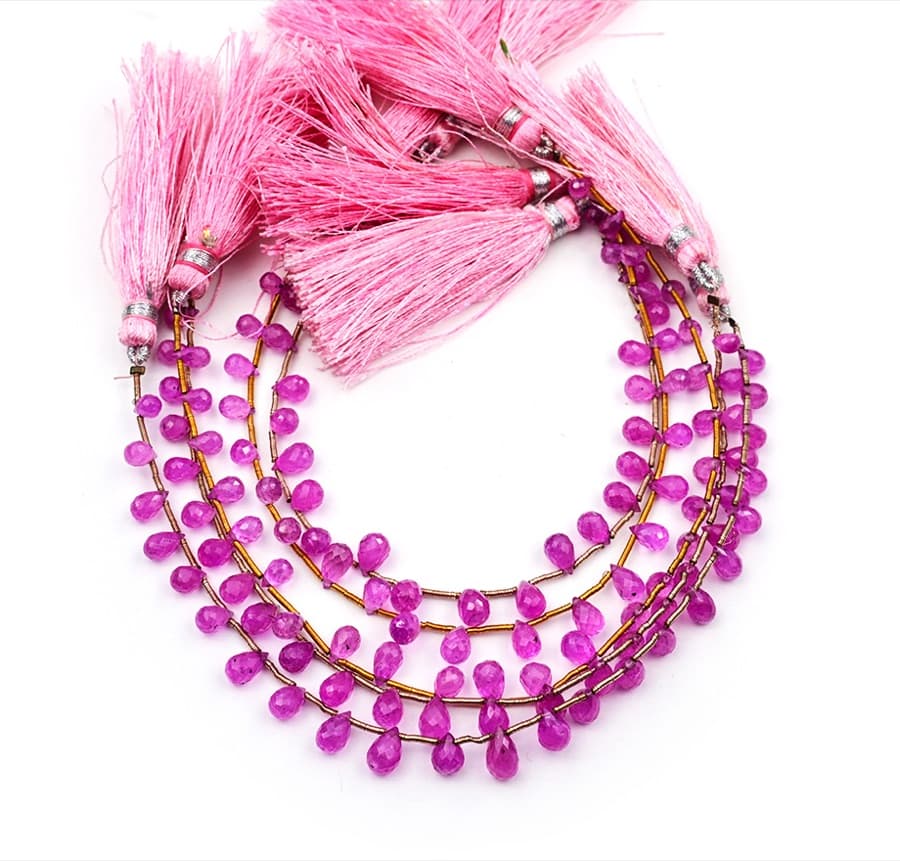 New
New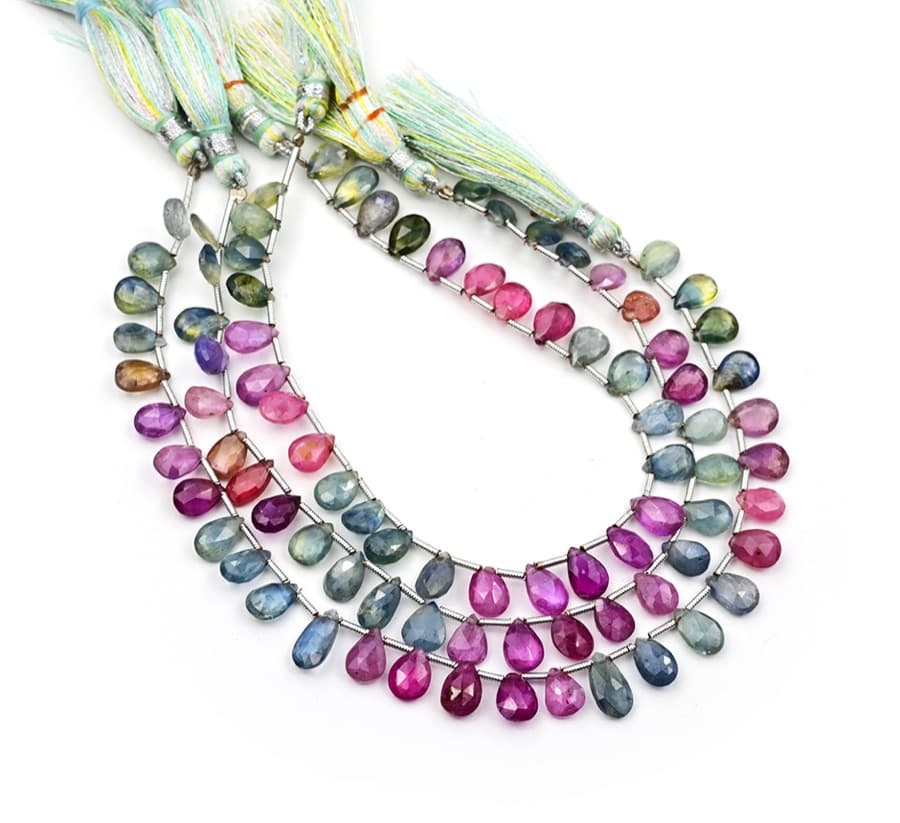 New
New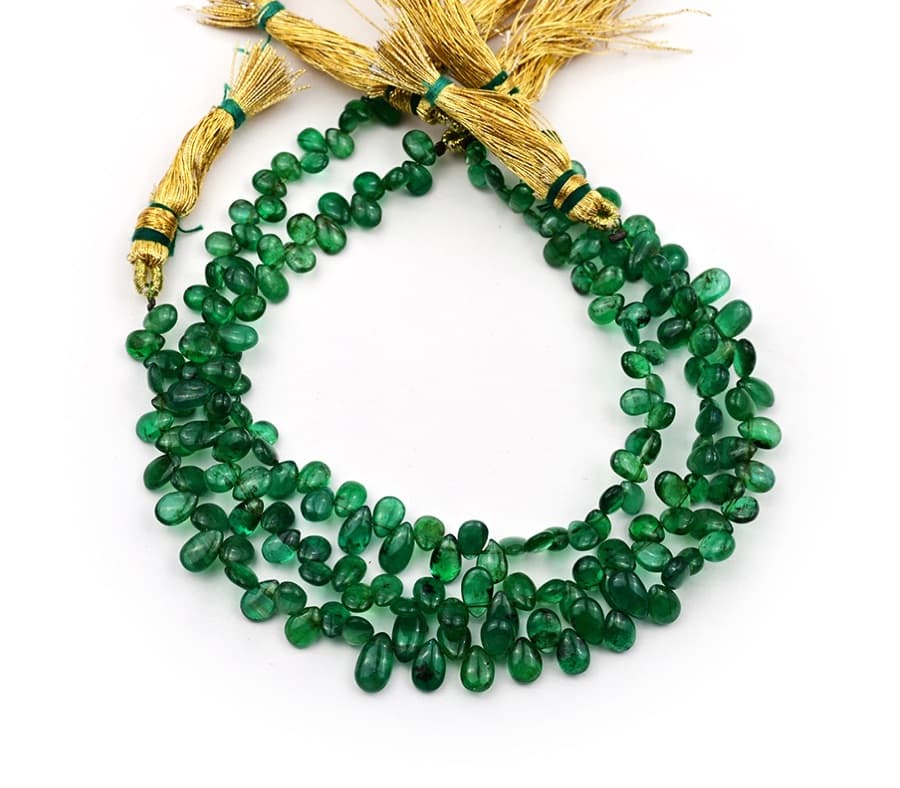 New
New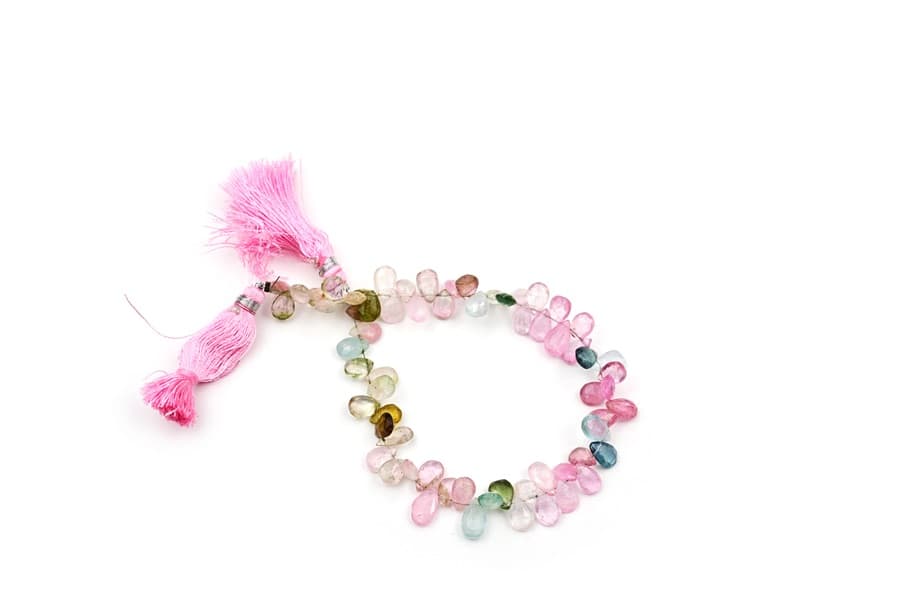
How many pears do I need for a fringe necklace or graduated bib?
Plan the finished length first. A 16 inch choker has a beaded run of about 14.5 inches after allowing space for clasp and findings. Lay the whole strand on a bead board from center out, longest pears at the middle tapering to shorter ones near the clasp. Add small spacers between pears to prevent crowding and to keep the tips visible.
For a graduated bib, cluster the longest pears at center and taper quickly toward the sides. A second matching strand helps when you want extra fullness. Standard Jaipur strand length runs 13 to 16 inches, so one strand often covers a choker, and two make a lush matinee or bold bib.
How do I build a pendant cluster and a Y-necklace?
To build a pendant cluster, gather pears on individual wraps to a single heavy ring, mixing lengths for layered movement. Hang that ring from cable chain or tiny rondelle chain. Create a Y-necklace by adding a short center drop with a pear, then place smaller pears at the split so the Y reads clearly. Keep the center joint compact so it sits flat.
Top-drilled pears give the best flare in a cluster. Center-drilled pears suit a single pendant or the Y-tail. Jewelers often protect pear points with special prongs; see GIA's note on V-prongs for pears (GIA).
Can I use pears for bracelets and ear climbers?
Charm bracelets take a few pears spaced along chain, mixed with small rounds. Use snug wraps so charms do not snag. Ear climbers use short bars with petite pears pointing up the ear for a leafy line. A slim ring can carry a very small pear as a topper, but pick a harder stone for daily wear.
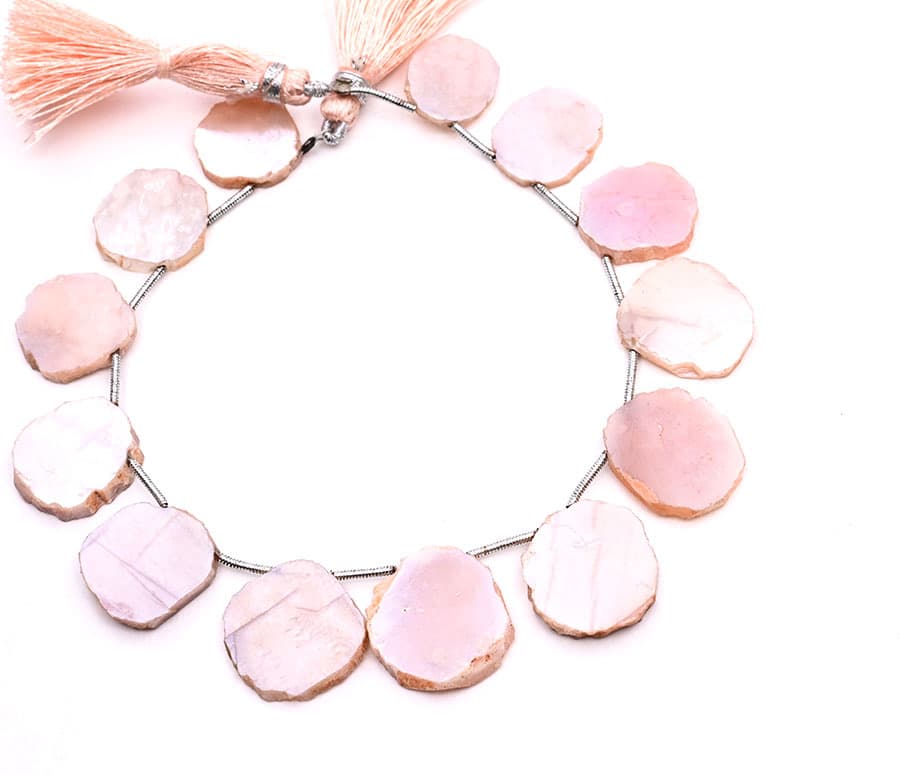
Labradorite and moonstone have cleavage and are better in earrings and pendants than rings. Dendrite opal is softer than quartz, so skip rings and heavy bracelets. Sapphire is Mohs 9 and handles more wear, which suits ring accents. Jewelers discuss guarding the fragile tip on pears at Ganoksin (Ganoksin).
What stringing and findings work best for pears?
Use flexible beading wire for necklaces and bracelets, and simple wrapped loops for earrings and clusters. Small spacer beads between pears keep them from stacking and chipping. Bails or pinch bails suit center-drilled pears for pendants. A short segment of fine chain can add swing to each drop in a fringe or bib.
Match metal color to the stone. Warm tones flatter peach moonstone and Umba sapphire. Cool finishes pair well with labradorite and amazonite. Our sapphire guide shows color families we stock so you can coordinate findings easily.
Which pear strands should I pick right now?
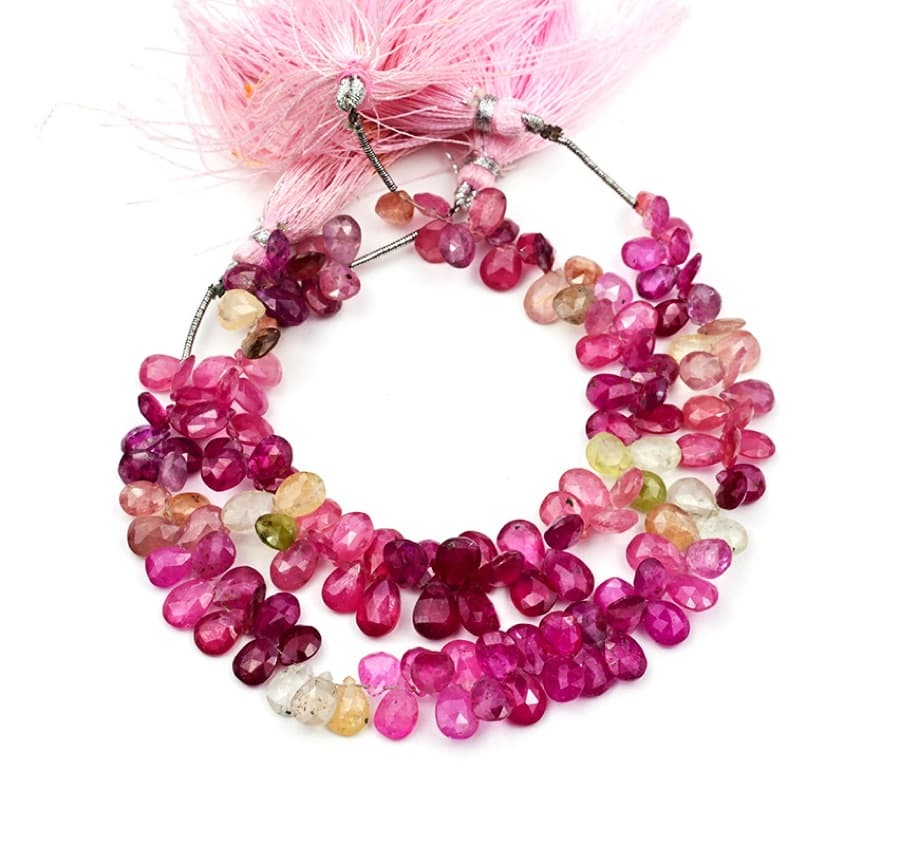
Umba sapphire pears bring mixed hues and lively sparkle for rainbow earrings and bibs. Brides reach for peach or gray moonstone pears when they want a soft neutral glow. Emerald pears make a strong pendant or Y-tail. Tourmaline pears give pink and green notes that pop on bracelets and clusters.
Shop a few favorites: Umba sapphire pears for color play (shop). Pink sapphire tear drops for soft drops (shop). Emerald pears for a rich centerpiece (shop). Afghani tourmaline pears for two-tone work (shop).