Dendrite opal
White common opal with black tree-like manganese-oxide inclusions; hydrated silica, Mohs 5.5 to 6; rough from Kazakhstan, Turkey, Mexico, Madagascar. "Dendrite opal" is the Indian trade name; "dendritic agate" is the same picture in harder chalcedony (6.5 to 7); "merlinite" is a New Mexico crystal-shop name applied to either.
At a glance
| Hardness (Mohs) | 5.5 to 6 |
|---|---|
| Family | Opal |
| Where it is mined | See description |
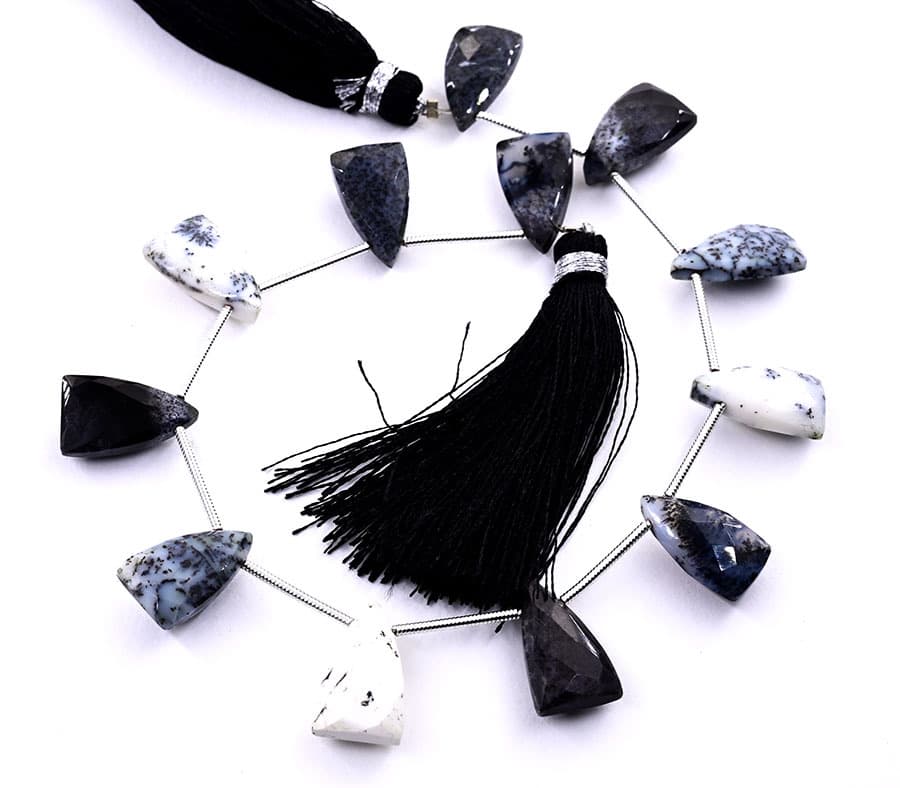
| Shapes we carry | Arrowheads, Diamond cuts, Half moons, Hearts, Marquise, Pears, Pyramids, Rectangles, Trilliants |
| Strands listed | 19 |
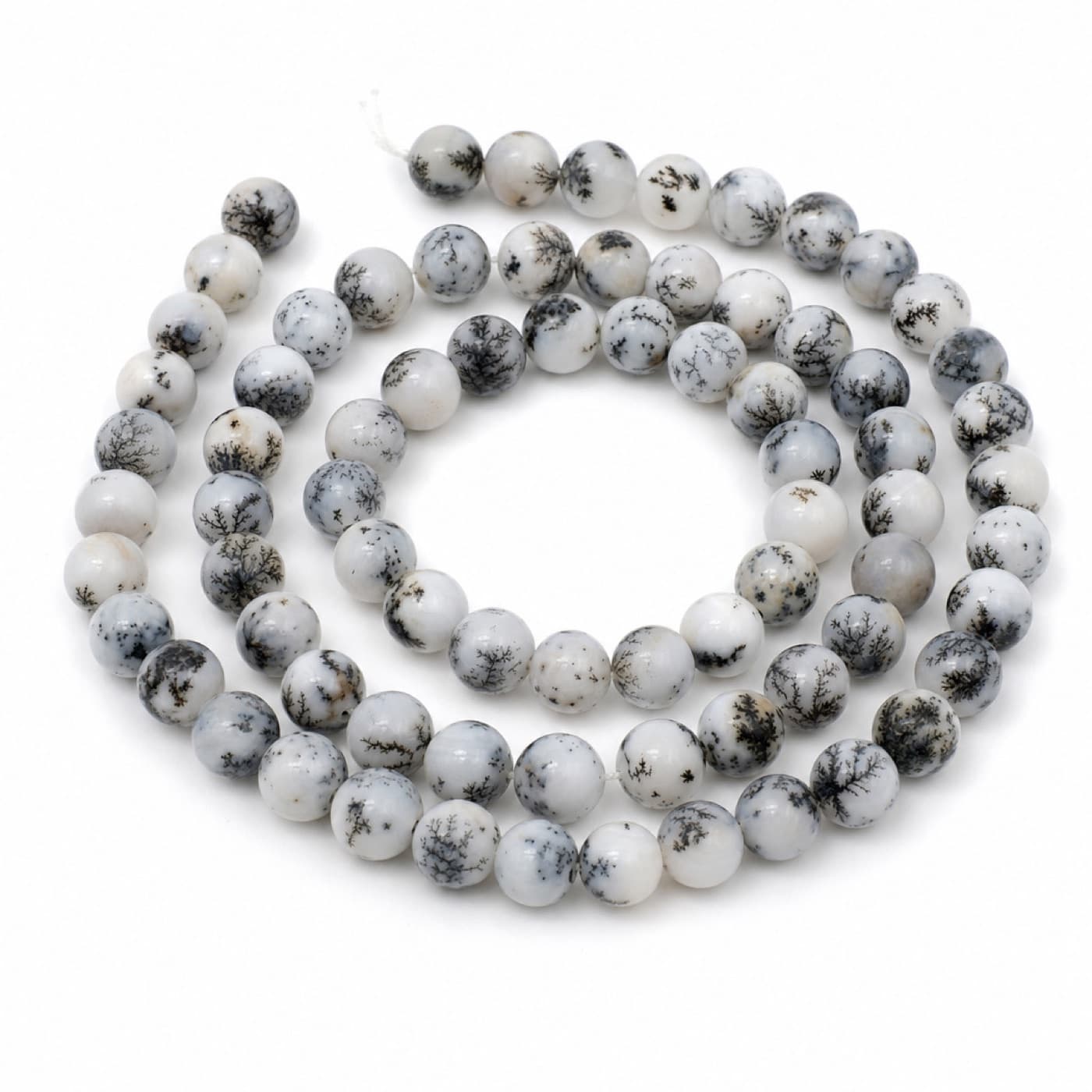
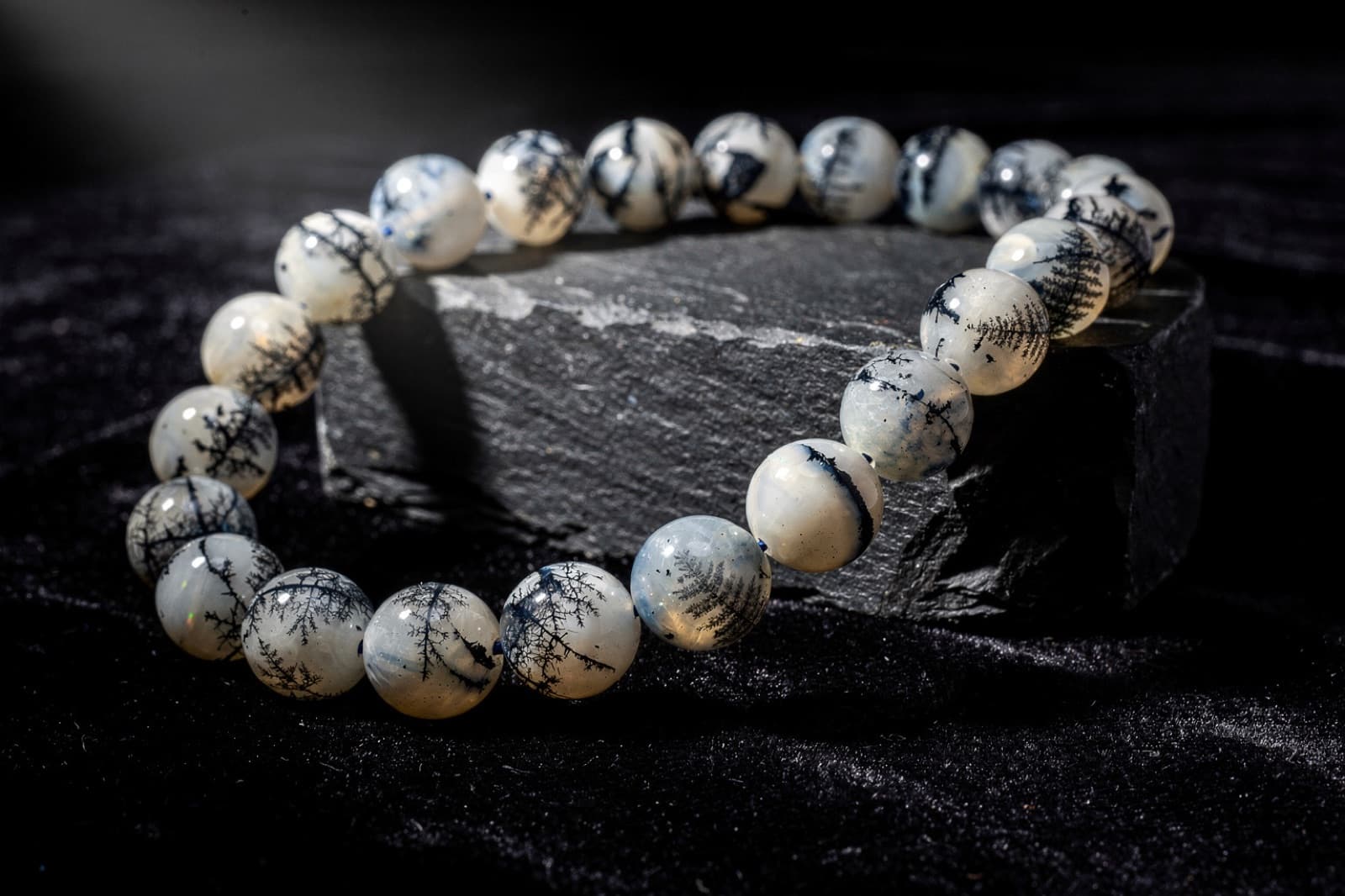
Film and illustrations are AI renders. Strand listings below show photographs of the actual material.
How to judge it
Crisp black ferns on a clean white ground, one full dendrite per dagger. A steel point scratches opal at the drill-hole edge and skates on agate. Look-alike: printed glass (bubbles; surface pattern only).
What it's like to work with
Minimalist and neutral-palette designers, wedding work. Entry to mid tier. Daggers and kites sell best.
Care
Softer than quartz; no rings, ultrasonic or heat. Water, soft cloth.
Tradition links dendritic stones to growth; tradition, not fact.
Black ferns held in white opal, cut in Jaipur.
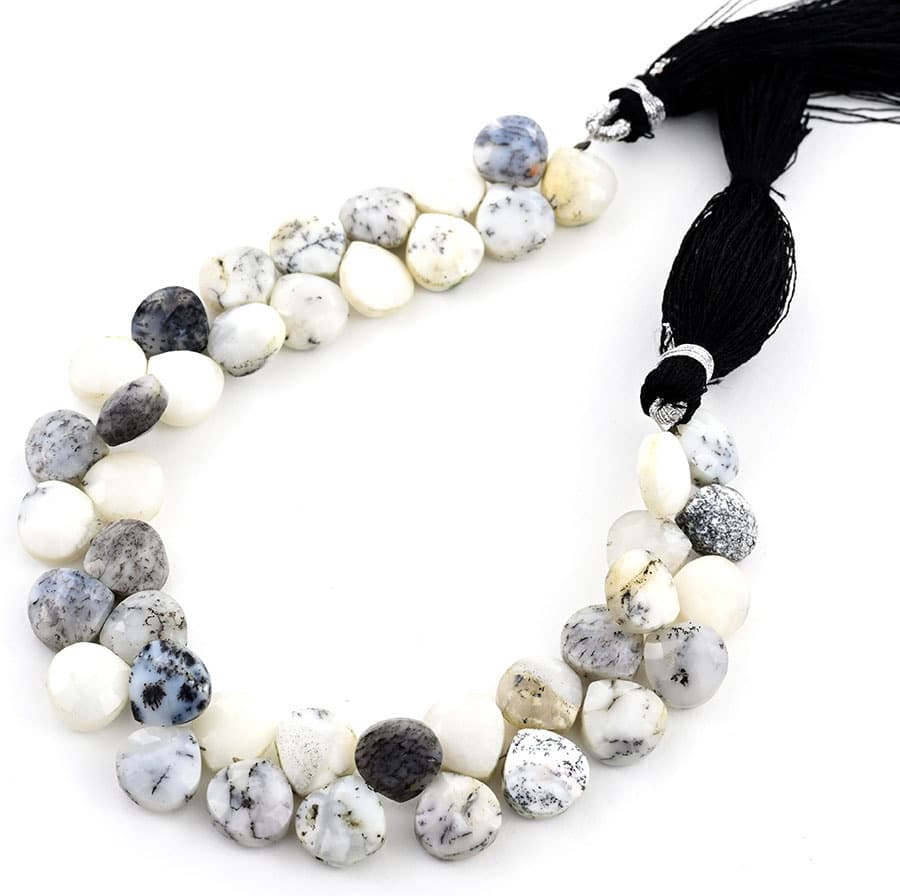
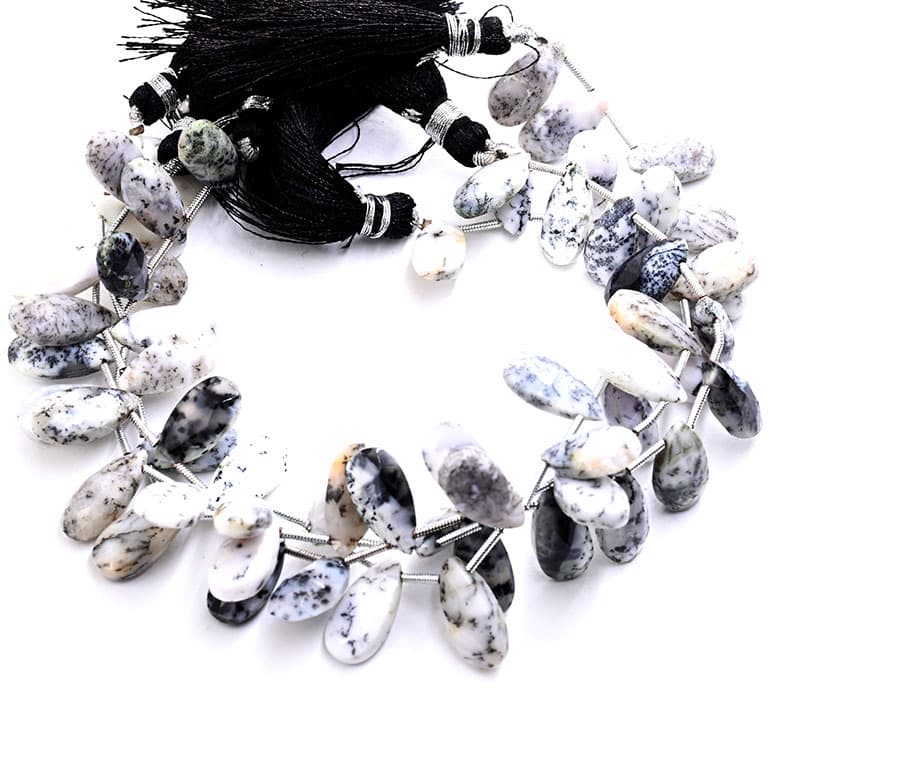
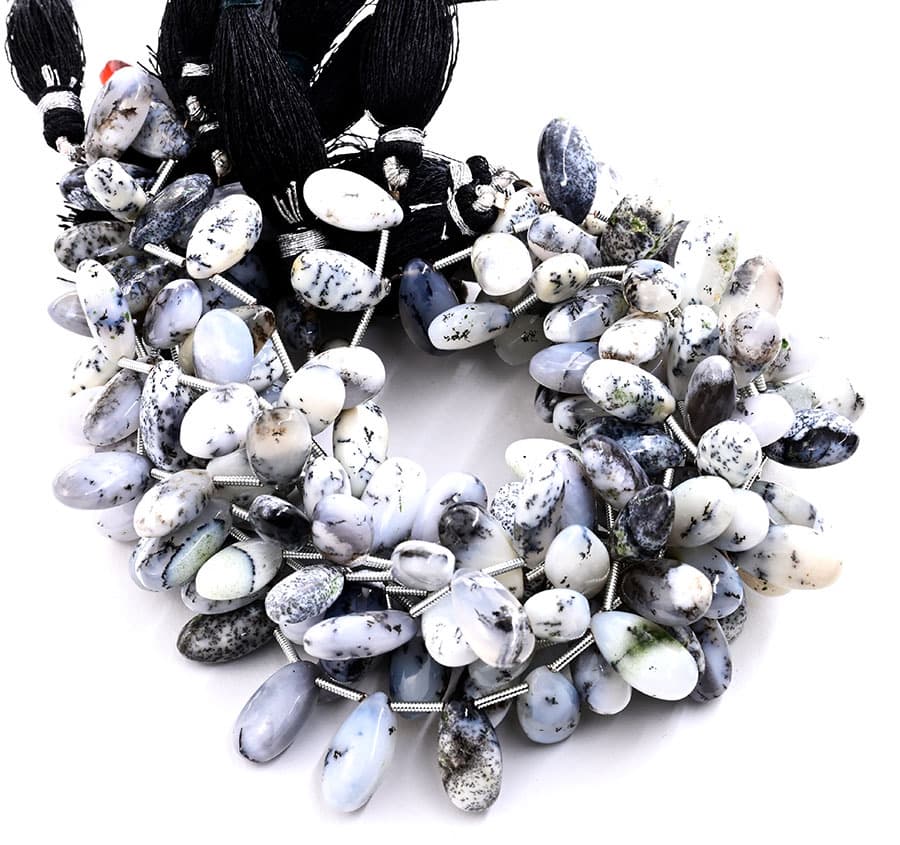
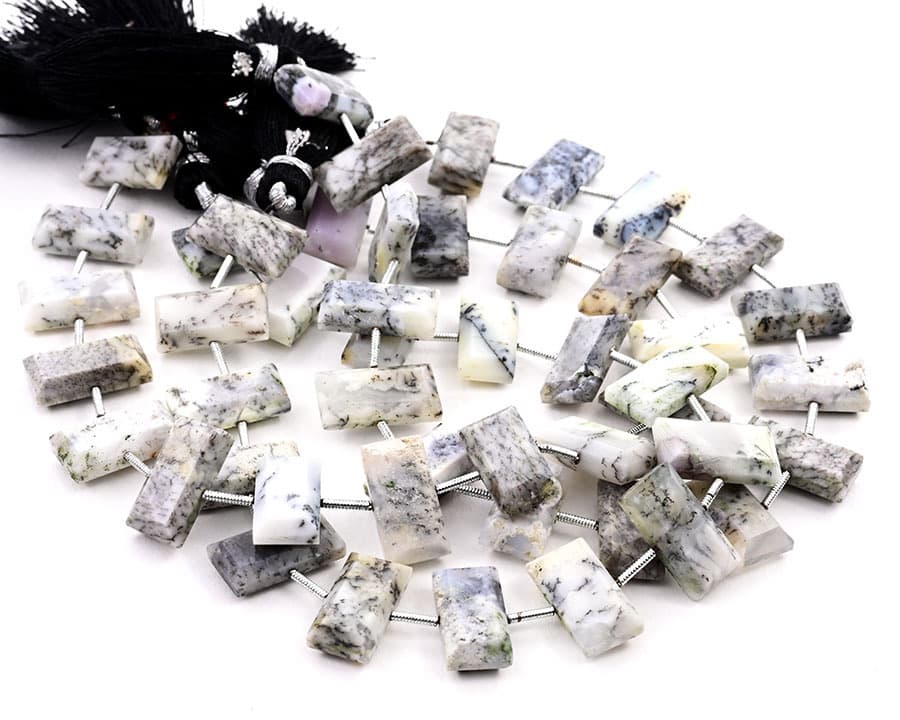
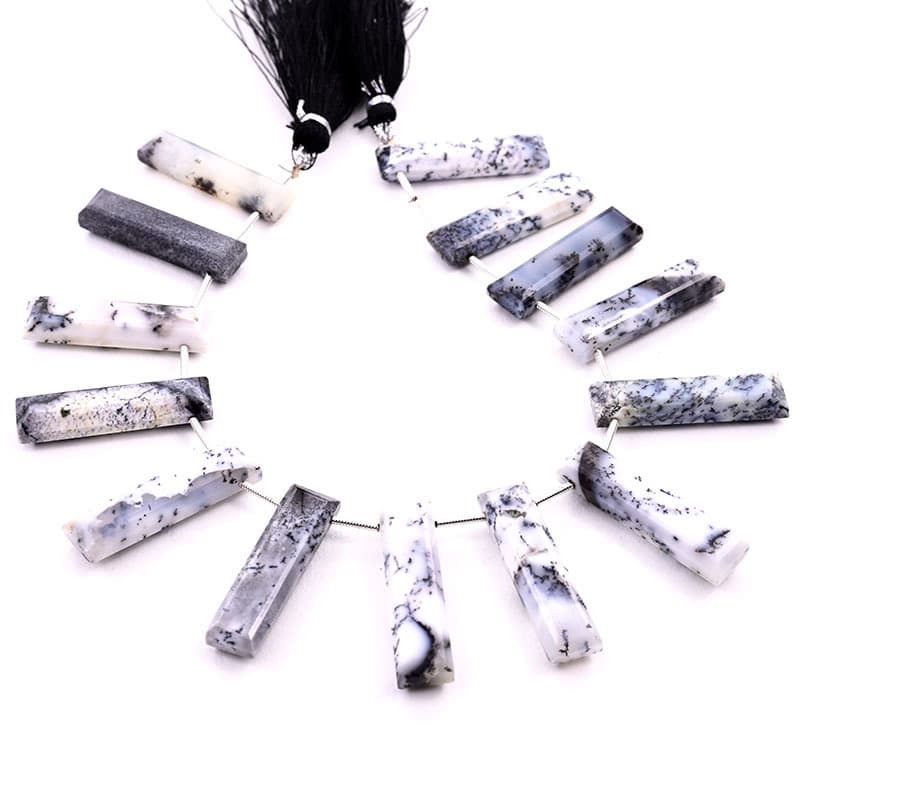
On the strand, the ground reads like paper: a soft, milky white with no fire in it, closer to porcelain than to glass. Across that white run thin black lines, branching the way frost climbs a window or a fern opens. Every bead carries a different drawing. Makers pick it up because the pattern does the work; you do not need a second focal stone, and the black and white sits quietly against skin and against metal.
Where it comes from
Opal begins as silica dissolved in water, carried down into cracks and between rock layers, left behind as the water dries. Here the same seams gave manganese oxide room to creep outward in branching films, so the tree shapes are locked inside the white silica rather than drawn on its surface. Rough for these strands comes from Kazakhstan, Turkey, Mexico, and Madagascar. Opal itself has been in jewelry a very long time; the Romans called it opalus, a word that stood for precious stone, and in 75 AD Pliny wrote about the play of color inside it. Australian mines began producing commercially in the 1890s and became the main source. Dendrite opal is the Indian trade name for the white-and-black picture stone. The same picture in harder chalcedony is sold as dendritic agate, and some crystal shops in New Mexico call either one merlinite. Our strands are cut in Jaipur, India, and chosen strand by strand in Cupertino, California.
What tradition says
Opal has carried opposite reputations. In ancient Rome it stood for love and hope, and because it held the colors of other gems the Romans considered it the most precious and powerful of all. The Bedouins believed opals contained lightning and had fallen from the sky during thunderstorms. For centuries it was linked with royalty and good luck, until the novel Anne of Geierstein gave it a name for being unlucky, a superstition with nothing behind it. Opal is the October birthstone. In crystal tradition, stones with dendrites are tied to growth and steady patience, and people have long believed the branching pattern encourages things to take root. All of this is tradition rather than fact.
These are beliefs people have held about the stone, told as tradition. They are not claims, and not advice.
How makers use it
The faceted dagger is the shape people ask for first, long enough to hold one whole dendrite from tip to shoulder, and it hangs well as a single pendant or in a graduated fringe. Smooth 12mm rounds make a plain knotted necklace that reads neutral with everything, and 5mm heishi gives you a flat black-and-white line for spacing or for a stacked bracelet. It suits minimalist and neutral-palette work, and it turns up often in wedding pieces. A stronger strand shows crisp, dark, well-separated branching on clean white rather than a gray haze. We keep nineteen strands listed.
Looking after it
Treat it as opal, not as quartz. At 5.5 to 6 on the Mohs scale it is softer than the stones it often sits beside, so keep it out of rings and away from heat and ultrasonic cleaners. Wipe with water and a soft cloth, and store it apart from harder beads.
Sources: Opal History and Lore, Opal Gemstone | Opal Stone – GIA, Dendritic Agate, Dendritic Opal, Dendritic Chalcedony - Different stones, or the same? - Gem Related Discussion - IGS Fo, Opal | Properties, Types & Uses | Britannica
Dendrite opal strands
All 19