Chocolate and brown Ethiopian opal
Hydrophane precious opal with a brown, tan or red-brown body, SiO2 with water, Mohs 5.5 to 6.5. Natural brown body color is typical of the older Shewa (Mezezo) deposit, found 1994, which crazes badly.
At a glance
| Hardness (Mohs) | 5.5 to 6.5 |
|---|---|
| Family | Opal |
| Where it is mined | See description |
| Shapes we carry | Arrowheads, Hearts, Heishi, Pears, Pyramids, Trilliants |
| Strands listed | 11 |
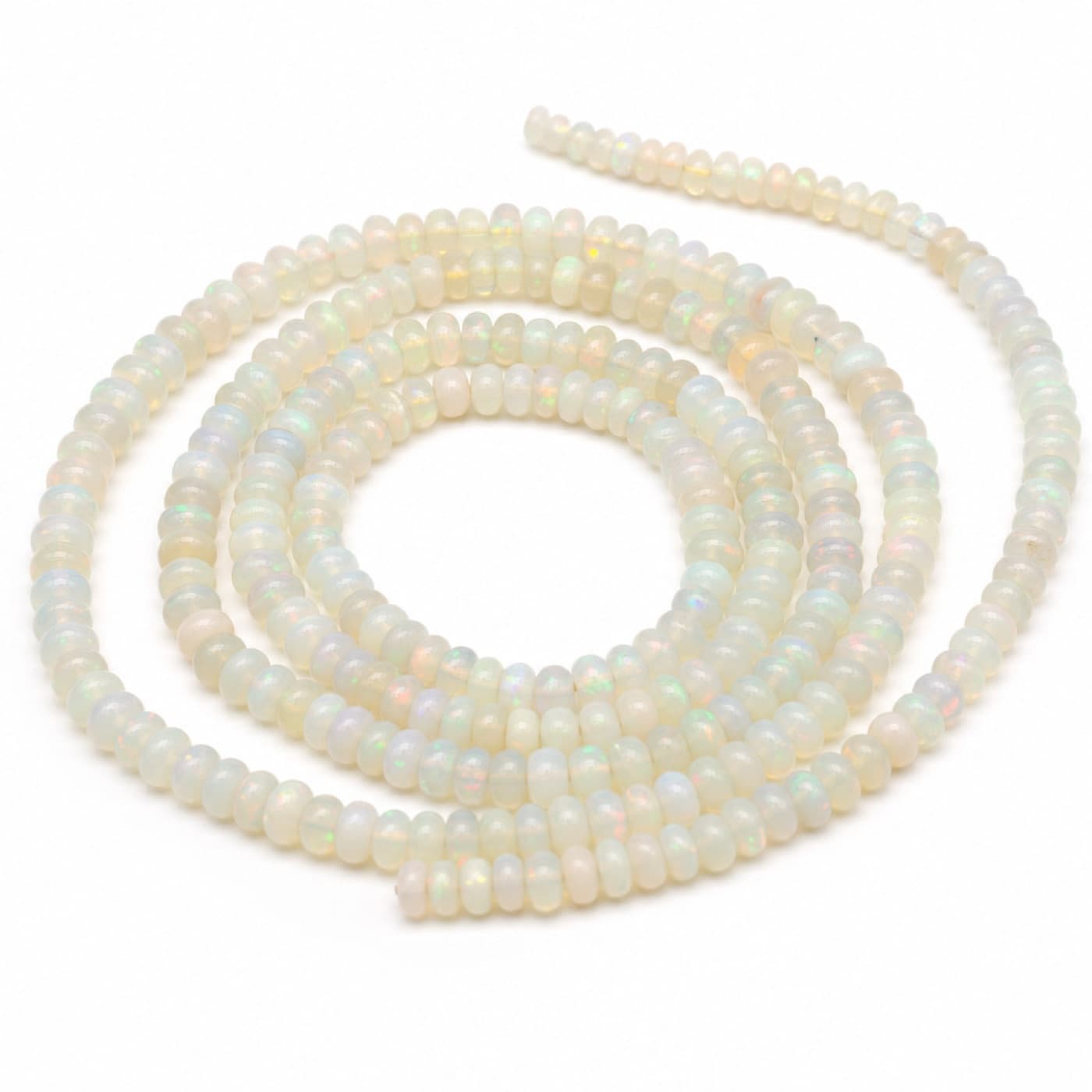
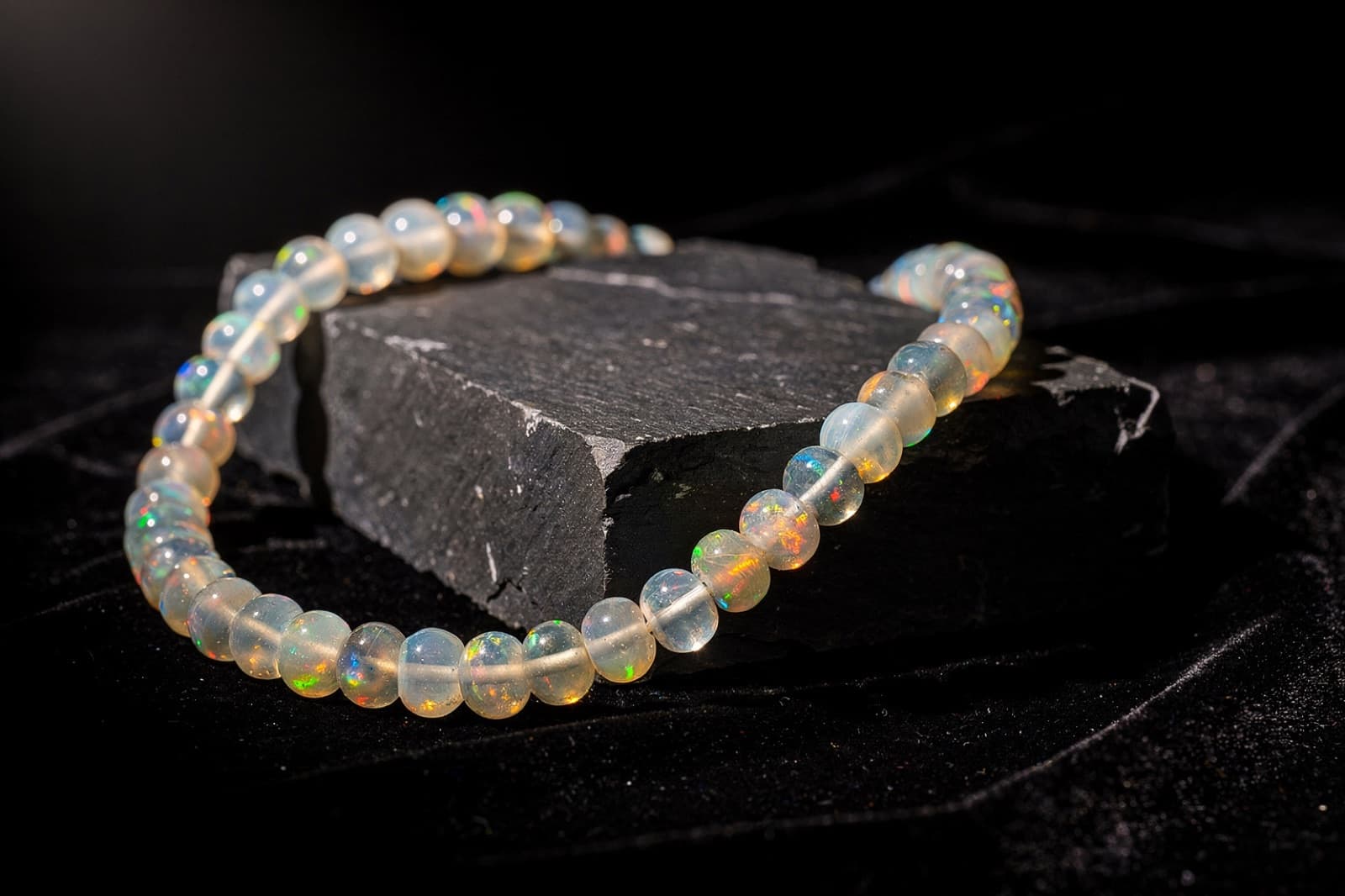
Film and illustrations are AI renders. Strand listings below show photographs of the actual material.
How to judge it
Crazing is the risk: hold each strand to the light and look for a web of hairline cracks, especially in Shewa material.
What it's like to work with
Designers working in bronze, copper and oxidized silver, autumn collections. Rondelles as full strands.
Care
Same as white Welo: keep dry, no lotions, ultrasonic or heat.
October birthstone; no separate tradition for the brown variety (tradition, not fact).
Fire on a coffee-colored ground.
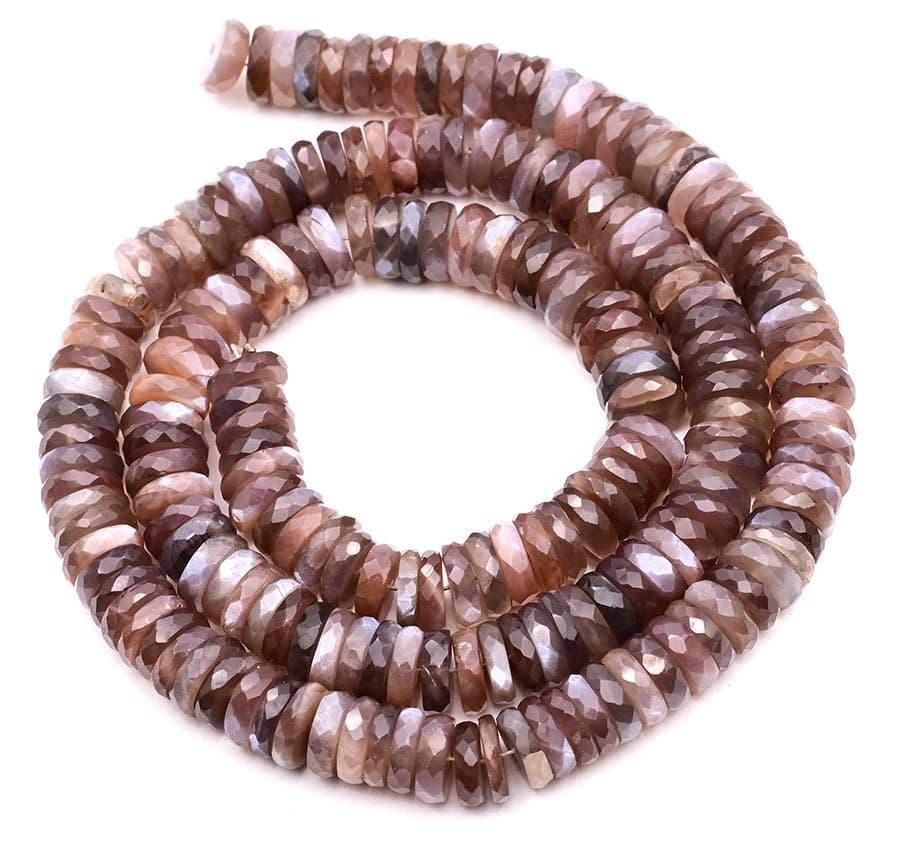
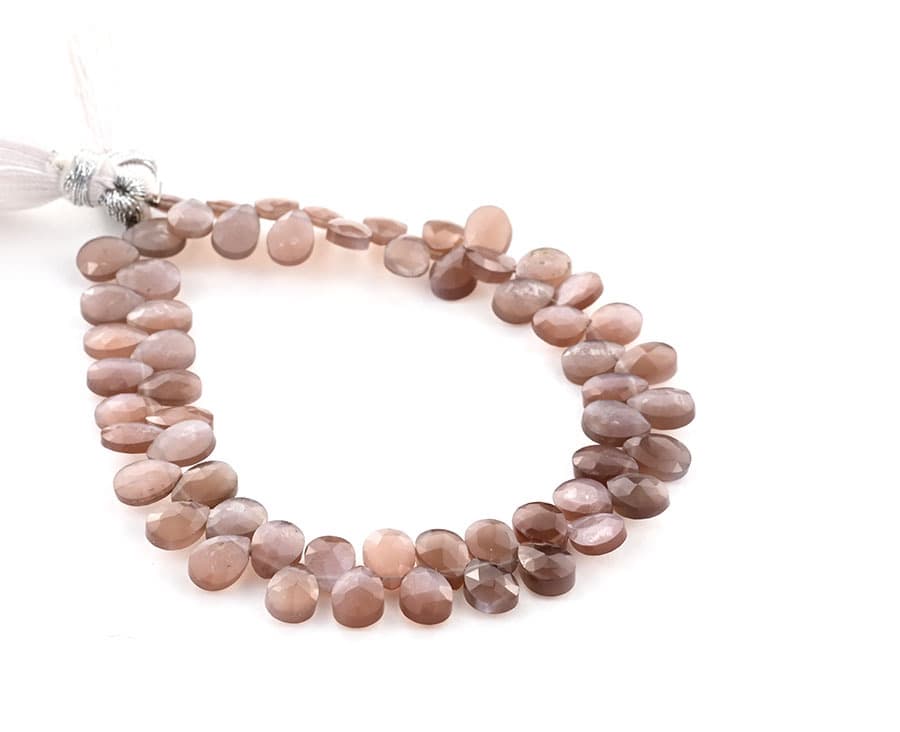
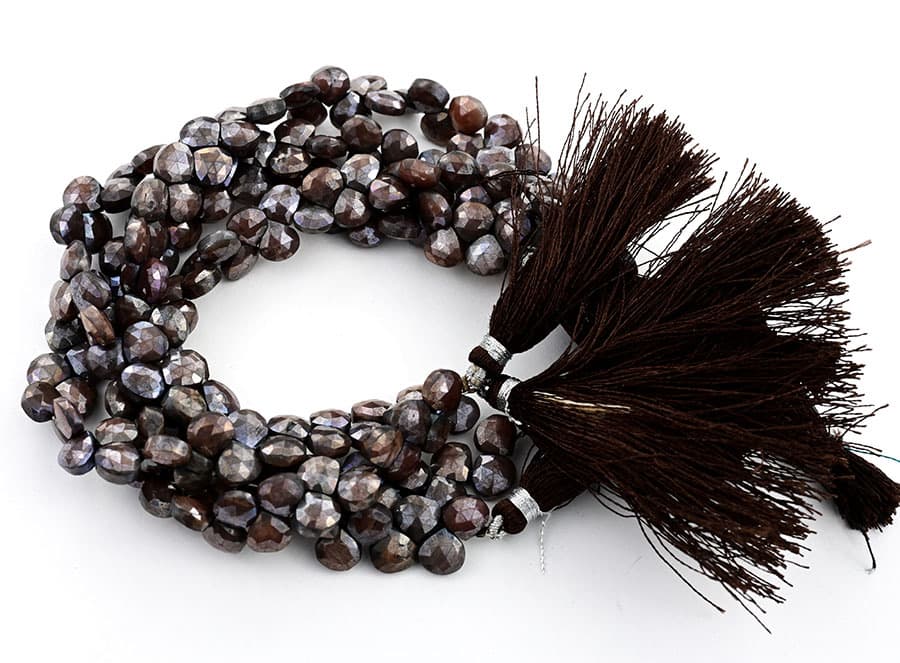
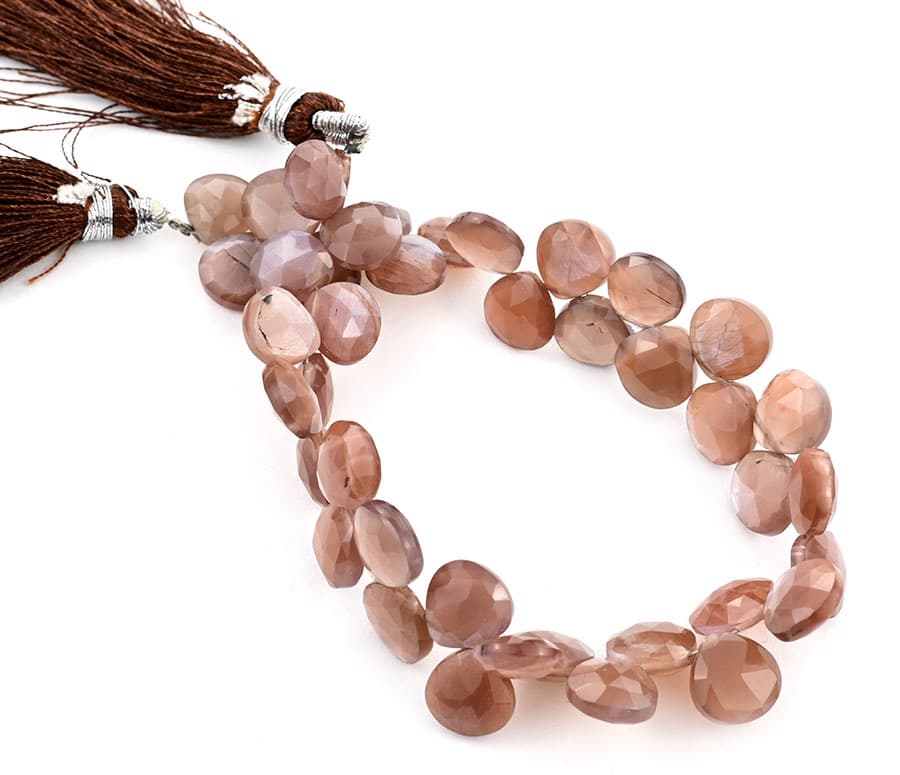
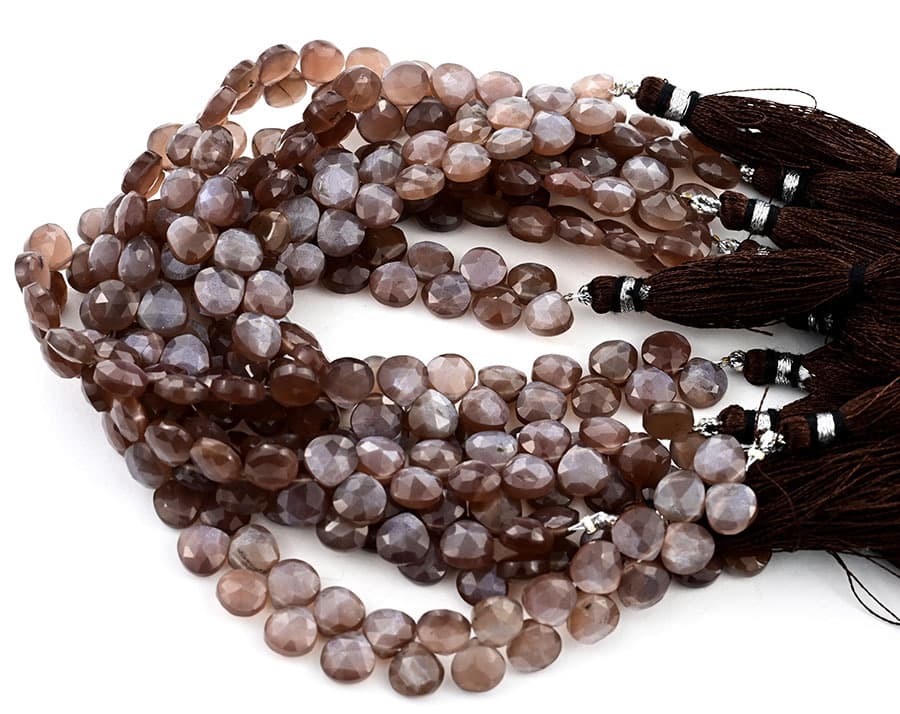
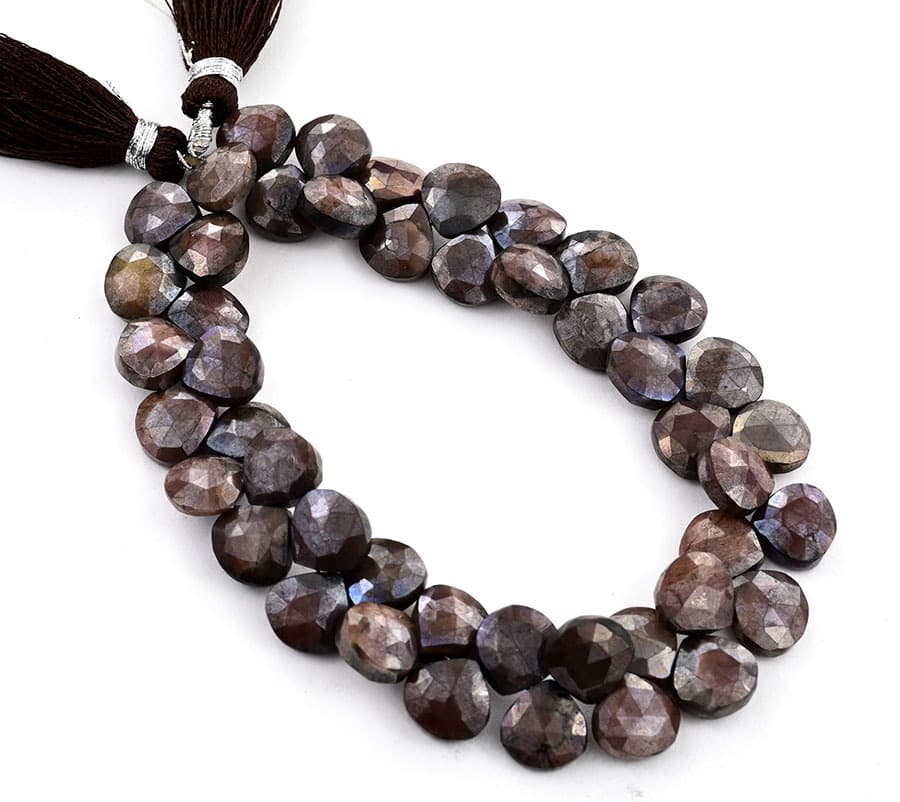
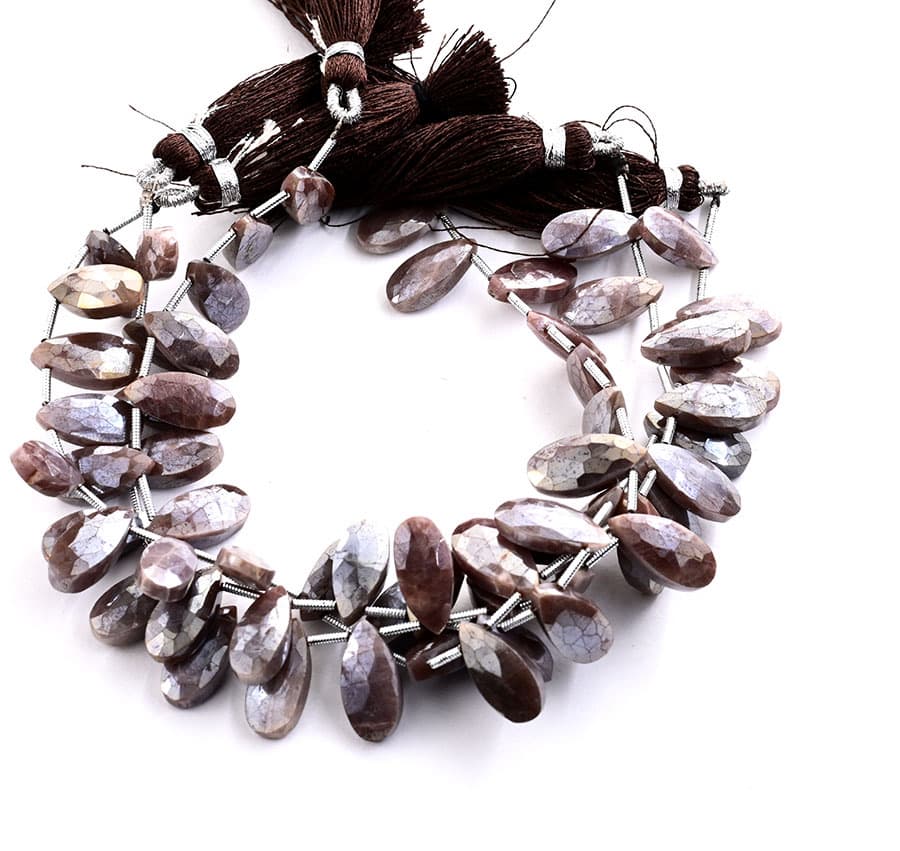
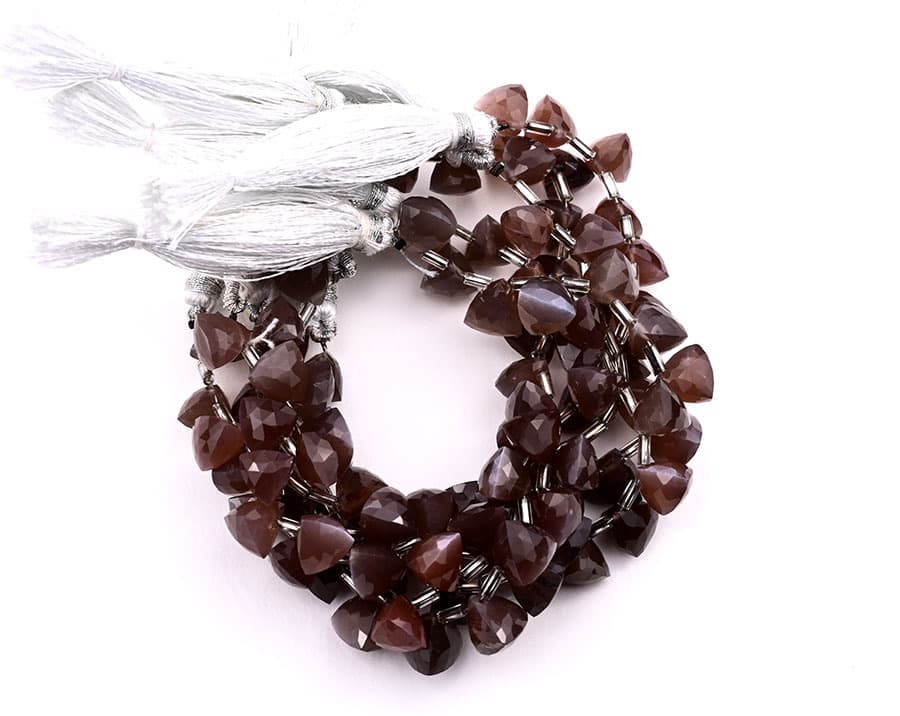
On the strand the color runs from milk chocolate to tan to a red-brown that reads almost like cinnamon in daylight. Then a bead turns. Green comes up through the brown, or orange, or a quick line of blue along one facet. The body color is dark enough that the flash looks lit from inside rather than laid on top. Faceted, the fire arrives in small bright pieces. People reach for these when white opal feels too cool for the rest of their work.
Where it comes from
Precious opal from Ethiopia reached the gem trade in 1994, after a small find in the Shewa area near Mezezo. That is where the brown bodies come from. By the mid-1990s Mezezo was known for chocolate opal with play-of-color, and the Smithsonian keeps an 8.86 carat chocolate cabochon from that deposit. A second discovery, much larger, came in 2008 near the town of Wegel Tena in Wollo Province. That material is mostly white, though it also yields brown opal and fire opal and colorless crystal opal. The trade name Welo comes from the province. Wollo material is now what most people mean by Ethiopian opal. Gemstones played little part in Ethiopia's long history until these last few decades. Opal is what changed that. Our strands are cut in Jaipur, then chosen strand by strand in Cupertino, California.
What tradition says
In ancient Rome opal stood for love and hope, and the Roman name opalus was used as a word for precious stone in general. In 75 AD Pliny wrote that some opals held a play equal to the deepest and richest colors of painters, while others seemed to carry the flaming fire of burning sulphur or the blaze of burning oil. He marveled that one gem could hold the red of ruby along with so much else. Later writers compared opals to volcanoes and to fireworks. Great stones were given poetic names: Pandora, Light of the World, Empress. By long custom opal is the October birthstone, and that custom follows the brown bodies as much as the white.
These are beliefs people have held about the stone, told as tradition. They are not claims, and not advice.
How makers use it
Designers working in copper and bronze, or in oxidized silver, tend to find this the opal that agrees with their metal. It turns up often in autumn collections. A 7x13mm pear hangs as a single drop, with room for the flash to move as it swings. Seven millimeter trilliants set a rhythm in a row along a collar. Heishi gives a denser, steadier line of color for a bracelet. We keep eleven strands at the moment, faceted, along with smooth rondelles sold as full strands. On the strongest strands the play crosses the whole bead as it turns rather than blinking in pinpoints.
Looking after it
Opal sits at 5.5 to 6.5 on the Mohs scale, so store it apart from harder beads. Keep it dry. No lotion or hand cream on the beads, and put a piece on last after you dress. Never an ultrasonic cleaner, never heat. A soft dry cloth is all it needs, and a drawer out of the sun.
Sources: Ethiopian Opals | Smithsonian National Museum of Natural History, Ethiopian Opals - Precious, Fire and Common Opal, Land of Origins: A Gemological Expedition to Ethiopia | Gems & Gemology, Play-of-Color Opal from Wegel Tena, Wollo Province, Ethiopia | Gems & Gemology
Chocolate and brown Ethiopian opal strands
All 11