Peruvian blue opal and multi Peruvian opal
Common opal from the same copper-country deposits as pink opal (Acari, Arequipa); blue-green credited to copper, dendrites to manganese oxide. Mohs 5.5 to 6.5. "Multi Peruvian opal" is mixed pink, blue, green and tan common opal.
At a glance
| Hardness (Mohs) | 5.5 to 6.5 |
|---|---|
| Family | Opal |
| Where it is mined | See description |
| Shapes we carry | Ask us |
| Strands listed | 0 |
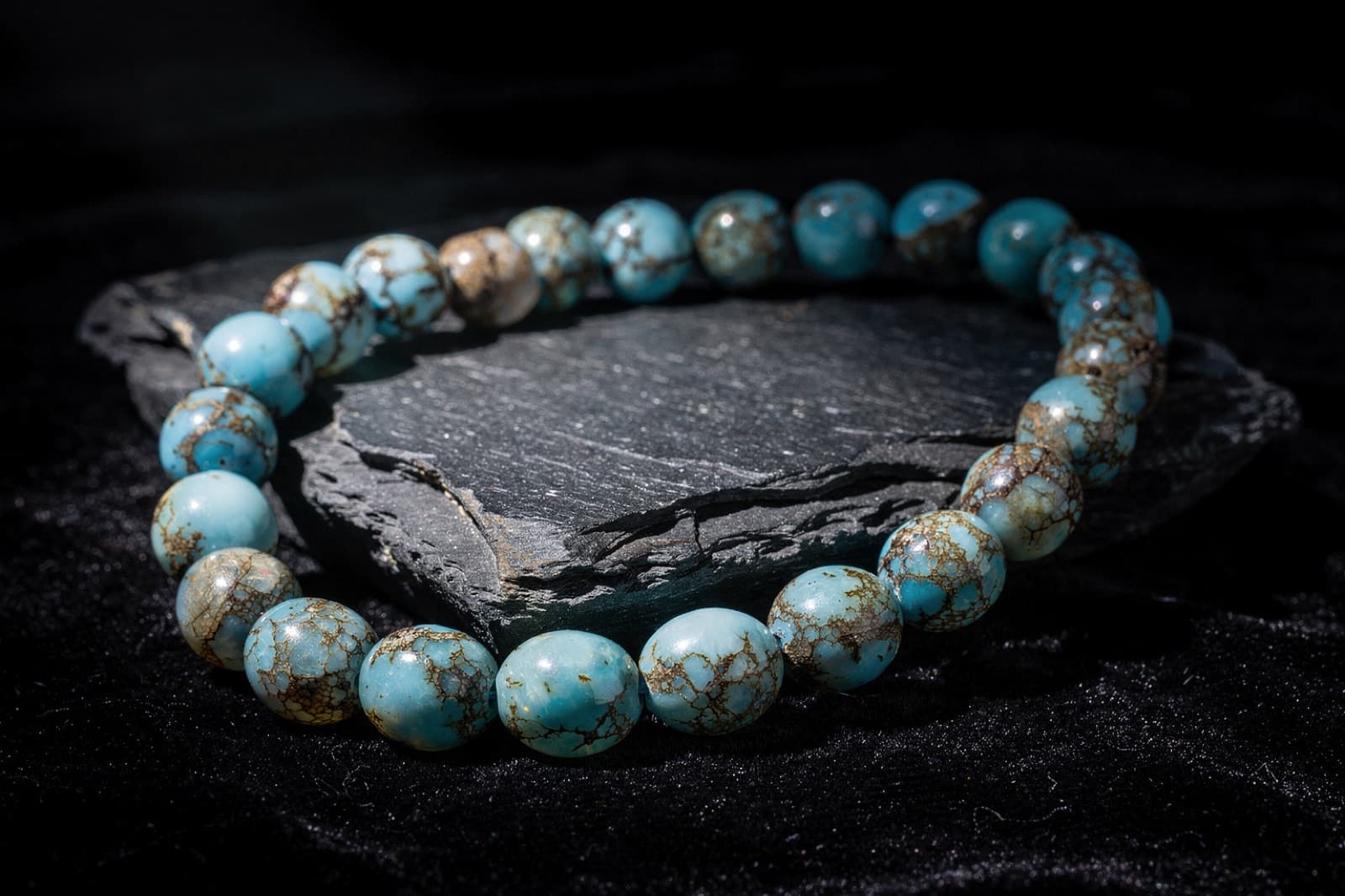
Film and illustrations are AI renders. Strand listings below show photographs of the actual material.
How to judge it
Blue: clean sky to teal with sharp dendrites is the top; muddy gray-green with heavy matrix the bottom. Multi should look soft and slightly uneven.
What it's like to work with
Blue ovals: focal pendants, upper-mid tier. Multi rondelles: beachy, boho work, entry tier.
Care
As pink opal: no ultrasonic, chemicals, heat or soaking.
Tradition ties blue opal to calm speech; tradition, not fact.
Pastel blue from copper country, dark manganese dendrites.
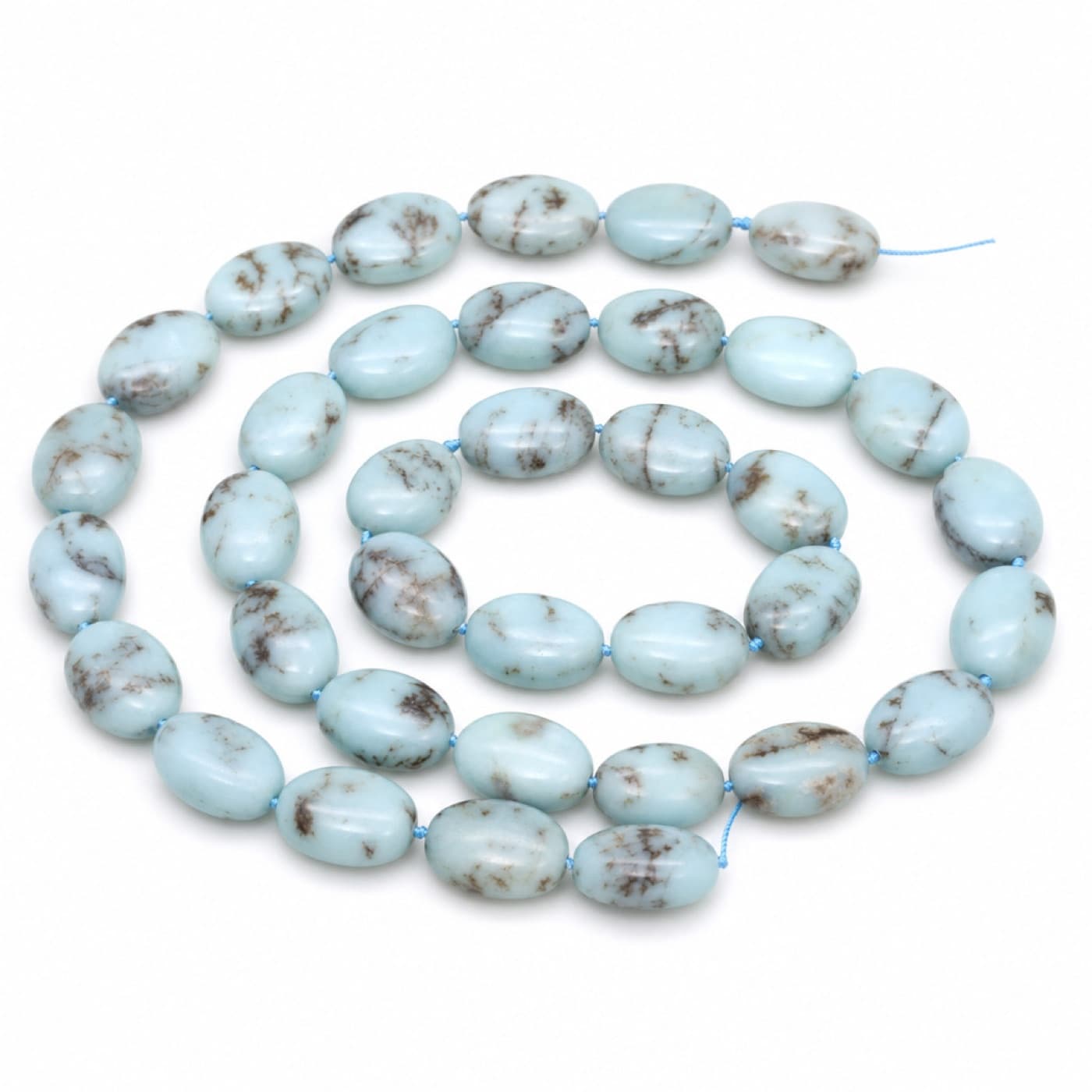
On the strand, the blue ovals read like pieces of a shallow sea. Pale sky in one bead, teal in the next. Each is smooth and slightly milky rather than glassy, and dark dendrites branch across some faces like ink pulled through paper. No two run the same way. The multi rondelles sit beside them in soft pink and green, with tan and blue mixed in, uneven on purpose. Color stays quiet here. The pattern does the talking.
Where it comes from
This is common opal from Peru. It comes from the same copper country deposits near Acari, in Arequipa, that give the market its pink opal. Copper is credited with the blue and green. The fine black and brown dendrites that wander through the better beads come from manganese oxide. Blue material from Peru carries the trade name Andean opal, and it turned up in Lima alongside chrysocolla in the early 1970s. Unlike precious opal, it has no play of color, so the appeal is the flat pastel body itself. Cutters have long worked it into cabochons and tumbled stones as well as beads. When a green Peruvian bead of this type went to the lab at the Gemological Institute of America, it came back identified as natural opal. Our strands are cut in Jaipur, India, then chosen strand by strand in Cupertino.
What tradition says
Opal has collected stories for a long time. In ancient Rome it stood for love and hope, and the Roman name opalus was used as a word for precious stone generally. In 75 AD Pliny wrote that some opals carried a play within them equal to the deepest and richest colors of painters. The Bedouins are said to have believed that opals held lightning and fell from the sky during thunderstorms. Much later the novel Anne of Geierstein gave the stone an unlucky reputation. Opal is the birthstone for October. In crystal tradition the pale blues are tied to calm speech, to saying the thing you mean without heat. All of it is belief and custom.
These are beliefs people have held about the stone, told as tradition. They are not claims, and not advice.
How makers use it
The blue smooth ovals we carry, 10 by 14 millimeters, are built for a focal spot. A full strand gives you enough of them to sort by pattern before you decide which faces sit forward. The multi rondelles, 5 to 7 millimeters, run in beachy and boho work, easy on their own or broken up with knotted cord. In blue, the strands worth holding out for are clean sky to teal with sharp, well defined dendrites, rather than the muddy gray green ones with heavy matrix. The multi should stay soft. Slightly uneven, bead to bead.
Looking after it
Keep these beads out of ultrasonic cleaners. No household chemicals, no heat, no long soaking. At 5.5 to 6.5 on the Mohs scale they sit below quartz, which means grit and everyday knocks can mark a polished face. Handle them as the soft part of whatever you build.
Sources: Peruvian Opal in pastel blue, green and pink., Andean Opal gemstone information, Andean Opal, Common Opal Can Be Pink, Blue, Green, Yellow, Purple, Orange
Peruvian blue opal and multi Peruvian opal is in the stock room
We carry peruvian blue opal and multi peruvian opal at shows and it is not all listed online yet. Tell us the shape and size you want and we will send photos of what is in stock.
Ask on WhatsApp