Should I use wire or silk for sapphire beads?
Wire wins for faceted sapphire. Choose a flexible multi-strand beading cable sized to your bead holes, which balances durability, soft drape and easy crimping. Sapphire is Mohs 9, and those crisp facet edges can abrade thread during wear, so we recommend flexible beading cable instead. This stone is hard. Facet edges are sharp.
Silk still has a place, just not for faceted corundum. Save it for pearls or very smooth beads when you want traditional knots between each bead. That keeps spacing even and protects surfaces. For sapphire, cable plus crimps is the reliable choice.
What size wire fits micro faceted sapphire?
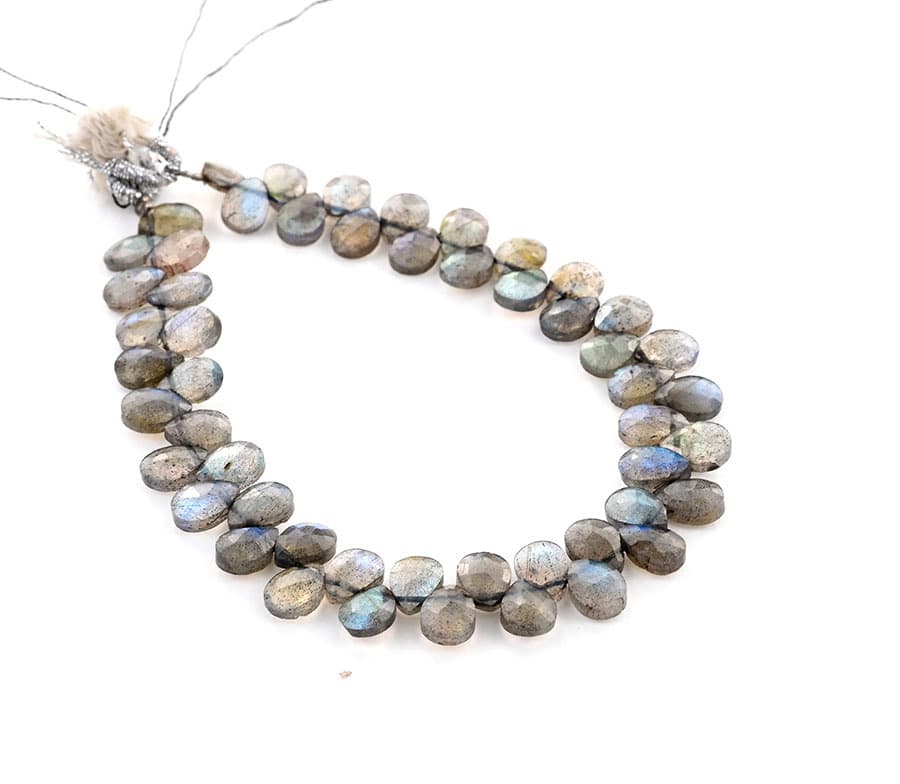
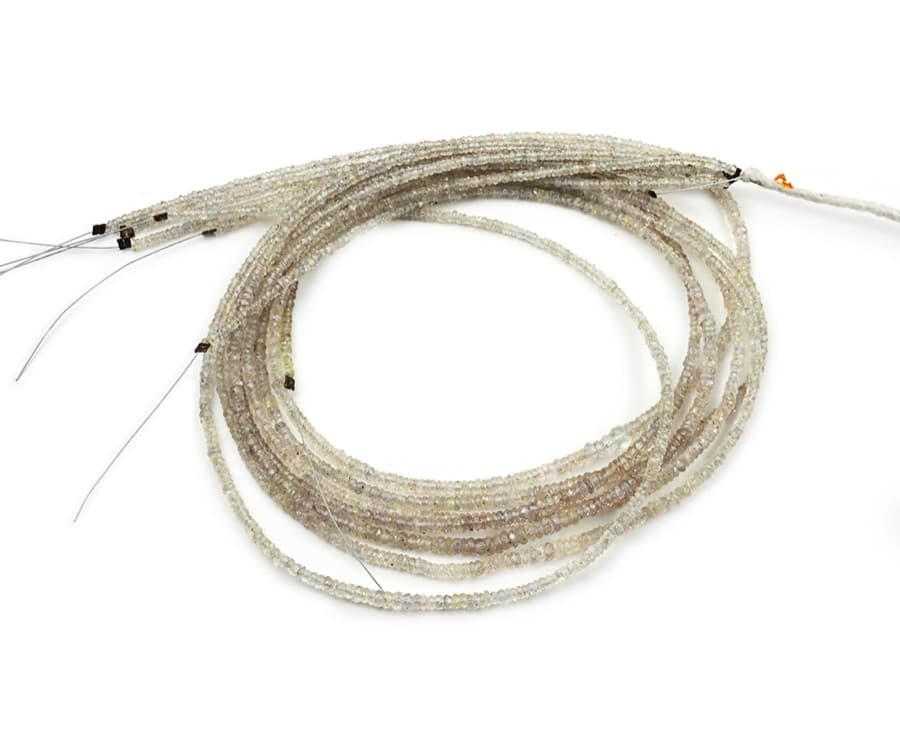
Start with the thinnest cable that passes your bead holes smoothly, then step up a size if the holes allow and you want a touch more body. Pick a diameter that can also go twice through your crimp or wire guardian without bunching, otherwise finishing gets messy and weak where you need strength most. Test a few beads first. Our gray 3 to 4 mm faceted rondelles show typical holes for this size GS1611.
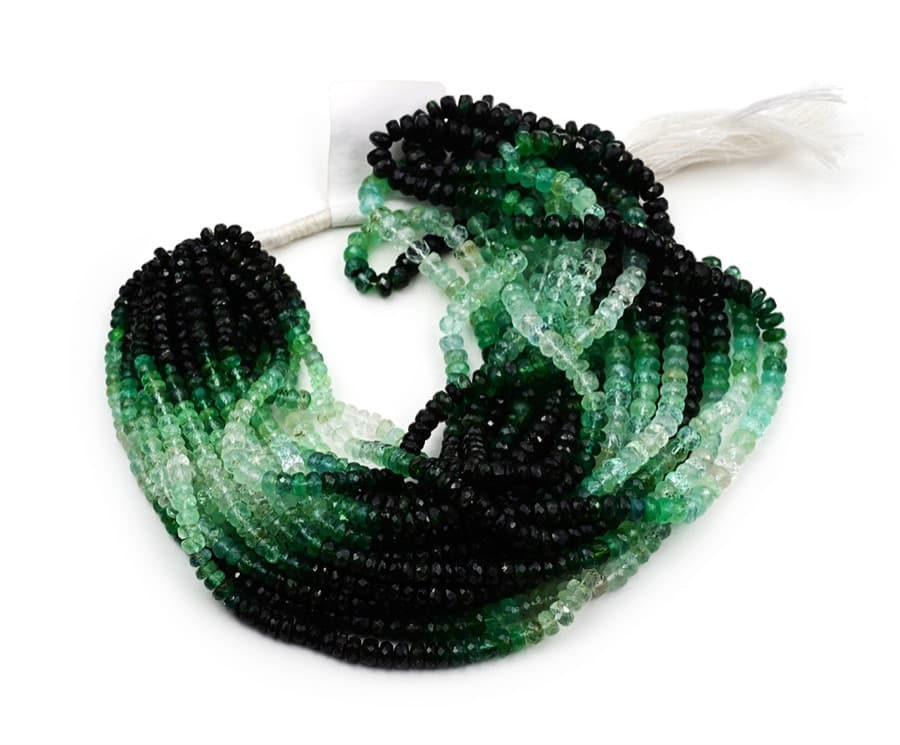
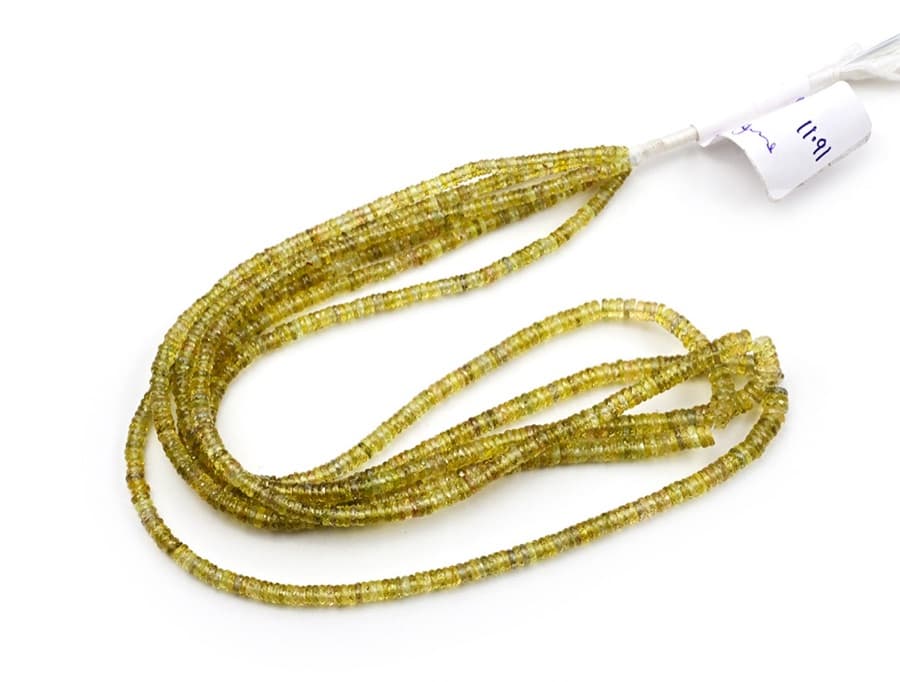
Rondelles are the workhorse shape for strung designs, and hole sizes vary by cut and lot. See how rondelles are measured on our rondelle shape page. If you need a bigger hole, heishi cuts can help; compare our apple green sapphire heishi GS1588. Fewer headaches down the line.
 New
New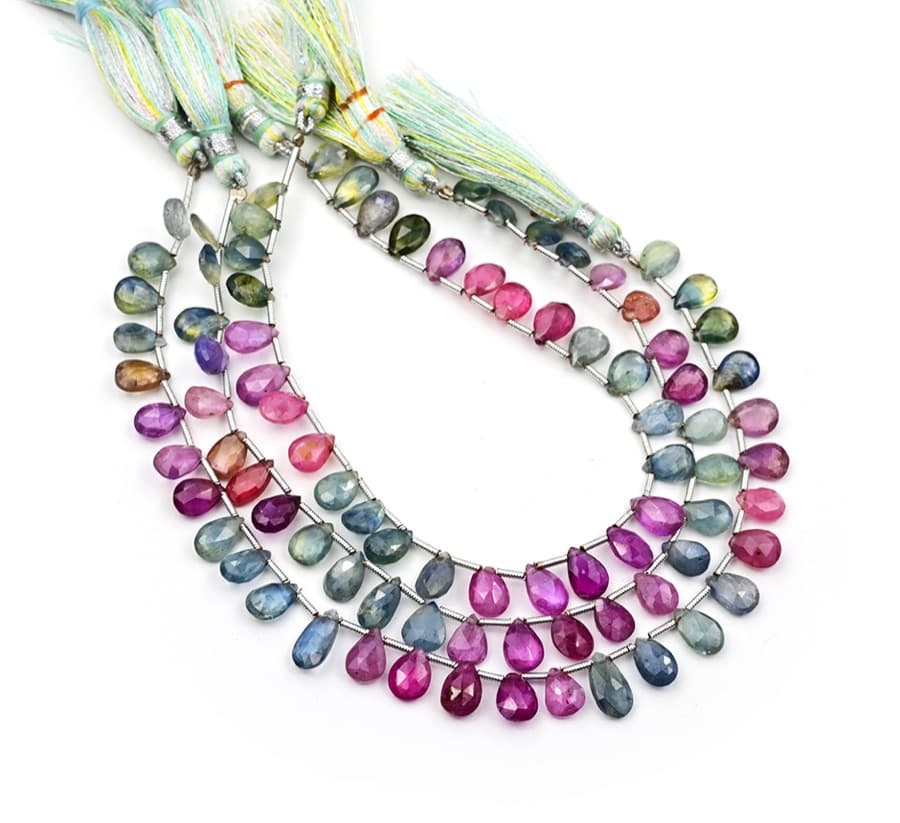 New
NewWhen would silk make sense?
Use silk for pearls and smooth beads when you want knots between every bead. That tradition adds elegance and limits bead loss if a strand fails. Silk sizes D, E, F and FF are chosen by hole size and the knot size you want, as bench jewelers often explain in forum notes. Keep the look classic.
Silk does stretch, and fully knotted strands take practice and time. Many pros reserve full knotting for high value pieces and pearls. Plan your timing accordingly.
Will knotting change my finished length?
Yes, expect a length change. Knotting between beads adds about 1 mm per knot, which increases the overall run. Plan your finished length and reduce bead count accordingly when you fully knot. Recheck your clasp plan before you trim so the length lands where you want, especially on chokers where half an inch changes the hang. Small change, big effect.
How do I finish wire strung sapphire so it lasts?
Use solid quality crimps. Crimp with care, always. Add wire guardians or a closed ring at stress points. Many breakages happen right at the crimp when it is squeezed too hard, which pinches the cable and creates a metal fatigue point that fails early.
If bead holes feel rough, sleeve the cable with tiny seed beads so metal does not rub the stone. Leave a small, neat tail tucked through a few beads for security. Add crimp covers for a clean finish if your design calls for it. Do a firm pull test.
What if the holes are too tiny for cable?
Some sapphire beads have very fine holes. If your thinnest cable still will not pass, switch to 28 or even 30 gauge wire and build wire wrapped links for security. Simple loops can open, so wrapping is preferred with such fine wire. Wrap the loop, then test.
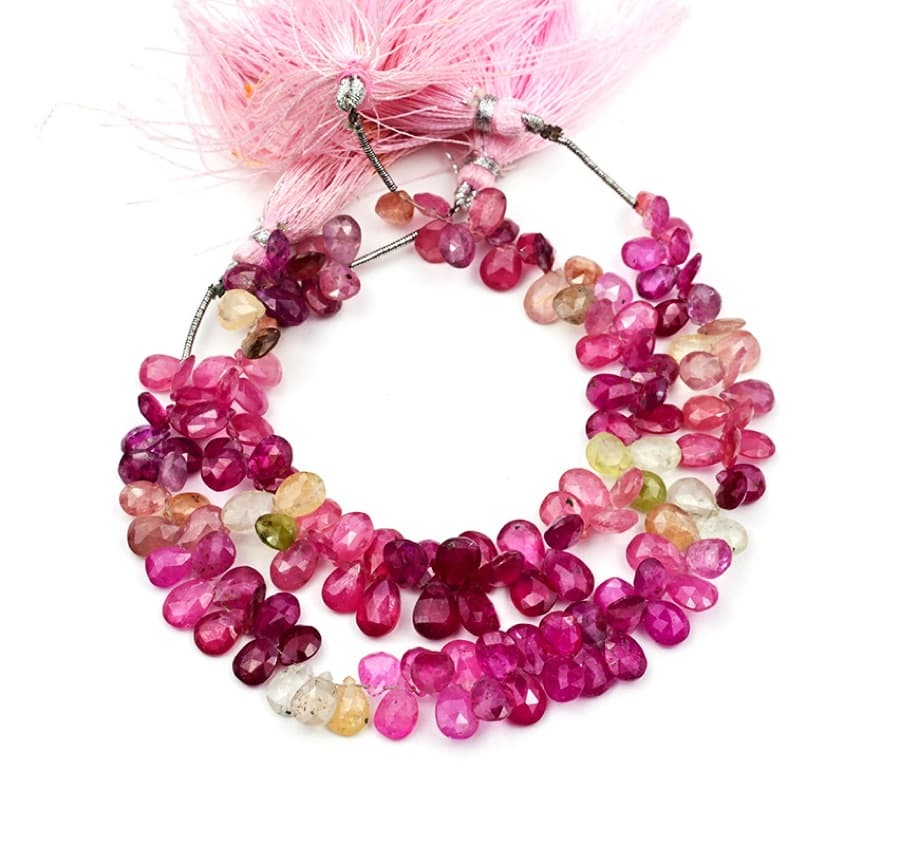
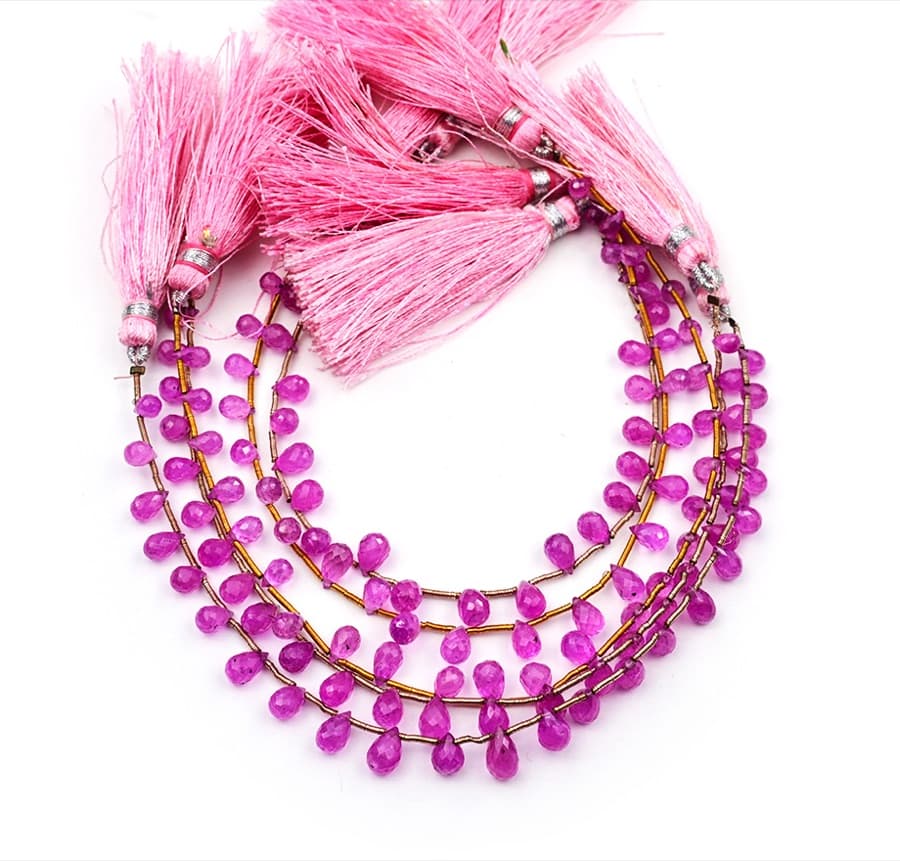
Top drilled pears and teardrops often look best on wrapped loops anyway. See our pink sapphire tear drops GS2443 and multi Umba pears GS2465 for wrap friendly shapes. You can handle strands in person first. Visit us at our shows.