Ruby
Red corundum, Al2O3 colored by chromium, Mohs 9. Bead grades: India, Mozambique, Madagascar, Myanmar.
At a glance
| Hardness (Mohs) | 9 |
|---|---|
| Family | Corundum |
| Where it is mined | See description |
| Shapes we carry | Rondelles, Tear drops |
| Strands listed | 4 |
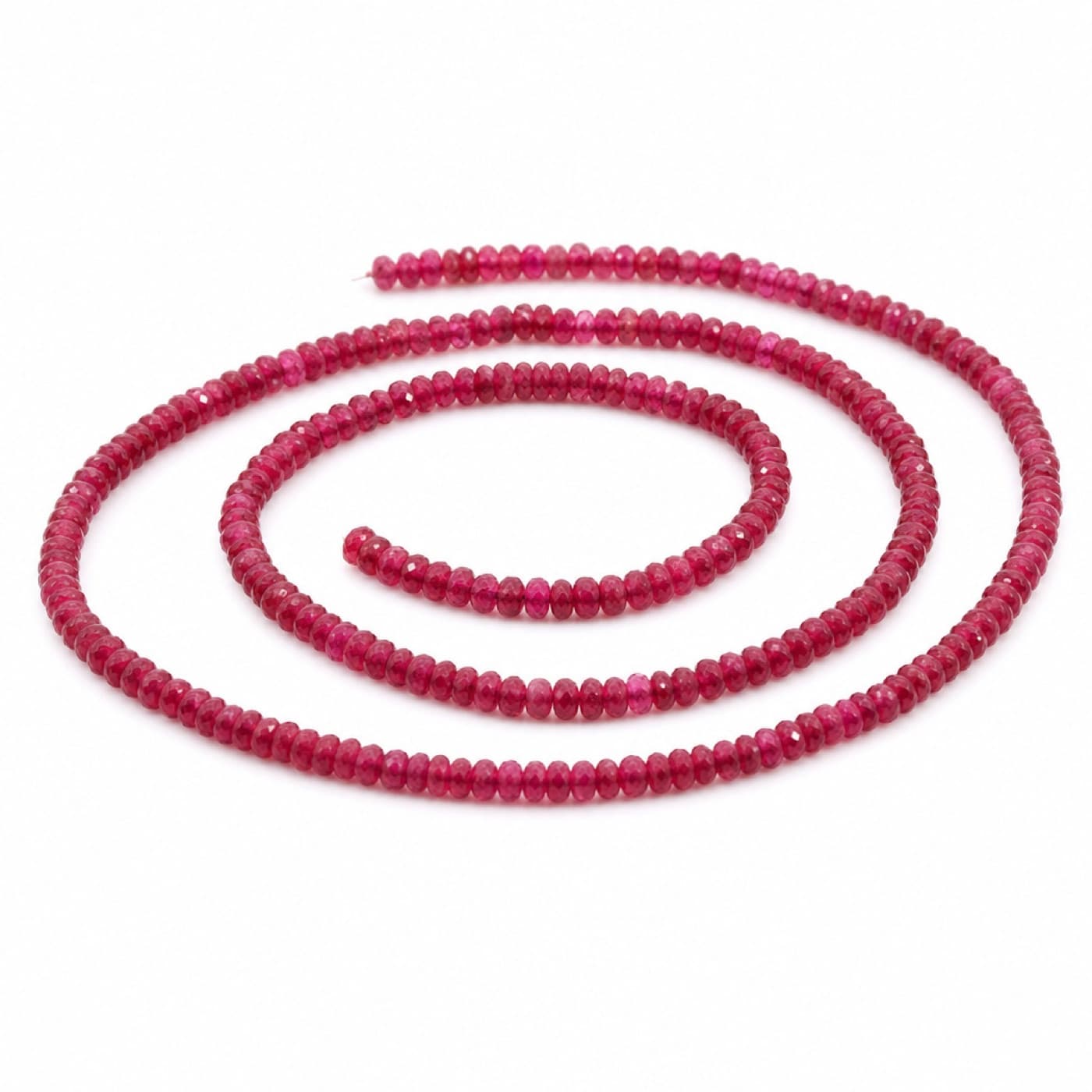
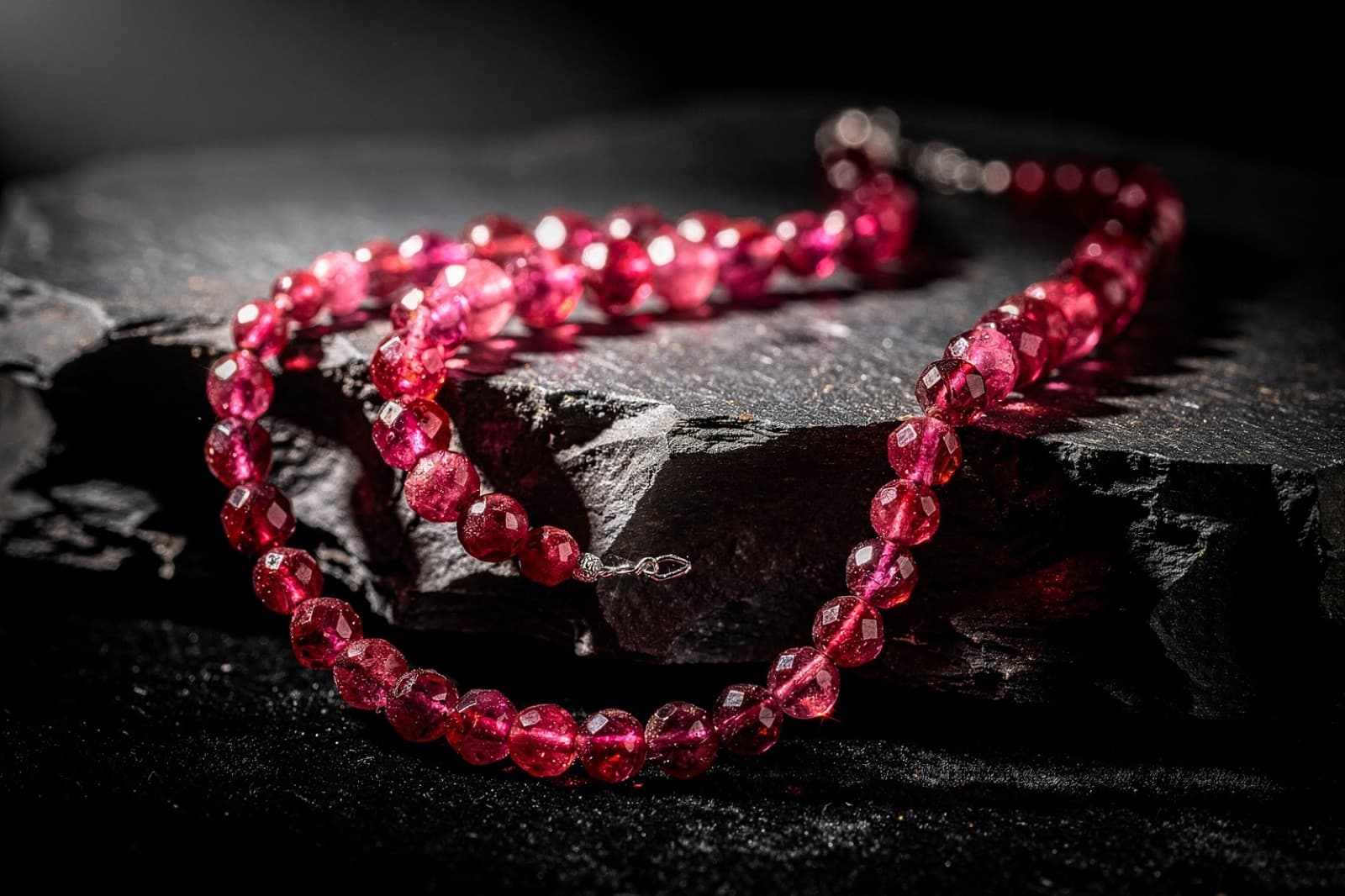
Film and illustrations are AI renders. Strand listings below show photographs of the actual material.
How to judge it
Assume glass filling until proven otherwise. and dull glassy patches at the drill hole. Garnet stays dark under UV; ruby glows red.
What it's like to work with
Birthstone sellers, budget bridal, red accents in gold fill. 2mm spacers and teardrop earrings sell best.
Care
lemon juice, bleach, jewelry dip and a torch etch it. Soft cloth only.
July birthstone; tradition ties it to passion (tradition, not fact).
Red corundum cut small, shaded bead to bead.
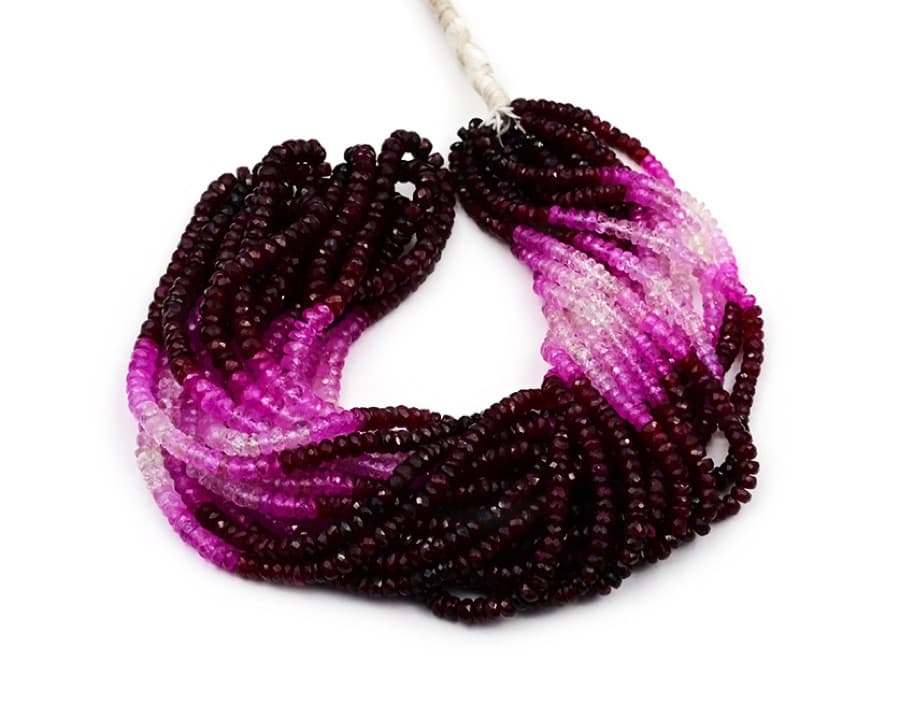
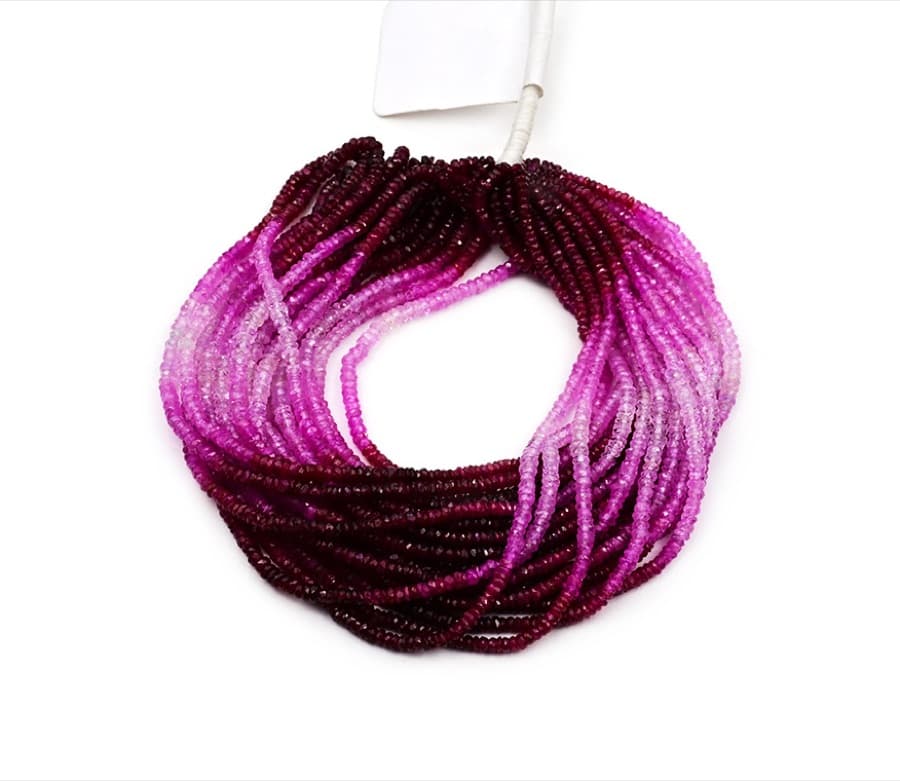
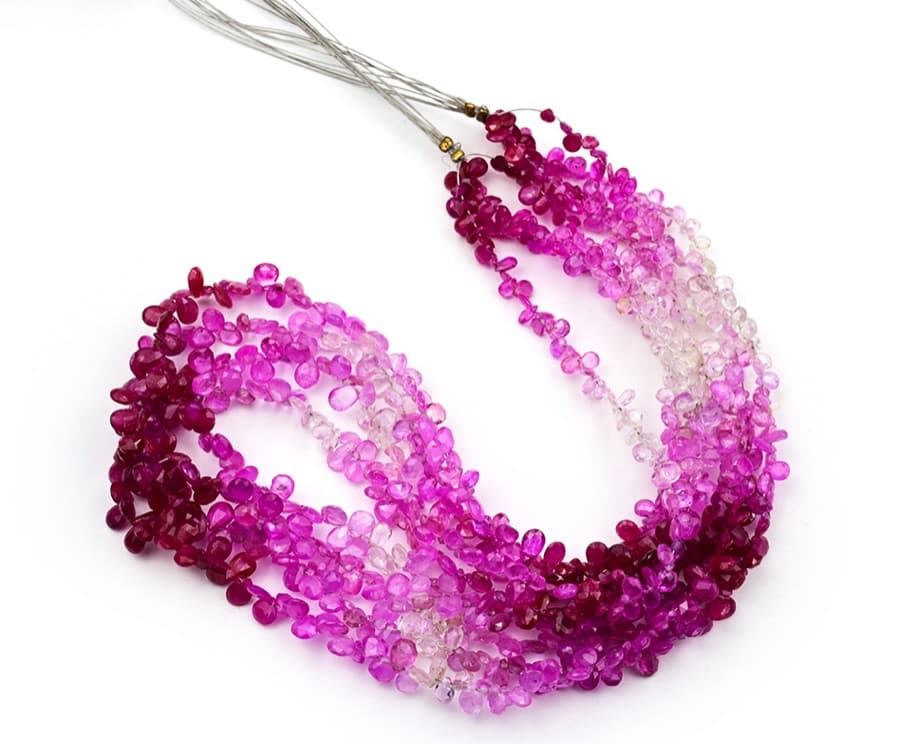
Held to a window, a ruby strand reads as a run of small red lamps. Some beads go deep, nearly brown. Others sit closer to raspberry. The color is uneven from one bead to the next, and that shading is much of the character. Faceted rondelles at 2.5mm catch light in short flashes rather than long ones, and teardrops hang point down with the color pooling at the wide end. People reach for them when they want real red corundum at a working price.
Where it comes from
Ruby is red corundum: aluminum oxide with chromium sitting in the crystal structure. More chromium, stronger red. The name comes from ruber, Latin for red. In Sanskrit the stone is ratnaraj, king of precious stones, and it is mentioned four times in the Bible, tied there to beauty and wisdom. It sits among the traditional cardinal gems, along with amethyst and sapphire. Asia supplied gem corundum for more than a thousand years, and Myanmar still carries weight in the bead trade, as does India. Africa came forward later. Mozambique and Madagascar are now steady sources for material that gets cut into beads. Our strands are cut in Jaipur and chosen one strand at a time here in Cupertino, California.
What tradition says
Early cultures set ruby beside the red of blood in the veins and believed the stone held the power of life itself. Many cultures have long called it a king's gem. The folklore clusters on power and protection. Wealth comes into it as well. Owning one was said to benefit the holder's estates and to help wealth gather. Red has long stood for the strongest feelings, love and anger alike, and tradition ties ruby to passion above all else. These are old beliefs, carried along with the stone rather than proven by it. Ruby is the July birthstone. It is also the gem given for the fifteenth and fortieth wedding anniversaries.
These are beliefs people have held about the stone, told as tradition. They are not claims, and not advice.
How makers use it
Two shapes do most of the work here. Faceted rondelles from 2.5 to 3mm make good spacers, a few between gold fill rounds or flanking a larger center bead, and they suit a plain line bracelet where the shading reads as one long gradient. Pear and teardrop drops in the 4.5 to 5mm range make earrings that need nothing added. We list four strands, sold by the 8 inch and by the 16, with roughly 8 to 15 carats per 8 inches. Stronger flash shows as sharp separate points of light off the facets rather than a soft general glow.
Looking after it
Ruby is 9 on the Mohs scale and takes daily wear well. Chemistry is another matter. Lemon juice and jewelry dip both etch the surface, and a torch will do worse, so keep flame away from a strung strand. Wipe with a soft dry cloth. Store the beads where harder stones cannot rub the drill holes.
Sources: Ruby History and Lore, Ruby, Ruby Gemstone | Ruby Stone – GIA, July Birthstone | Learn About the Ruby Gemstone | GIA
Ruby strands
 NewSold out