Turquoise
Hydrated copper aluminum phosphate. Mohs 5-6, porous. Bead material comes from Arizona (Kingman still operates; Sleeping Beauty closed in 2012), China (Hubei), Iran and, since 2013, Kazakhstan's Altyn-Tyube deposit (Golden Hills). Mine names can't be lab-confirmed.
At a glance
| Hardness (Mohs) | 5 to 6 |
|---|---|
| Family | — |
| Where it is mined | See description |
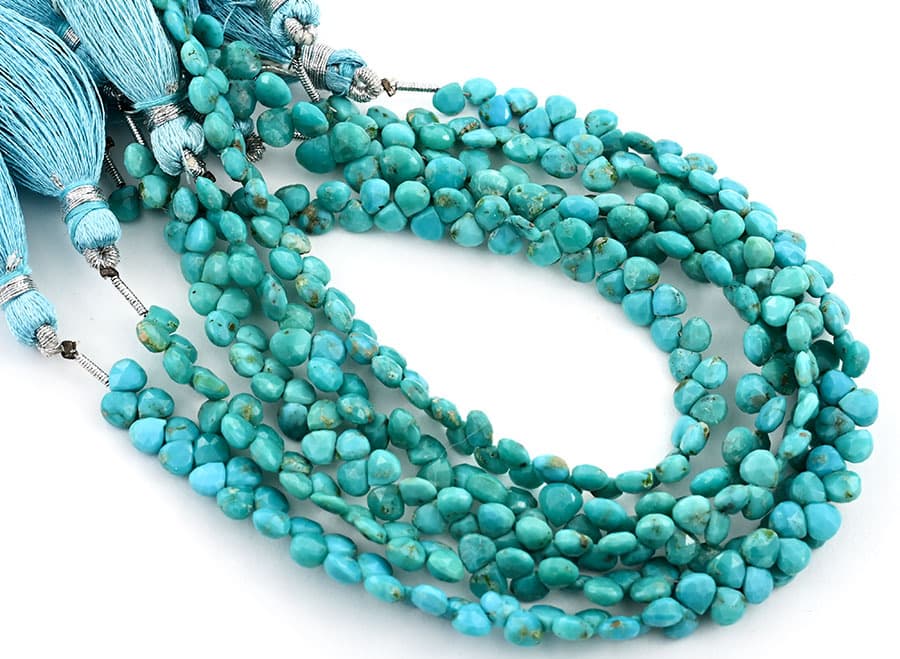
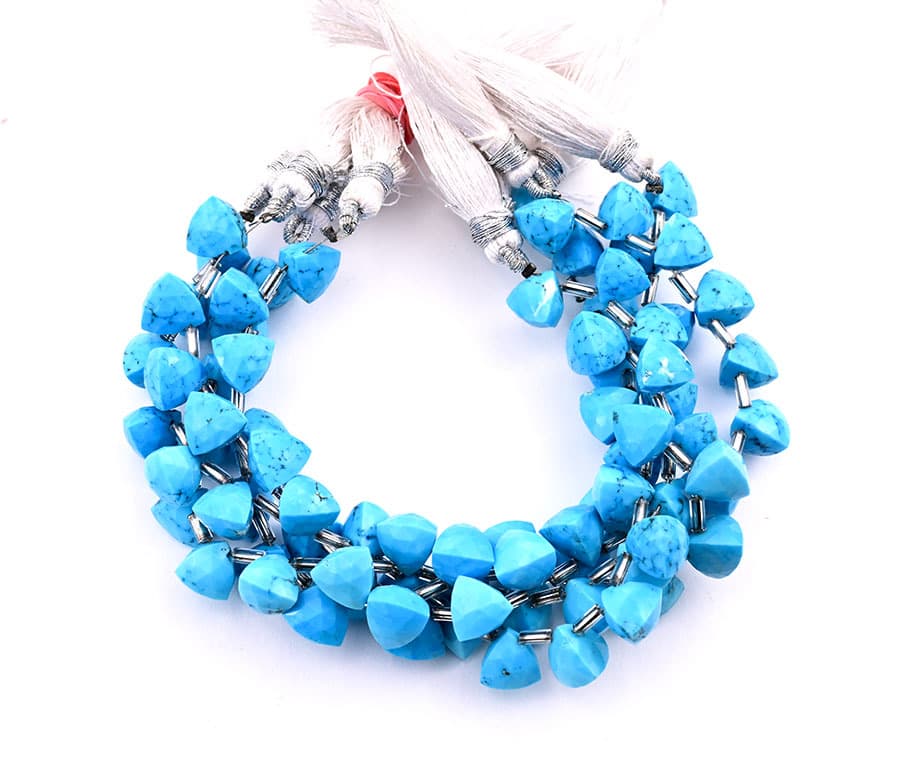
| Shapes we carry | Hearts, Nuggets, Trilliants |
| Strands listed | 4 |
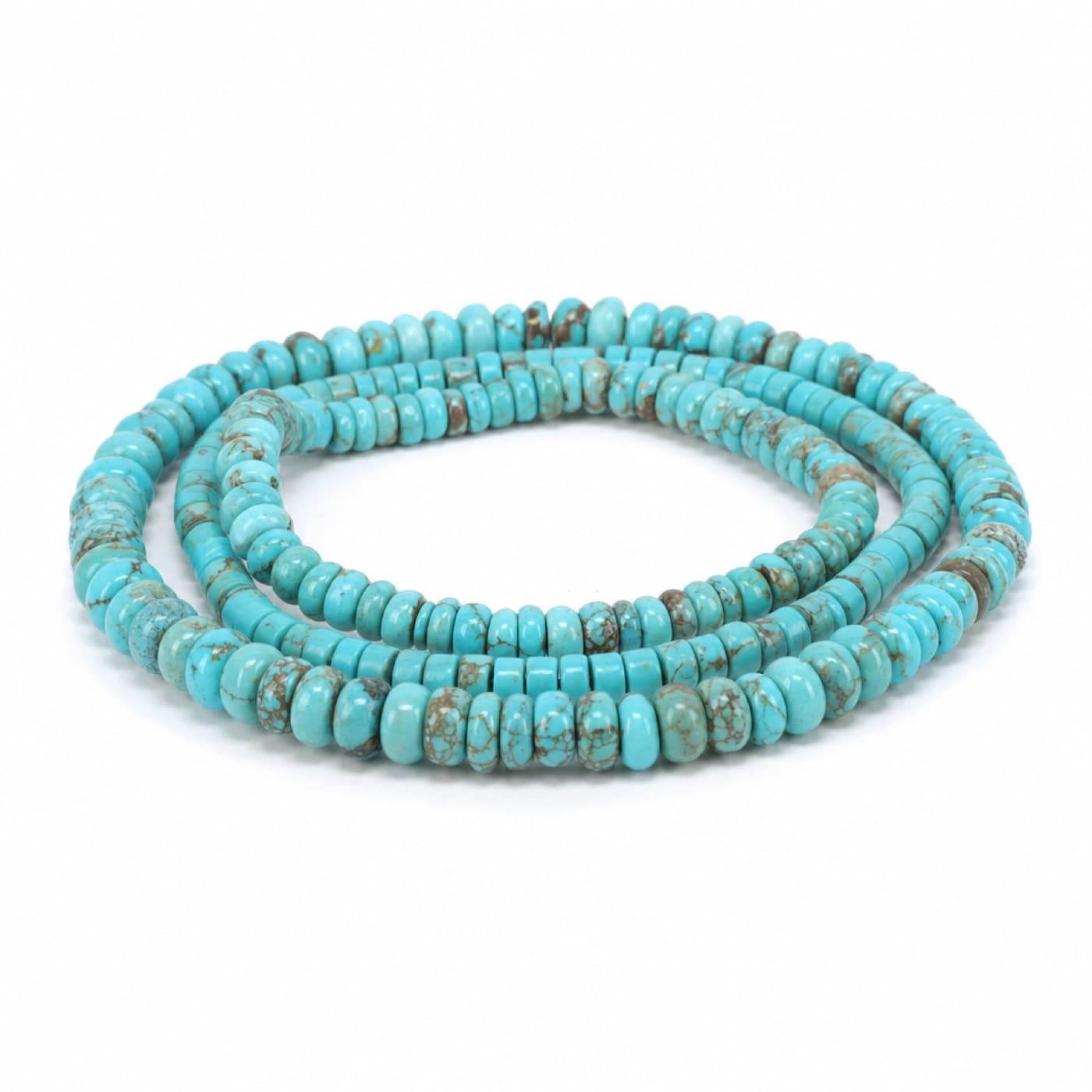
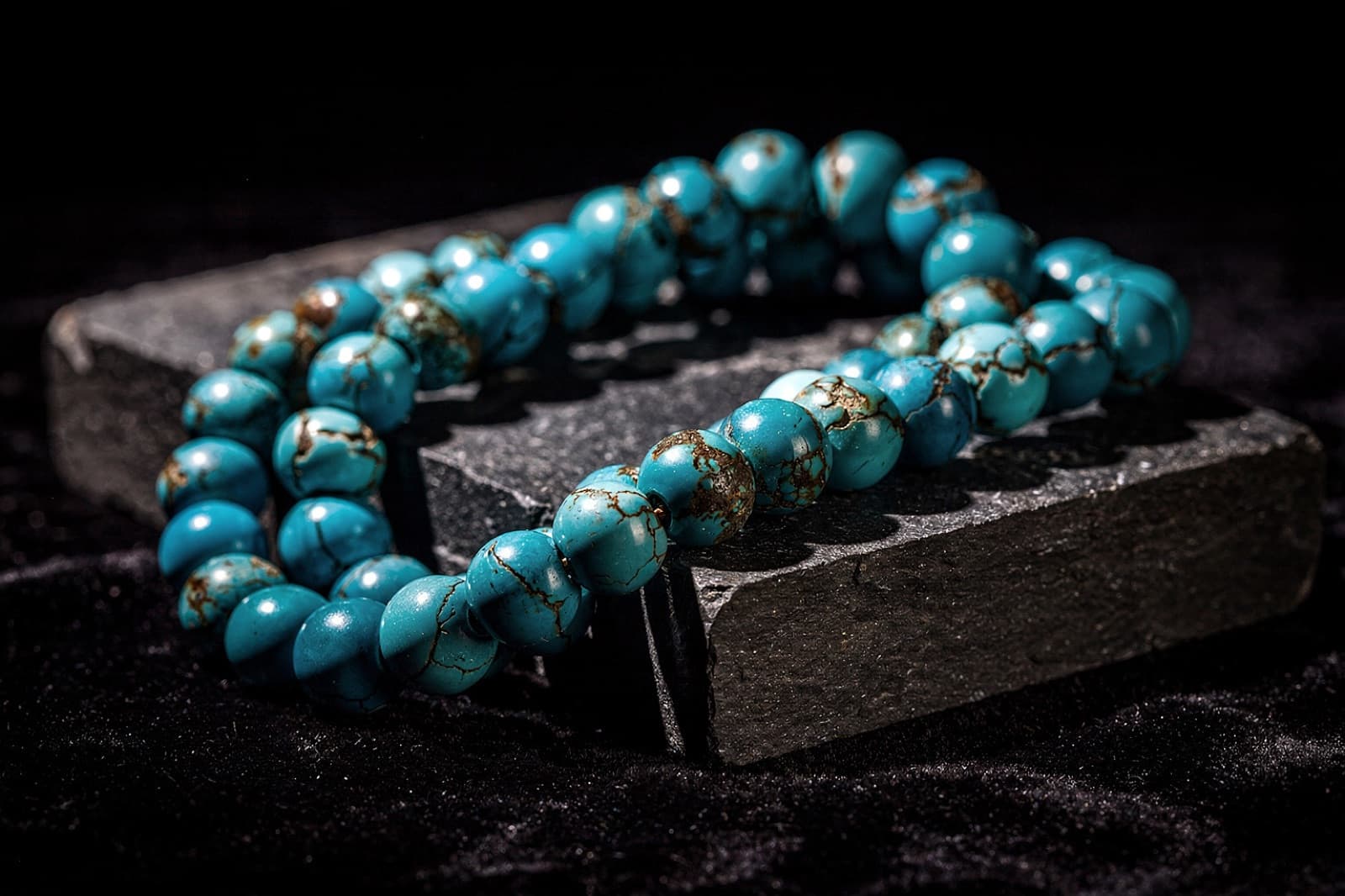
Film and illustrations are AI renders. Strand listings below show photographs of the actual material.
What it's like to work with
Every tier. Southwest and boho designers. Heishi and 4mm rondelles sell best; Golden Hills nuggets are collector items.
Care
Natural: necklaces and earrings, damp cloth only, no oils or perfume. No ultrasonic.
December birthstone; tradition calls it a traveler's protector (tradition, not fact).
Blue born of copper, worn for the road.
On a strand, turquoise looks like pieces of sky held together. Arizona type blue sits clean and bright; Golden Hills shows lavender blue with brown matrix; green stones carry fine webbing. Heishi lines wear light and even. Four millimeter rondelles stack close and smooth. Nuggets keep the hand on the stone. They feel irregular and tactile. People reach for it first for the color, then for how it settles into silver or leather and makes steady daily pieces.
Where it comes from
Turquoise forms where copper-rich water meets aluminum and phosphorus in arid ground, creating a porous, opaque gem. Bead material today comes from Arizona, China's Hubei, Iran, and, from 2013, Kazakhstan's Altyn-Tyube deposit known as Golden Hills. Arizona's Kingman mine still operates; Sleeping Beauty closed in 2012. Turquoise was mined in Egypt's Sinai before the 4th millennium BC. Rulers of ancient Egypt wore it, and Chinese artisans carved it more than 3,000 years ago. Pieces appear in ancient Egyptian tombs and in Ancestral Puebloan inlay from Chaco Canyon National Historical Park. It is the national gem of Tibet. Europe learned the name in the thirteenth century from the French pierre tourques, "Turkish stone," because material reached Europe through Turkish sources. In trade, mine names are traditional.
What tradition says
In crystal tradition, turquoise is a traveler's protector and a bringer of good luck. It is the traditional birthstone for December and the gem of the 11th anniversary. Many people prize the clear sky blue as a lucky color. From Afghanistan to the Zuni Pueblo, it has long been regarded as a good luck stone. Lore often speaks of warning of danger by changing or breaking. It is also said to offer protection from evil and to favor safe passage. These are enduring beliefs about what the stone may invite.
These are beliefs people have held about the stone, told as tradition. They are not claims, and not advice.
How makers use it
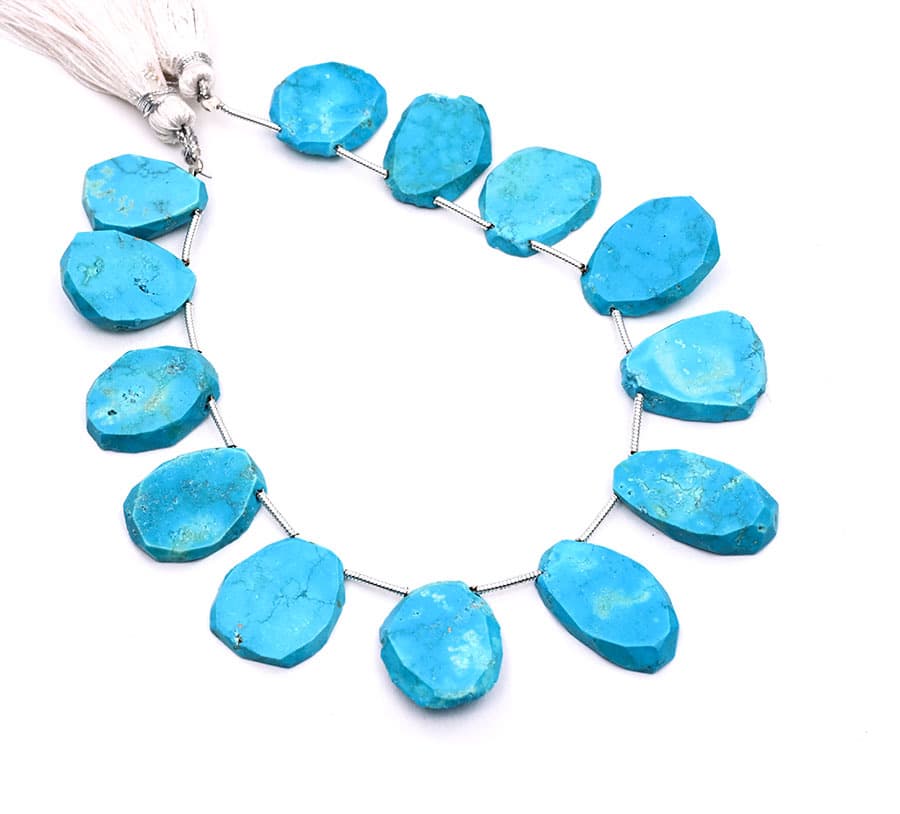
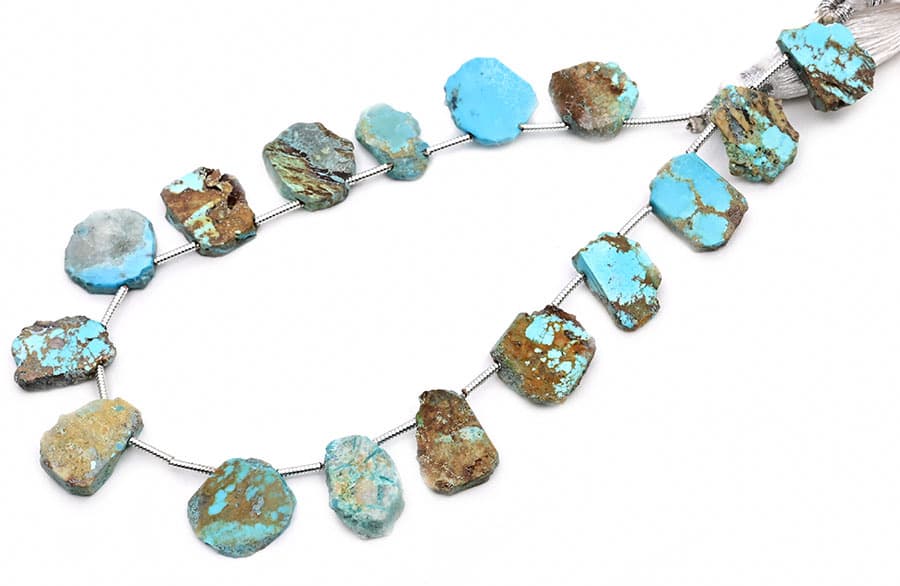
Makers reach for turquoise for clean lines and everyday wear. Heishi builds long, supple necklaces. Rondelles in 4 mm make easy spacers and soft, even strands; larger 10 to 18 mm nuggets bring the matrix forward for statement pieces. We carry Arizona type sky blue as smooth rondelles and heishi, and we keep nuggets on hand. Golden Hills lavender blue with brown matrix comes in rondelles and in nuggets. We also stock green matrix strands. Our strands are cut in Jaipur and chosen one by one in Cupertino. Southwest and boho designers use it across the board.
Looking after it
Mohs 5 to 6 and porous. Wipe with a damp cloth only. Keep it away from oils and perfume during wear. No ultrasonic cleaning. It is best suited to necklaces and to earrings rather than bracelets.
Sources: Turquoise History and Lore, Turquoise Gemstone, Turquoise Gemstone | Turquoise Stone – GIA, Turquoise
Turquoise strands
From the blog
All posts Care and durability
Which gemstone beads are hard enough for an everyday bracelet
Use Mohs 7 as the everyday-bracelet line because household dust contains quartz around 7. For daily wear, we recommend sapphire, black spinel, red Mozambique garnet, and amethyst beads. Black onyx sits on the line and needs a gentle finish. Labradorite, lapis, pyrite, turquoise, Ethiopian opal, pearls, and kyanite are better as careful or occasional bracelets.
 Buying guides
How to tell if gemstone beads are real stone or glass
Use quick checks: temperature (stone stays cool longer), a loupe for round gas bubbles or a mold seam at the drill hole, and natural bead-to-bead variation in color and inclusions. Glass warms fast, shows bubbles, and looks identical. Plastic feels light. Price matters too: a way-below-market strand for the stated stone and size is a red flag.