Kyanite
Aluminum silicate that grows as flat blades. Hardness depends on direction: about 4.5-5 along the blade, 6.5-7 across it, hence its old name disthene, "two strengths," plus perfect cleavage in one direction. Blue is mainly Nepalese and Indian; Brazil and East Africa supply teal.
At a glance
| Hardness (Mohs) | — |
|---|---|
| Family | Kyanite |
| Where it is mined | See description |
| Shapes we carry | Ask us |
| Strands listed | 0 |
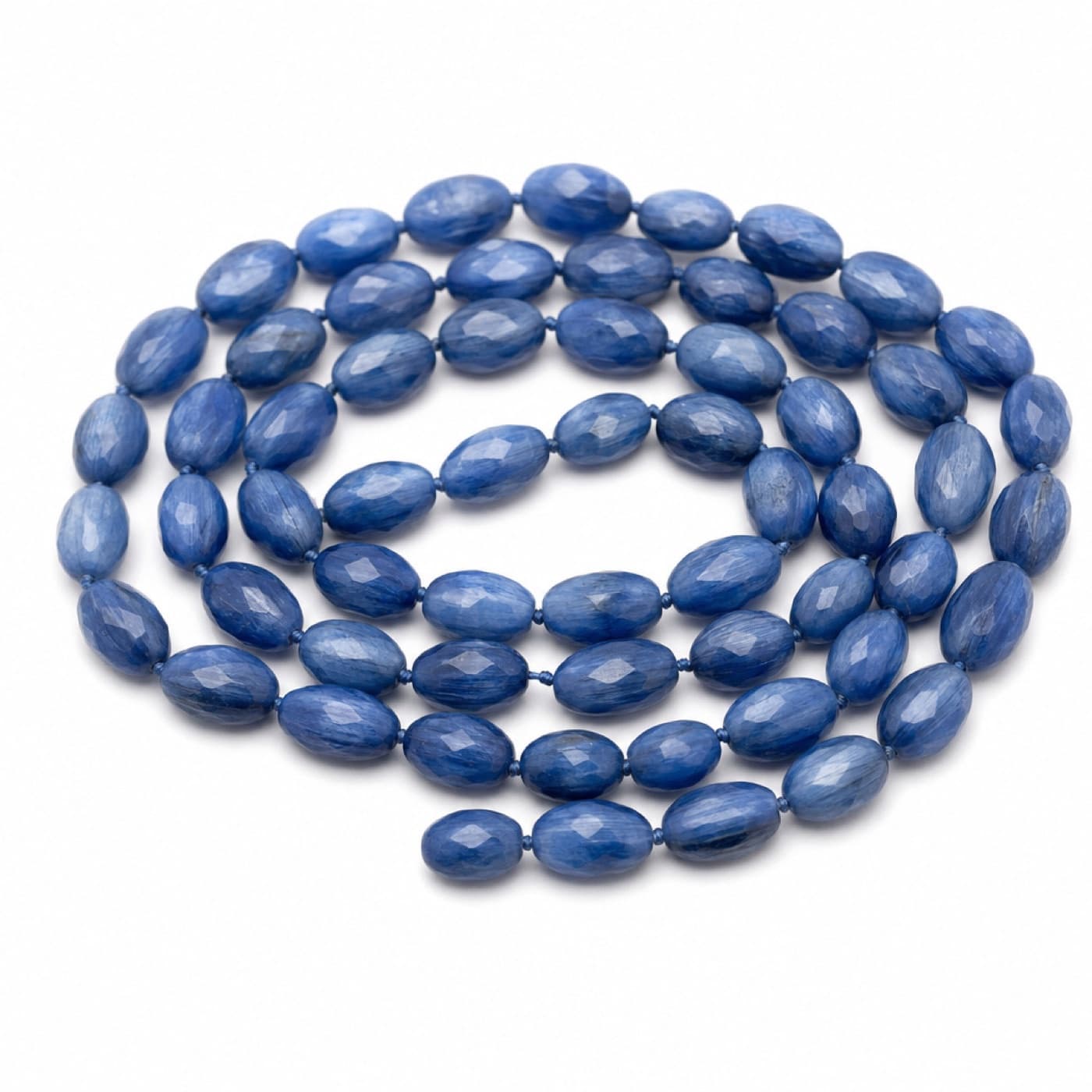
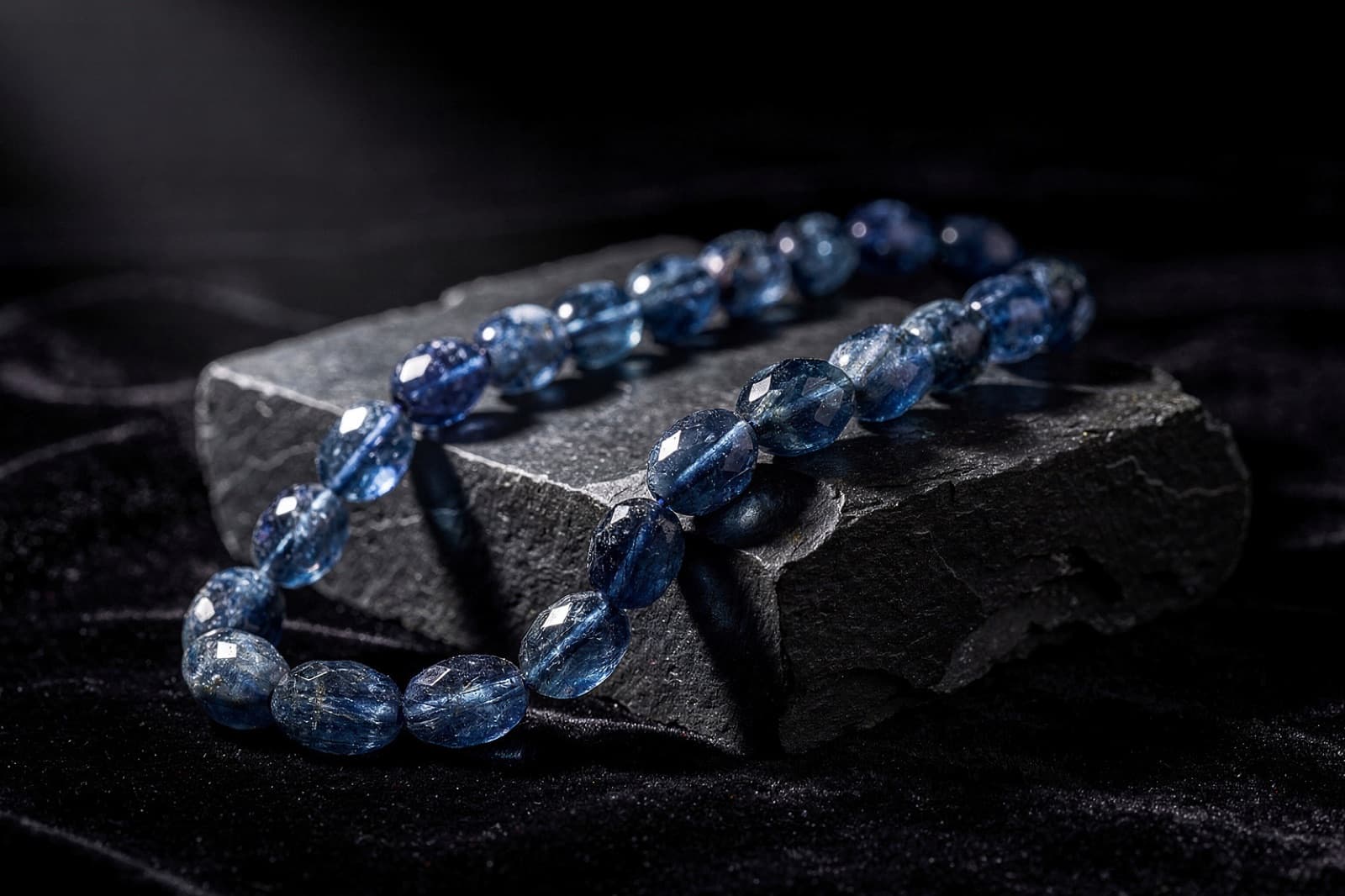
Film and illustrations are AI renders. Strand listings below show photographs of the actual material.
How to judge it
Look for even color and a bright polish on the flat face; Nepal blue is the top color. Teal and green are graded for lack of gray. Box and oval beads are sliced parallel to the blade, showing the soft face; check edges for white flaky spots, early cleavage.
What it's like to work with
Entry to mid tier. Designers who want sapphire blue at a working price. Faceted rondelles and pears sell best.
Care
Necklaces and earrings. Bracelets wear the soft direction fast, and a knock along the blade can split a bead; holes drilled across the blade hold better. Soap and water.
No birthstone month; tradition says it never needs cleansing (tradition, not fact).
Blades of Nepal blue, soft one way and hard the other.
A strand of blue kyanite reads in bands, darker in one spot and paler in the next. Faceted rondelles throw a cold, hard blue that comes close to sapphire. The box beads and smooth ovals are sliced parallel to the blade, so each one shows a wide flat face with a glassy polish. Blades hold their color unevenly, and on a strand that shows as a run of light and dark. Makers reach for it when they want that blue at a working price.
Where it comes from
Kyanite is an aluminum silicate that grows as flat blades in metamorphic rock, formed when clay minerals are altered under high pressure. It turns up in schists and gneisses, less often in quartzite or eclogite, and points to metamorphism deep in the crust. The name comes from the Greek kyanos, meaning blue. Older books call it disthene, two strengths, since the blade runs about 4.5 to 5 along its length and 6.5 to 7 across it. That, with perfect cleavage in one direction, kept it a cutter's puzzle and a collector's stone, with cut gems reaching ten to fifteen carats. Gem material long came from Brazil, Cambodia and Burma, usually gray toned and seldom clear. Finds in Nepal brought blue that rivals fine sapphire. Blue is now mainly Nepalese and Indian; Brazil and East Africa give teal. Our strands are cut in Jaipur, India, and chosen strand by strand in Cupertino, California.
What tradition says
In crystal tradition, one claim about kyanite outruns the rest: that it never needs cleansing. People who keep stones say it does not hold what passes through it, so it is never put through the clearing that other stones traditionally get. That is tradition rather than fact, but it is the first thing many collectors will tell you about the blue blades, and it is why kyanite often shares a pouch with stones that are given a regular clearing. The old name, disthene, points at the other thing people remark on: two strengths in one crystal, soft along its length and hard across it. Blue and hard to cut, it has long been a stone collectors keep for themselves.
These are beliefs people have held about the stone, told as tradition. They are not claims, and not advice.
How makers use it
Faceted rondelles and pears move fastest, mostly with designers after sapphire blue at a working price. A 4mm rondelle strand runs about 55 carats per 16 inches and gives a fine, even line of blue. The 9 to 10mm pears come on 8 inch strands. Box beads suit long necklaces where the flat faces can lie against the skin, and come on strands of about 200 carats. We carry blue, teal and multi. On a stronger strand the color is even from end to end and the flat face takes a bright polish, so the blue looks lit rather than flat.
Looking after it
Best in necklaces and earrings. Bracelets wear the soft direction of the blade quickly, and a knock along the length can split a bead, so beads drilled across the blade hold up better. Watch the edges for white flaky spots, which are early cleavage. Wash in mild soap and water.
Sources: Kyanite Value, Price, and Jewelry Information - Gem Society, Kyanite: The blue gemstone kyanite information and pictures · Minerals.net, Kyanite Mineral | Uses and Properties, Kyanite | Smithsonian National Museum of Natural History
Kyanite is in the stock room
We carry kyanite at shows and it is not all listed online yet. Tell us the shape and size you want and we will send photos of what is in stock.
Ask on WhatsApp