Lapis lazuli
A rock, not a mineral: mostly lazurite with pyrite flecks and calcite. Mohs 5-6. Best material: Badakhshan, Afghanistan; Chile supplies most calcite-rich "denim" grade.
At a glance
| Hardness (Mohs) | 5 to 6 |
|---|---|
| Family | Lapis |
| Where it is mined | See description |
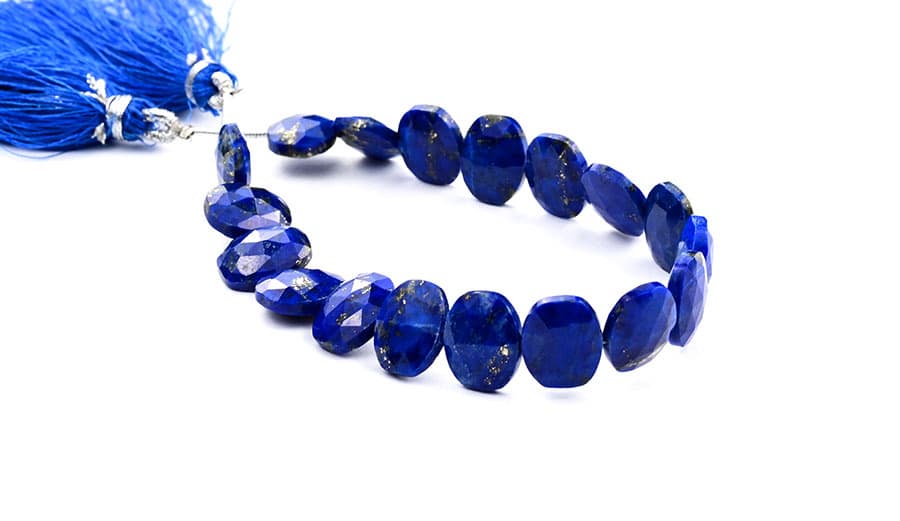
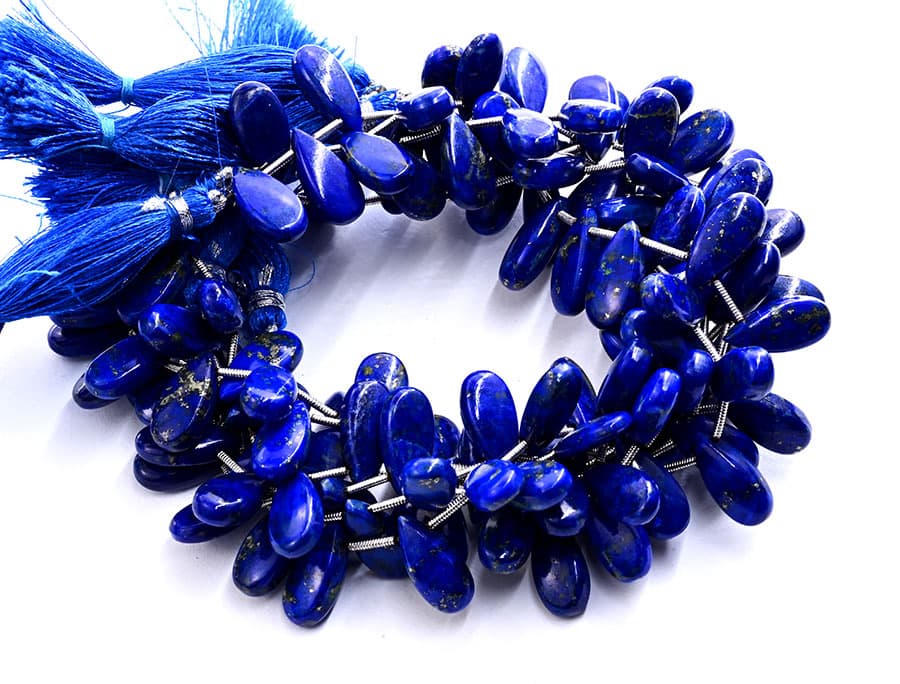
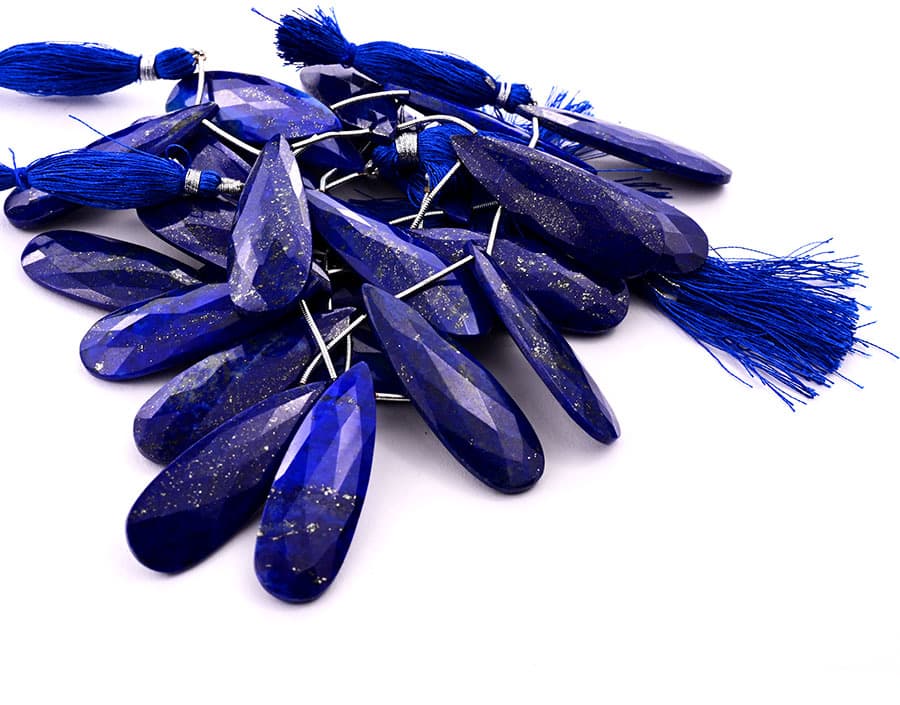
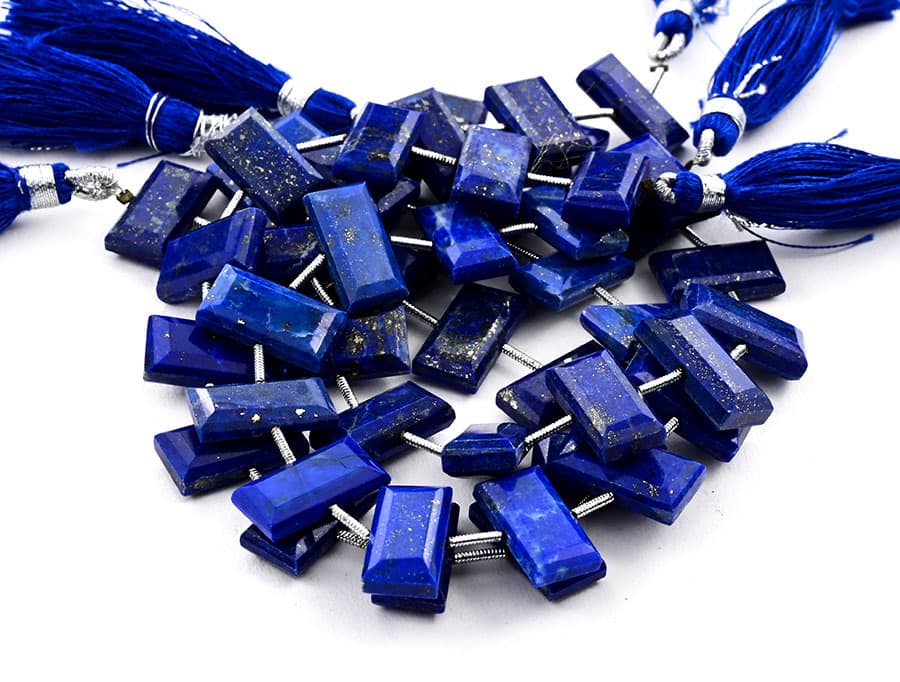
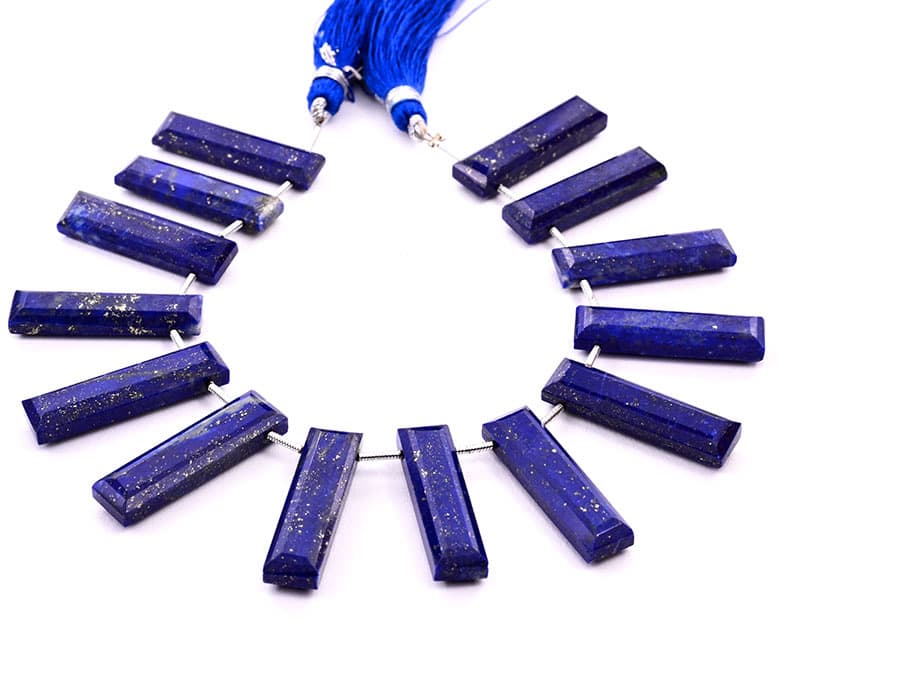
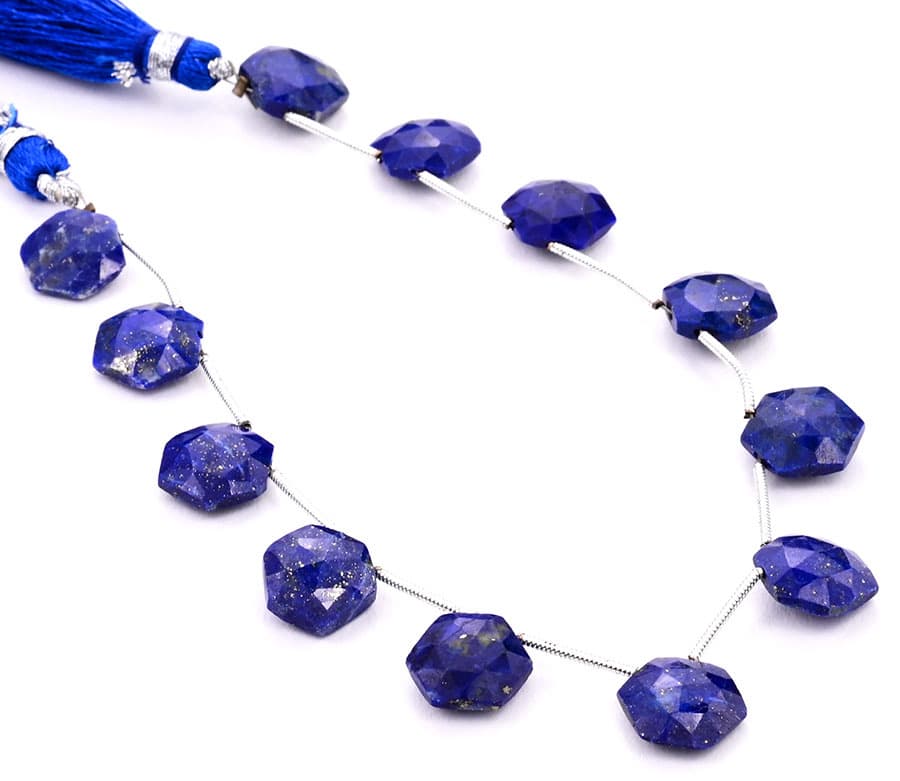
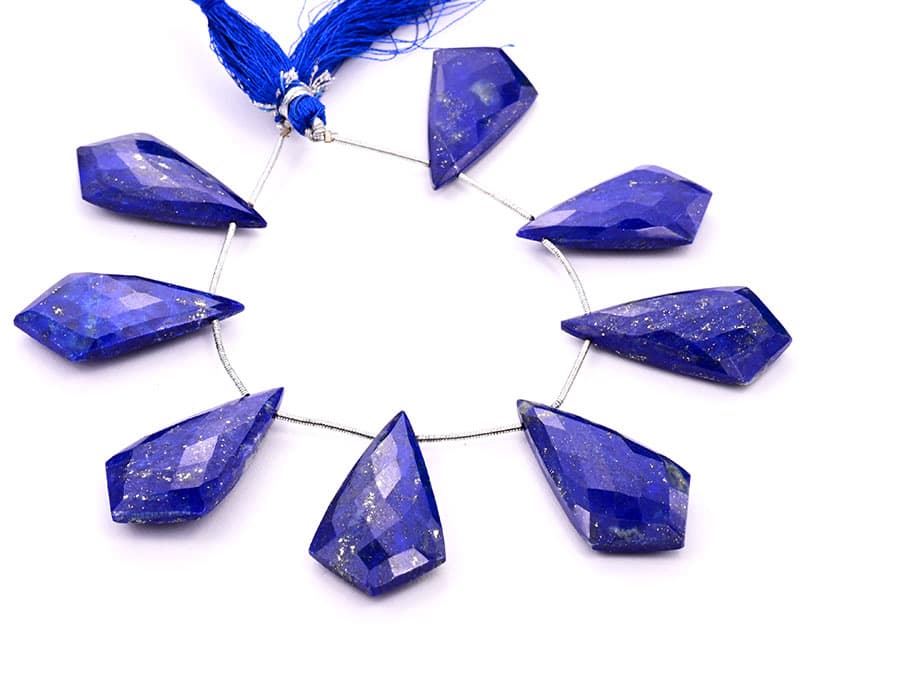
| Shapes we carry | Arrowheads, Diamond cuts, Marquise, Nuggets, Ovals, Pears, Pyramids, Rectangles, Trilliants |
| Strands listed | 14 |
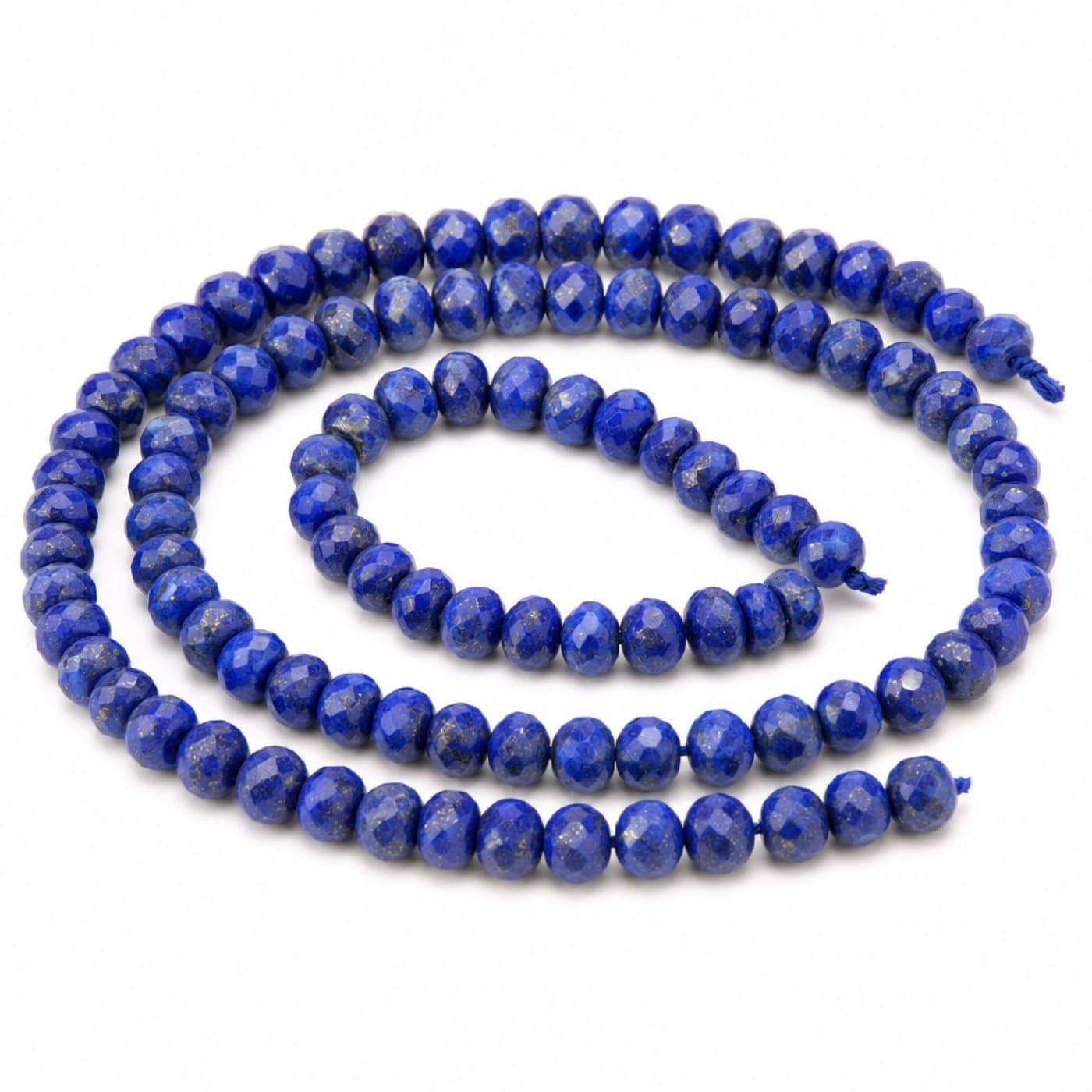
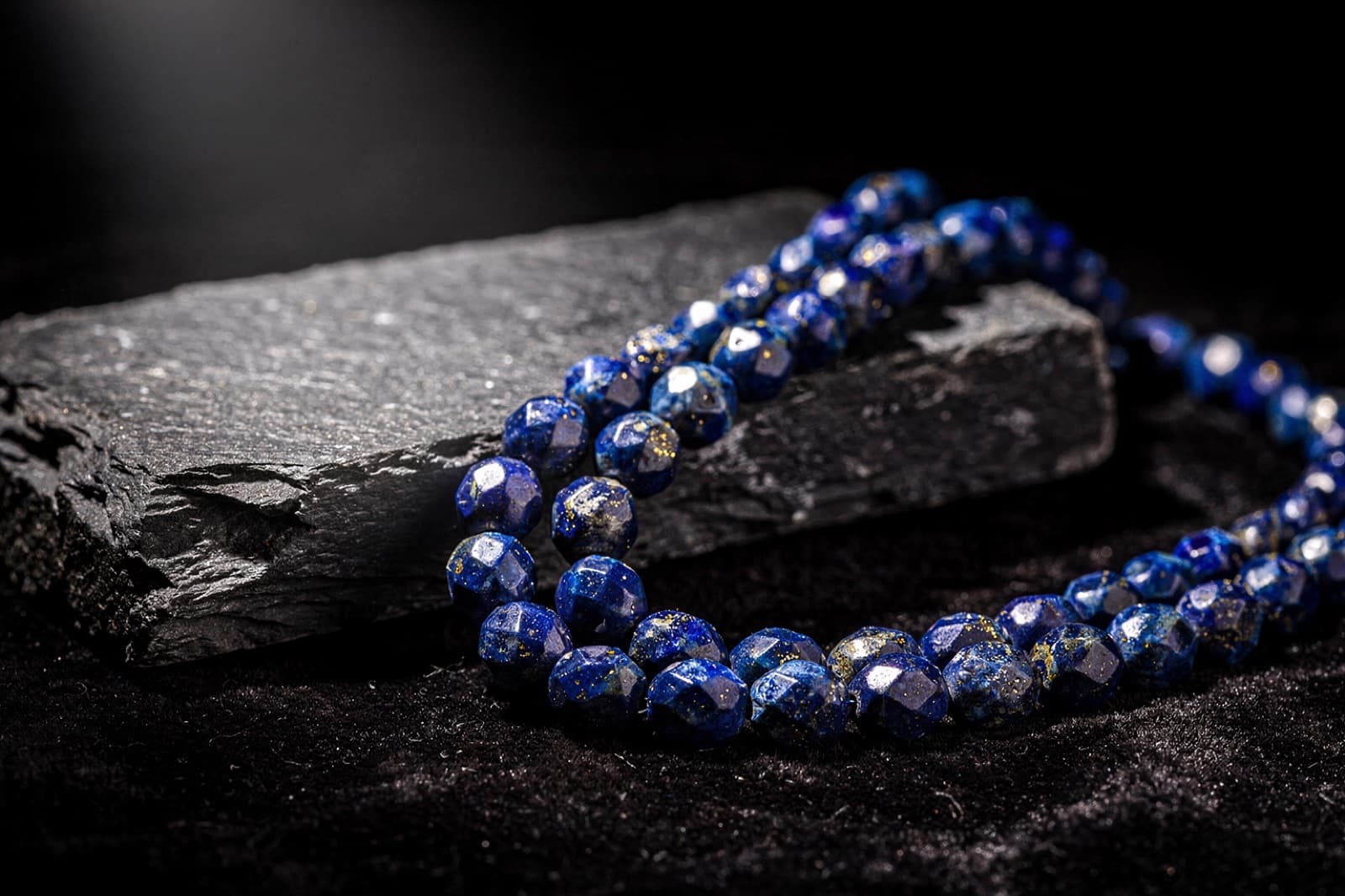
Film and illustrations are AI renders. Strand listings below show photographs of the actual material.
How to judge it
Grades: top is deep royal blue with gold pyrite and no visible white; middle has more pyrite and calcite spots; denim is pale with much calcite. an acetone swab picks up blue. Sodalite, the usual substitute, is purplish with white veins and no pyrite.
What it's like to work with
Entry to mid tier. Navy-and-gold palettes, men's bracelets. Faceted 5mm rondelles and 8mm rounds sell best.
Care
Pendants and earrings daily, bracelets with care. Mild soap, soft brush; no ultrasonic or solvents.
Older lists make it a December birthstone; tradition ties it to truth (tradition, not fact).
Deep blue with gold pyrite, cut in Jaipur.
On the strand, lapis reads as a run of deep navy with small gold sparks scattered through it. The gold is pyrite, and it is the surest sign you are holding lapis and not something else. Some beads carry a thin gray-white cloud of calcite; others are almost solid blue. Faceted rondelles catch light in short flashes along the edges, while smooth rounds go quiet and matte-dark, like ink. People reach for it because the blue holds its own next to gold wire.
Where it comes from
Lapis is a rock rather than a single mineral, an aggregate of lazurite with calcite and pyrite, plus small amounts of diopside, amphibole, feldspar, or mica. Lazurite gives the royal blue. It was mined in the mountains of Badakhshan, in what is now Afghanistan, as early as the 7th millennium BC, and historians place the link between people and this stone at more than 6,500 years. It was valued in Mesopotamia, Egypt, China, Greece, and Rome, prized alongside sapphire and turquoise, and cut for inlay and intarsia as well as ground for pigment and cosmetics. By 700 BC the region was known as Bactria; Marco Polo described its mines in 1271, and the same workings still produce. Chile supplies most of the paler, calcite-rich denim grade. Our strands are cut in Jaipur, India, and chosen strand by strand in Cupertino, California.
What tradition says
Lapis legends are among the oldest recorded. In older gem tradition the stone stands for truth, and that is the association people who work with it repeat most often. Some accounts link lapis to mother goddess figures of the ancient world. Pliny the Elder, writing in Rome, called it a fragment of the starry firmament, in admiration of the deep blue with its twinkling bits of gold. Scholars believe many early references to sapphire may in fact describe lapis, which says something about how the blue was ranked. Jewelry made from it has been found in prehistoric tombs in Asia, Africa, and Europe. Older birthstone lists name it for December.
These are beliefs people have held about the stone, told as tradition. They are not claims, and not advice.
How makers use it
Faceted 5mm rondelles are the workhorse. They build a full navy line without weight, and they space well with small gold or brass beads. Smooth 8mm rounds suit men's bracelets and single-strand necklaces where you want the blue solid and unbroken. Daggers make a fringe for a collar or a pair of long earrings. Lapis sits easily in navy-and-gold palettes, and paler denim-grade material softens a design when full royal blue feels too heavy. Stronger strands show deep royal blue with gold flecks and almost no visible white; middle grades carry more pyrite and gray calcite spotting.
Looking after it
At 5 to 6 on the Mohs scale, lapis marks more easily than quartz. Pendants and earrings take daily wear; bracelets need more care, since cuffs and desks scuff beads. Clean with mild soap and a soft brush, then dry well. Keep it away from ultrasonic cleaners and solvents.
Sources: Lapis Lazuli History and Lore - GIA, Lapis Lazuli Gemstone | Lapis Lazuli Stone – GIA, Lapis Lazuli: A blue gem used for cabochons, beads, inlay, Lapis lazuli - Wikipedia
Lapis lazuli strands
All 14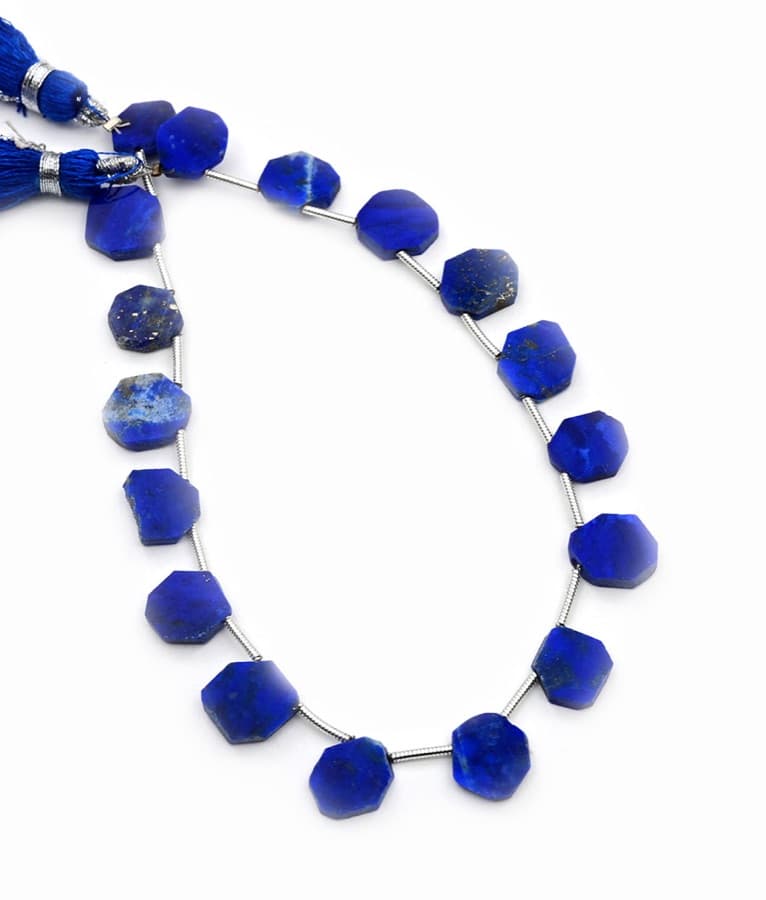
 Sold out