Pyrite
Iron sulfide, FeS2, "fool's gold." Metallic brass-yellow, Mohs 6 to 6.5 but brittle, and heavy (specific gravity about 5, twice chalcedony). It oxidizes slowly in humid air into iron sulfates and traces of sulfuric acid ("pyrite decay"). Rough is mostly Peruvian (Huanzala district) and Chinese.
At a glance
| Hardness (Mohs) | 6 to 6.5 |
|---|---|
| Family | Pyrite |
| Where it is mined | See description |
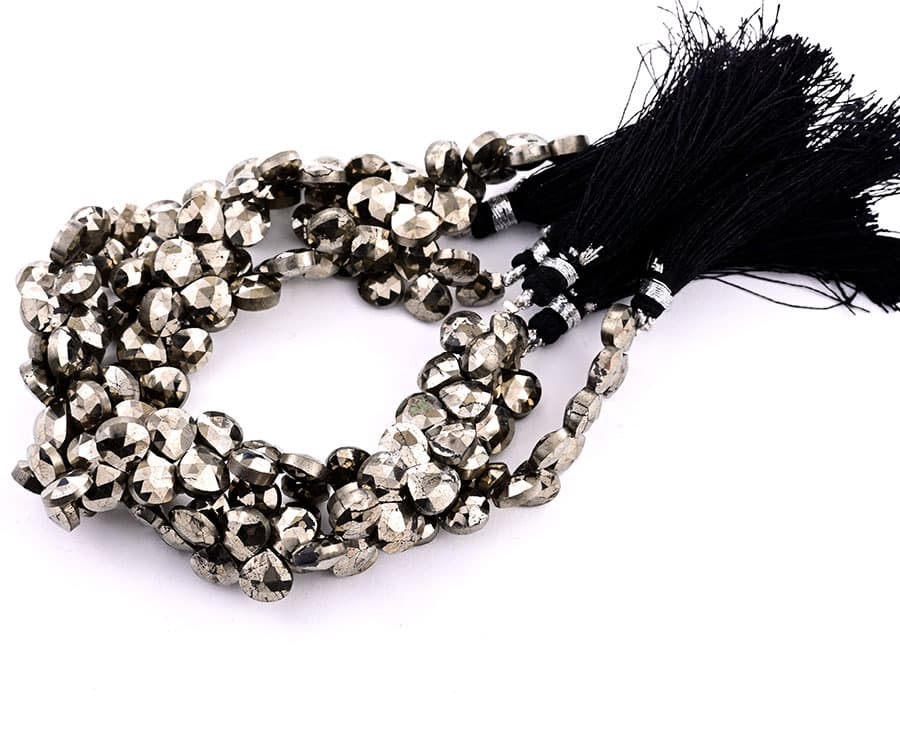
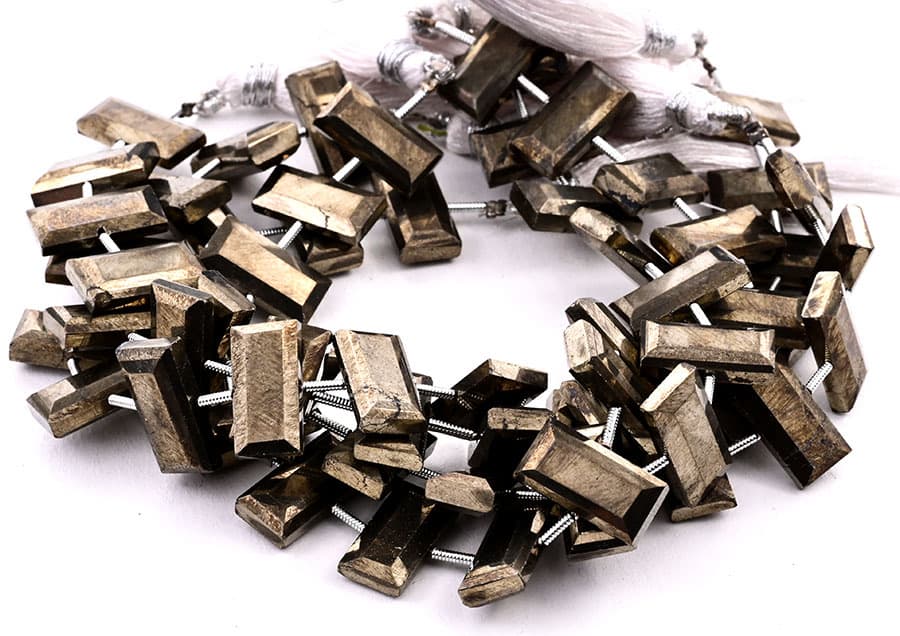
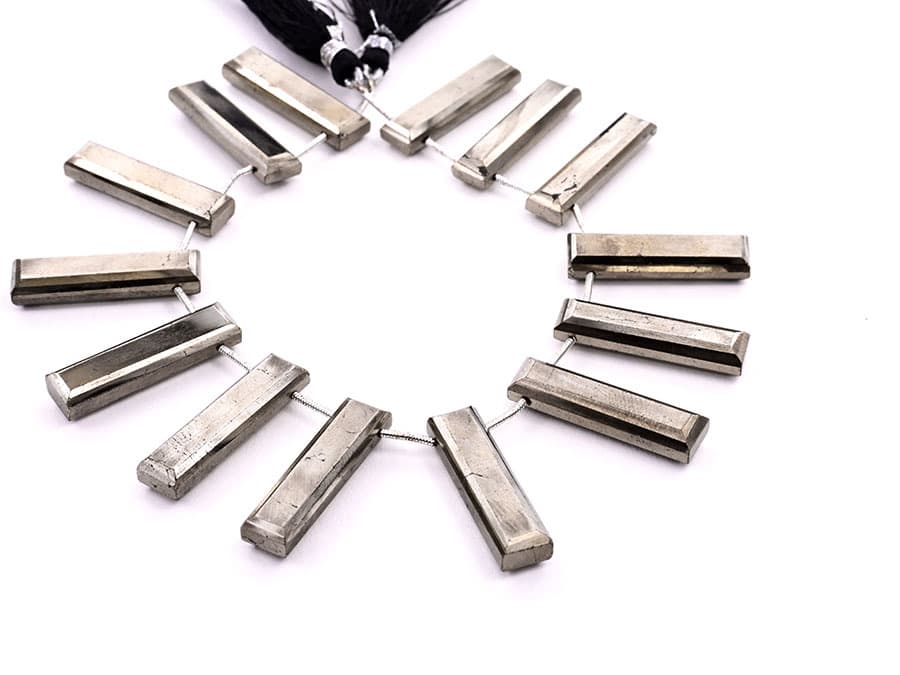
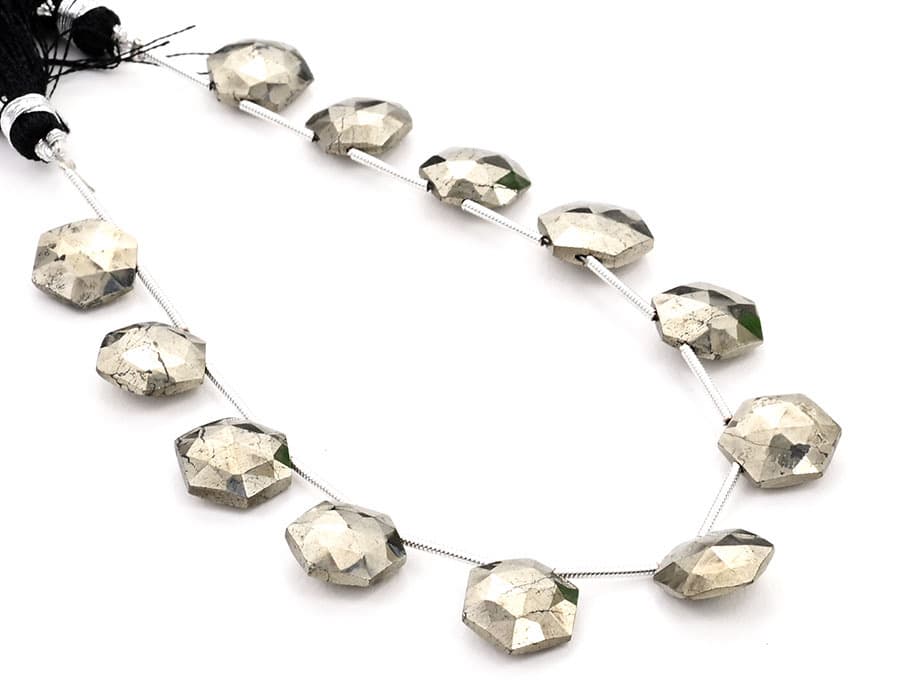
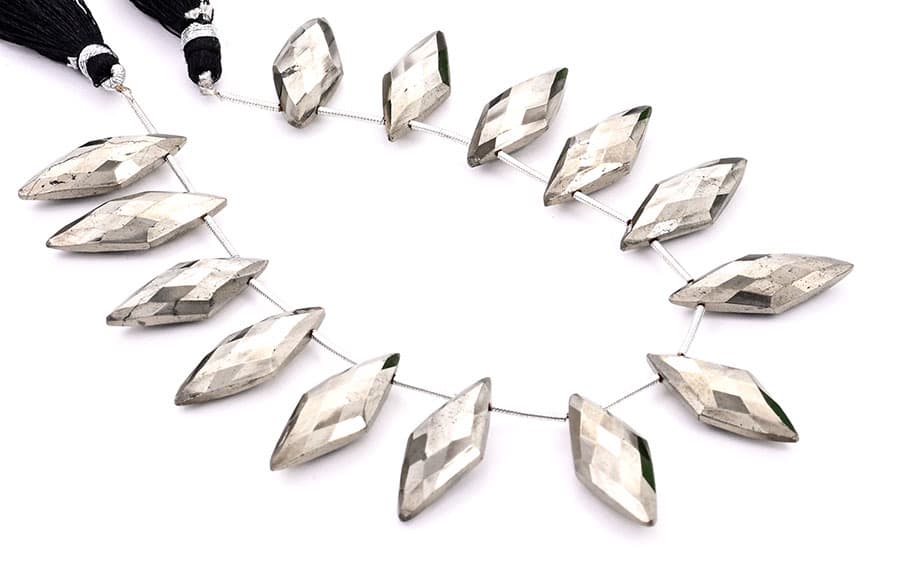
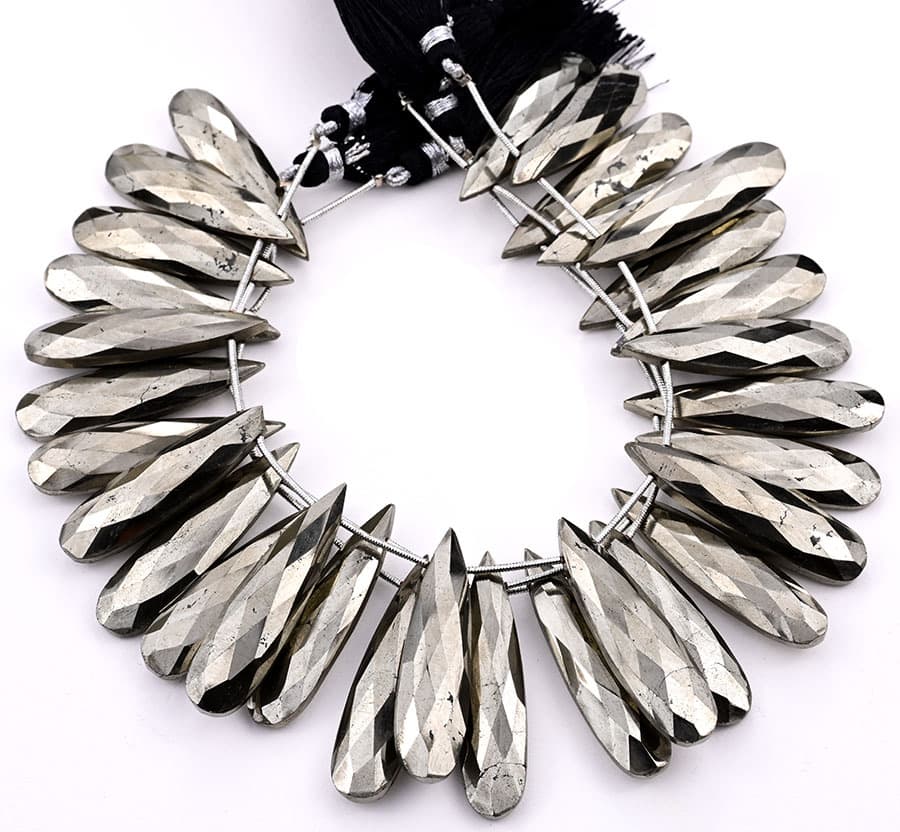
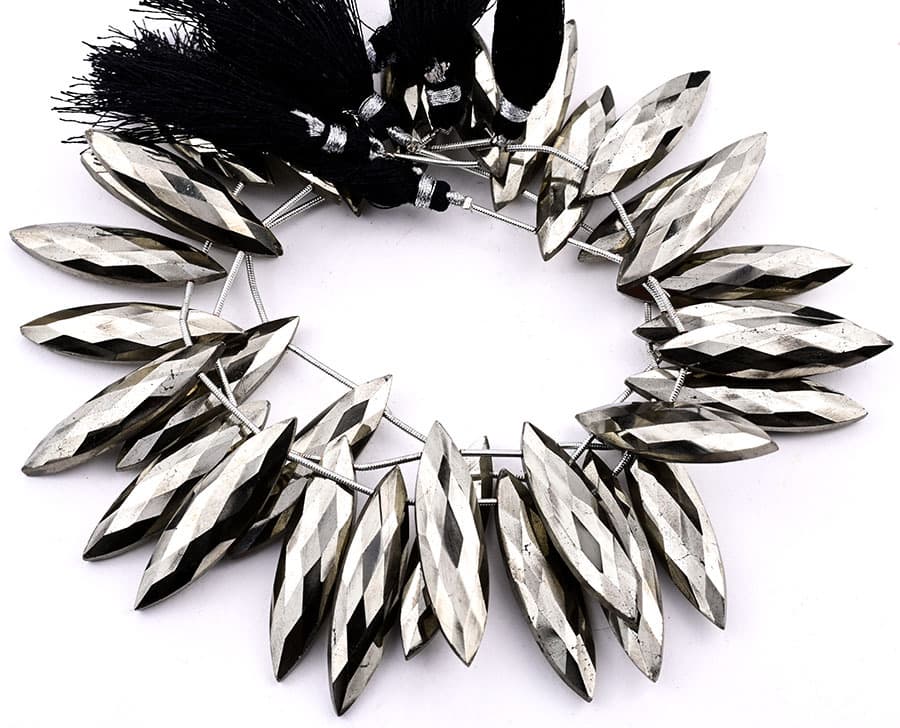
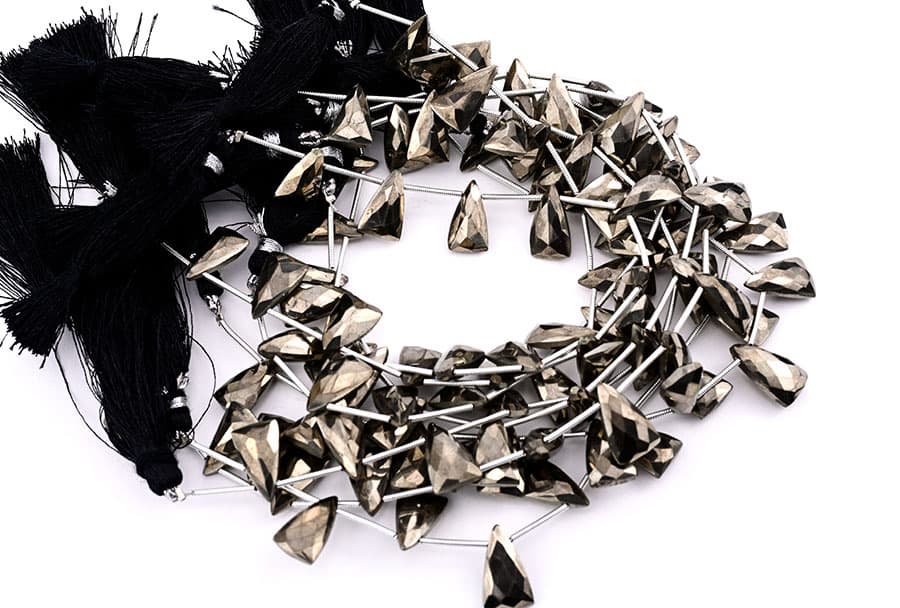
| Shapes we carry | Diamond cuts, Hearts, Marquise, Pears, Pyramids, Rectangles |
| Strands listed | 8 |
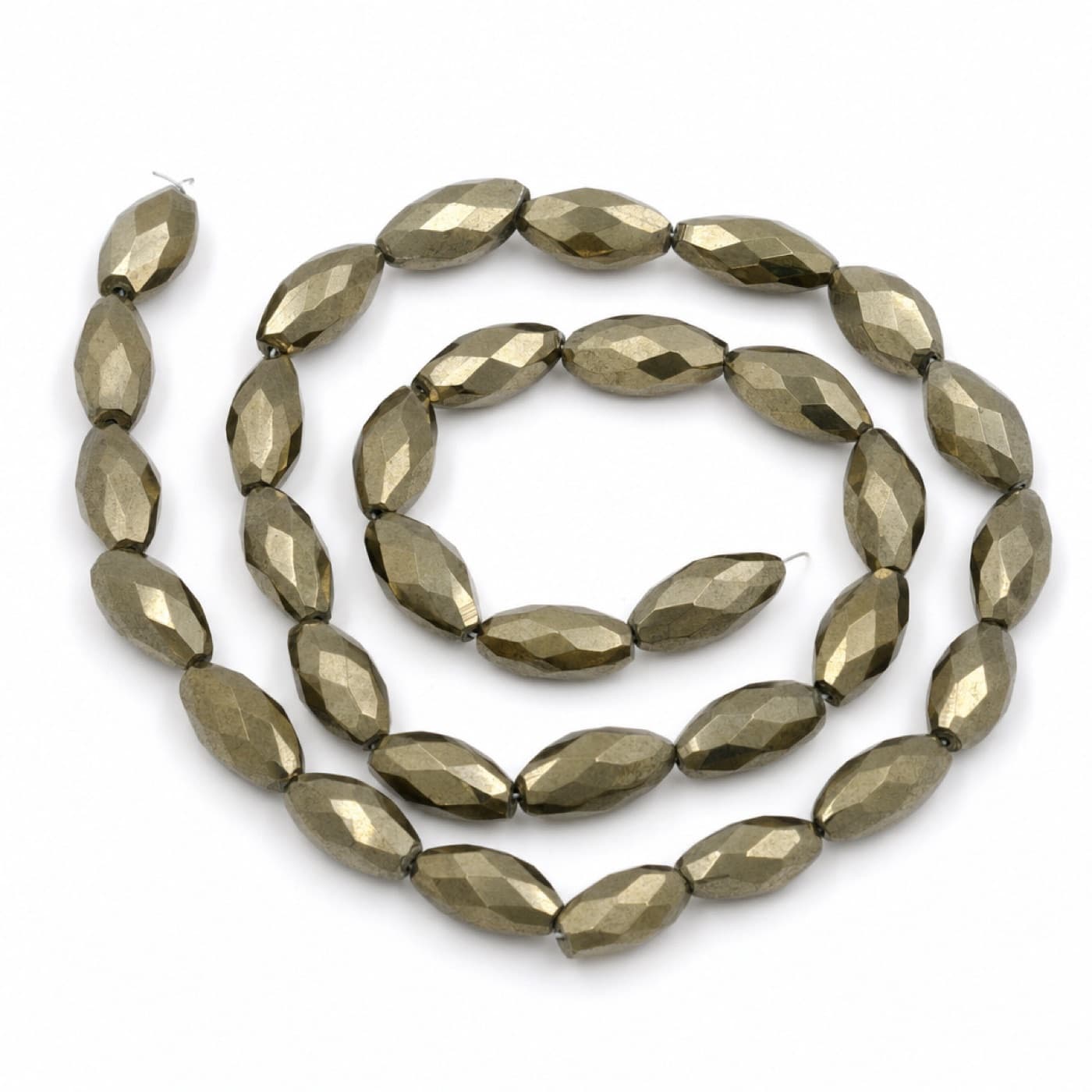
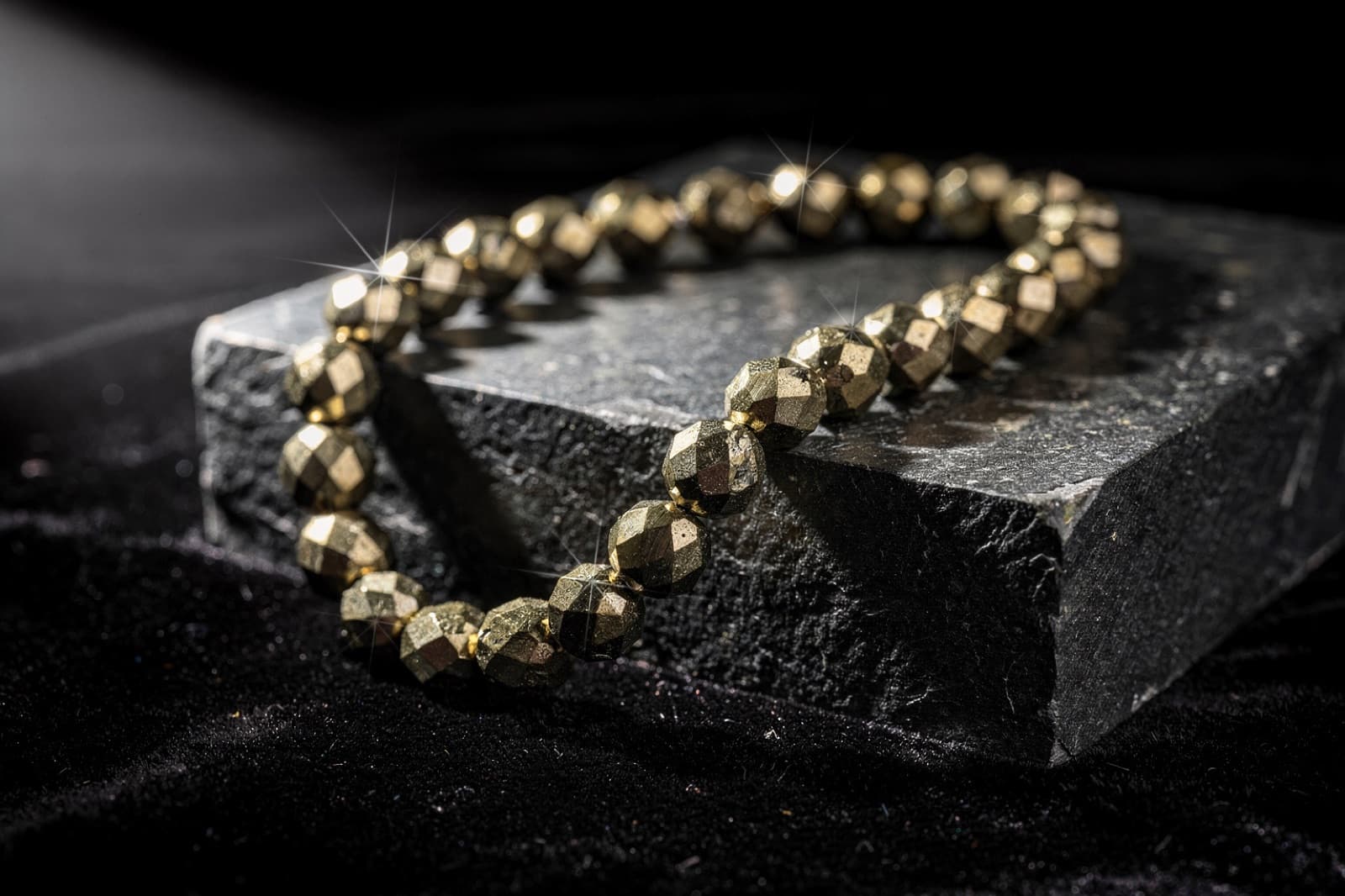
Film and illustrations are AI renders. Strand listings below show photographs of the actual material.
How to judge it
Even brass color, mirror-bright facets, no dull brown patches (early tarnish), crisp edges, no cracks radiating from drill holes. Real pyrite leaves a greenish-black streak on unglazed tile.
What it's like to work with
Men's bracelets, mixed-metal and industrial styles. Entry to mid tier. Bars, daggers and heishi sell best.
Care
Dry box with silica gel; wipe after wear; never shower, swim or sleep in it. Not for rings.
Tradition calls pyrite a money stone; tradition, not fact.
Brass-bright, heavy in the hand, happiest kept dry.
Pyrite comes out of the tray looking like small machined parts. Brass-yellow, mirror-bright where two facets meet, throwing flat sparks rather than a glow. Lift a strand and the weight surprises you: pyrite runs about twice as heavy as chalcedony, so a bar strand hangs with the heft of a chain. Makers reach for it when a piece wants metal in it without another metal finding, and when they want that color to come from a stone.
Where it comes from
Pyrite is an iron sulfide, FeS2, and the most abundant sulfide mineral. Rough for beads comes mostly from Peru, out of the Huanzala district, and from China. Our strands are cut in Jaipur, India, and chosen strand by strand in Cupertino, California. The name is Greek, from pyr, fire: struck against steel or another hard stone, pyrite throws sparks. Nodules have turned up in prehistoric burial mounds, which points to fire making. Wheel-lock guns spun a serrated wheel against a piece of pyrite before the flintlock, and flintlock firearms used it as spark-producing material as well. Dioscorides described it around 50 CE in his five books on medical materials. As a jewelry stone, faceted pyrite had a long run in the United States and Europe in the mid- to late-1800s, though most of it was sold then under the name marcasite.
What tradition says
The old nickname is fool's gold, given because to an untrained eye the color reads deceptively like a gold nugget. Crystal tradition leans on that resemblance and calls pyrite a money stone, kept in a cash drawer or worn to draw abundance. That is tradition, not fact. The older association is with fire itself. The Greek name says as much, and the nodules found in prehistoric burial mounds suggest people carried pyrite as a means of making fire, so it has long been a stone kept close by anyone who needed a spark. None of this is a promise. It is what has been believed about a heavy, metallic stone for a very long time.
These are beliefs people have held about the stone, told as tradition. They are not claims, and not advice.
How makers use it
Pyrite suits pieces that read industrial, and it does steady work in mixed-metal designs: the brass note comes from the stone rather than from another finding. Faceted bars in the longer lengths make a strong men's bracelet. A 10x25mm marquise holds a center position next to plainer beads and needs little around it. Heishi at 5mm is the quietest form, thin brass-yellow discs. On a stronger strand the flash is even and mirror-bright, facets crisp at the edges, with no dull brown patches. We list eight strands, all faceted, cut in Jaipur.
Looking after it
Pyrite oxidizes slowly in humid air, so keep it dry. Store strands and finished pieces in a closed box with silica gel, and wipe the beads after wearing them. Never shower, swim or sleep in it. It is brittle for its hardness, which makes it a poor choice for rings.
Sources: Pyrite Mineral | Uses and Properties, Pyrite Value, Price, and Jewelry Information - International Gem Society, Pyrite: The gemstone Pyrite information and pictures · Minerals.net, Pyrite
Pyrite strands