Why do my facet edges chip on rondelles and pears?
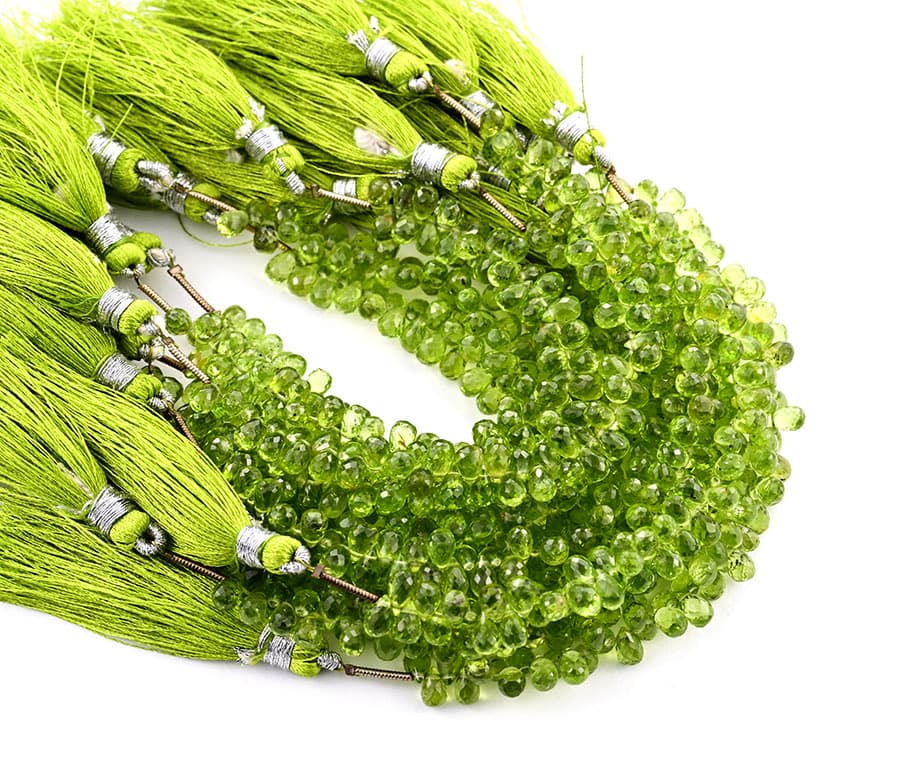
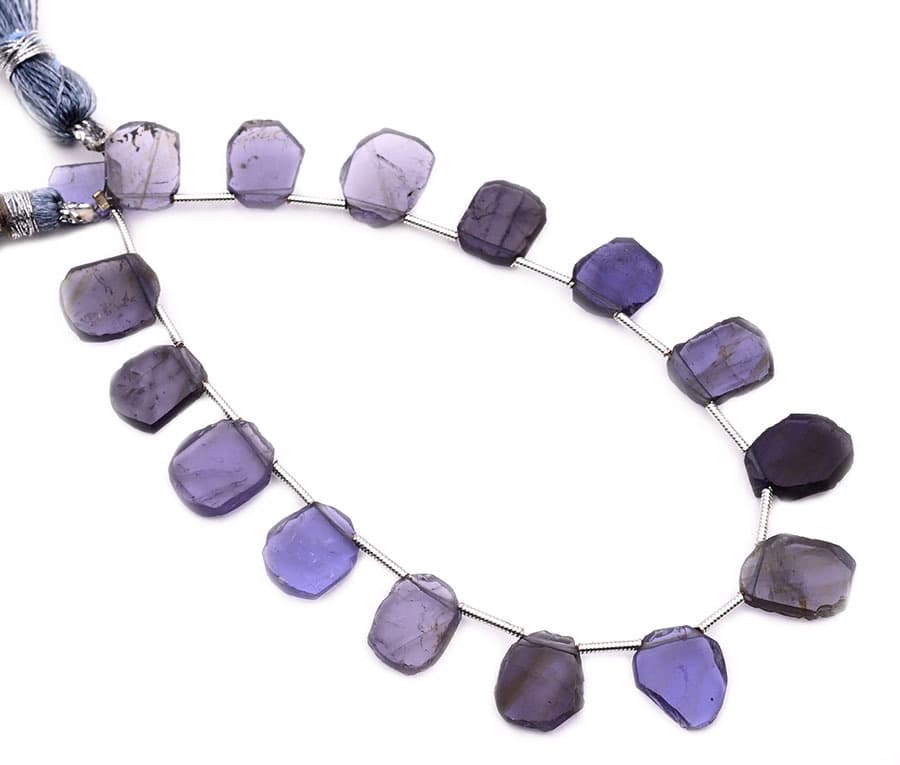
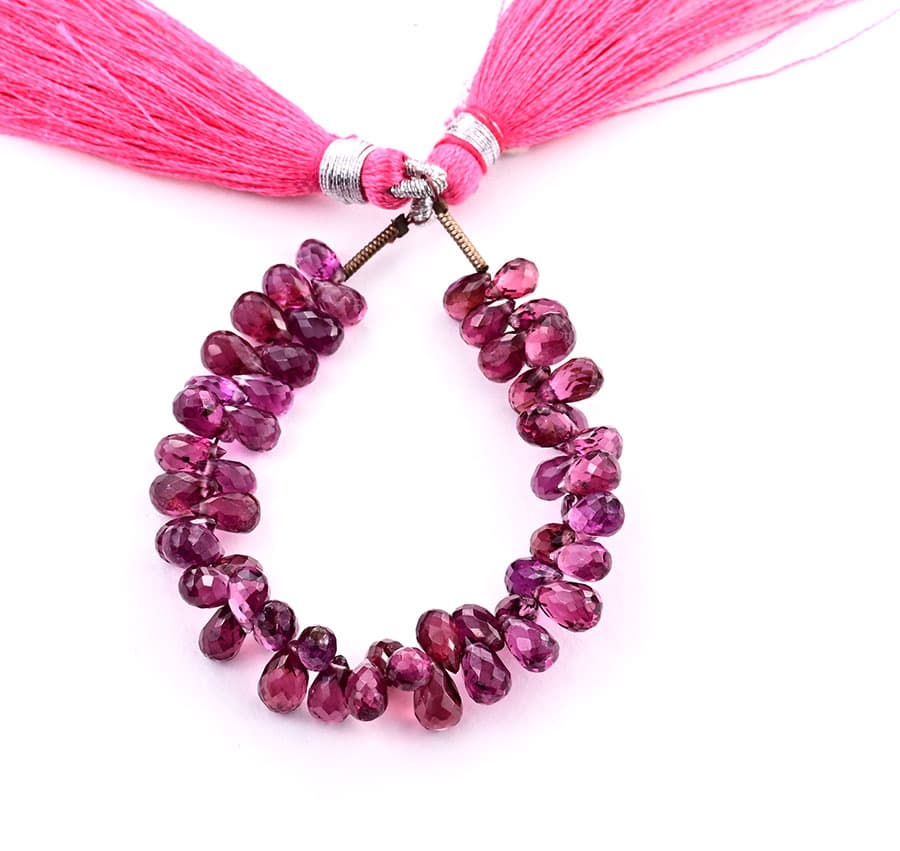
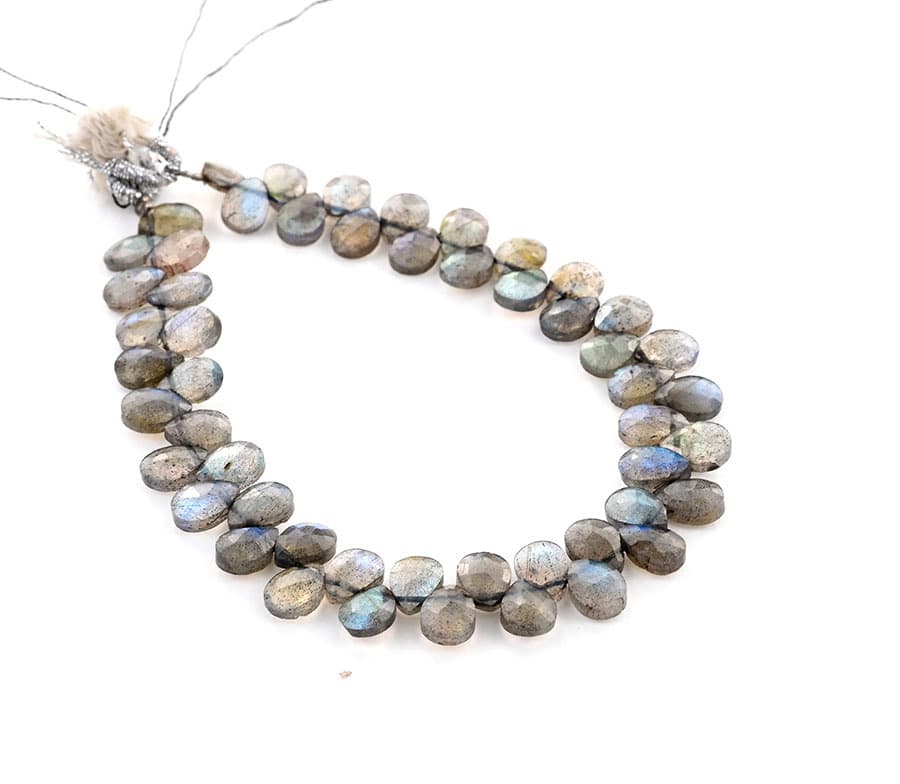
Facet junctions and drill-hole rims are the thinnest, most exposed parts of a bead, so impact and abrasion concentrate there. On pears, the pointed end and top-drilled area are especially vulnerable, much like a gem's girdle or culet in a setting. Stones with cleavage or brittleness, such as labradorite, sunstone, peridot, and iolite, demand extra care.
We also see micro-chips start at rough drill lips and spread with string friction. Prevent contact between hard edges, limit movement during handling, and buffer any place metal or thread bears against stone.
- Rondelles present many sharp facet edges in a tight line.
- Pears concentrate stress at the drilled point and tip.
- Cleavage and brittleness increase the risk of edge loss.
- Sharp drill lips can start chips that grow with wear.
How should I handle strands at the bench so edges stay safe?
Work over a plush bead mat or folded cloth. Keep strands tied on their temporary thread and feed off one bead at a time. Use bead stoppers or soft caps at strand ends so nothing slides. Nylon-jaw tools near stones reduce accidental scuffs from metal.
Stage small groups dome-up in a lidded parts tray. For quick layout changes, lift with a soft scoop or business card instead of dragging a pile across the mat.
- Keep beads restrained, never loose in a dish.
- Avoid metal jaws on or near stone.
- Lift and place, do not push beads across each other.
- Feed off the tied strand one bead at a time.
How do I pack and store faceted rondelles and pears?
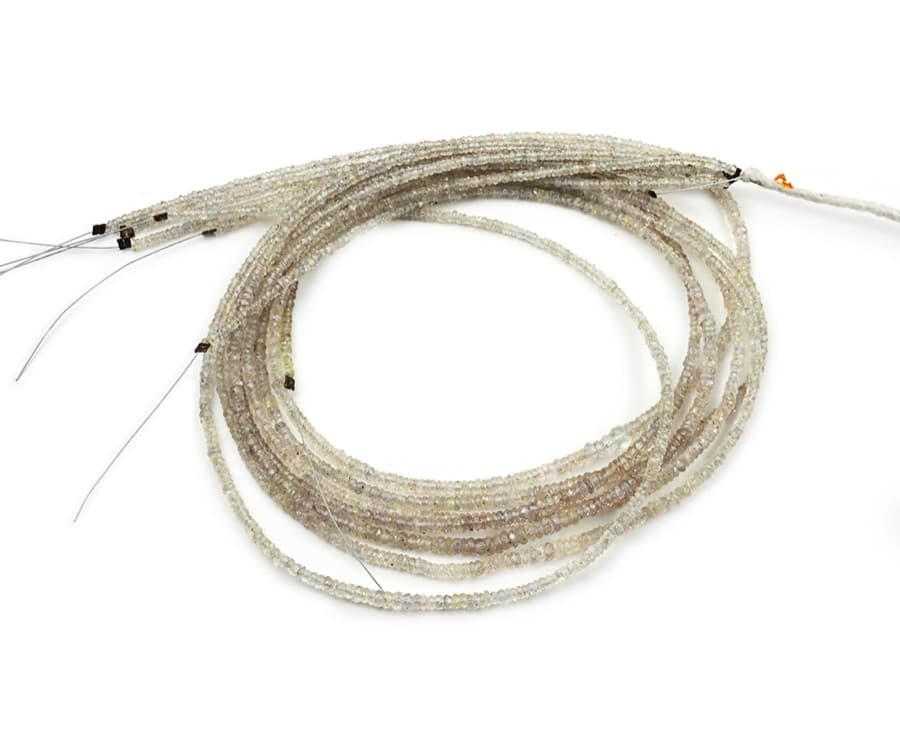
Store by shape, never mixed. Coil strands loosely and interleave soft tissue or bag film between layers so facets do not touch. For rondelles, a gentle figure-eight coil inside a small bag or box with padding works well.
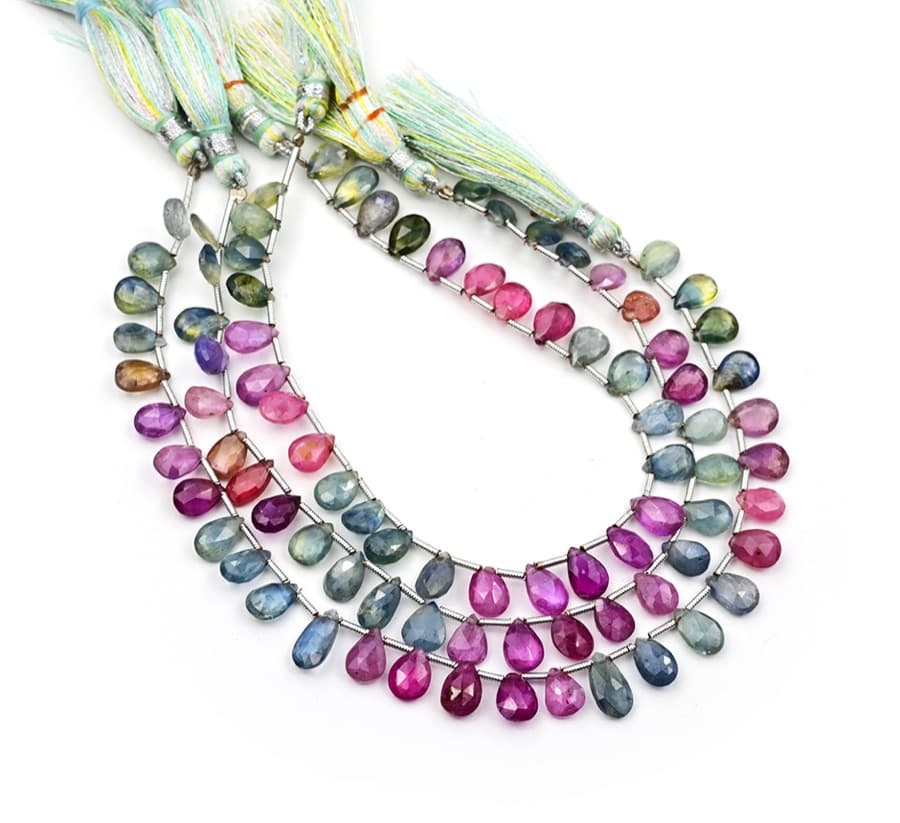
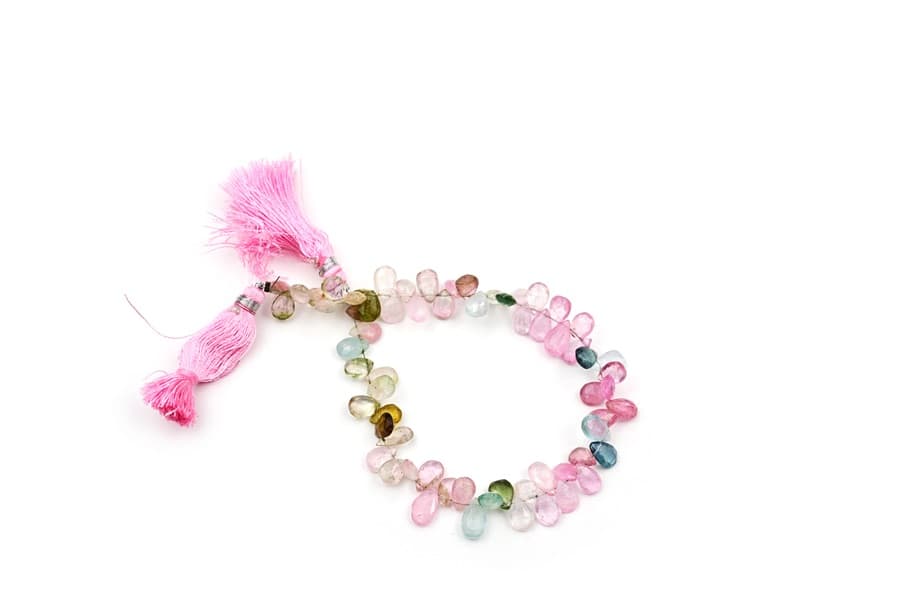
Immobilize pears so tips do not bump. Seat top-drilled pears into slits on a cardstock strip, stagger the points, then wrap in tissue and place in a firm container. For flat, faceted shapes like diamond cuts, add a tissue layer between each tile-like bead.
- One compartment per strand or per shape.
- Interleave soft layers anywhere stone can touch stone.
- Use firm boxes for travel and shelves for at-home storage.
- Keep bead tips away from seams and zippers.
What stringing choices protect facet edges?
Separate faceted rondelles with tiny seed beads or knot between each bead to stop facet-to-facet grinding. When the design calls for metal spacers, choose gently rounded beads and avoid hard edges near the stone holes.
For pears, use a soft, supportive top wrap or bail that sits above the drill and does not lever against the tip. Add a tiny seed as a bumper at the drill if your design allows. At strand ends, wire guards or French wire over the cable protect the first beads from clasp abrasion.
- Spacers or knots create nonabrasive gaps.
- Rounded metal next to stone, sharp edges away.
- Wire guards or French wire at every clasped end.
- Add a tiny seed as a drill bumper on pears when design allows.
Which tools and findings reduce chipping at the hole?
Choose flexible, smooth beading cable rather than stiff monofilament to reduce sawing at drill edges. Use quality crimp tubes, form them with the correct pliers, then add crimp covers so no raw metal corner can scrape a nearby bead.
Seat hard beads away from crimps. Flush-cut wire tails and tuck them into a cover or inside a spacer so no sharp end contacts stone.
- Flexible cable minimizes abrasion.
- Crimp, then cover the crimp.
- Keep cut metal ends buried and away from gems.
- Use nylon-jaw pliers for final shaping near stones.
How should I clean faceted rondelles and pears?
Warm water with a drop of mild soap and a soft brush is our standard across stones. Rinse thoroughly and pat dry on a soft cloth, then air dry fully before bagging. We avoid ultrasonic and steam, especially for feldspar and peridot, and we skip harsh chemicals.
Clean strands on their temporary string or after finishing, but never in a tumbler or mixed with other beads in a bowl. Keep metal tools and gritty cloths away during cleaning to prevent fresh edge wear.
- Mild soap, soft brush, gentle rinse.
- Dry fully before storage.
- No ultrasonic or steam for cleavage-prone stones.
- Clean pieces separately to prevent contact.