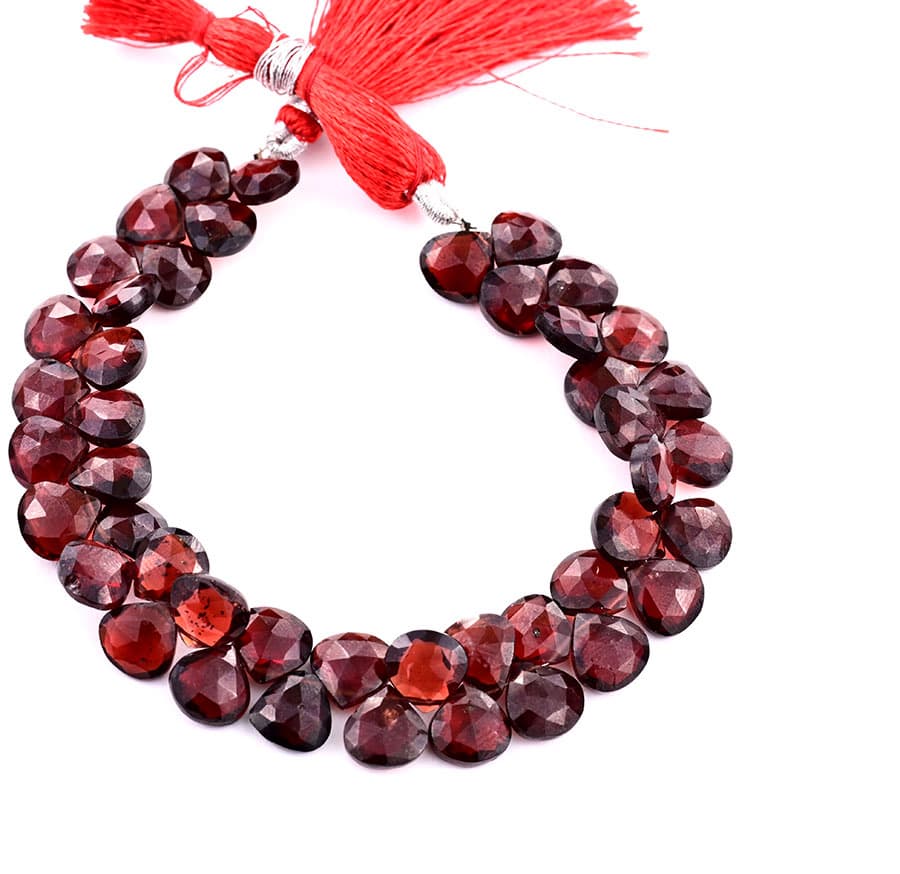
Rhodolite garnet
Pyrope-almandine garnet, the purplish red to raspberry garnet. Magnesium-iron aluminum silicate, Mohs 7-7.5, no cleavage. Sources: Tanzania, Mozambique, Sri Lanka, India (Odisha), Madagascar.
At a glance
| Hardness (Mohs) | 7 to 7.5 |
|---|---|
| Family | Garnet |
| Where it is mined | Tanzania, Mozambique, Sri Lanka, India (Odisha), Madagascar |
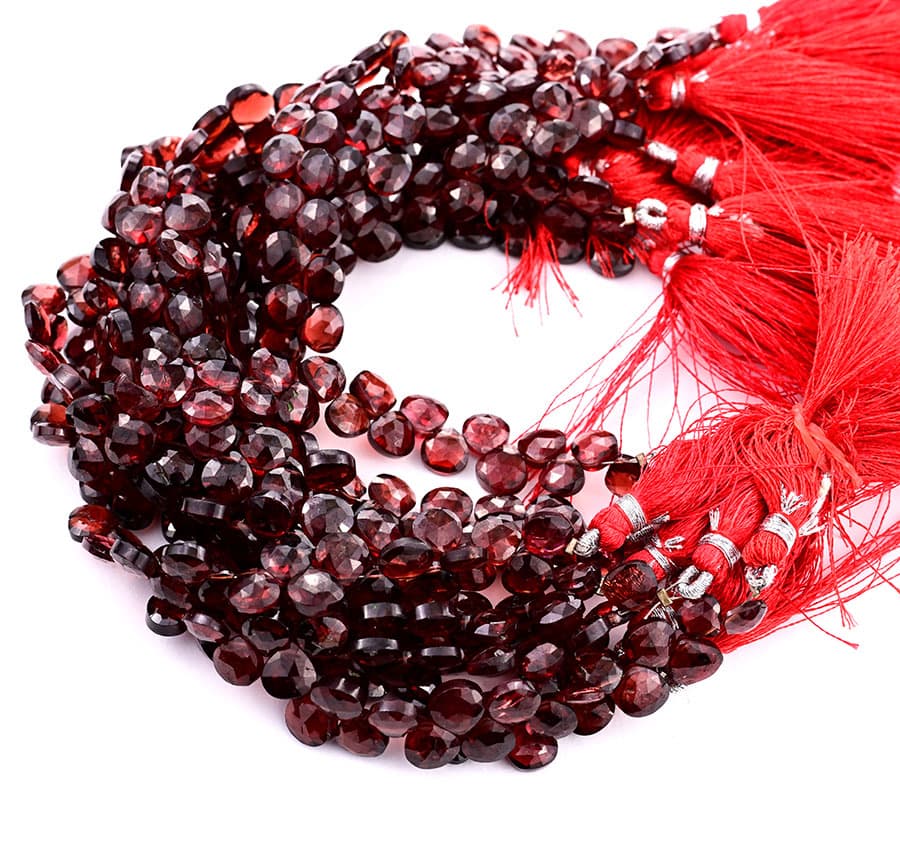
| Shapes we carry | Hearts, Tear drops |
| Strands listed | 5 |
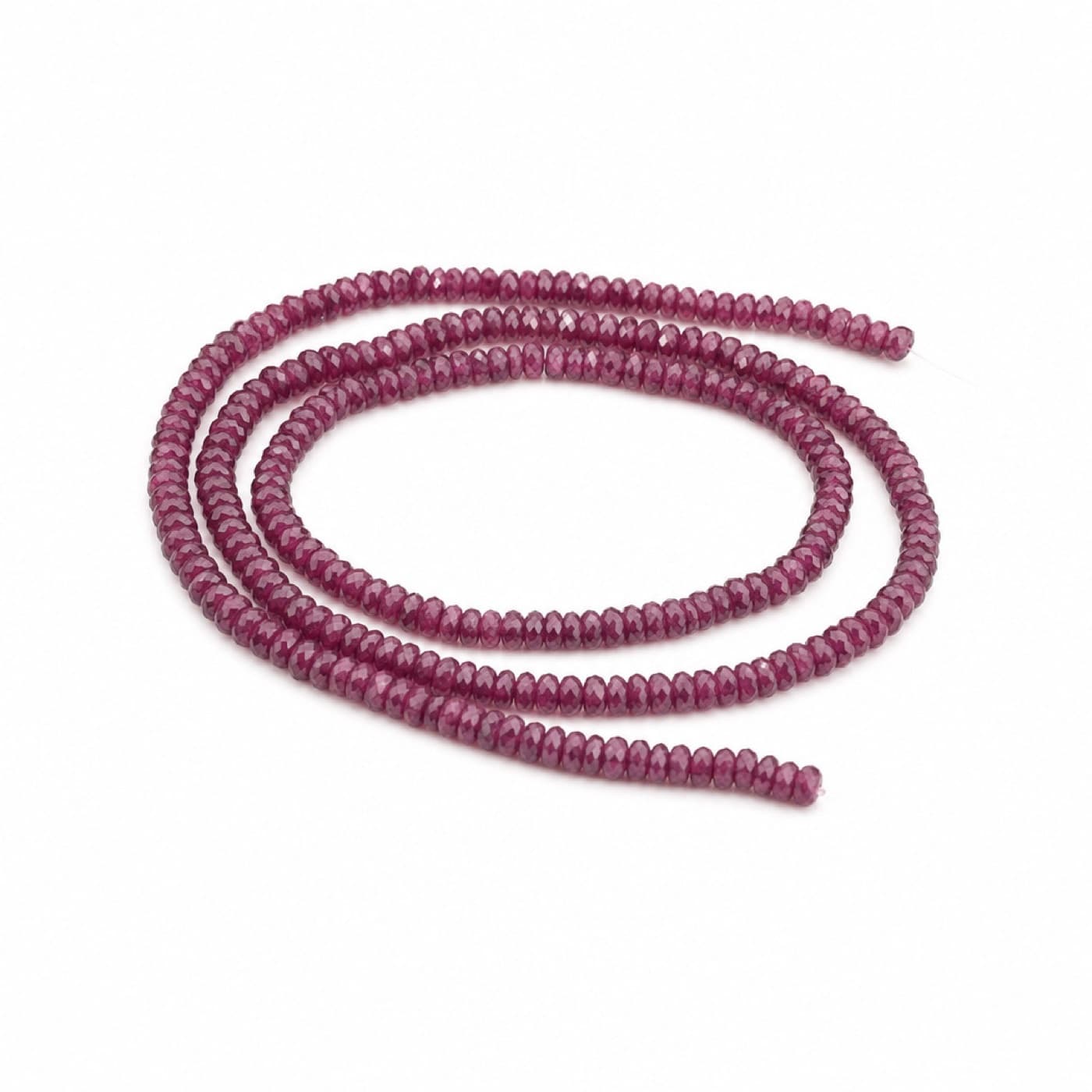
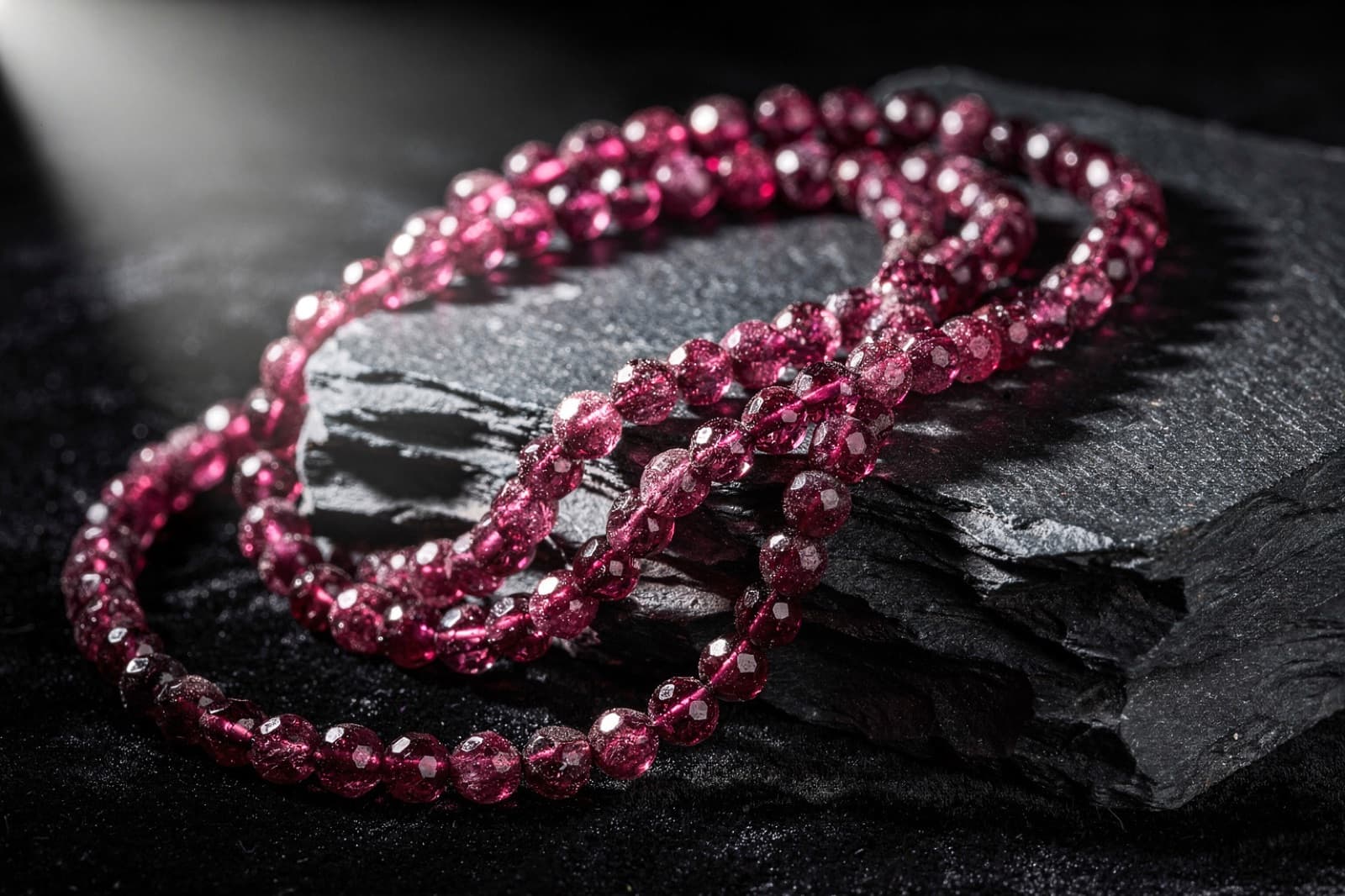
Film and illustrations are AI renders. Strand listings below show photographs of the actual material.
How to judge it
Even raspberry with a purple flash in daylight and no brown; brick tones mean almandine sold up as rhodolite. Rondelles should be eye-clean and unchipped at the hole. Look-alikes: pink glass (round bubbles, dead-even color) and rubellite tourmaline (pricier; doubles back facets under a loupe, garnet doesn't).
What it's like to work with
Mid tier. Bead artists pairing pink-red with gold fill or oxidized silver. Rondelles and pear briolettes move fastest.
Care
Daily wear. Warm soapy water, soft brush.
January birthstone; tradition links garnet to friendship and safe travel (tradition, not fact).
The purple-red garnet, cut small and worn often.
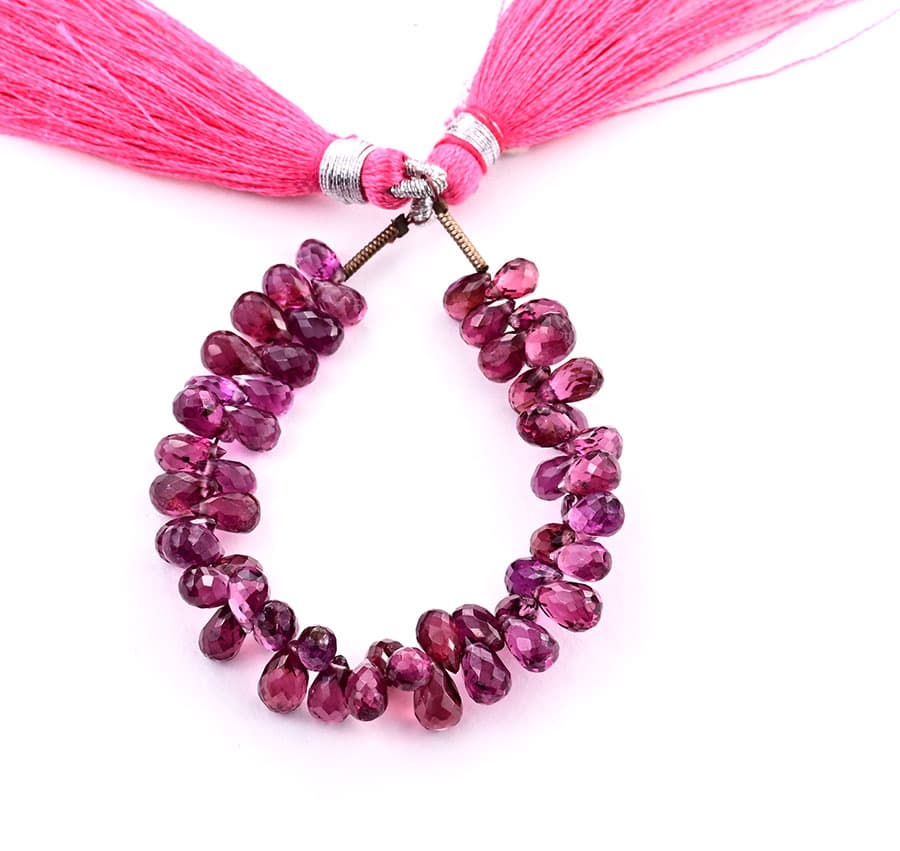
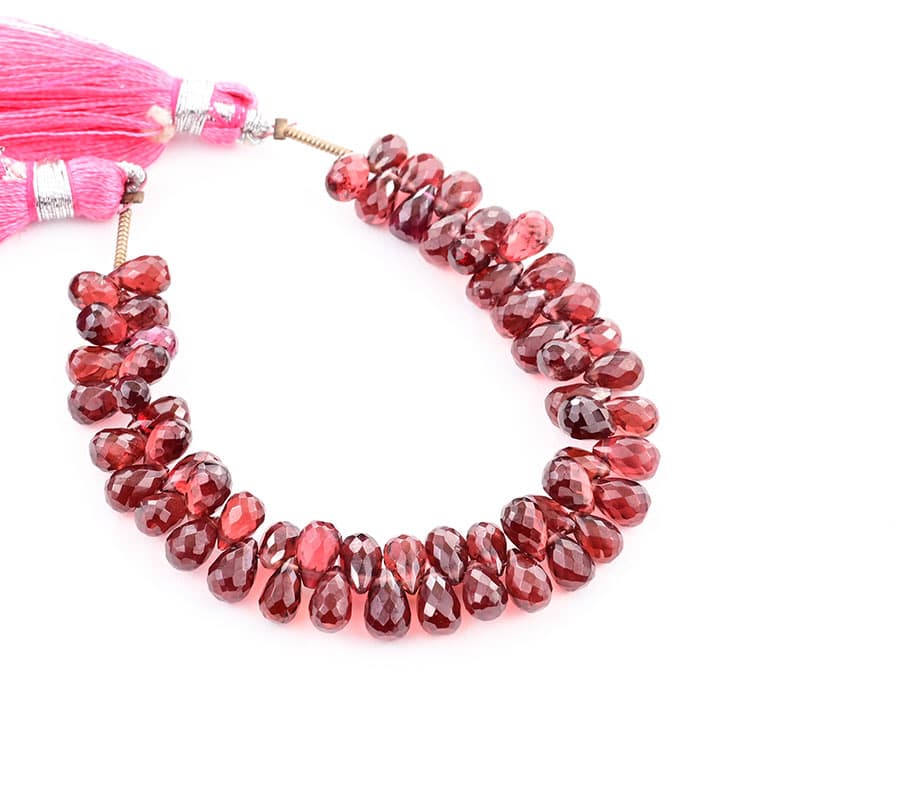
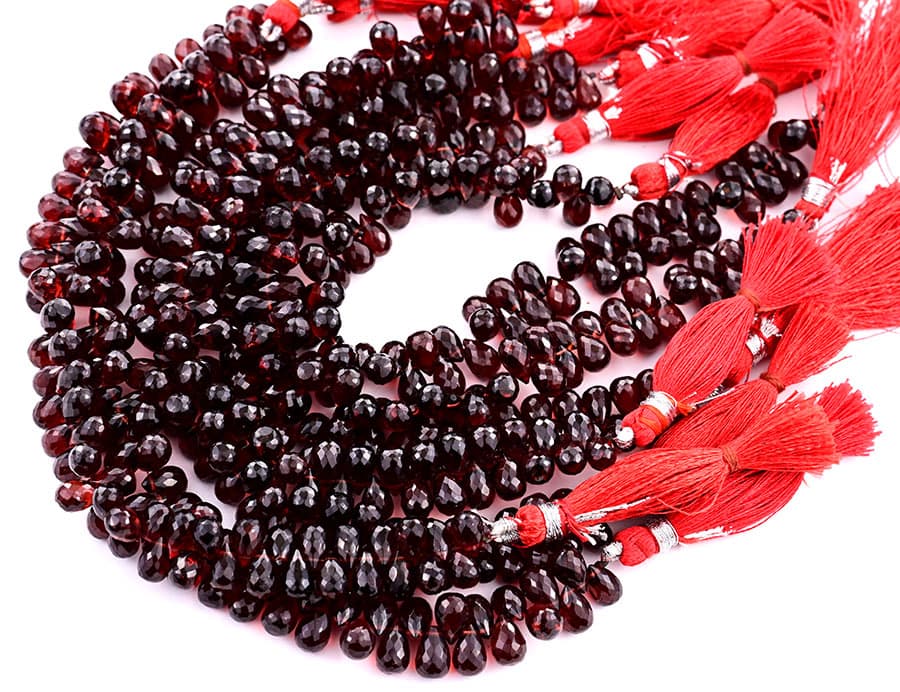
Hold a strand of rhodolite up to a window and the color reads raspberry, with a cool purple edge running through the red. Not brick. Not the brown of the garnets most people picture. The faceted rondelles are small and tightly cut, and light comes back off them in short flashes rather than a broad glow, so a whole strand seems to flicker as it turns. Most beads are clean enough to look straight through. Roll one between thumb and finger and the facets catch on the skin.
Where it comes from
Rhodolite is a pyrope-almandine garnet, a magnesium-iron aluminum silicate that sits between the two species and always carries small amounts of others besides. The name comes from the Greek rhodon, rose-like. Hidden and Pratt gave it in 1898 to a rose-red garnet found in detrital sands at Masons Branch Brook in Cowee Valley, Macon County, North Carolina. It is a trade name, not an official mineral species, kept in use because the purplish red hue is worth naming. Red garnets go back much further in jewelry: necklaces buried with Egypt's pharaohs, carved signet rings in Rome that stamped the wax on important documents, and wide use in Pliny's time, from 23 to 79 AD. The bead material comes from elsewhere now. Tanzania, Mozambique, Sri Lanka, Odisha in India, Madagascar. Our strands are cut in Jaipur, India, then chosen strand by strand in Cupertino, California.
What tradition says
Garnet is the birthstone for January, and rhodolite is often the choice for people who want that custom without a dark red stone. Tradition makes garnet a stone given between friends. People have long believed it keeps a traveler safe on the road. Older writing called red garnets carbuncle, a name used loosely for almost any red stone, and one story holds that carbuncle was among the four precious stones given to King Solomon by God. None of this is asked of a bead on the bench. It comes along anyway, and plenty of makers like knowing it is there.
These are beliefs people have held about the stone, told as tradition. They are not claims, and not advice.
How makers use it
Faceted 3mm rondelles are the workhorse. They sit tight between knots, hold their color at that small scale, and carry a full necklace or a wrapped bracelet without going heavy. Pear briolettes move just as fast, and the 5x8mm we stock is the size makers keep coming back to for earring drops. The pink-red sits well against gold fill. It also holds its own against oxidized silver. A stronger strand shows even raspberry with a purple flash in daylight, no brown creeping in, and beads that are eye-clean and unchipped at the hole. Smooth ovals are here too, for anyone who wants the color without the sparkle.
Looking after it
Rhodolite runs 7 to 7.5 on the Mohs scale with no cleavage. That is hard enough for daily wear, and hard enough that the stone will outlast the wire it is strung on. Wash it in warm soapy water with a soft brush. Dry it before you put it away.
Sources: Rhodolite Garnet Value, Price, and Jewelry Information - IGS, Rhodolite, Rhodolite garnet: The gemstone Rhodolite information and pictures · Minerals.net, Pyrope (var. rhodolite)
Rhodolite garnet strands