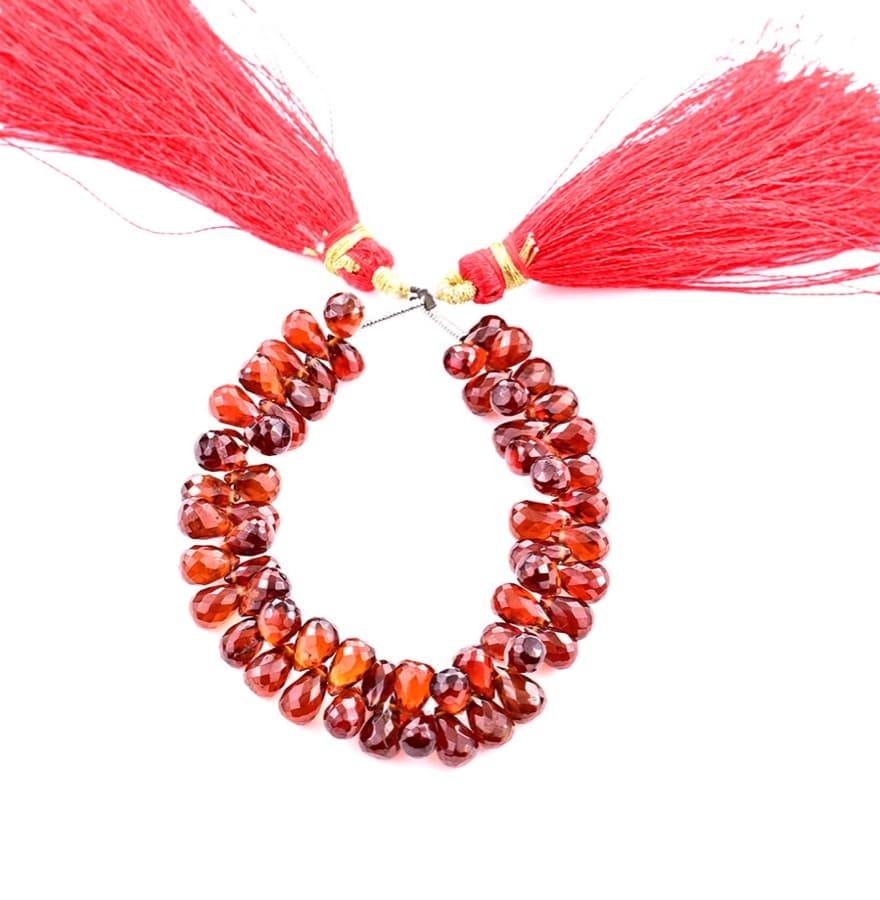
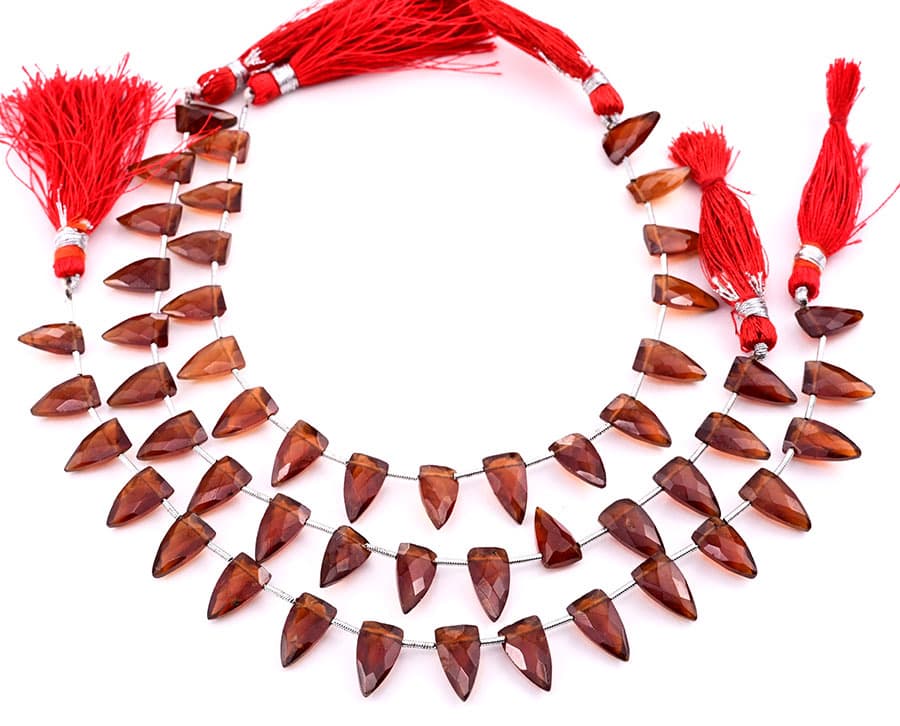
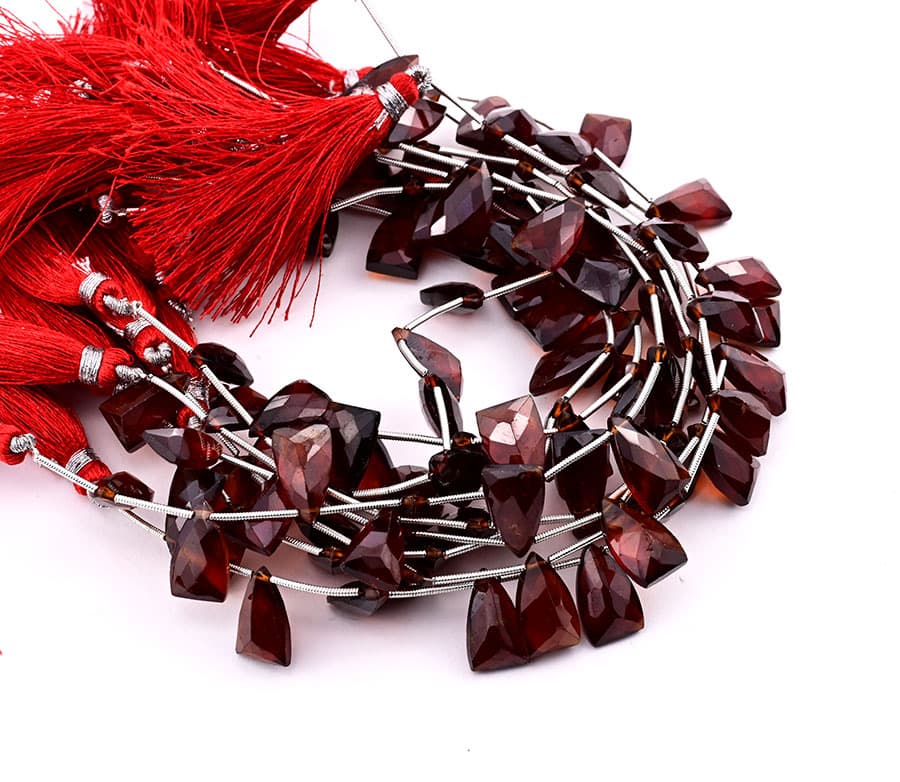
Hessonite and spessartite garnet
Hessonite is the cinnamon to honey variety of grossular (calcium aluminum silicate), from Sri Lanka, India and Tanzania. Spessartite is manganese aluminum silicate, brighter mandarin orange, from Nigeria, Namibia and Mozambique. Both Mohs 6.5-7.5; mixed parcels sell as "shaded."
At a glance
| Hardness (Mohs) | 6.5 to 7.5 |
|---|---|
| Family | Garnet |
| Where it is mined | See description |
| Shapes we carry | Arrowheads, Pyramids, Tear drops |
| Strands listed | 3 |
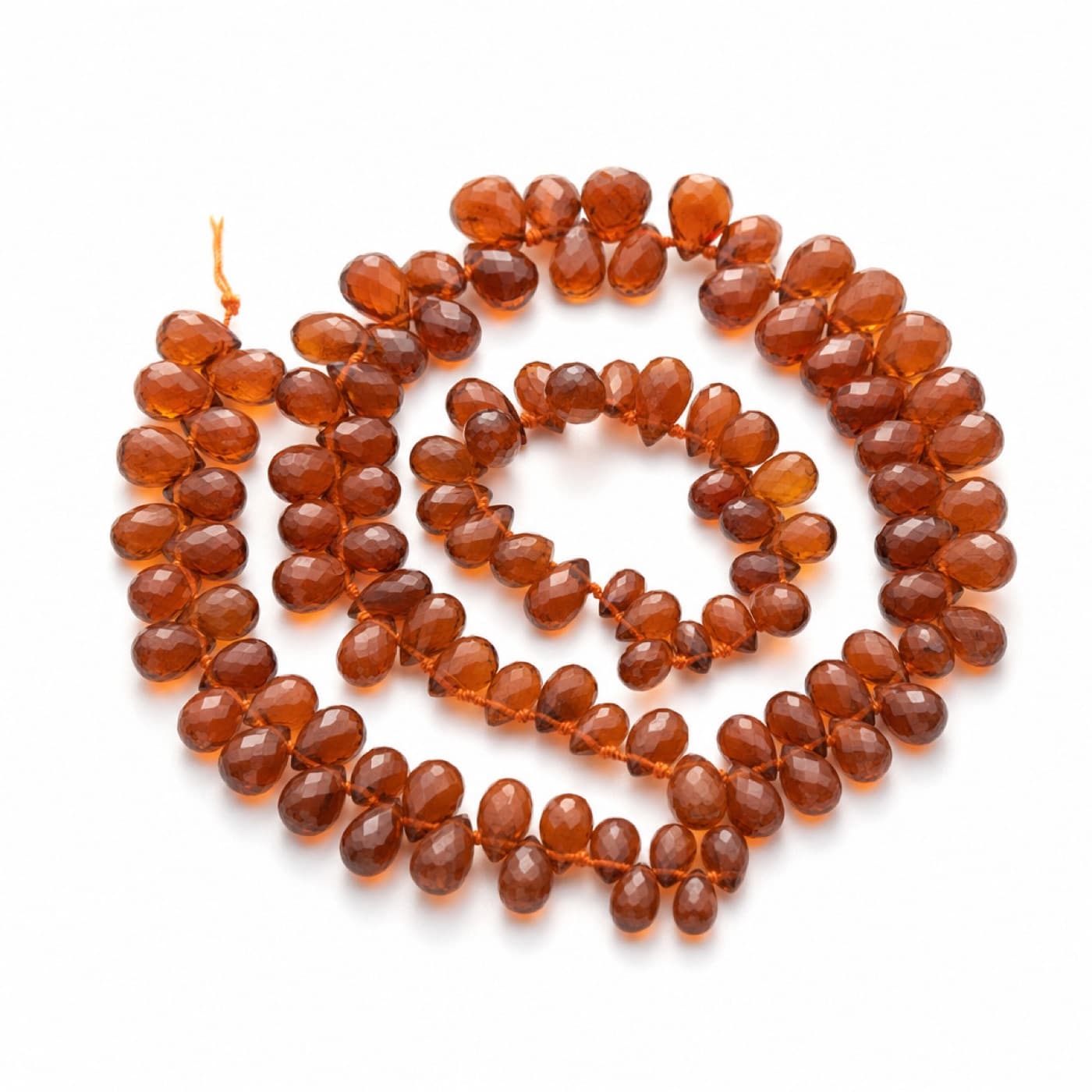
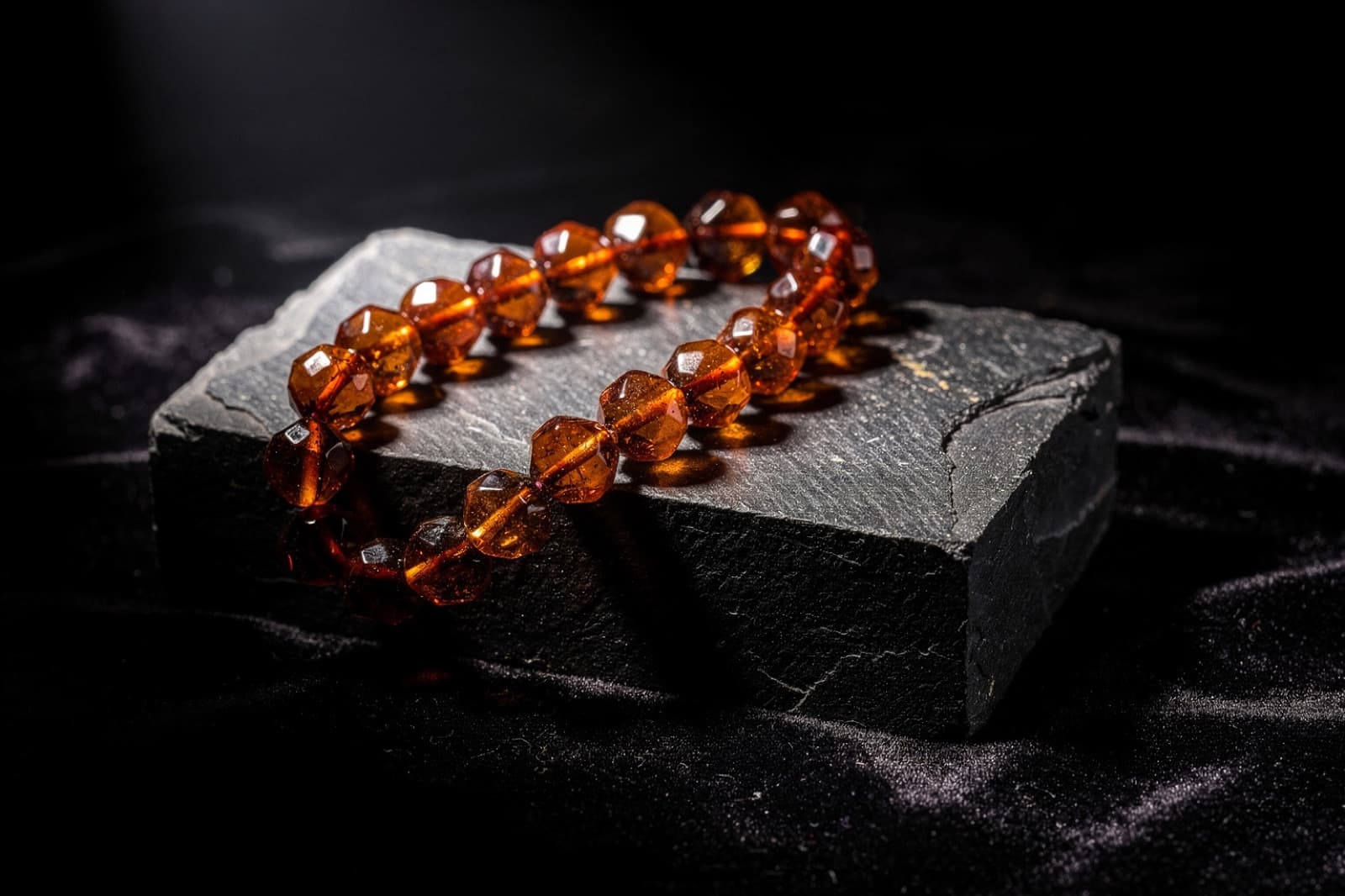
Film and illustrations are AI renders. Strand listings below show photographs of the actual material.
How to judge it
Hessonite alone shows a swirled, oily "treacle" look inside under a 10x loupe. Citrine is glassy and clean inside, paler, and a same-size strand weighs about 27 percent less (SG 2.65 against 3.65). Fire opal weighs about half as much, is softer (Mohs 5.5-6.5, a steel point scratches it) and often hazy.
What it's like to work with
Mid tier. Autumn palettes and Vedic astrology buyers asking for "gomed" (hessonite). Shaded heishi and 3mm rondelles sell best.
Care
Daily wear. Soap and water.
January birthstone; in Indian tradition hessonite (gomed) is worn for the planet Rahu (tradition, not fact).
Fire opal color at garnet hardness.
Hold a shaded strand to a window and the beads sort themselves out: cinnamon at one end, honey through the middle, then a few that go clean mandarin. Under a 10x loupe the hessonite gives itself away. The inside looks stirred, a swirled, oily texture that cutters call treacle. Citrine by comparison sits glassy and empty, and lighter in the hand. People reach for these strands in autumn, when they want orange that stands up to being worn every day.
Where it comes from
Hessonite belongs to the grossular species, a calcium aluminum silicate, and arrives in cinnamon and honey tones from Sri Lanka, India and Tanzania. Spessartite is a different chemistry, manganese aluminum silicate, and takes its name from Spessart in Bavaria, Germany, where it was first described. The brighter mandarin material comes from Nigeria, Namibia and Mozambique. Garnet has been worn a long time. Red garnet necklaces were placed on the necks of Egypt's pharaohs and buried with them for the afterlife, and in Rome carved garnets set into signet rings stamped the wax that secured documents. By Pliny's day, 23 to 79 AD, red garnets were among the most widely traded gems. Grossular took much longer to find an audience, and for years hessonite was the only part of the species used much in jewelry. Our strands are cut in Jaipur, India, and chosen strand by strand in Cupertino, California.
What tradition says
Garnet is the birthstone for January and the gem given for a second anniversary. In older writing the word carbuncle covered red garnets and nearly any red stone, and one tradition holds that carbuncle was among the four precious stones given to King Solomon. Across many cultures people have long associated garnet with love, friendship, light and vitality, and have worn it as a stone of warmth and steadiness. In India, hessonite is known as gomed and is worn by tradition for the planet Rahu, which is why buyers who follow Vedic astrology often ask for it by that name. These are beliefs carried down through generations rather than statements about the stone itself.
These are beliefs people have held about the stone, told as tradition. They are not claims, and not advice.
How makers use it
Faceted rondelles at 3 to 4mm do the most work here: spacers between larger stones, a whole strand knotted for a plain necklace, short runs in earrings. Shaded heishi is the other steady seller, since the drift from cinnamon to mandarin along the strand does the design work for you. Pear briolettes at 7x13mm suit a single drop or a close-set fringe. Autumn palettes take most of what we sell, and a shaded parcel lets one necklace run through several tones without anything needing to match. We list three strands at a time.
Looking after it
These take daily wear. Garnet sits at 6.5 to 7.5 on the Mohs scale, hard enough for a necklace worn most days. Wash with mild soap and water, then dry the beads before they go back on the hook. Store them apart from harder stones so the facet edges stay crisp.
Sources: Garnet History and Lore, Garnet Symbolism and Legends - International Gem Society, Gem-Quality Grossular Garnets, Garnet Gemstone | Garnet Stone – GIA