Iolite
Gem cordierite, a magnesium-iron aluminum silicate. Mohs 7-7.5, one direction of cleavage. Most bead material is from India; also Tanzania and Sri Lanka. Nicknamed "water sapphire" for its pale sapphire look.
At a glance
| Hardness (Mohs) | 7 to 7.5 |
|---|---|
| Family | Cordierite |
| Where it is mined | See description |
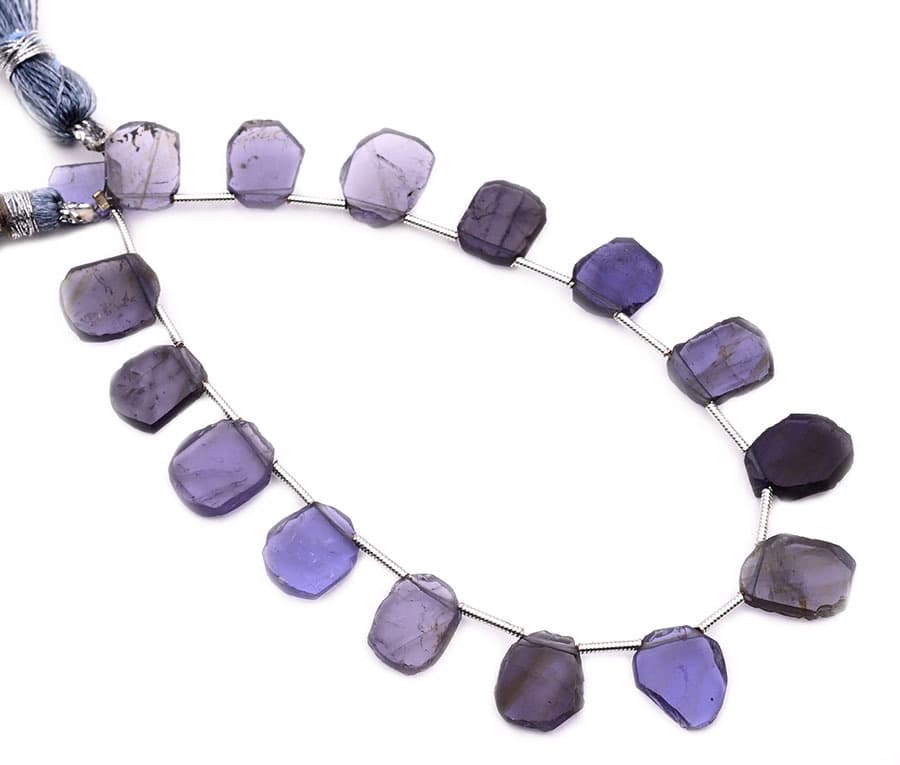
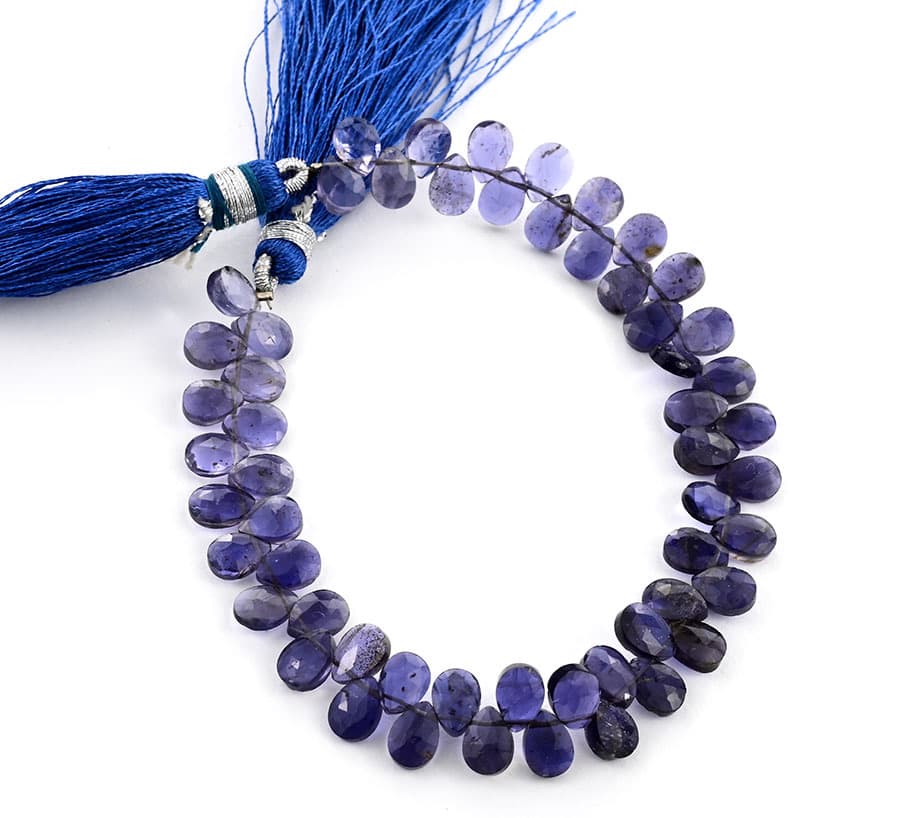
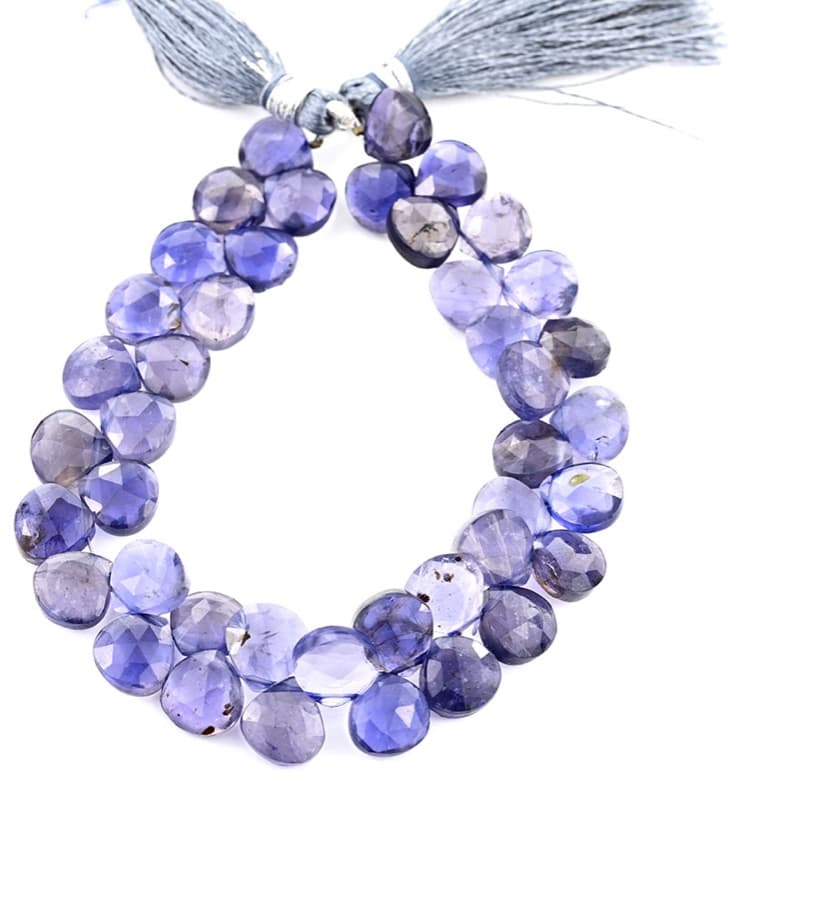
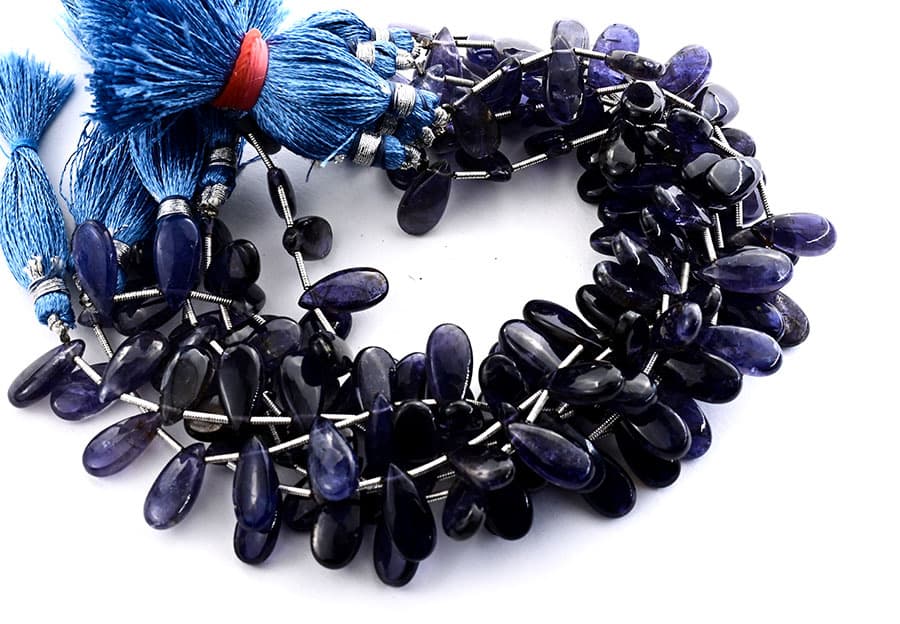
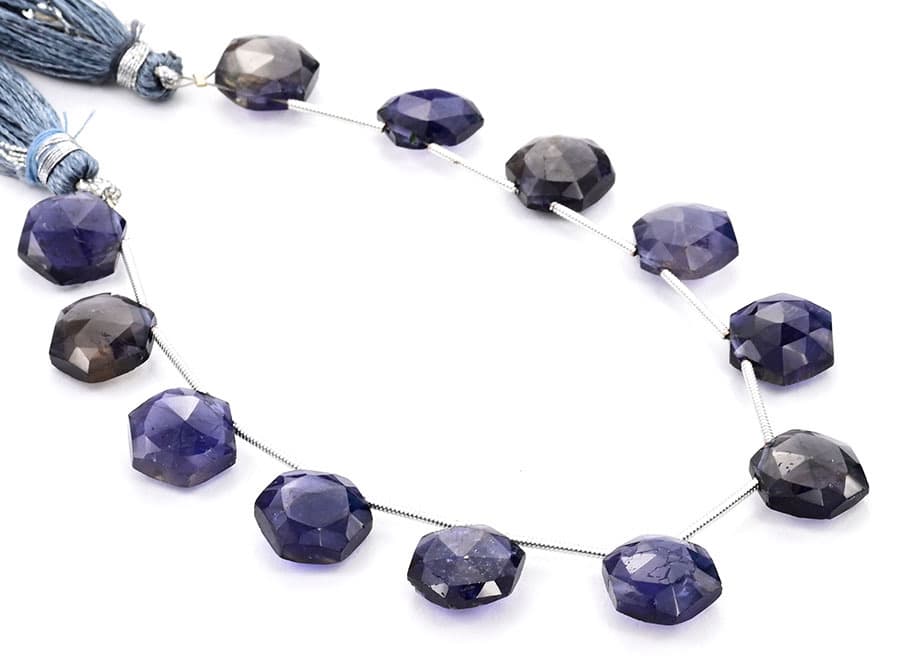
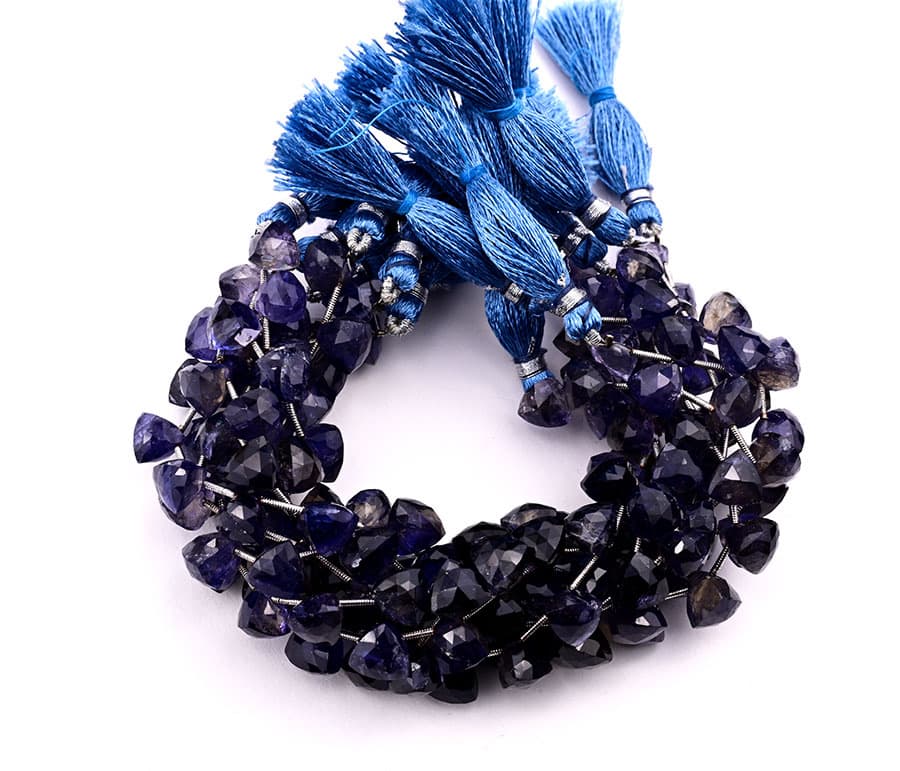
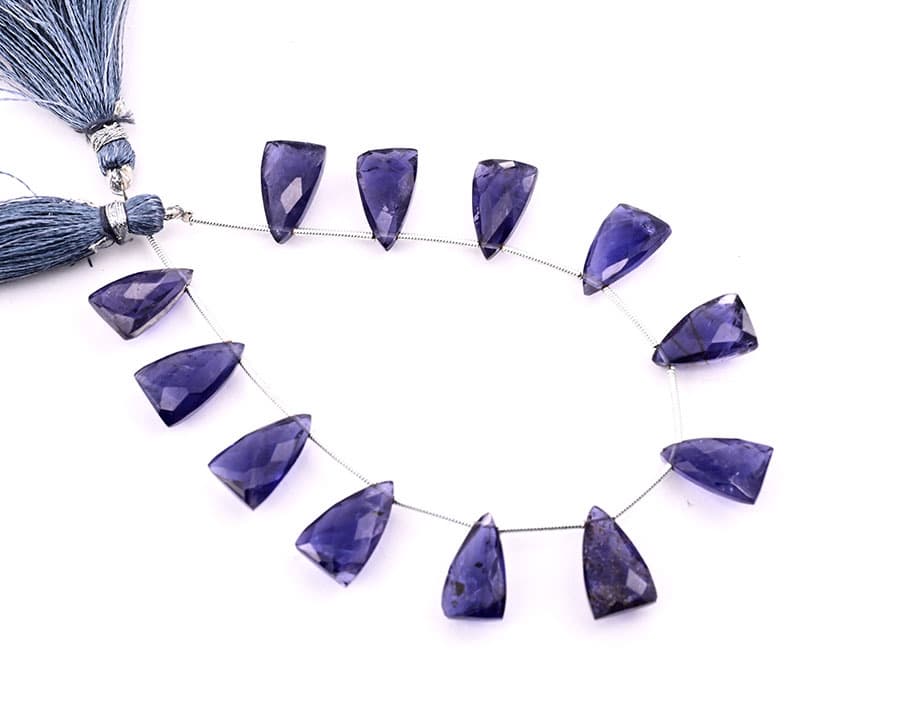
| Shapes we carry | Hearts, Nuggets, Pears, Pyramids, Tear drops, Trilliants |
| Strands listed | 8 |
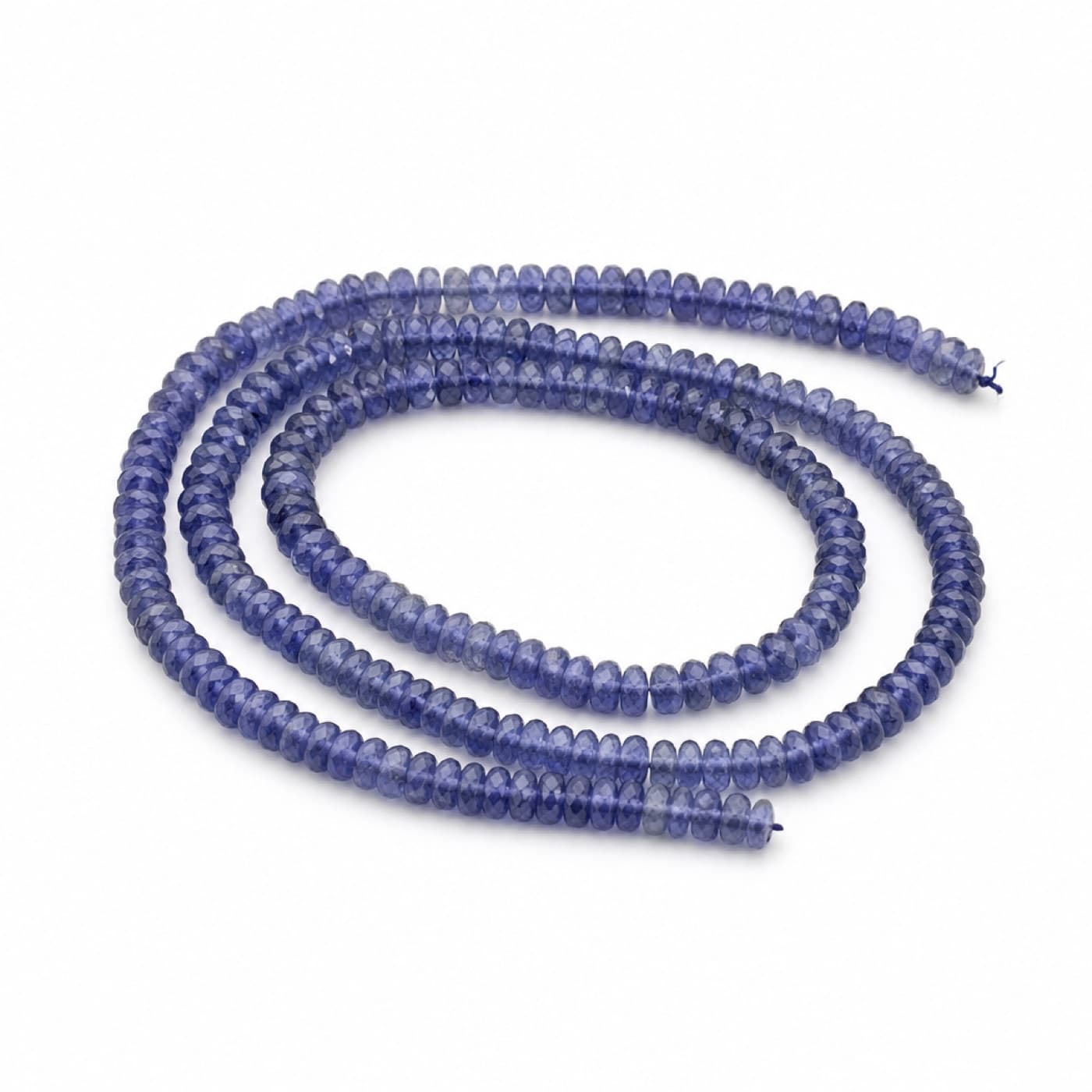
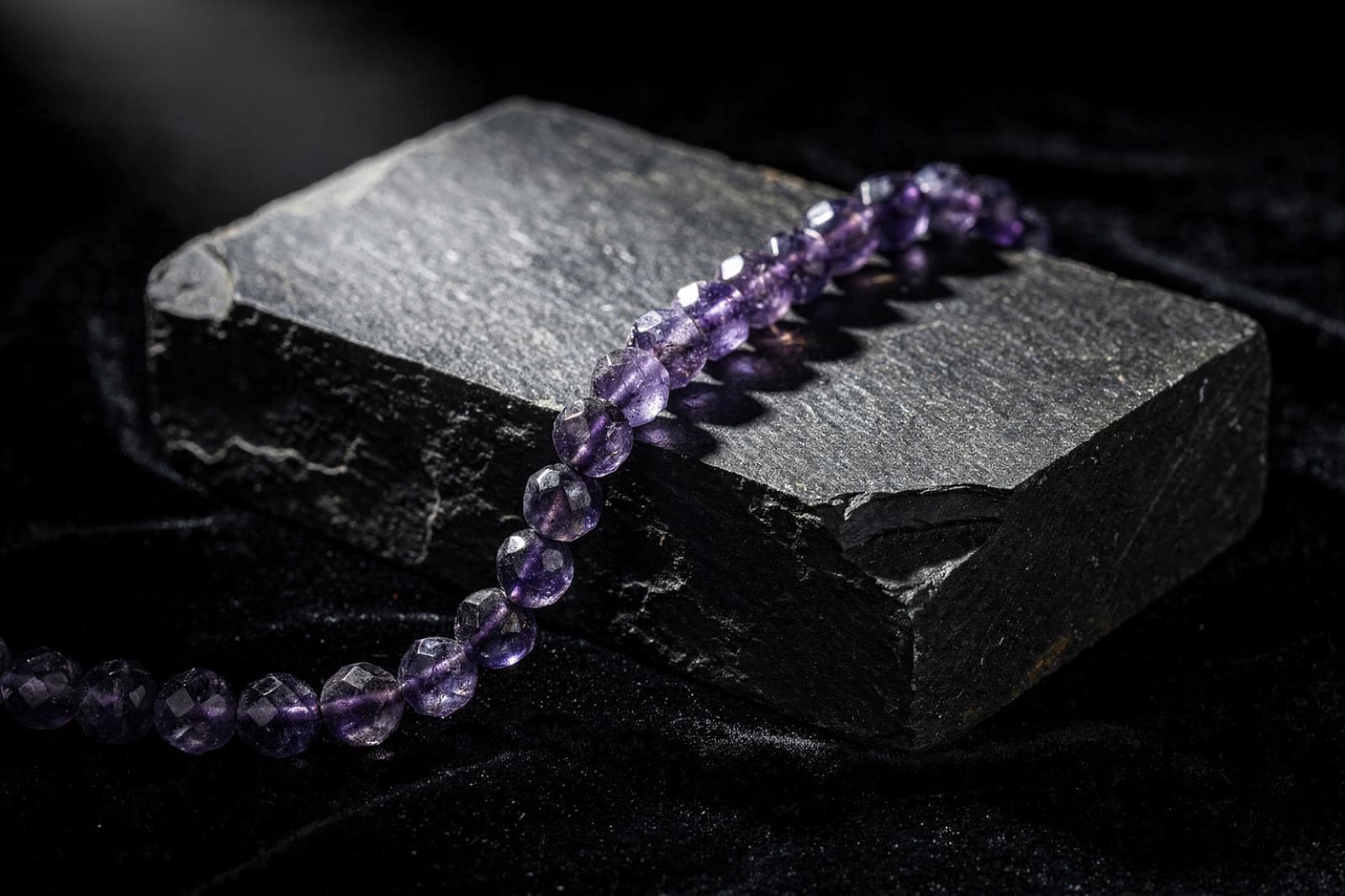
Film and illustrations are AI renders. Strand listings below show photographs of the actual material.
How to judge it
Iolite is strongly pleochroic: violet-blue in one direction, pale blue-gray in another, straw yellow in the third. In an oval bead one face looks inky and the side washed out; good cutters drill so the blue faces out, so check most beads read blue from the front. Look-alikes: tanzanite (far pricier, different pleochroic colors) and blue glass (no pleochroism, bubbles).
What it's like to work with
Entry tier. Denim and slate palettes, budget "sapphire look" pieces. Faceted heishi sells best.
Care
Daily wear is fine; avoid hard knocks along the cleavage. Soap and water.
Not a modern birthstone; tradition calls it the Viking compass stone (tradition, not fact).
Turn it and the blue comes and goes.
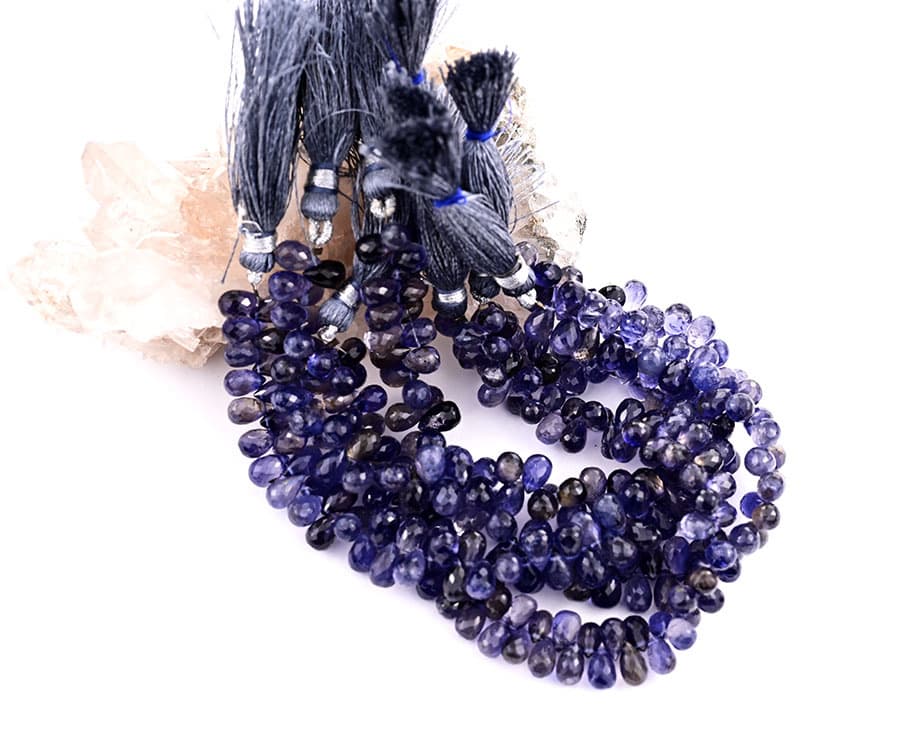
Iolite on a strand looks like denim washed a few times, blue with gray in it. Turn the strand and the color shifts: one face inky violet-blue, the next pale and watery, the third a hint of straw. That flicker belongs to the stone, not to the light. Glass can be blue, but glass cannot do that. Makers reach for iolite when they want a sapphire look at a working price, on a bead that holds its color across a whole necklace.
Where it comes from
Mineralogists call it cordierite, a magnesium-iron aluminum silicate. The mineral was described in 1813 from specimens at Níjar, in Almería, Spain, and named for the French geologist Louis Cordier, who lived from 1777 to 1861. The gem trade uses a different name, iolite, from the Greek word for violet. Older names stuck to it as well. Dichroite means two-colored rock, and water sapphire came from the same habit of changing color as you turn it, blue from one direction and nearly clear from another. Most of the bead material we see comes from India, with some out of Tanzania and Sri Lanka. Because the rough is usually transparent and fairly clean, it is most often faceted, though it is also cut as cabochons and carvings, and it turns up often as beads. Our strands are cut in Jaipur and chosen one at a time in Cupertino, California.
What tradition says
Legend gives iolite a job at sea. Viking navigators are said to have used thin slices of it as a filter, cutting glare and locating the sun through overcast sky so they could fix their own position. Whether that ever happened is unsettled, and the tale is passed along as tradition rather than record, but the name Viking compass stone has stayed with it. The nickname holds the idea in it: light read through a blue stone, direction found on a day with no sun in view. Iolite has long been fashioned for adornment, and in the language of anniversaries it belongs to the twenty-first year.
These are beliefs people have held about the stone, told as tradition. They are not claims, and not advice.
How makers use it
Iolite sits in denim and slate palettes and does the work of a sapphire look in an everyday necklace. Faceted heishi at 4mm moves fastest here; the flat discs pack tight and keep the blue coming and going down the whole line. Smooth ovals at 8x10mm suit a plain strung necklace or a knotted piece with silver in it. When you pick a strand, hold it at arm's length. The drilling decides which face shows, and on the better strands nearly every bead reads blue from the front. We have eight strands in the shop, in sixteen inch lengths and half strands of eight inches.
Looking after it
Iolite runs 7 to 7.5 on the Mohs scale, hard enough for daily wear. It has one direction of cleavage, so a sharp knock against a counter edge matters more than a scratch. Wash with mild soap and warm water. Store it where it will not press against harder stones.
Sources: Iolite History and Lore, Iolite Gemstone | Iolite Stone - GIA, Iolite: Gem-quality cordierite and blue sapphire look-alike., Cordierite
Iolite strands