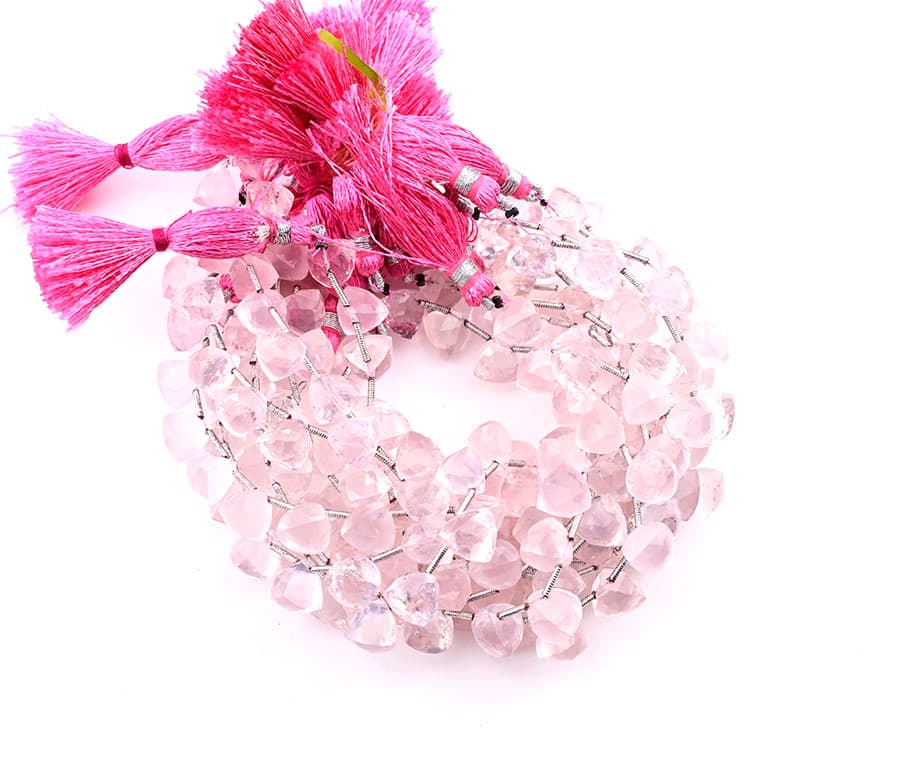
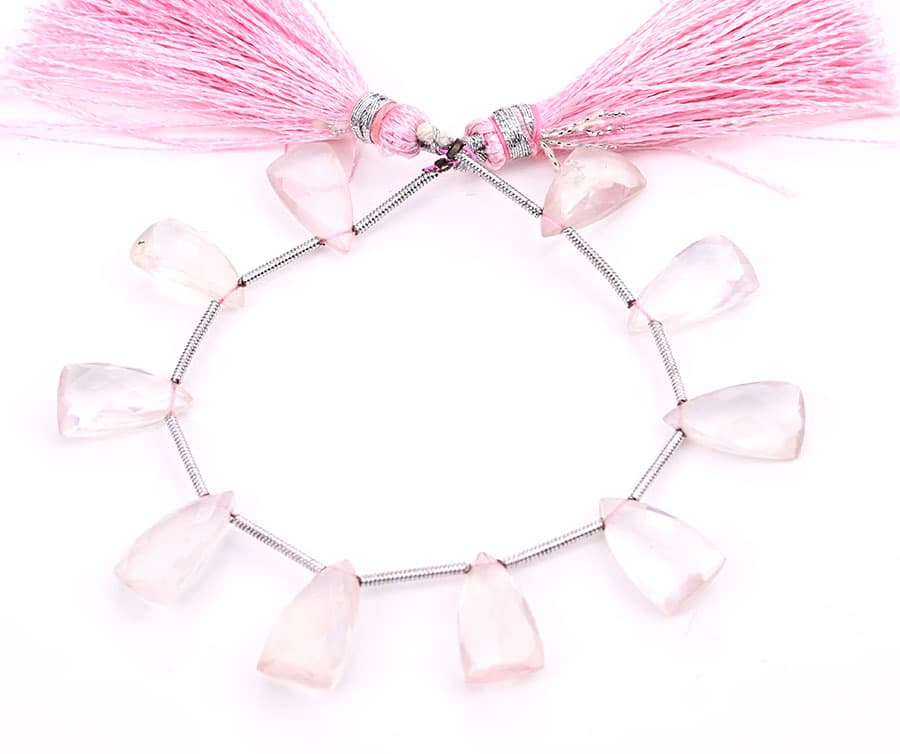
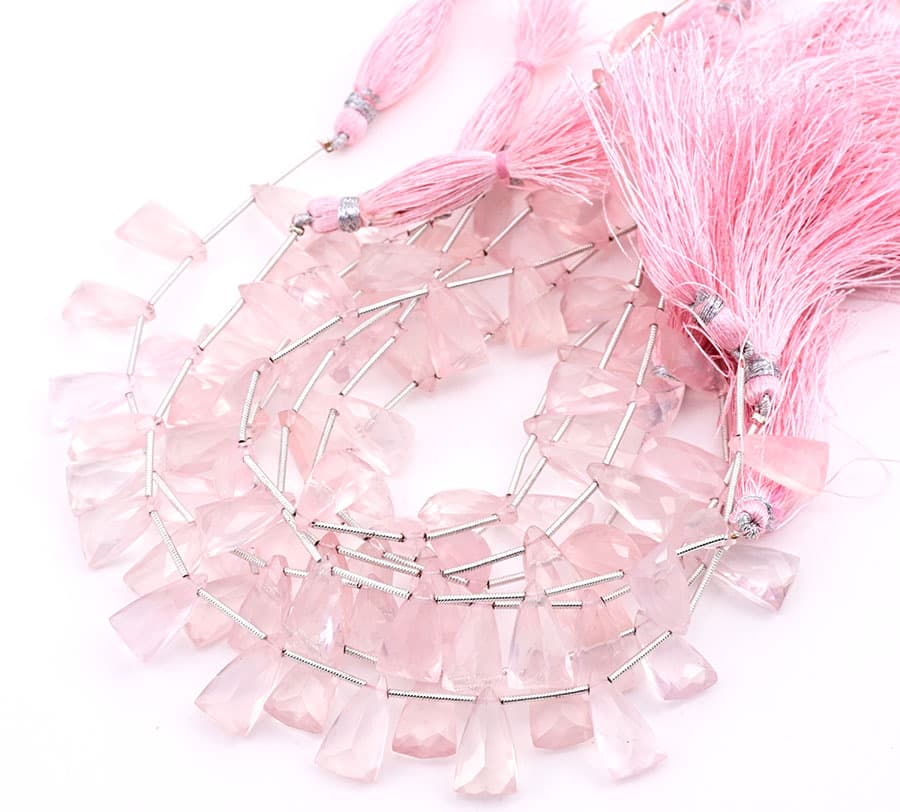
Rose quartz
Translucent pink quartz, Mohs 7, colored by microscopic fibers of a pink dumortierite-type mineral, which is why it is always hazy. Sources: Brazil, Madagascar, South Africa, India.
At a glance
| Hardness (Mohs) | 7 |
|---|---|
| Family | Quartz |
| Where it is mined | Brazil, Madagascar, South Africa, India |
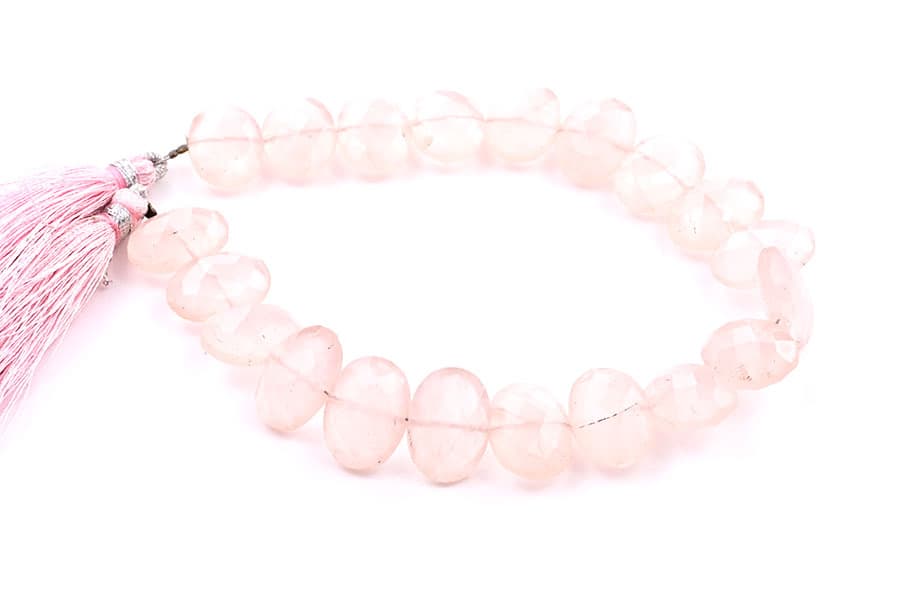
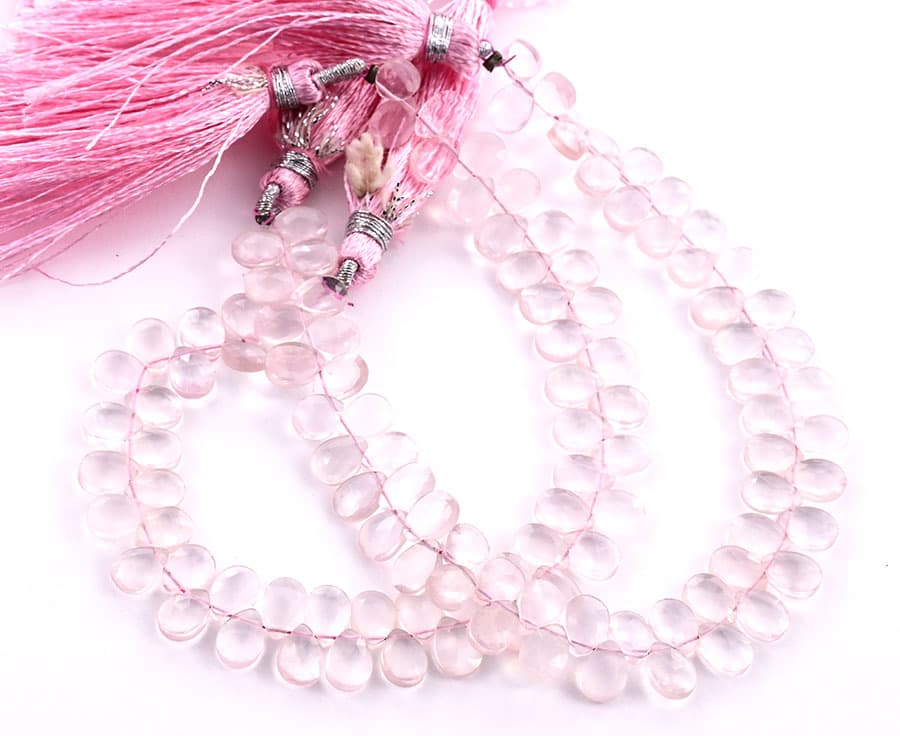
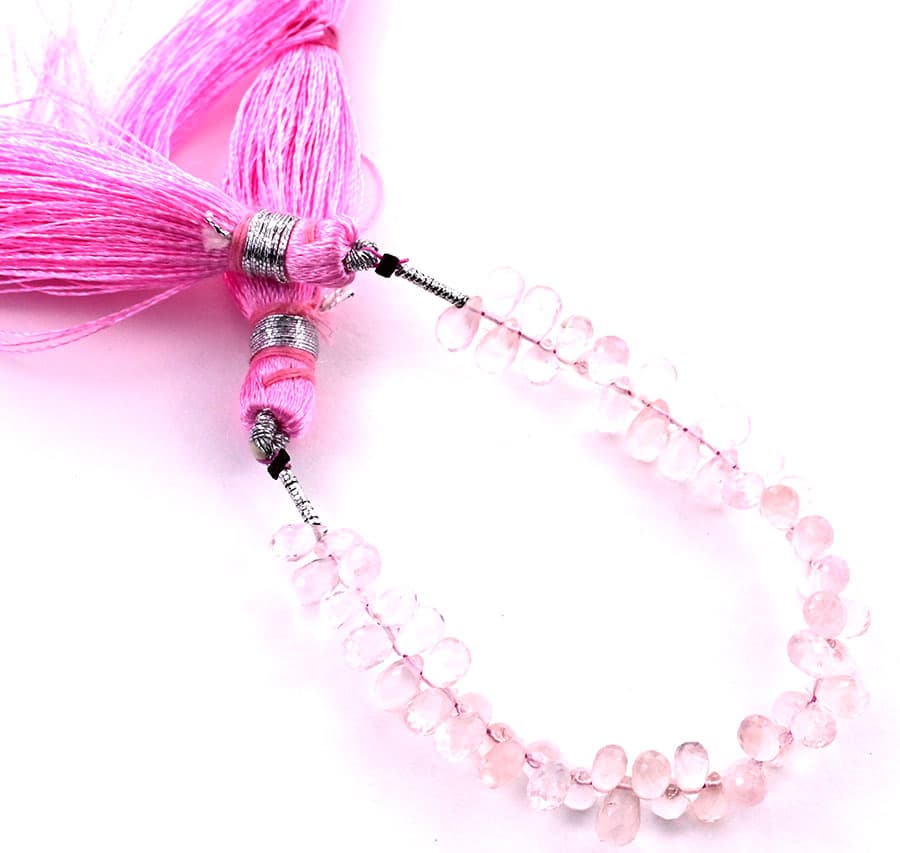
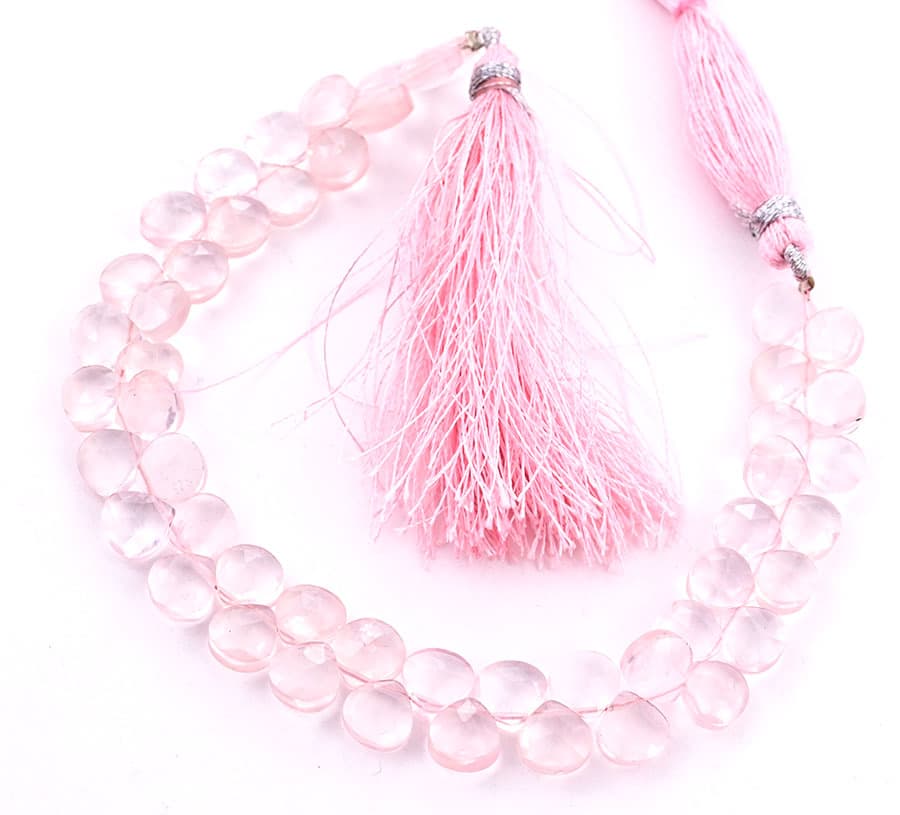
| Shapes we carry | Hearts, Ovals, Pears, Pyramids, Tear drops, Trilliants |
| Strands listed | 7 |
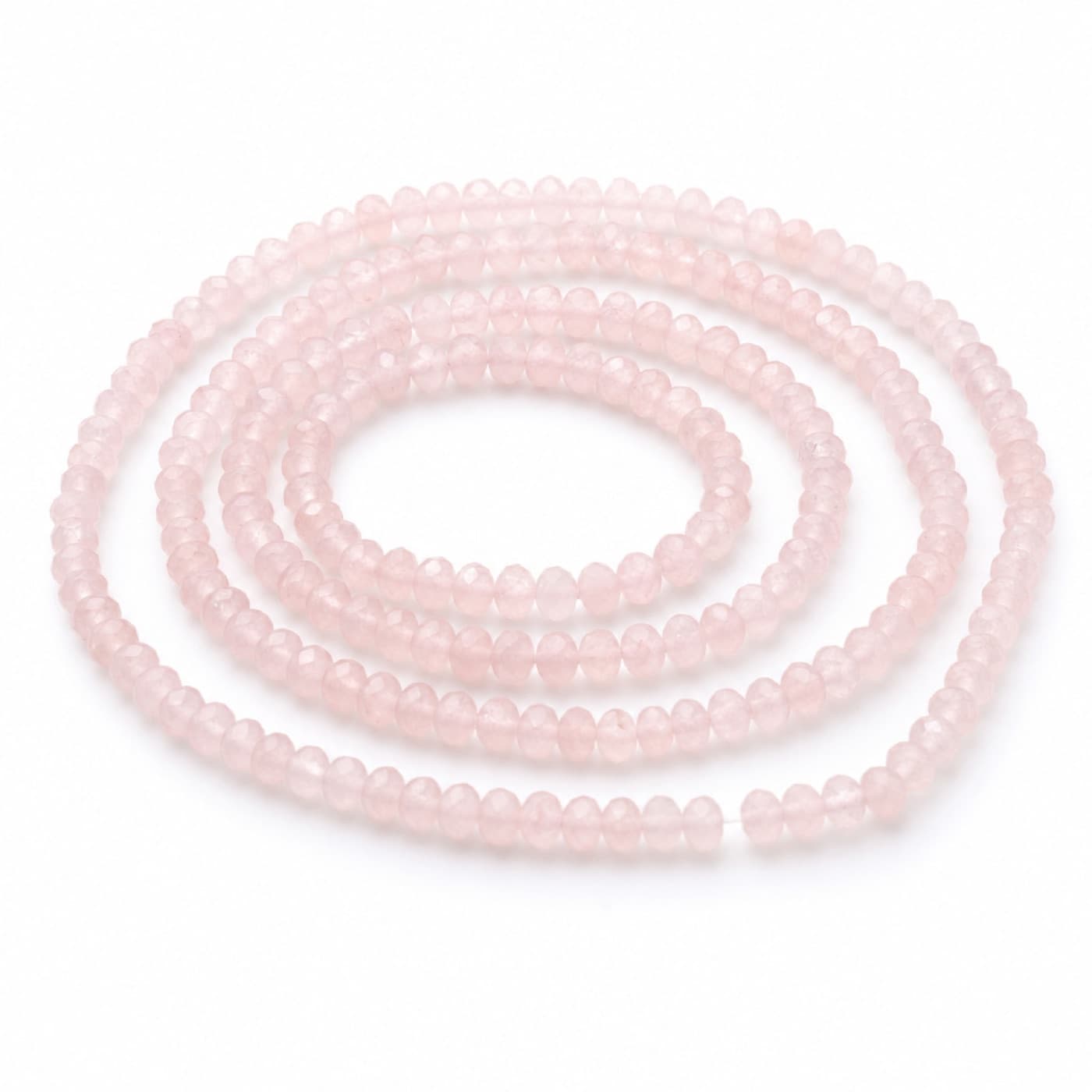
Film and illustrations are AI renders. Strand listings below show photographs of the actual material.
How to judge it
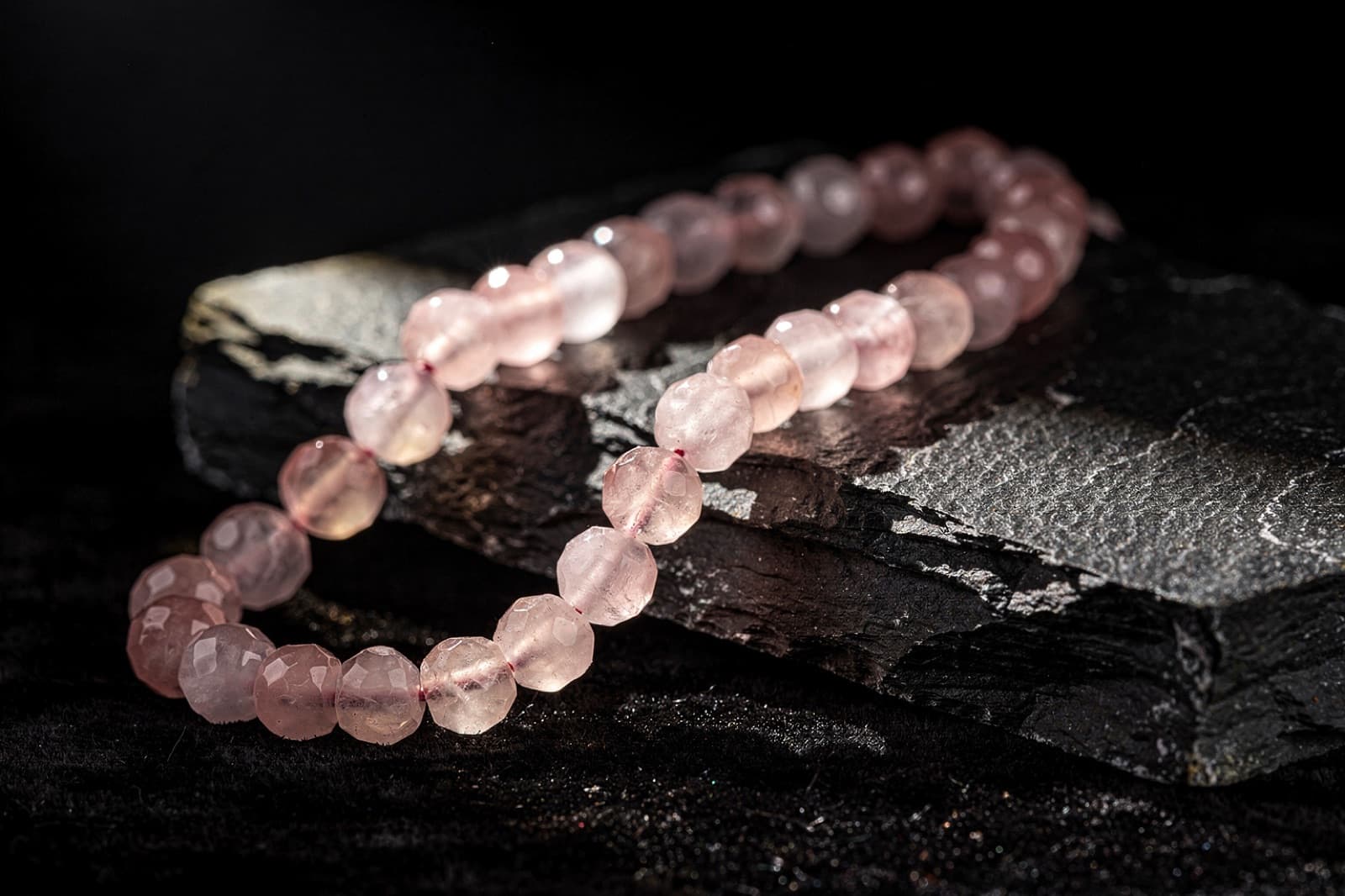
Even medium pink with a soft glow and no gray or brown; chalky white is the low grade. A transparent pink bead at this price is not rose quartz.
What it's like to work with
Entry-price pink for bracelet stacks, gift lines, bulk stringing. 3 to 4mm rondelles as spacers and full strands.
Care
Everyday durable. Warm soapy water; ultrasonic fine. Years of direct sun can fade it.
No birthstone; by long tradition the love and self-compassion stone.
The honest pink, hazy by nature.
Hold a strand of rose quartz to a window and the light does not pass straight through. It slows down and spreads, so each bead glows from the inside rather than sparkling on the surface. The pink is soft, closer to the inside of a shell than to a candy color, and the faceted edges catch small flat highlights. That haze is the mineral itself, microscopic pink fibers related to dumortierite, not a flaw in the cutting. People reach for it because the color is honest and easy to wear.
Where it comes from
Rose quartz grows in the quartz cores of pegmatites, formed at 400 to 700 degrees Celsius, and it comes out of the ground in massive lumps rather than clean crystals. Most of what reaches the bead market is from Brazil, Madagascar, South Africa, and India. It is an old material in jewelry. Beads dating to 7000 BC have been found in the area once known as Mesopotamia, in what is now Iraq, and the Assyrians were crafting rose quartz jewelry around 800 to 600 BC. The Romans used it as a seal to signify ownership. Along with the Assyrians, they may have been among the first to work this stone. Our strands are cut in Jaipur, India, faceted to wake up a stone that is naturally quiet, and chosen strand by strand in Cupertino, California.
What tradition says
Rose quartz has been carried for a very long time as a stone of love, and in crystal tradition it is the one people reach for when the love in question is for themselves. It is said to soften how a person speaks to themselves, and to hold a steady, forgiving kind of warmth rather than a bright one. The ancient Egyptians are said to have used it as a talisman believed to hold off the signs of age. Romans, Greeks, and Egyptians all regarded quartz as a stone with power in it. By custom, rose quartz marks the fifth wedding anniversary.
These are beliefs people have held about the stone, told as tradition. They are not claims, and not advice.
How makers use it
The 3 to 4mm faceted rondelles do double duty. Run a full strand for a bracelet that reads as one soft line of pink, or scatter them between larger stones as spacers where you want a break in color without a break in sparkle. They also stand up to bulk stringing for gift lines without pushing the price up. We cut rose quartz faceted in hearts, pears, and ovals as well, in sizes from 5x7mm up to 9x15mm. We list seven strands at a time, sold by the 16 inch strand and by the half. Buy three and match the pinks; an even medium pink with a soft glow looks far stronger than a chalky white one.
Looking after it
At 7 on the Mohs scale, rose quartz handles daily wear. Wash it in warm soapy water with a soft brush, and an ultrasonic cleaner is fine. The one thing to watch is sunlight. Years on a sunny windowsill or a car dashboard will pull the pink out of it, so store finished pieces in a drawer or a pouch.
Sources: Rose Quartz History and Lore - GIA, Rose quartz, Rose Quartz Gem | Rose Quartz Stone – GIA, Rose quartz | Healing, Love, Energy | Britannica
Rose quartz strands