Strawberry quartz and red aventurine
Two materials, one loose name. Strawberry quartz: translucent quartz with red hematite inclusions (often mislabeled "lepidocrocite"), Mohs 7. Red aventurine: quartzite colored by hematite and mica, faint sparkle, Mohs 6.5 to 7. Sources are inconsistently reported; India supplies most aventurine.
At a glance
| Hardness (Mohs) | 7 |
|---|---|
| Family | Quartz |
| Where it is mined | See description |
| Shapes we carry | Diamond cuts, Half moons, Hearts, Marquise, Nuggets, Tear drops |
| Strands listed | 7 |
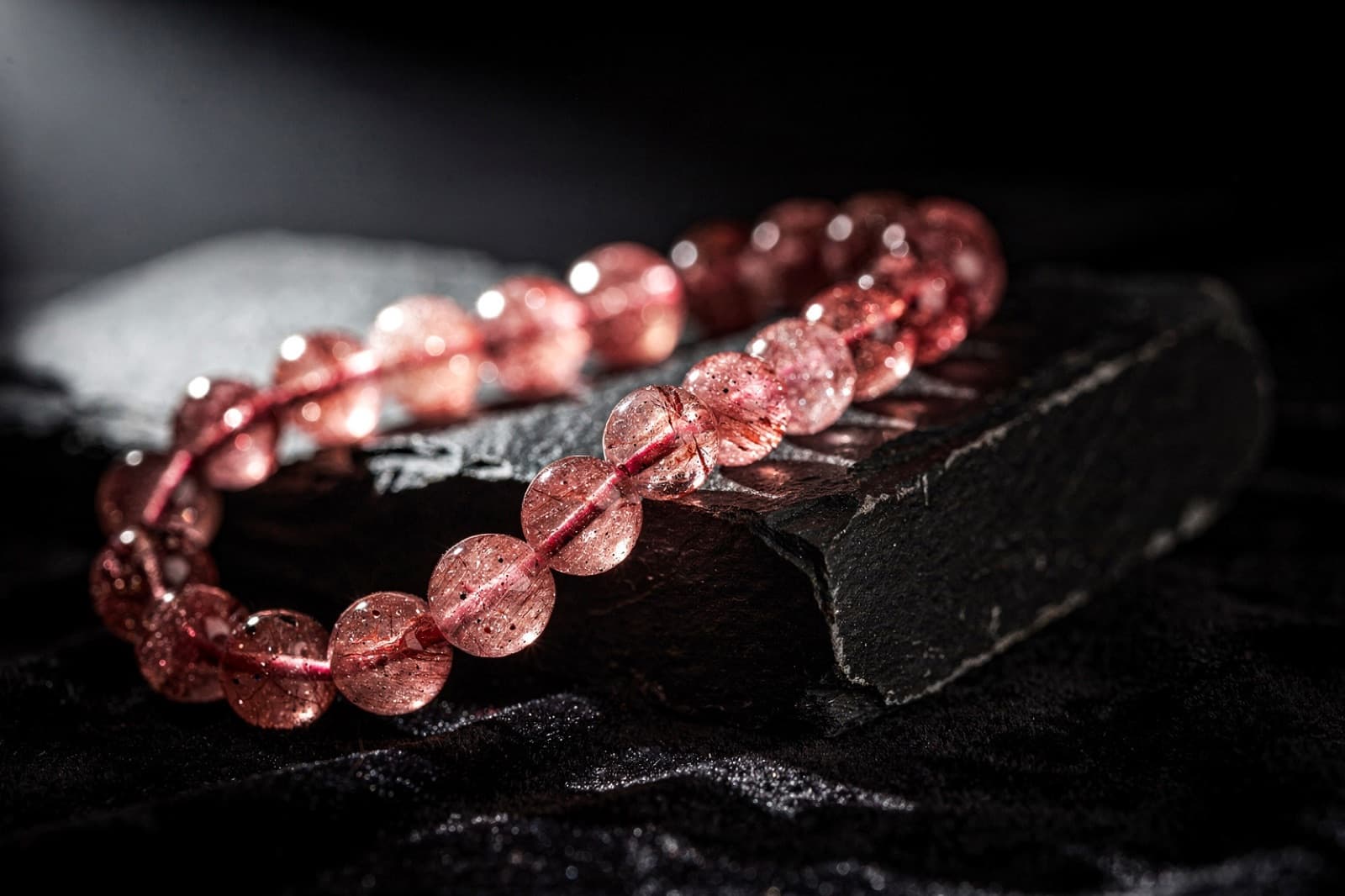
Film and illustrations are AI renders. Strand listings below show photographs of the actual material.
How to judge it
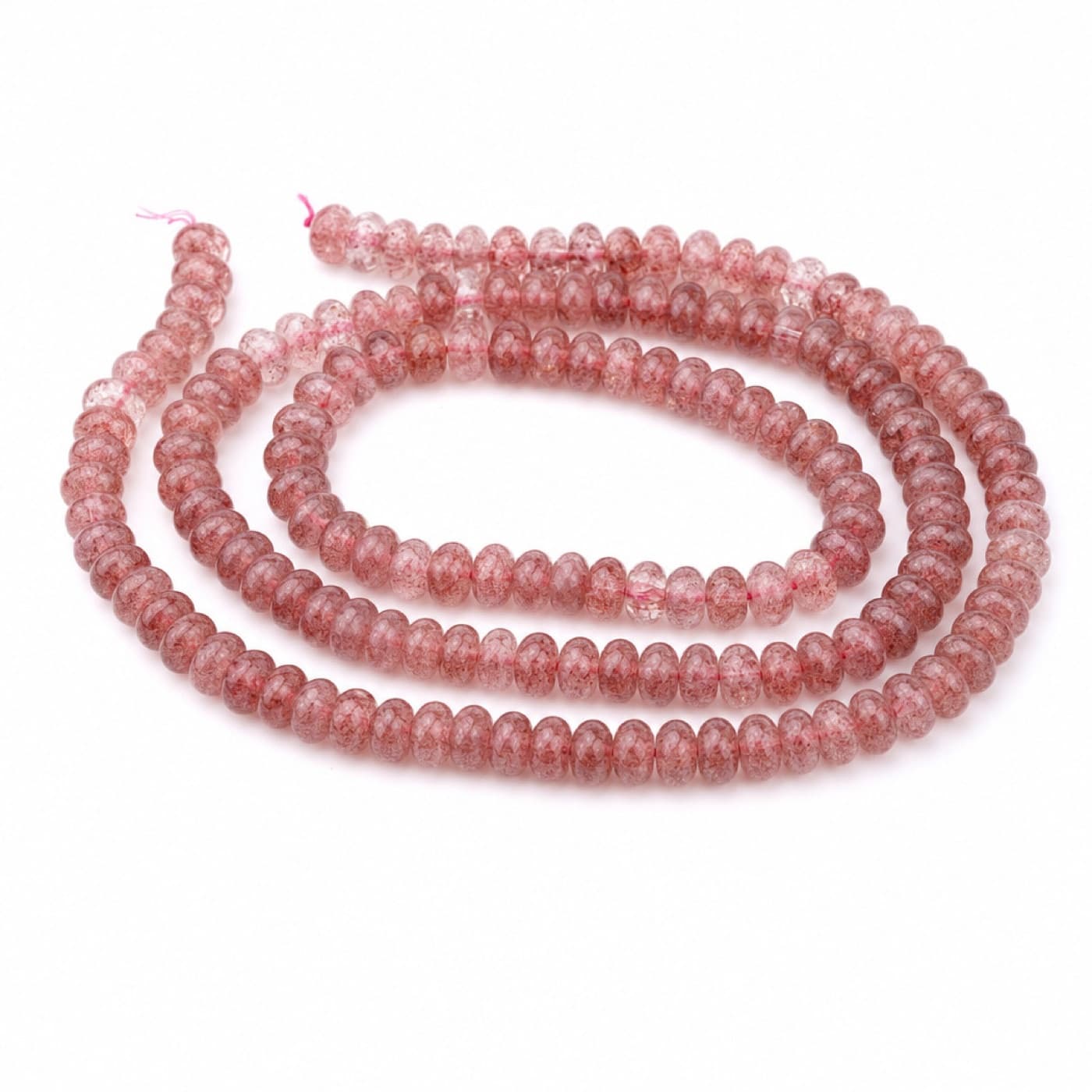
Strawberry quartz: translucent body with visible red flecks or needles. Red aventurine: opaque brick-red with faint glitter. under a loupe, round bubbles and smooth flowing swirls.
What it's like to work with
Pink and red bracelet stacks, Valentine's lines. Heishi and rondelles as spacers; pears for earrings.
Care
Everyday durable. Warm soapy water; ultrasonic fine. Aventurine is slightly porous; no harsh cleaners.
No birthstone; tradition ties both to love and vitality.
Two stones share one name, and the red grew inside.
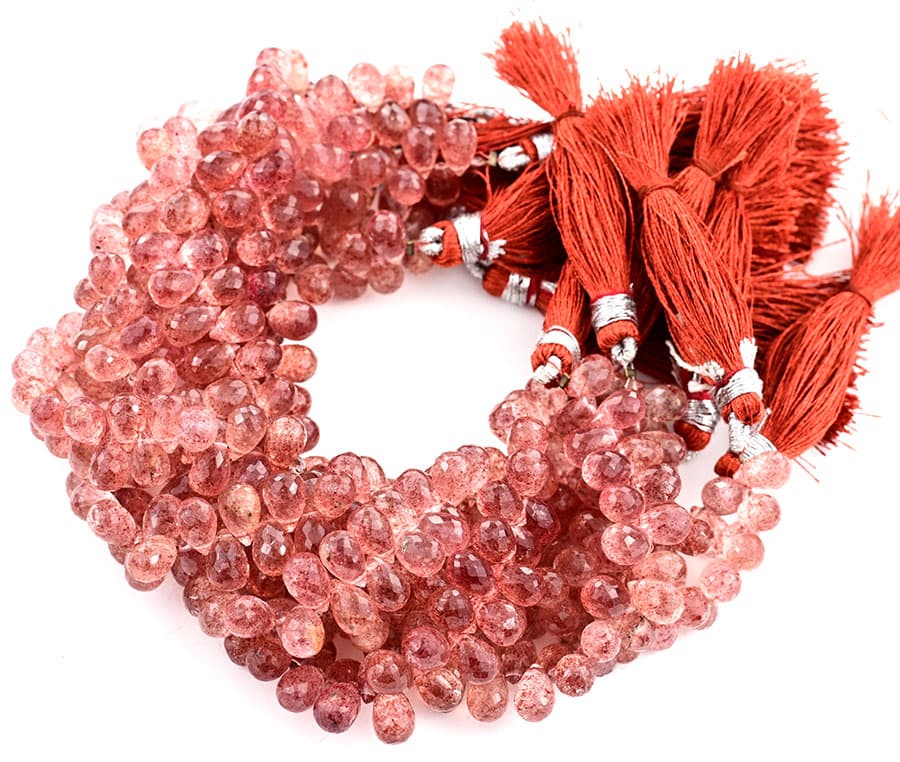
Hold a strand to a window and the two halves of the name separate. Strawberry quartz lets light through, a clear body carrying red flecks and fine needles that look suspended mid-drift. Red aventurine stops the light: brick red, opaque, with a faint glitter that shifts as you turn a bead between your fingers. On the wrist both read as warm red, one lit from inside, the other from the surface. Two materials share the one loose name.
Where it comes from
Both belong to the quartz family. Strawberry quartz is a trade name for quartz colored pink to red by inclusions large enough to see, usually small platelets or hair-like crystals of hematite that grew inside the crystal while it formed. The more inclusions there are, and the more evenly they spread, the deeper the red reads. Red aventurine is quartzite rather than a single crystal, colored by hematite with flakes of mica; light entering the stone bounces off those flakes and produces the sparkle called aventurescence. The name aventurine comes from the Italian a ventura, by chance, after a copper-flecked glass first made by accident in Italy in the early 18th century. India supplies most of the aventurine in the bead trade. Our strands are cut in Jaipur and chosen strand by strand in Cupertino, California. Cherry quartz, sold under a similar sounding name, is glass. These are stone.
What tradition says
Crystal tradition keeps these two in the same company and gives them the same word: love. Strawberry quartz is described as a stone of affection, gentle where other red stones are loud. Red aventurine is spoken of in terms of vitality, the liveliness people have long read into the color red. Much of this arrived with the trade names rather than from old texts, since strawberry quartz is a fairly new name in the gem world. That is still how the beads travel. Sellers set them out together in February, and people choose them for pieces about love. All of it is custom and belief, carried along with the stones.
These are beliefs people have held about the stone, told as tradition. They are not claims, and not advice.
How makers use it
These beads suit pink and red bracelet stacks, and they turn up every winter in Valentine's lines. Faceted teardrops at 11x15mm hang well from ear wires, where the red catches at every turn of the head. Small 5x8mm rondelles work as spacers between larger stones, breaking up a strand of jasper or clear quartz without crowding it. Hearts read plainly for what they are and need no help from the rest of the piece. Strawberry quartz next to red aventurine gives you two reds in one bracelet, one lit through, one matte with a glint. We list seven strands, sold by the sixteen inch and the eight.
Looking after it
Everyday durable, both of them, which is why they hold up in bracelets that get worn daily. Warm water and a little soap on a soft cloth is enough, and an ultrasonic is fine. Red aventurine is slightly porous, so keep harsh household cleaners away from it and dry the strand before storing.
Sources: Strawberry Quartz, Strawberry Quartz, Strawberry Quartz - The Mineral and Gemstone Kingdom, Aventurine: A translucent quartz with a sparkle of mica
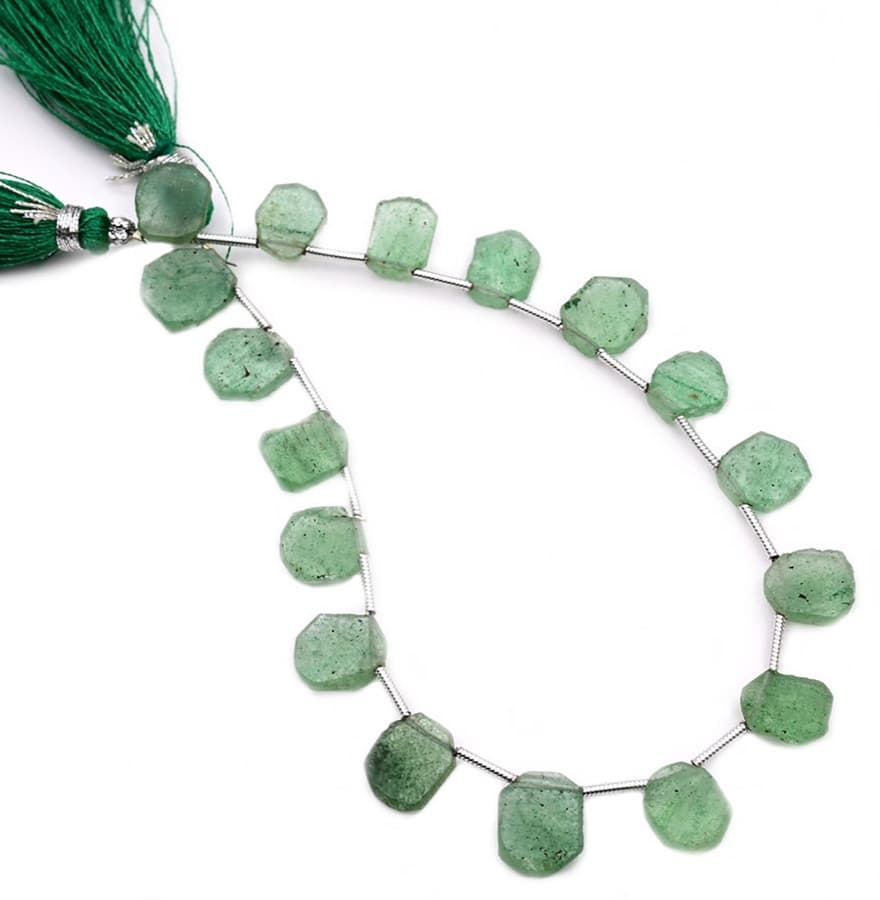
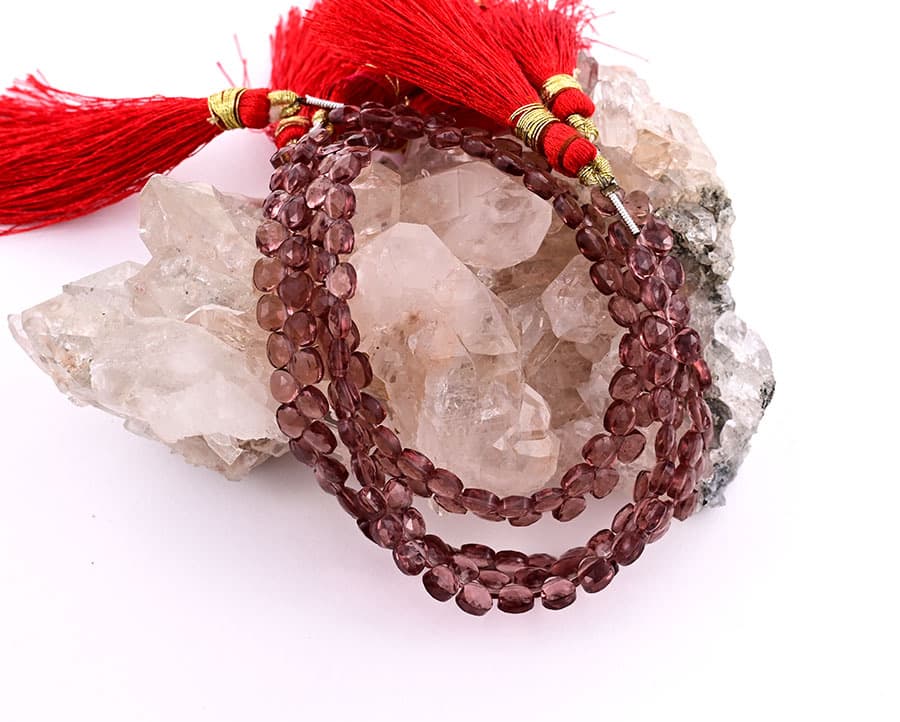
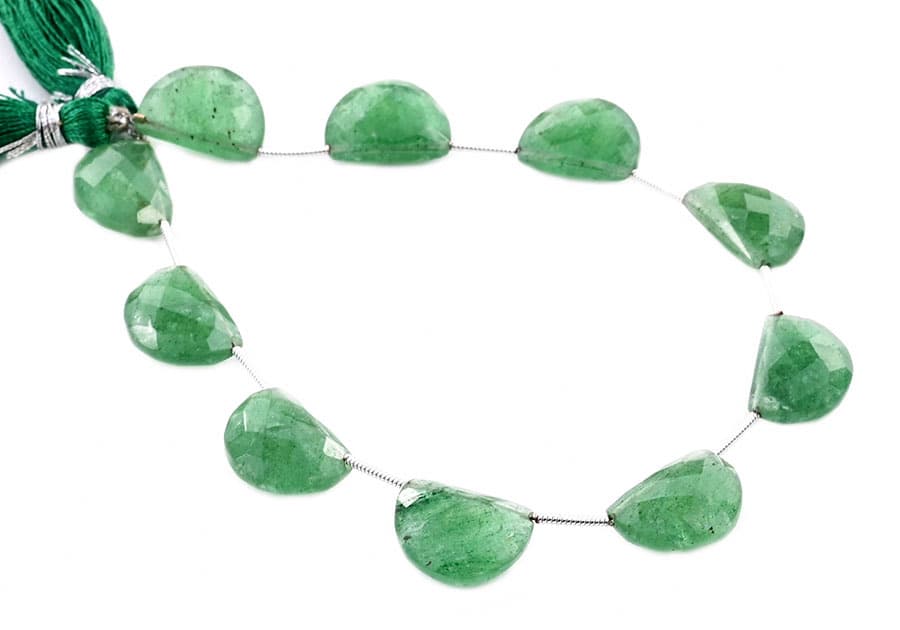
Strawberry quartz and red aventurine strands