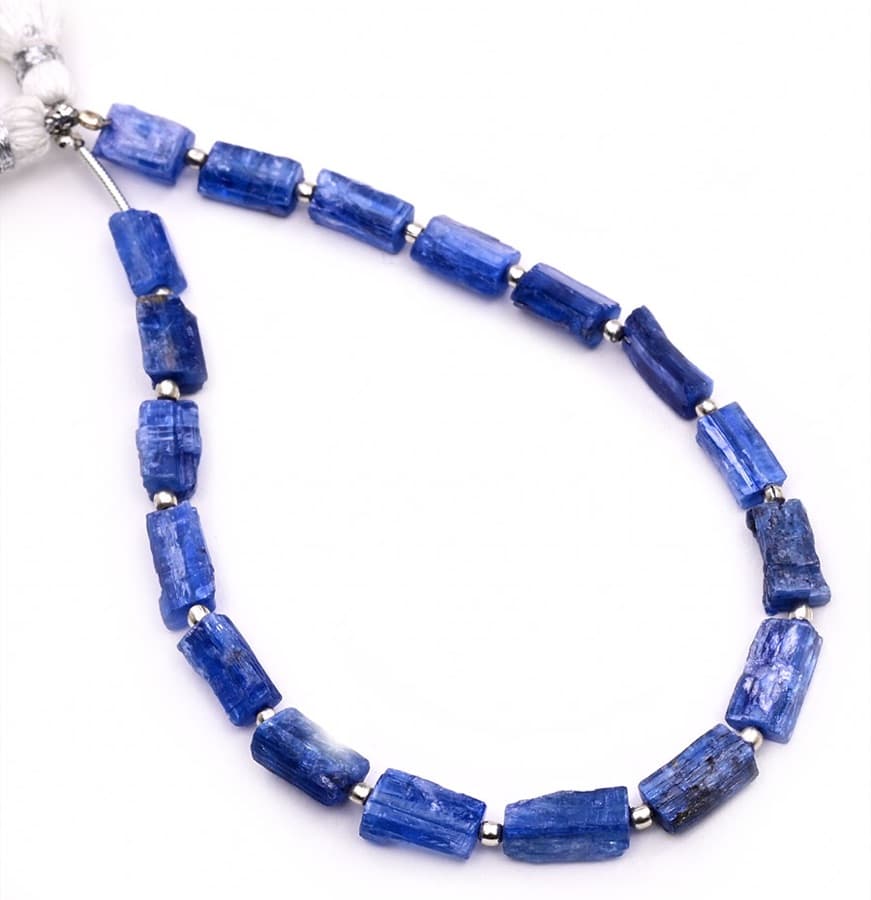
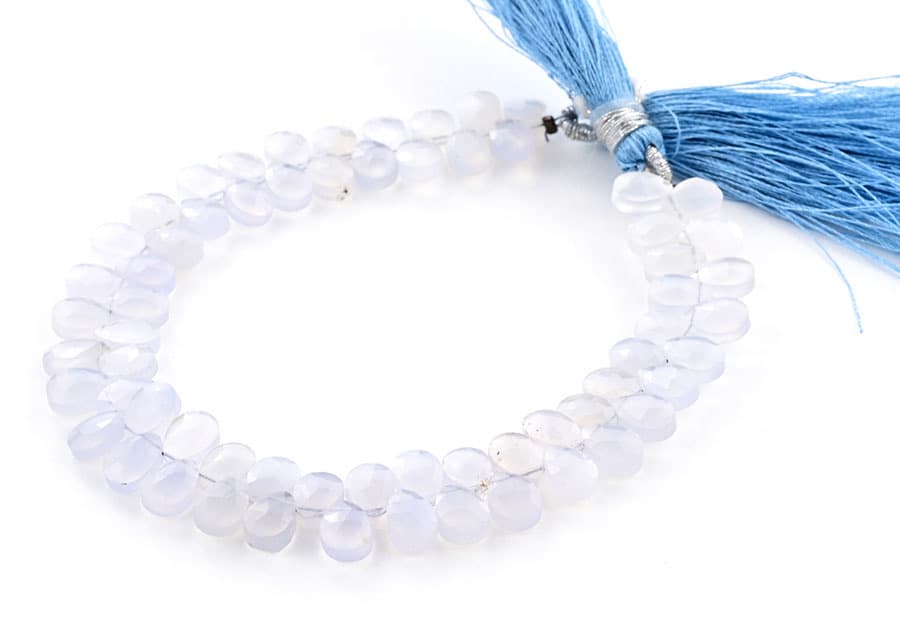
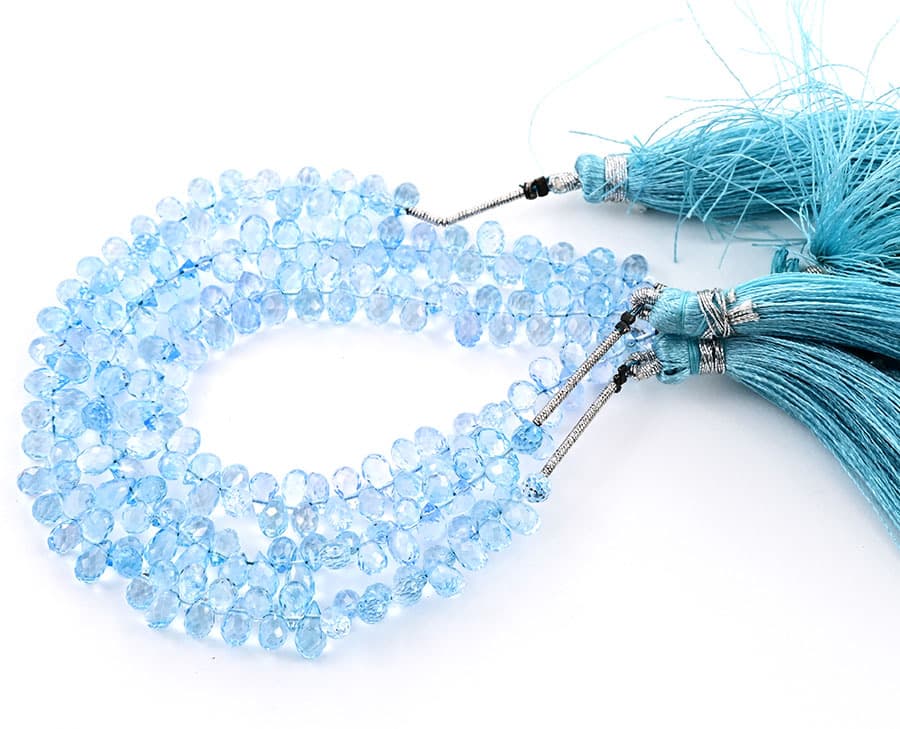
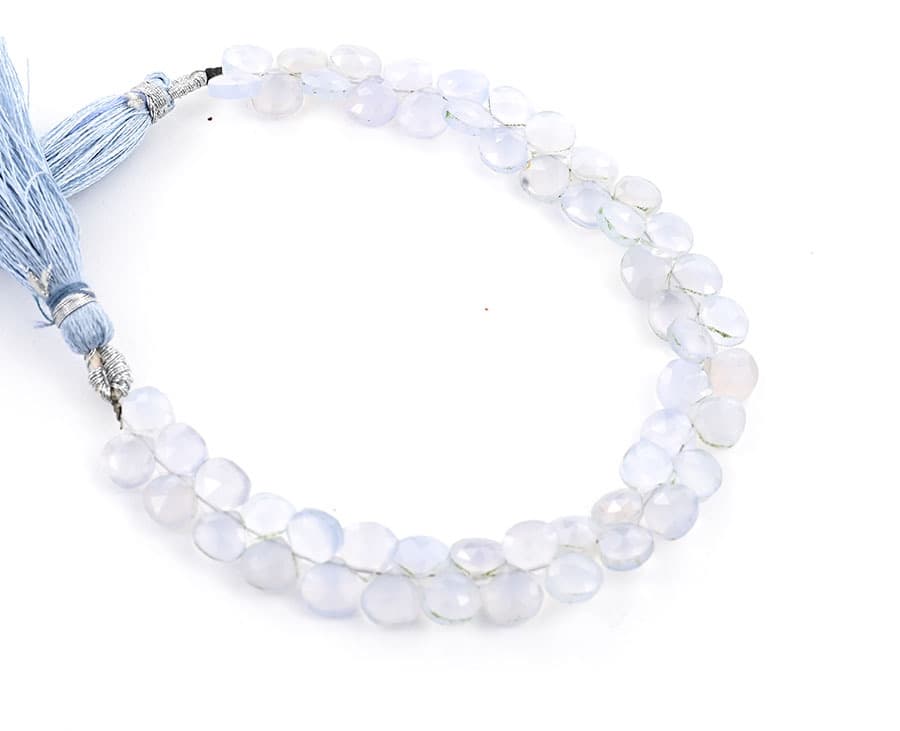
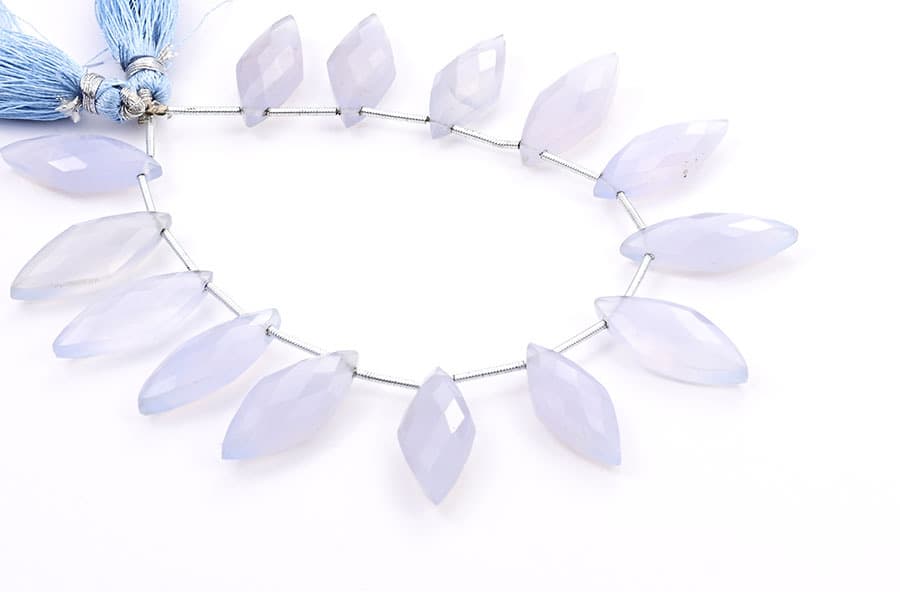
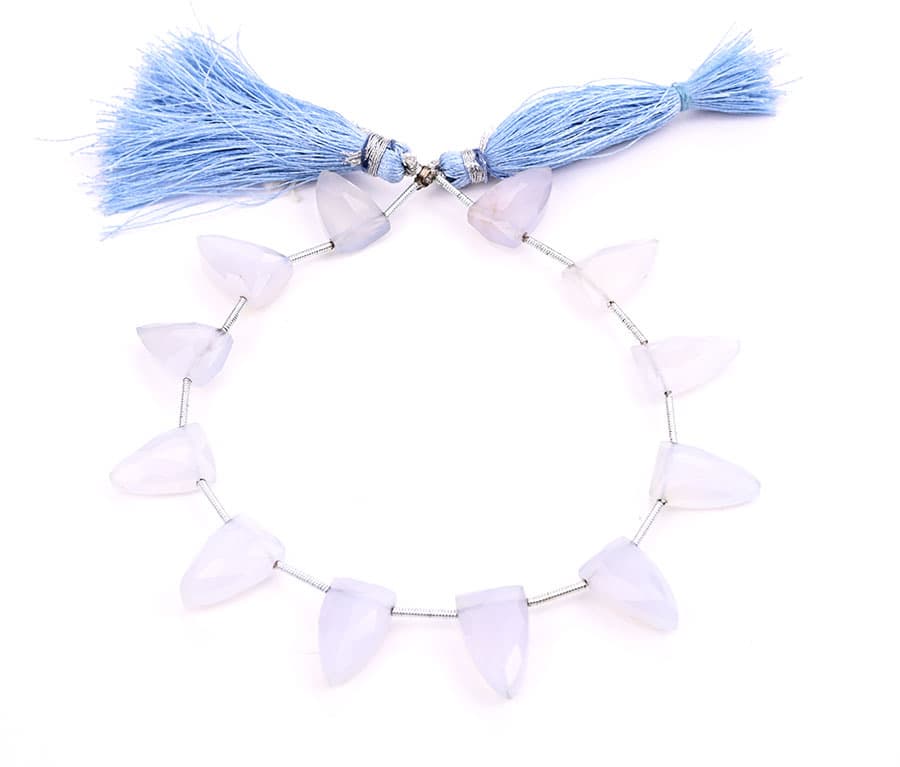
Blue and lavender chalcedony
Chalcedony whose blue comes from light scattering off microscopic voids, not pigment, so natural material looks milky, grayish or lilac. Mohs 6.5 to 7. Sources: Namibia, Turkey, Montana, Oregon.
At a glance
| Hardness (Mohs) | 6.5 to 7 |
|---|---|
| Family | Corundum |
| Where it is mined | Namibia, Turkey, Montana, Oregon |
| Shapes we carry | Arrowheads, Diamond cuts, Hearts, Pears, Rectangles, Tear drops |
| Strands listed | 6 |
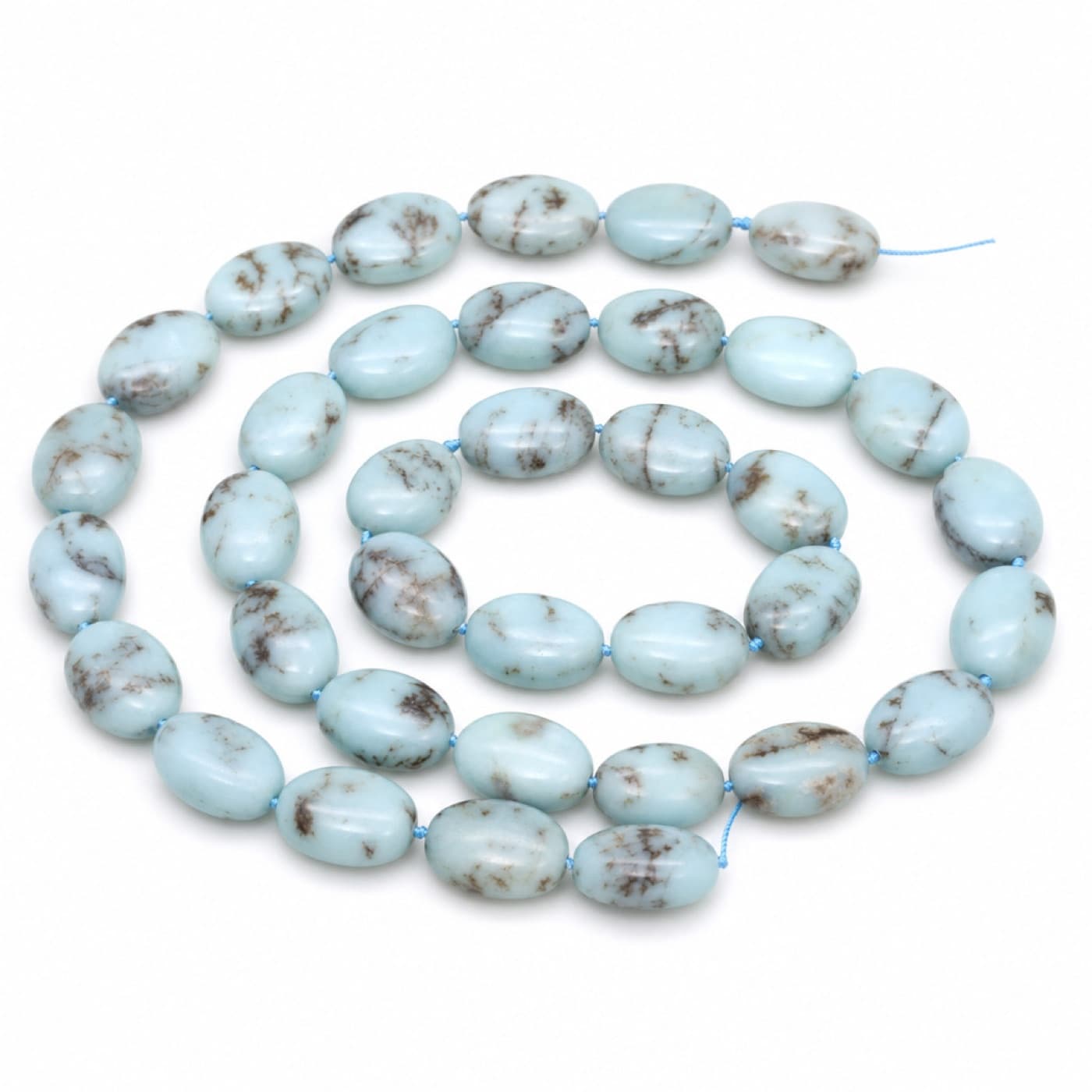
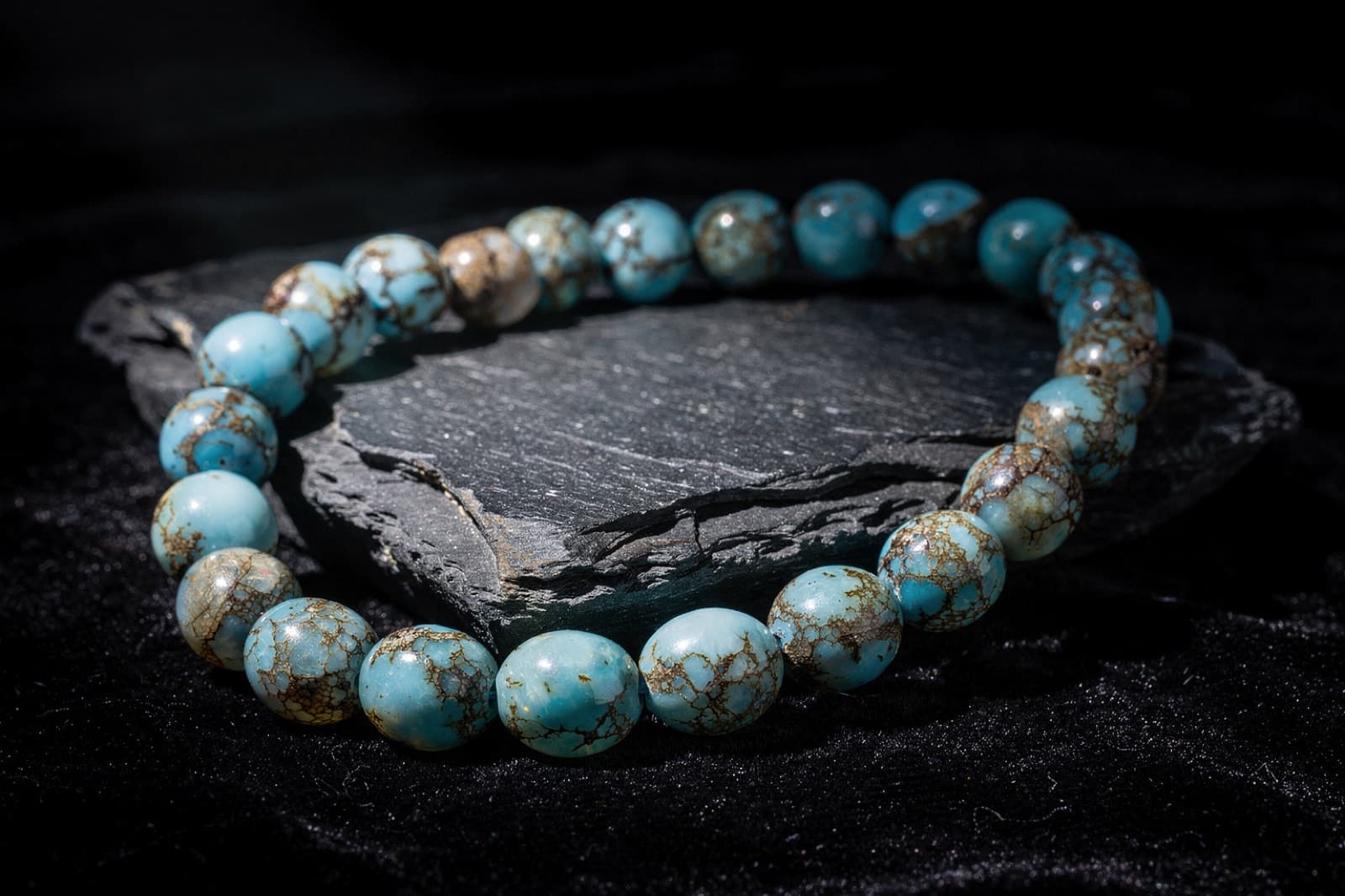
Film and illustrations are AI renders. Strand listings below show photographs of the actual material.
How to judge it
Natural: soft cloudy blue with a faint inner glow. vivid uniform periwinkle on every strand. Loupe drill holes for pooled color; acetone-swab one bead. His uniform "lavender moon quartz" pears are a flag.
What it's like to work with
Statement ovals for pendants; faceted pears for earrings. Upper-mid tier if natural. Rondelles and pears sell fastest.
Care
Hard enough for bracelets.
Tradition calls it the speaker's stone; tradition, not fact.
Cloudy blue with the light held inside it.
Hold a strand of blue chalcedony to a window and the color seems to come from inside the bead rather than sit on it. Soft, cloudy, sometimes closer to gray or lilac than to sky. The blue is not pigment at all. It comes from light scattering off voids too small to see, which is why the surface reads as milk with a faint glow behind it. People reach for it when they want quiet color that still catches the eye across a room.
Where it comes from
Chalcedony is the compact, microcrystalline form of quartz, and it has been worked into ornament for a very long time. The name is thought to come from an ancient town at the Bosporus. Color in the chalcedony family traces back to metallic impurities present while the stone was forming, and material left as it came from the ground is often a grayish blue. Blue and lavender stone is generally named for where it is dug: Namibia, Turkey, Montana and Oregon all send out material in this family, and the depth of blue shifts from one source to the next. Because the color is delicate and the stone takes a high polish without fuss, gem carvers and jewelry designers have long favored it. Most pieces are cabbed or carved. Only rarely does a near-transparent piece get faceted. Our strands are cut in Jaipur, India, and chosen strand by strand in Cupertino, California.
What tradition says
Blue chalcedony appears in old lists of the stones set in the high priest's breastplate, the twelfth in Exodus 28:18 and 39:11, standing for the tribe of Benjamin. In the Greek and Latin texts it falls sixth, as it does in Ezekiel 28:13, and it comes first in Revelation 21:19. In crystal tradition it is known as the speaker's stone, a name that ties it to words and to being heard. That is belief and custom rather than fact, but it is part of why the stone keeps turning up in gifts between friends, and why people who talk for a living tend to like wearing it.
These are beliefs people have held about the stone, told as tradition. They are not claims, and not advice.
How makers use it
Smooth ovals do the most work here. Set a 10x14mm bead as the drop on a pendant and the cloudiness reads as depth instead of haze. Faceted pears around 9x15mm make good earrings, since the facets pick up light at the edges while the body of the bead stays soft. Rondelles move fastest, because they space larger stones without fighting them. On a stronger strand the inner glow is even from bead to bead, so the light seems to travel down the whole line. We carry smooth ovals, rondelles, nuggets and faceted pears, six strands listed at the moment.
Looking after it
At 6.5 to 7 on the Mohs scale, blue chalcedony is a tough stone for how soft its color looks, hard enough for bracelets, which take more knocks than anything else you wear. The blue comes from structure rather than pigment, so what you see in a strand is what it stays.
Sources: Chalcedony Value, Price, and Jewelry Information - International Gem Society, Holly Blue — Chalcedony variety · Minerals.net, Chalcedony: The gemstone Chalcedony information and pictures · Minerals.net, Gemstones in the Bible
Blue and lavender chalcedony strands