Carnelian
Chalcedony colored orange to red by iron oxide; Mohs 6.5 to 7. Rough and cutting: India (Gujarat has cut carnelian for millennia), Brazil, Uruguay, Madagascar.
At a glance
| Hardness (Mohs) | 6.5 to 7 |
|---|---|
| Family | Chalcedony |
| Where it is mined | See description |
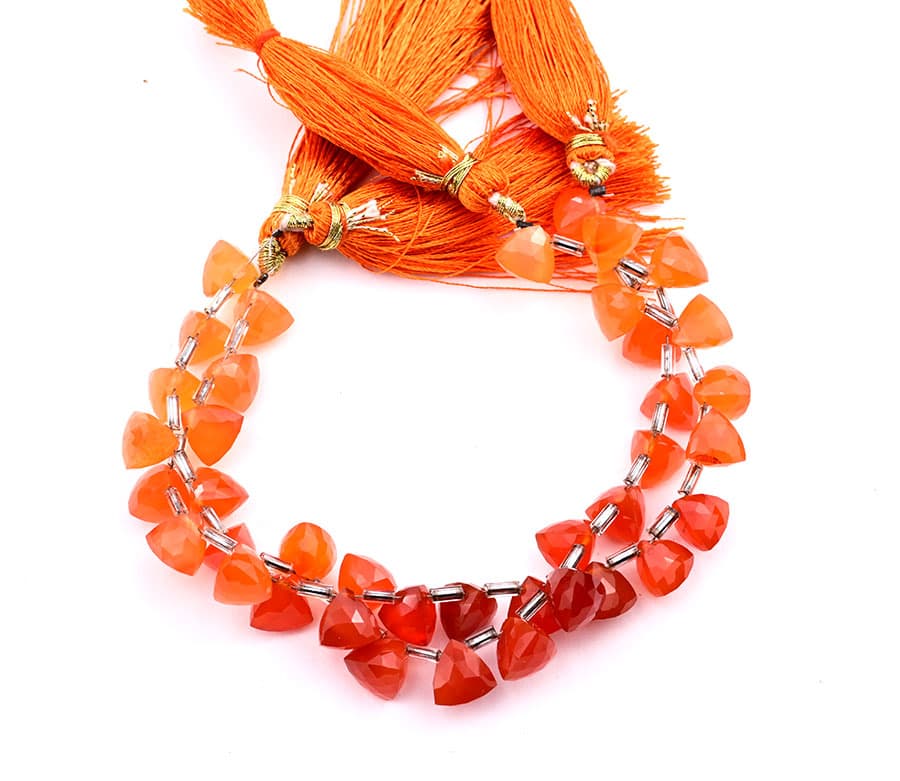
| Shapes we carry | Pears, Trilliants |
| Strands listed | 2 |
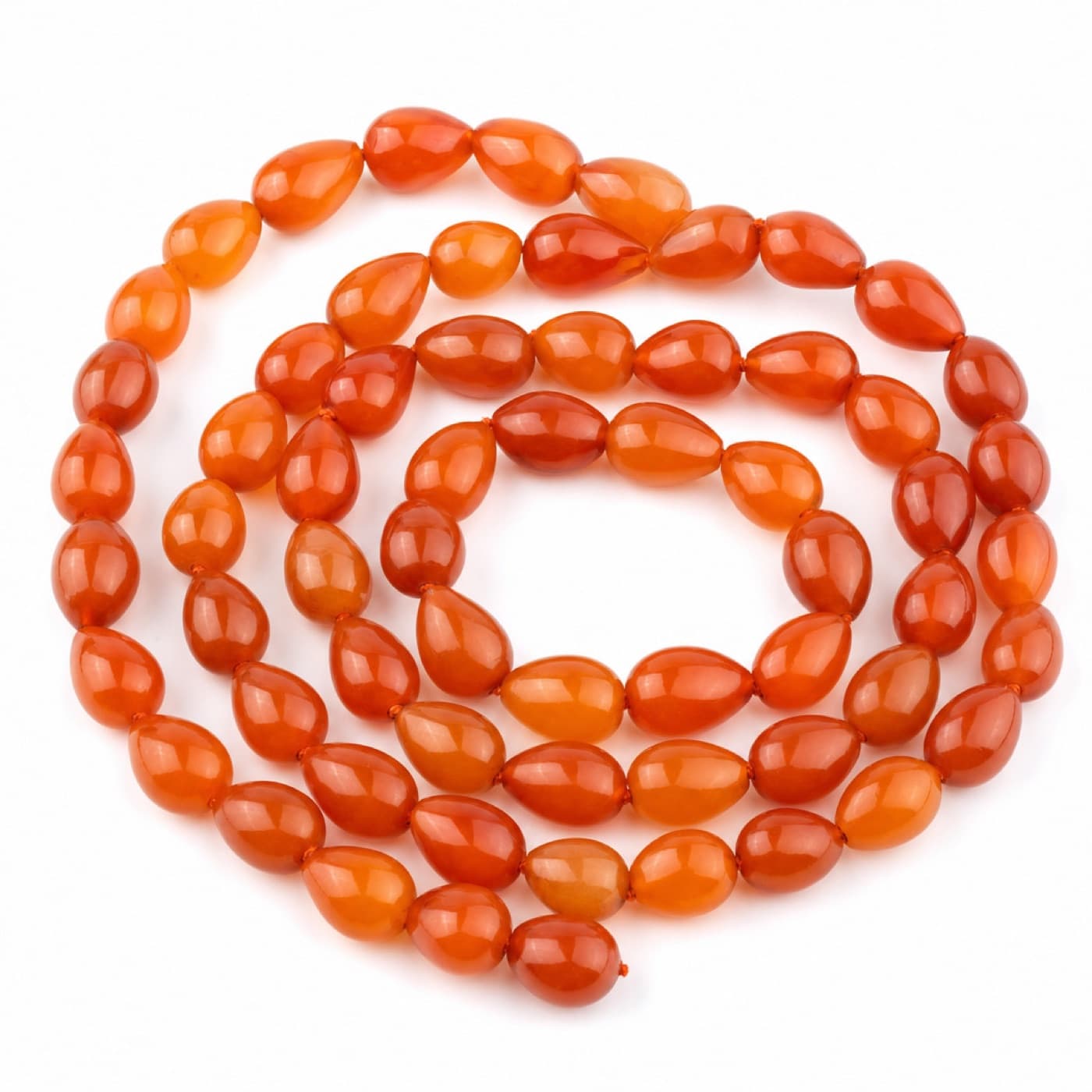
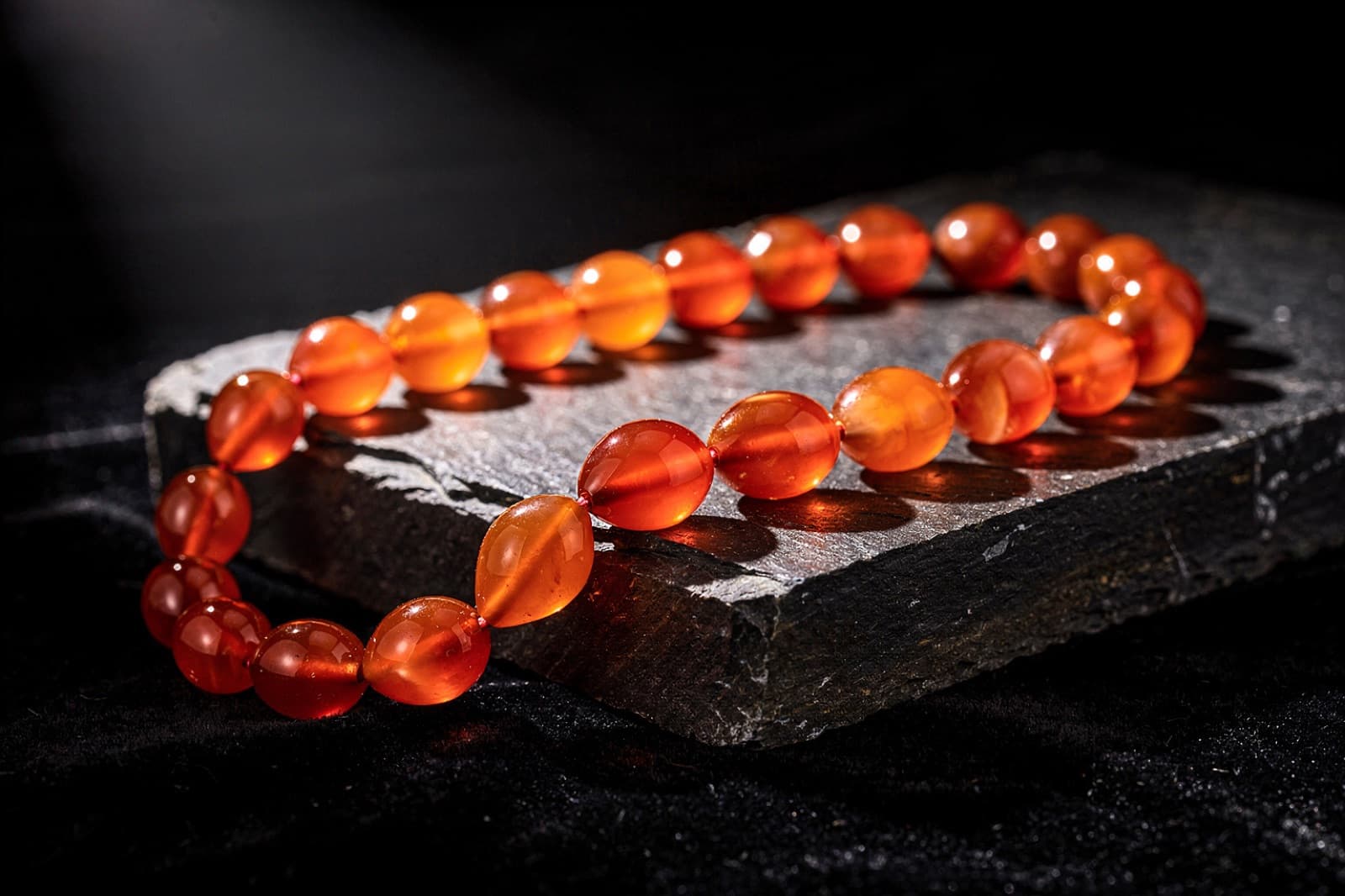
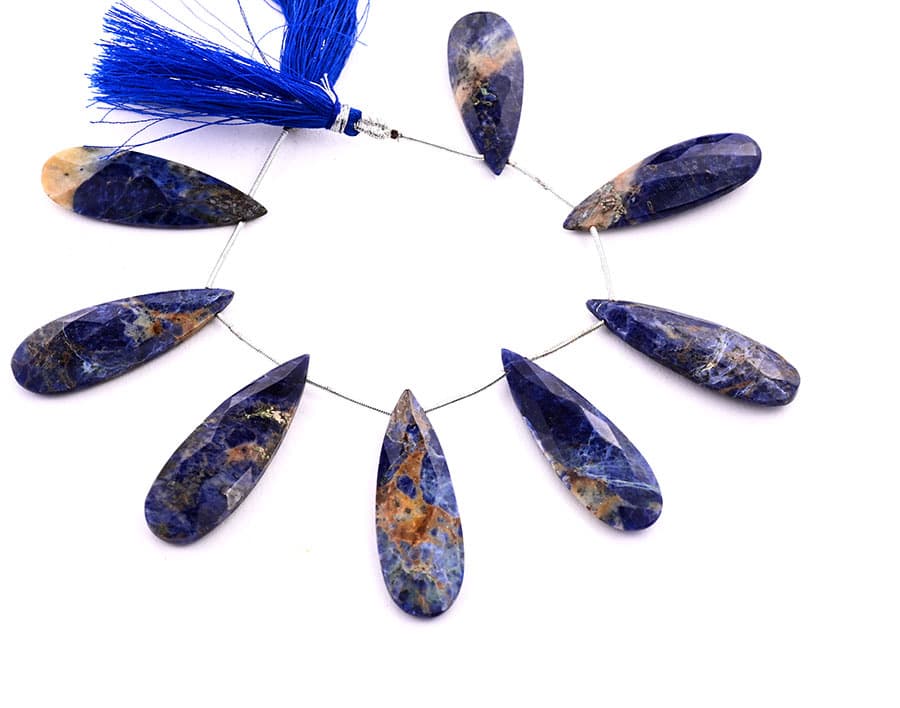
Film and illustrations are AI renders. Strand listings below show photographs of the actual material.
How to judge it
Translucent warm orange-red with soft cloudy zoning is the natural look. Look-alike: orange glass (bubbles).
What it's like to work with
Fall palettes, boho and southwestern work, men's bracelets, mala makers. Entry tier. Smooth pears and 8mm rounds sell.
Care
Tough. Warm soapy water, soft brush. Avoid prolonged heat.
Tradition makes carnelian a stone of courage; tradition, not fact.
Orange light with cloud still in it.
Hold a strand of carnelian up to a window and the light comes through orange, sometimes closer to red, sometimes clouding pale where the color thinned as the stone grew. It is never one flat tone. The zoning drifts across a bead like weather crossing a field. This is chalcedony, colored by iron oxide, hard enough at 6.5 to 7 to hold a bright polish and take daily wear. Makers reach for it when a piece needs warmth.
Where it comes from
Carnelian is a variety of the silica mineral chalcedony, its orange to reddish brown coming from iron oxide dispersed through the stone. Gujarat, in western India, has cut carnelian for millennia, and rough and cut material also comes from Brazil, Uruguay, and Madagascar. Significant deposits are recorded at Yanacodo in Peru and Ratnapura in Sri Lanka, with material found as well in Indonesia, Iran, and Russia. The Greeks and Romans valued it for rings and signets, and some of their intaglios have kept a high polish better than stones harder than they are. A Sassanid seal from the third century carries a bull cut into carnelian. Where lapis lazuli came to be linked with priests, carnelian was the stone linked with kings. Our strands are cut in Jaipur and chosen strand by strand in Cupertino, California.
What tradition says
Ancient peoples across many regions favored this warm reddish stone, and the lore that grew around it gathered up health, luck, and royalty. Tradition makes carnelian a stone of courage. That is tradition, not fact, and worth saying plainly. Because the color sits so close to the color of blood, old healers were said to give it out as a general talisman, something kept near the skin rather than set out to be looked at. In crystal tradition it is still spoken of as a warm, steadying stone, one people reach for when they want to feel braver than they are. Belief again, and a long-lived one.
These are beliefs people have held about the stone, told as tradition. They are not claims, and not advice.
How makers use it
Carnelian sits easily in fall palettes, in boho and southwestern work, in men's bracelets, and on the workbenches of mala makers. We carry smooth pears at 10x14mm, cut to show the natural cloudy zoning, and faceted trilliants that catch small points of orange light along a collar. Two strands are listed online. The color runs warm beside brass and copper, and it holds its own next to matte black beads or plain sterling. A good strand reads translucent warm orange-red with soft banding, no two beads quite matched. Orange glass, by contrast, holds tiny bubbles.
Looking after it
Carnelian is tough and takes ordinary wear well. Wash it in warm soapy water with a soft brush, then dry it before it goes back in the drawer. Keep it away from prolonged heat, so no sunny windowsills for weeks at a time and no leaving a bracelet on a hot dashboard.
Sources: Carnelian - Wikipedia, Carnelian | Healing, Protection & Strength | Britannica, Carnelian Symbolism and Folklore - International Gem Society IGS, Carnelian Gemstones | Beads, Jewelry, Tumbled Stones