Chrysoprase
Chalcedony colored apple green by nickel; Mohs 6.5 to 7. Rough from Queensland and Western Australia, Tanzania, Indonesia. "Lemon chrysoprase" is not chrysoprase: it is nickel-bearing magnesite (magnesium carbonate) from Western Australia, Mohs about 3.5 to 4.5.
At a glance
| Hardness (Mohs) | 6.5 to 7 |
|---|---|
| Family | Chalcedony |
| Where it is mined | See description |
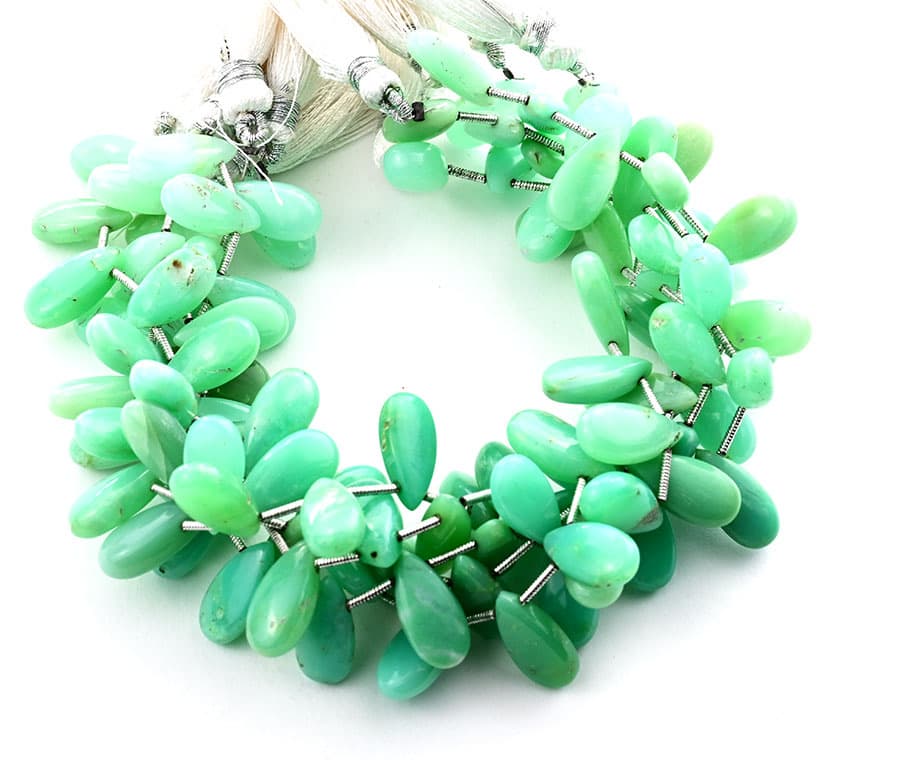
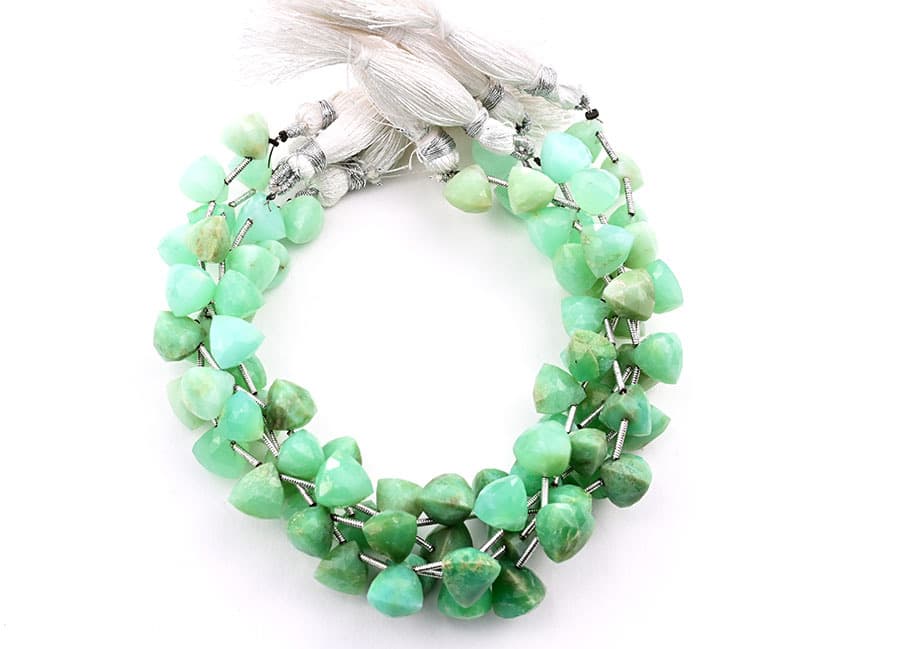
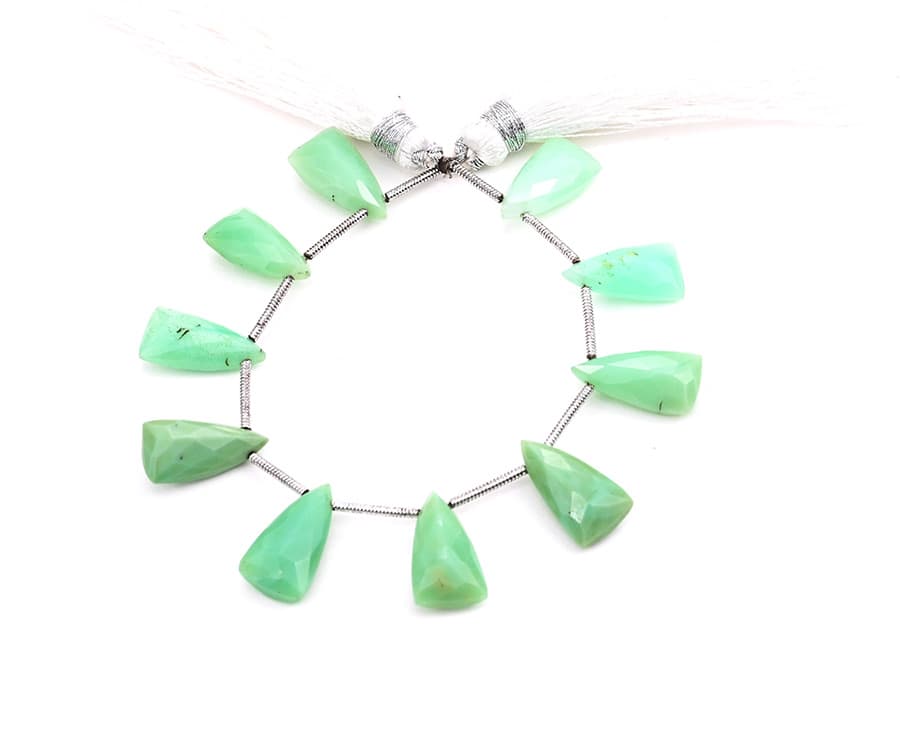
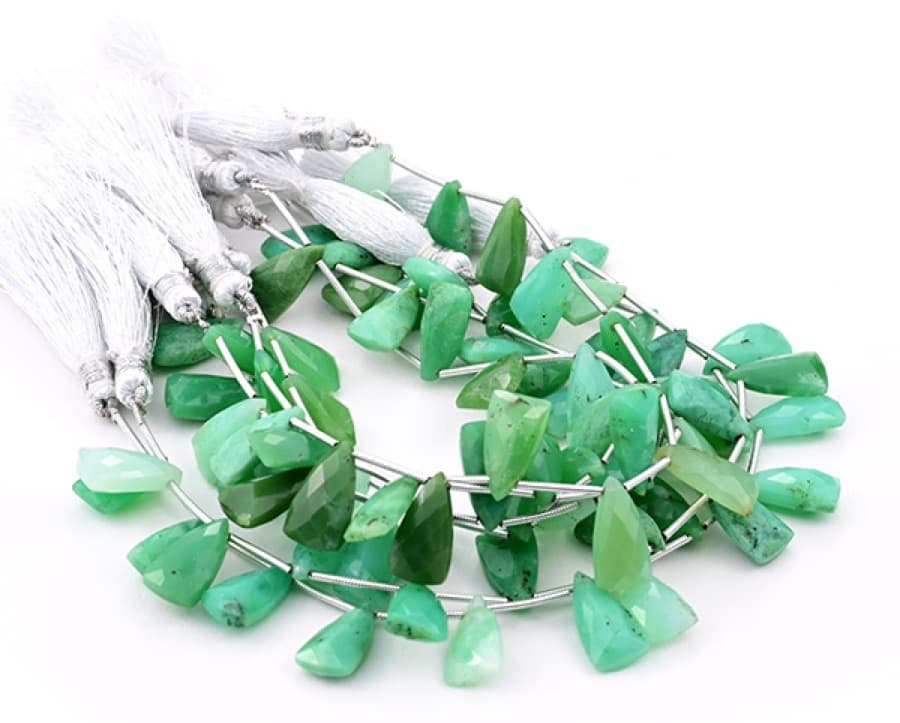
| Shapes we carry | Hearts, Pears, Pyramids, Trilliants |
| Strands listed | 5 |
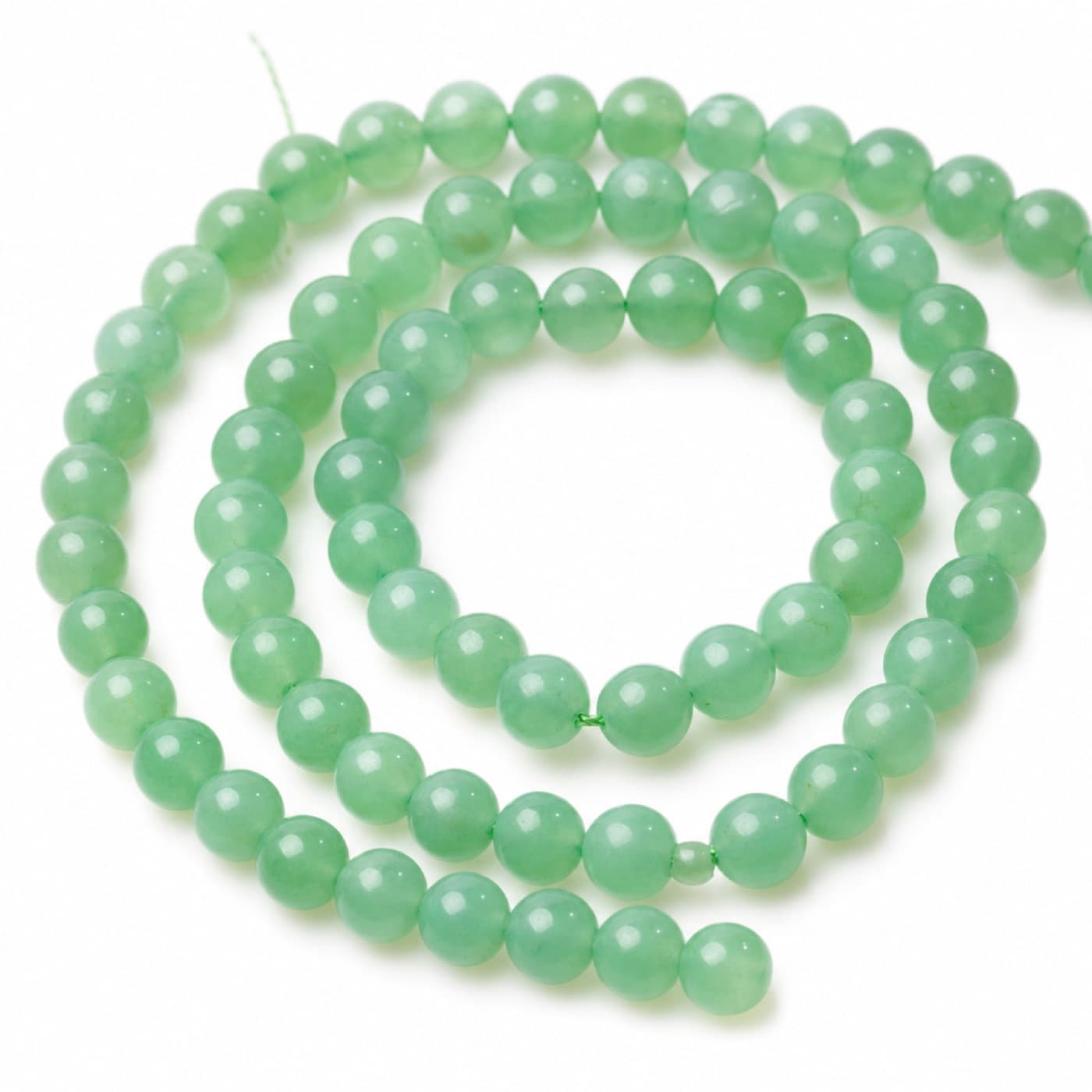
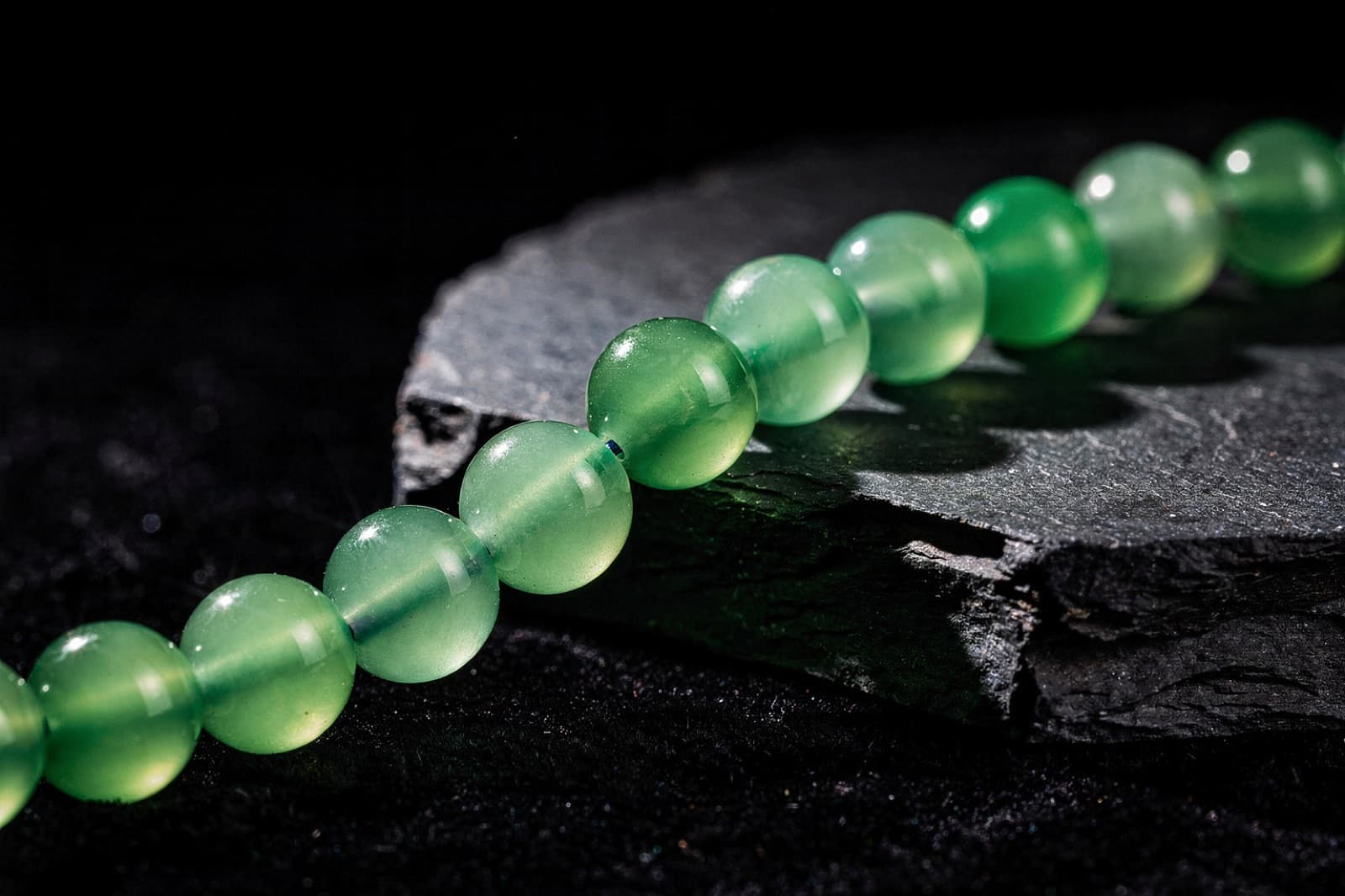
Film and illustrations are AI renders. Strand listings below show photographs of the actual material.
How to judge it
Even apple green with a translucent glow is the top; grayish and opaque is commercial; brown spots lower it. Lemon magnesite is opaque, light, and a steel point scratches it.
What it's like to work with
Fine-jewelry designers and collectors; the high-ticket strand. Rounds and rondelles sell.
Care
Fades with prolonged heat or sun; store dark; no ultrasonic. Magnesite is soft: earrings and necklaces only.
Tradition names chrysoprase the stone of optimism; tradition, not fact.
Apple-green chalcedony with a calm, even glow
Strung together, chrysoprase settles into a clear apple green that seems to hold light. The best strands show a soft translucence and even color from bead to bead. Makers reach for it when a design needs freshness without glare. Gray patches and brown spots pull the eye. We carry smooth 8 mm rounds, 6 to 9 mm rondelles, and 10 to 18 mm ovals, cut in Jaipur and chosen strand by strand here in Cupertino.
Where it comes from
Chrysoprase is a variety of chalcedony colored apple green by traces of nickel. It measures about 6.5 to 7 on the Mohs scale. Among chalcedonies, it is second in value only to gem silica. The name comes from Greek words for golden apple or golden leek. It was known to the ancient Greeks and Romans and, in many periods since, has been worked into beads and cabochons; finer translucent material also takes clean facets. Geologically, it occurs as a secondary mineral in cavities and veins of serpentine, and notable deposits were recorded in California and Silesia. Much of the rough used for beads today comes from Queensland and Western Australia, as well as from Tanzania and Indonesia. The apple-green look is most prized when the color is even and there is a gentle glow through the stone.
What tradition says
In crystal tradition, chrysoprase is named the stone of optimism. People have long said its clear apple green brightens the outlook and invites a more positive frame of mind. Stories about the stone circulate in folklore and studio talk rather than science. The name comes from Greek words for golden apple or golden leek, and many connect that fruit-like color with hopefulness. So the story goes. These meanings are matters of tradition. Those who choose chrysoprase often do so for the way its color feels to them and for this long-standing reputation for optimism.
These are beliefs people have held about the stone, told as tradition. They are not claims, and not advice.
How makers use it
Designers reach for chrysoprase when a piece needs clear color with soft light. Color first. Rounds and rondelles sit close to the skin and read as a steady field of green, good for quiet necklaces and grounded bracelets. We keep smooth 8 mm rounds and 6 to 9 mm rondelles, with both smooth and faceted cuts depending on the feel you want. Ovals make strong focal notes. The pale "lemon" look is a different stone, nickel-bearing magnesite, and we tag it as magnesite.
Looking after it
Keep chrysoprase away from prolonged heat or sunlight, which can fade the color. Store strands in the dark between uses and avoid ultrasonic cleaning. The light "lemon" material sold alongside it is nickel-bearing magnesite; it is softer, so use it in earrings and necklaces rather than rings.
Sources: Chrysoprase, Chrysoprase | Green Gemstone, Healing Properties & ..., Chrysoprase, Chrysoprase: The green gemstone chrysoprase information and pictures · Minerals.net
Chrysoprase strands
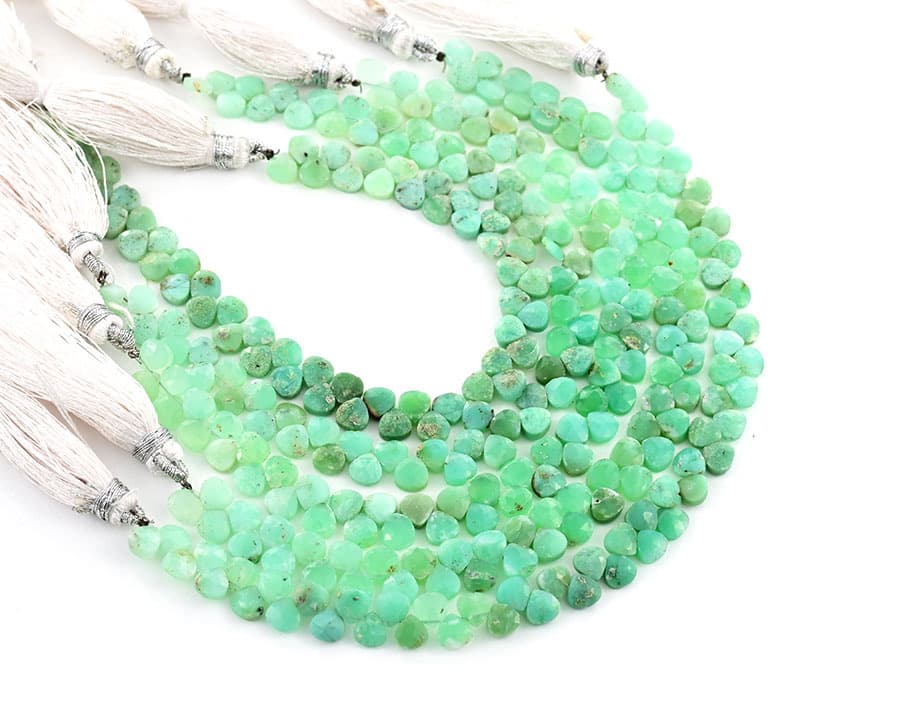 Sold out