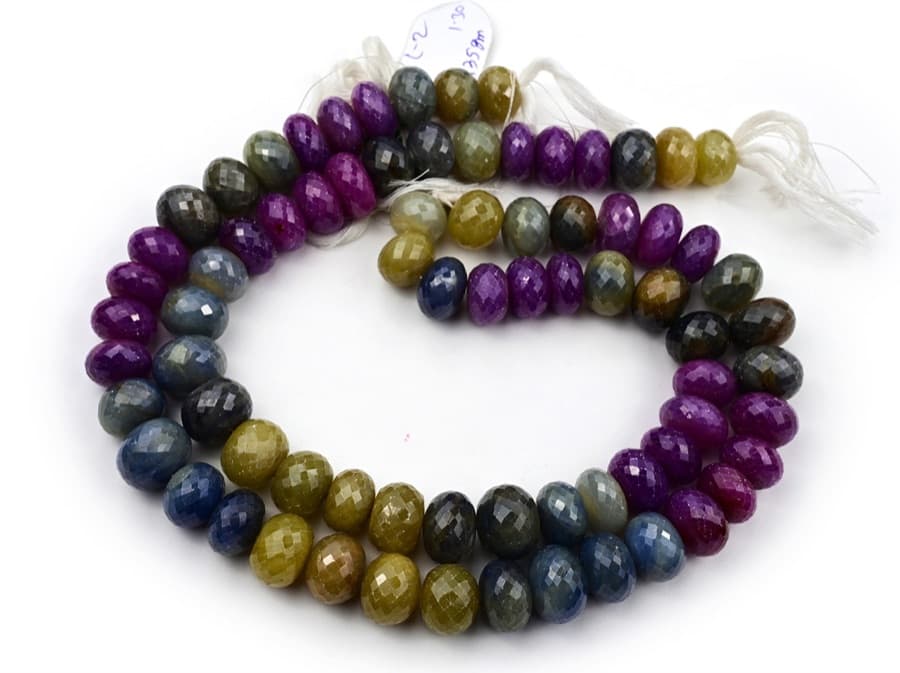
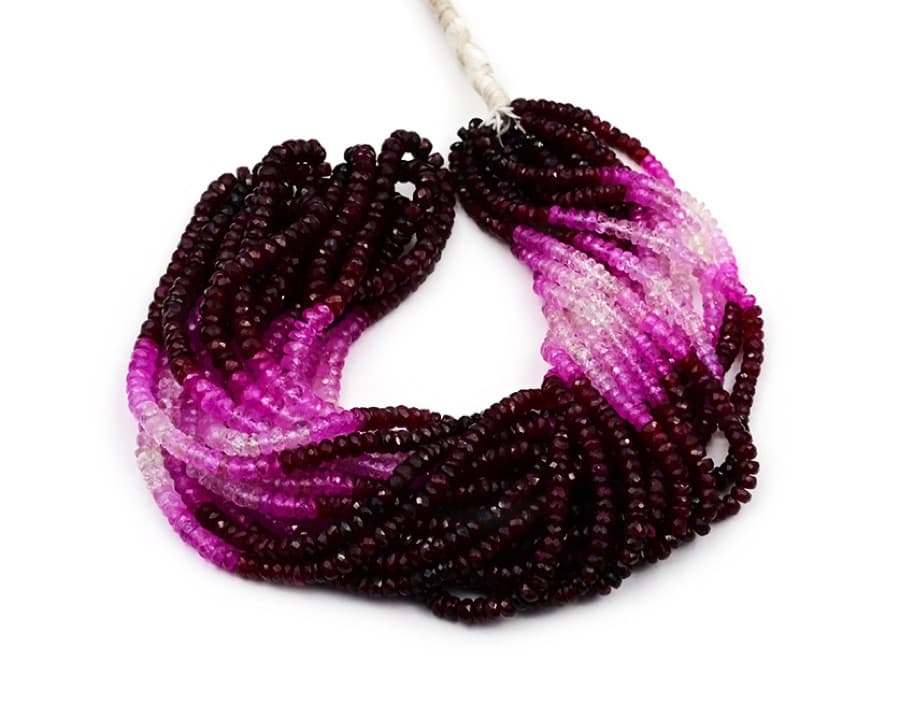
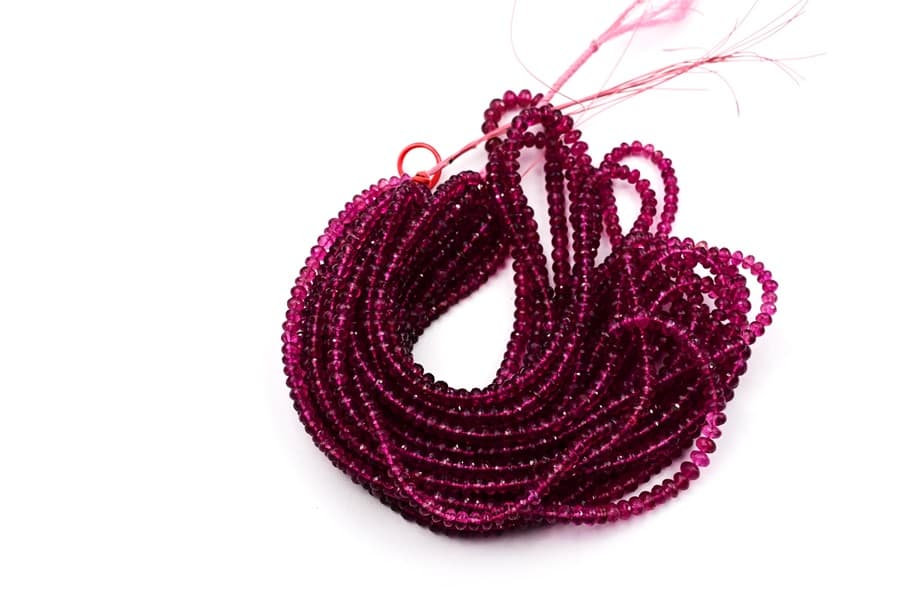
What tone should I expect by mm size?
Tone tracks size closely in chrome diopside. Around 3 mm the grass green reads bright; above about 5 mm the stone tends to go near black. We buy and recommend 3 mm for saturated color with life. If you want a touch larger, 4 mm can work when the cut is shallow and the material is clean.
Lay strands on white paper by size, then step back to see how the tone deepens as bead diameter increases.
- Bright at about 3 mm.
- Usable at 4 mm when shallow and well cut.
- Near-black risk around 5 mm.
- Very dark above 5 mm.
Which shapes keep chrome diopside looking rich?
Shallow profiles let light in and keep the green from closing up. Small faceted rondelles are the workhorse for necklaces and spacers because the width to height ratio favors brightness. For earrings, thin, small pears can show crisp color since they hang with plenty of light around them.
Rounded barrels, tall rondelles, and chunky ovals in this stone tend to read darker. Keep the height low and the facets crisp, and the chrome green stays clean and vivid.
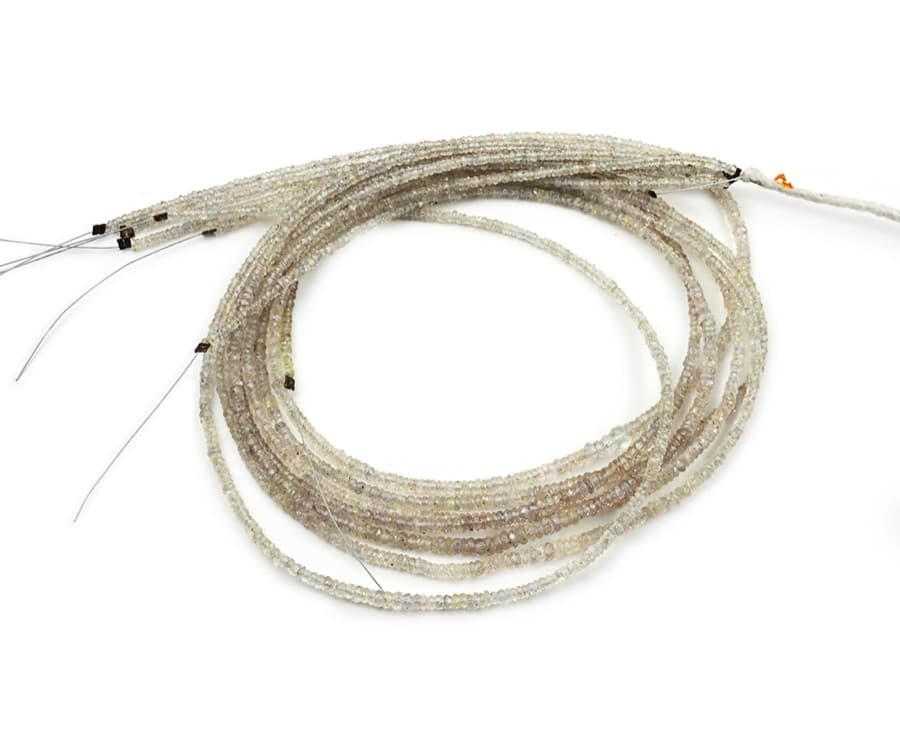
What should I avoid in 3 to 5 mm beads?
Skip tall cuts that are as high as they are wide. Those profiles trap light and push the tone too dark. Avoid strands that read oily yellow, which points you toward peridot rather than chrome diopside, and avoid green glass, which often shows round bubbles and no doubled facet edges under a loupe.
A quick test helps. Under 10x, true diopside shows doubled facet edges from birefringence, while glass does not. We also pass on uneven drilling that causes zigzagging when strands are lined up straight.
How many 4 mm or 6 mm beads do you need?
When you substitute nearby sizes, plan your counts before stringing. On average, 4 mm beads run about 6.3 per inch and 6 mm about 4.2 per inch. On a 7.5 in bracelet with a clasp, you bead about 6 in, so that's about 38 of 4 mm or about 25 of 6 mm.
An 18 in necklace run is about 104 of 4 mm or about 70 of 6 mm. Jaipur strands run 13 to 16 inches; a 15 to 16 inch strand of 6 mm rondelles has about 65 to 70 beads, and of 4 mm about 95 to 100. Two strands usually make a long necklace. Knotting between beads adds about 1 mm per knot.
How do I match greens across multiple strands?
Work under one light source. Line strands edge to edge and look for a consistent grass green with similar tone and saturation, then check across the full length for zoning. We group strands by hue first, then by tone, and only then by clarity.
Before ordering, ask us for side by side photos of multiple strands so you can pick the exact look. Our chrome diopside stone guide describes the target grass green we aim for when we sort. If you plan repeat work, keep an extra matching strand reserved for future repairs or add-ons.
How should I string and care for it?
Chrome diopside sits around Mohs 5 to 6 with two cleavage directions, so it prefers earrings and necklaces, not bracelets or rings. Avoid ultrasonic and steam cleaning, and store it apart from harder beads. Light spacers or knots reduce bead to bead contact and add drape.
Accent runs of 3 mm faceted rondelles between pearls look fresh and sell well. We keep the runs short near the collarbone where abrasion is minimal. If you want more presence, mix 3 mm chrome diopside with 4 mm neutrals to spread the color without darkening it.
Where can we help you choose the right strand?
We import Jaipur-cut strands and can sort for tone, cut height, and drill straightness on request. Message us on WhatsApp at +1 408-702-7405 or email tandongems@outlook.com with the size and look you want. Photos in our listings are of the actual strand unless marked representative, and each listing states stone, shape, size and cut.
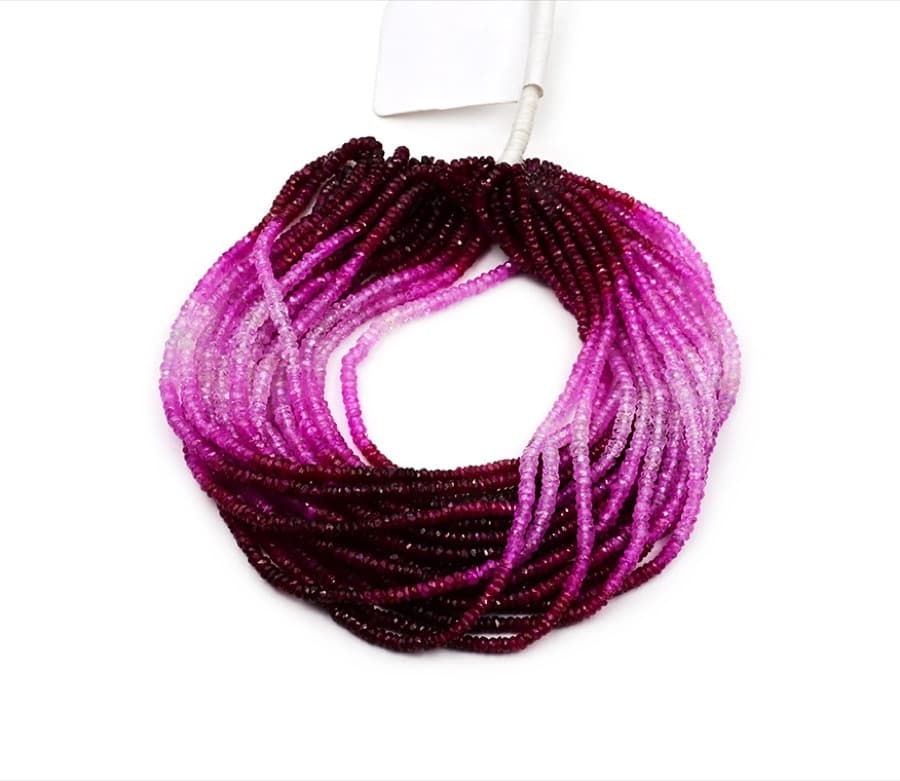
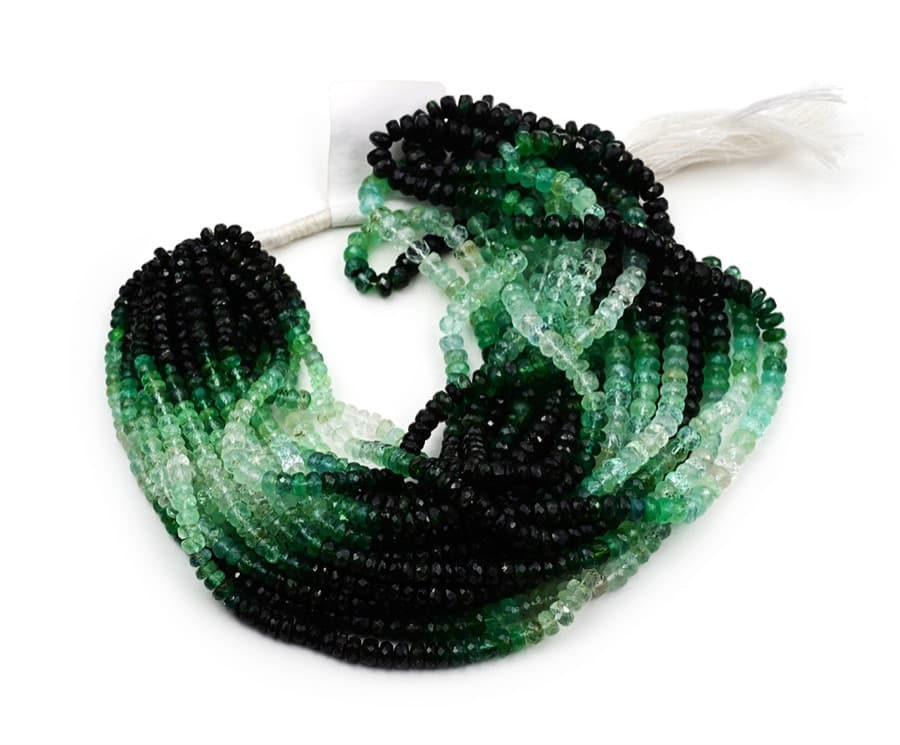
For reference on shapes that behave well in small sizes, compare our 3 to 4 mm faceted rondelle listings like Sapphire Gray 3 to 4 mm or Natural Ruby 2.5 to 3 mm. Studying cut height and facet crispness on these helps you judge chrome diopside too.