Chrome diopside
Chromium-bearing diopside, calcium magnesium silicate, CaMgSi2O6. Mohs 5 to 6 with two directions of cleavage. Nearly all gem material comes from the Inagli deposit in Yakutia (Sakha), eastern Siberia, mined only in the short summer.
At a glance
| Hardness (Mohs) | 5 to 6 |
|---|---|
| Family | Diopside |
| Where it is mined | See description |
| Shapes we carry | Ask us |
| Strands listed | 0 |
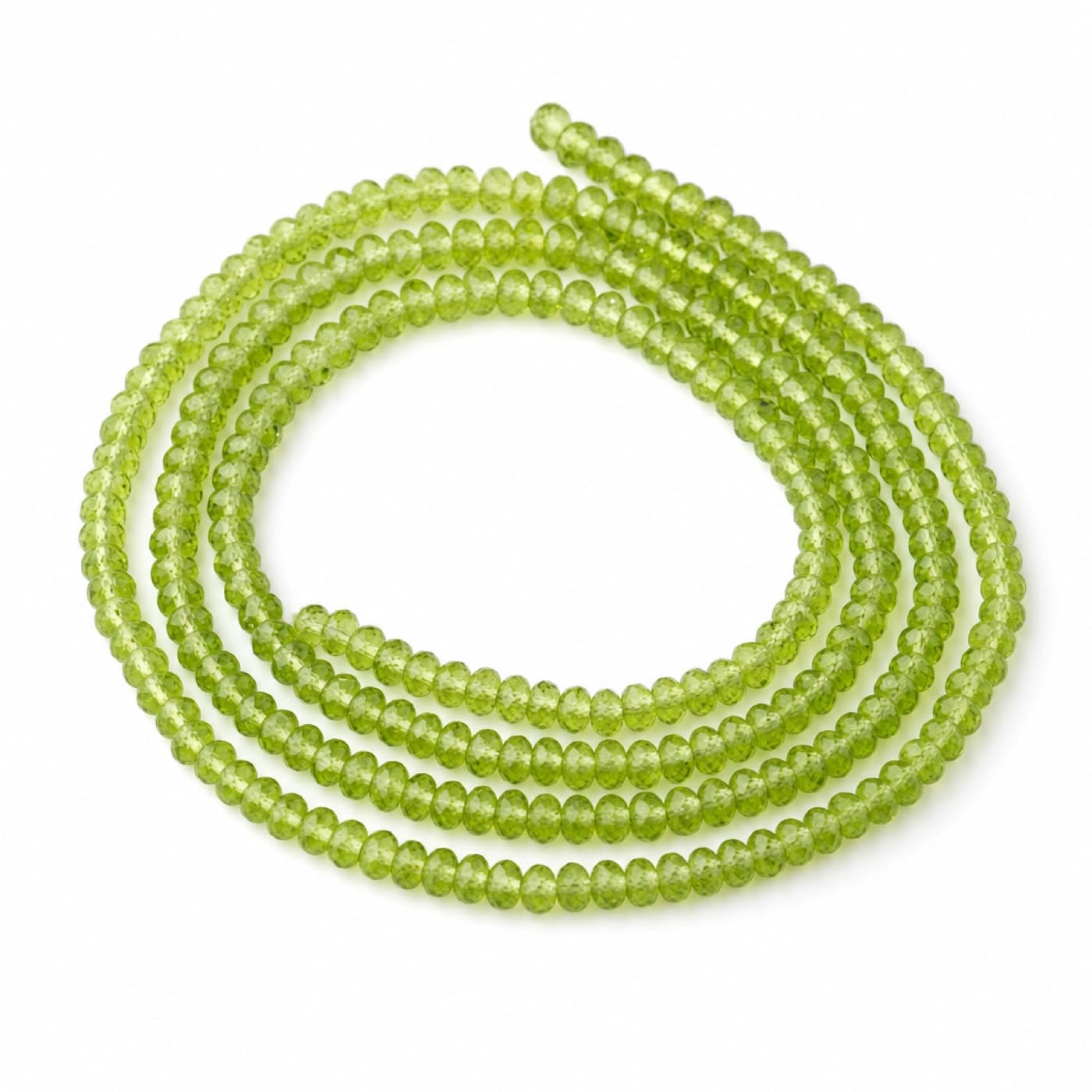
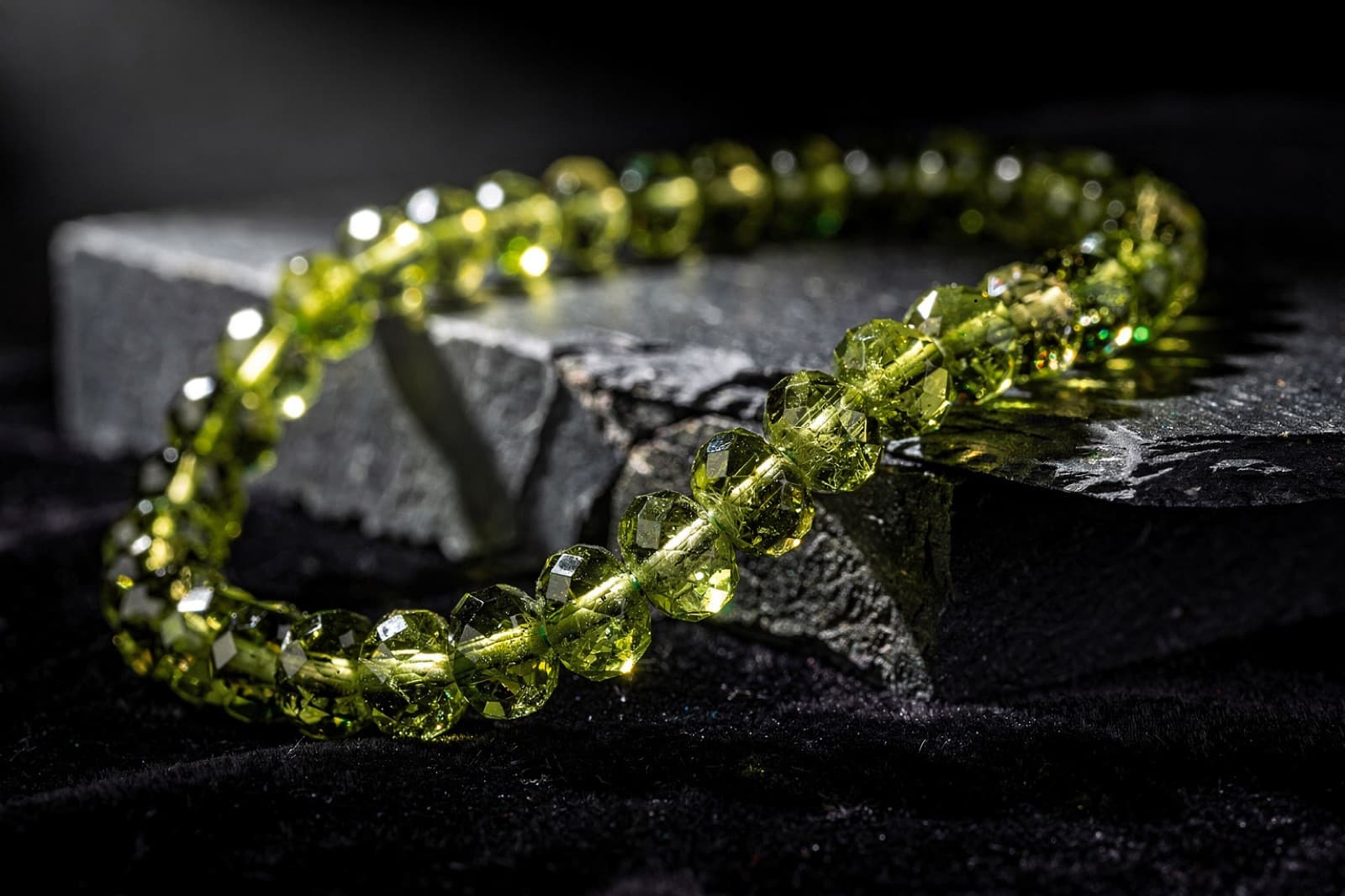
Film and illustrations are AI renders. Strand listings below show photographs of the actual material.
How to judge it
Bright grass green is ideal; the stone goes near black above about 5mm, so 3mm is the right size. Look for eye-clean beads with doubled facet edges under a loupe. Green glass has bubbles and no doubling; peridot is yellower and oily. Don't call it "Siberian emerald," a misleading varietal name under § 23.26.
What it's like to work with
Designers who want emerald green in silver at a low ticket, May birthstone sellers offering an alternative. Accent runs of 3mm rondelles between pearls sell best.
Care
Earrings and necklaces, not bracelets or rings. No ultrasonic or steam. Store apart from harder beads.
No birthstone; modern crystal lore only (tradition, not fact).
Grass green from Siberia, cut small so it glows.
A strand of 3mm chrome diopside rondelles looks like a line of wet grass held up to a window. The green comes from chromium, the same element that colors emerald, and the small facets throw a quick, hard spark. Size matters more here than with most stones. Above about 5mm the color darkens toward near black, so the little beads are the ones that stay lit. Makers reach for them when they want green that reads as gem rather than as rock.
Where it comes from
Diopside is a common pyroxene, a calcium magnesium silicate that forms in igneous and metamorphic rocks in many countries. The chromium-bearing green kind turns up near kimberlite pipes. Occurrences are reported in Canada, South Africa, Brazil and Russia, and in the United States in the serpentinite belt of northern California, in the kimberlite of the Colorado-Wyoming State Line district, and at Iron Mountain, Wyoming. For a long time diopside was a collector's stone, faceted in small numbers and seldom seen in commercial jewelry. That changed with one source: the Inagli deposit in Yakutia, in eastern Siberia, worked only through the short summer, which supplies nearly all the material cut for jewelry. In 1988 this new green gem from Russia began to be seen in the jewelry industry. Sellers sometimes borrow emerald for the name. It is not emerald, and the borrowed name misleads.
What tradition says
Chrome diopside carries no inheritance of old legend. It came out of Siberia within living memory, so it missed the centuries of lapidary writing and folk custom that gathered around older green stones. Whatever is said about it now belongs to modern crystal practice, where writers group it with the green stones and lean on the reputation of emerald, whose color it shares and whose coloring element it holds. All of that is tradition, held and passed along, rather than fact. There is field lore of a plainer kind as well. Prospectors read scattered grains of chrome diopside in the ground as an indicator that diamonds may lie nearby, and they have dug on that sign for years.
These are beliefs people have held about the stone, told as tradition. They are not claims, and not advice.
How makers use it
We carry it in one form, faceted rondelles at 3mm, cut in Jaipur and picked strand by strand here in Cupertino. Figure roughly 18 carats on an 8 inch strand. The way it sells best is as an accent: short runs of the green set between freshwater pearls, where the flash of the facets breaks up all that soft white. It suits earrings, short necklaces and pendant stations, and it sits well against silver, which keeps the green cool. On the brightest strands the beads read grass green rather than forest, stay clear to the eye, and show doubled facet edges under a loupe.
Looking after it
Chrome diopside is Mohs 5 to 6 with two directions of cleavage, so keep it to earrings and necklaces rather than bracelets or rings, where knocks are constant. No ultrasonic cleaner and no steam. Wipe with a soft cloth. Store the strand apart from harder beads so nothing scratches the facets.
Sources: Chrome Diopside | Smithsonian National Museum of Natural History, Diopside, Chrome Diopside, Star Diopside and Violane, Chrome-Diopside gemstone information, Diopside: The gemstone chrome Diopside information and pictures · Minerals.net
Chrome diopside is in the stock room
We carry chrome diopside at shows and it is not all listed online yet. Tell us the shape and size you want and we will send photos of what is in stock.
Ask on WhatsApp