What is Umba sapphire?
Umba sapphire comes from the Umba River valley in Tanzania and it is corundum, aluminum oxide. The deposit is known for a wide spread of natural colors, so parcels and strands often read like confetti. Sapphire is Mohs 9, so it stands up to daily wear. Our overview of the species is here: Sapphire stone guide.
Are multi sapphire beads real sapphire?
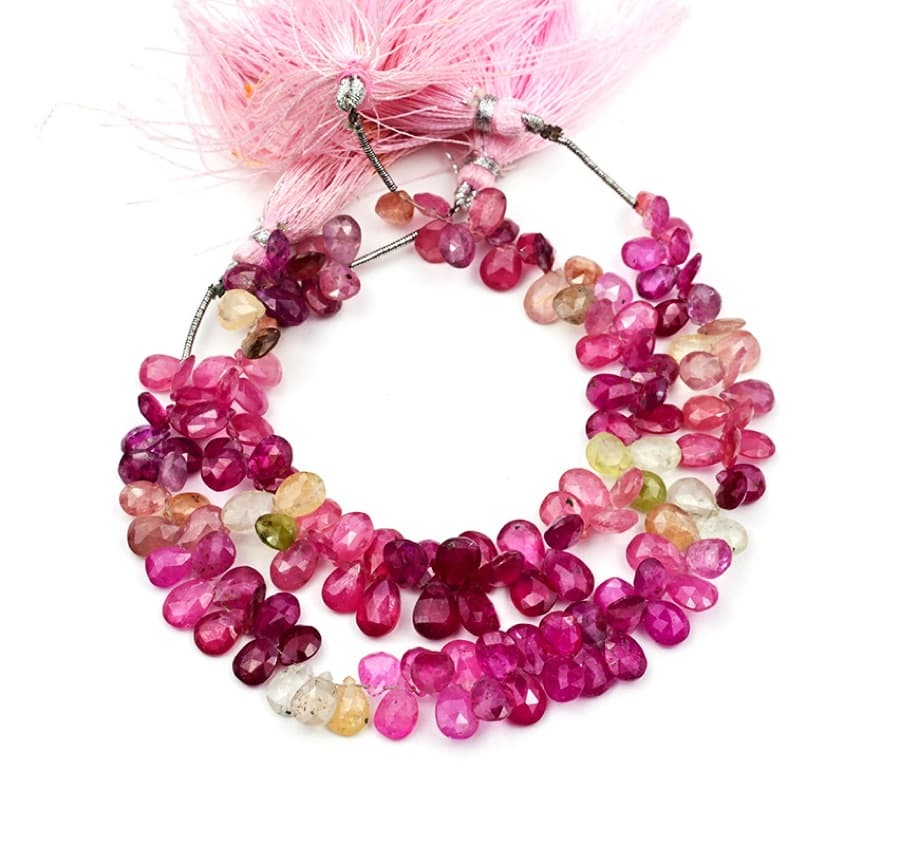
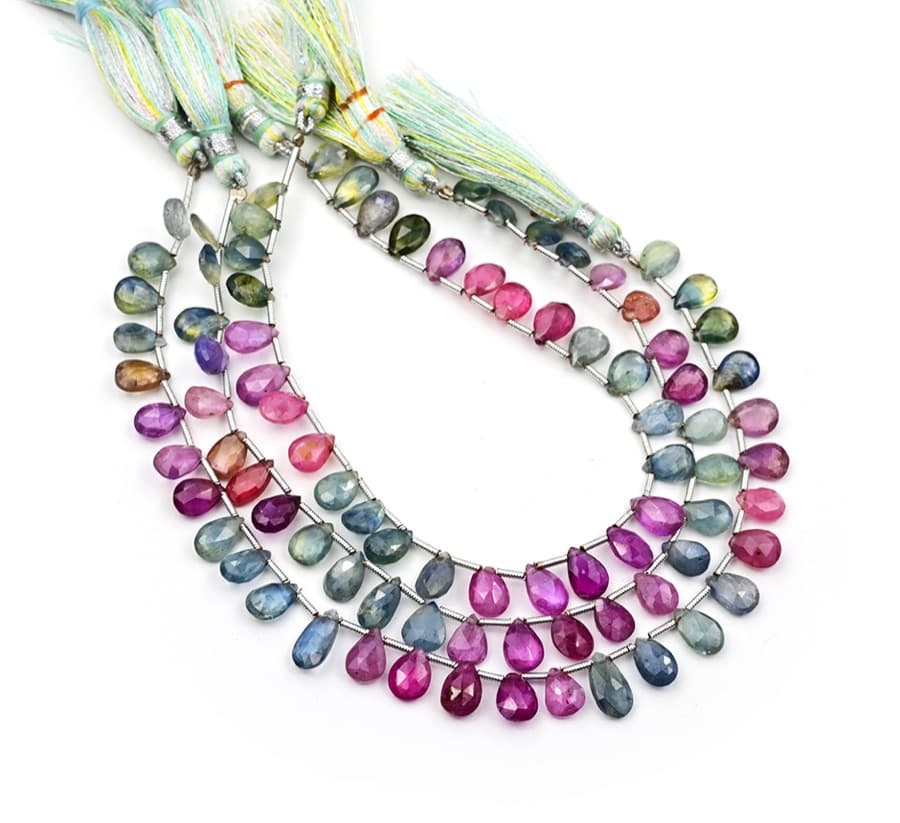
Yes. Multi sapphire strands are real sapphire when the beads are cut from corundum. Every color but red is sapphire, and red is classified as ruby. We source color mixes primarily from Tanzania, including Umba, with cutting in Jaipur. You can shop examples like our Multi Umba Sapphire 6x9 mm faceted pears.
 New
New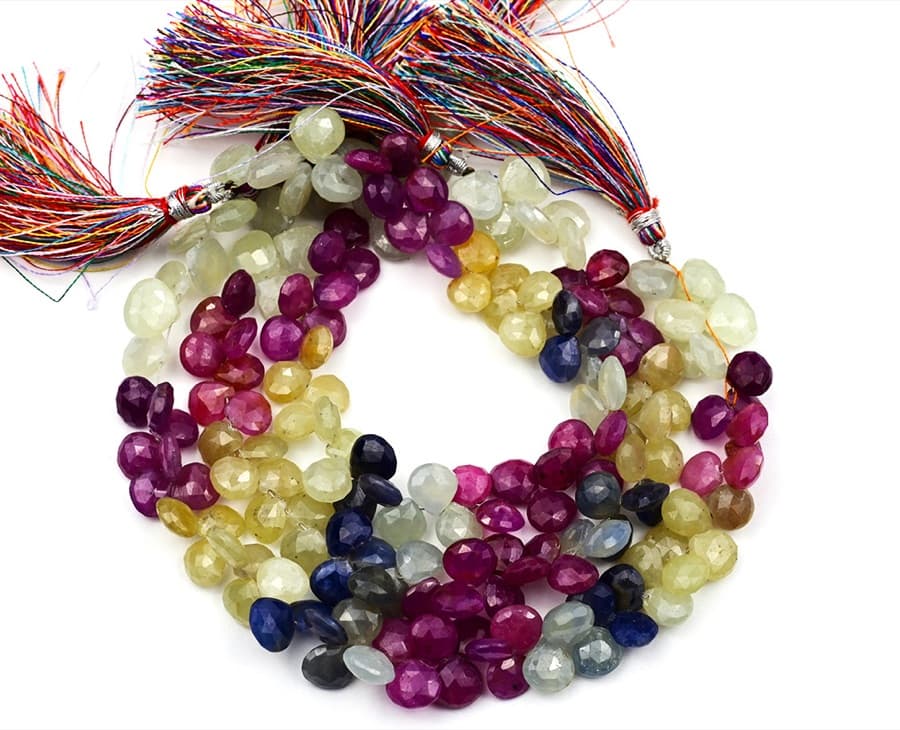 New
New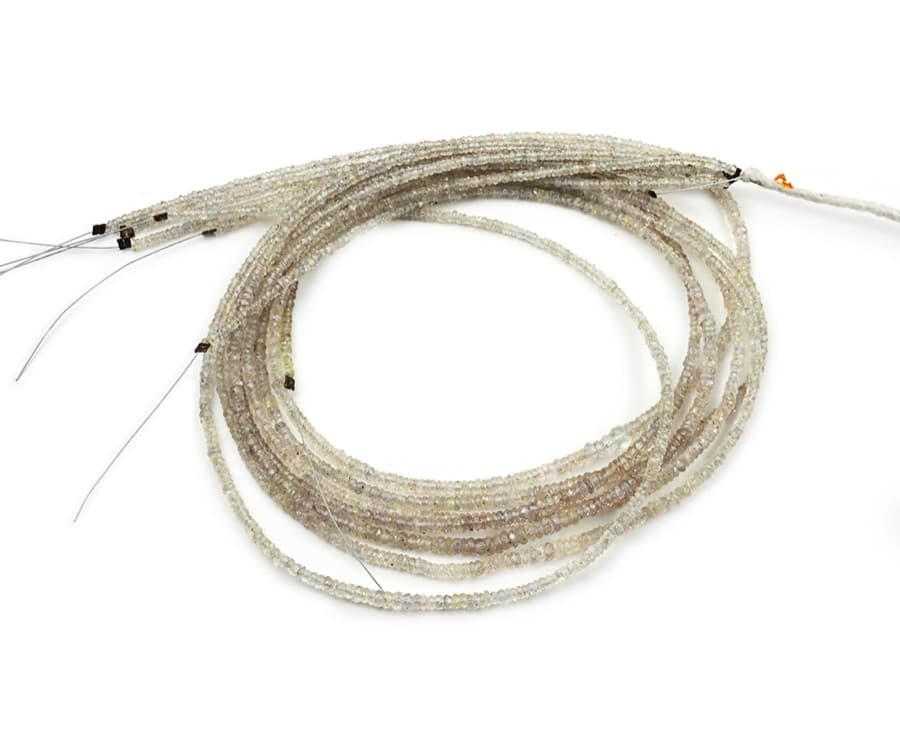
How do I tell multi sapphire from glass or quartz?
Under a 10x loupe, look for fine silk and angular color zoning. Glass often shows round bubbles. Sapphire will scratch a quartz bead. If a strand looks perfectly clean and uniform in color at a too-good price, be cautious and ask for a loupe photo.
- Real corundum shows silk and angular zoning at 10x.
- Glass shows rounded gas bubbles.
- Sapphire is harder than quartz and resists scratching.
- Ask for a 10x loupe photo on white paper before you buy online.
How many beads do I need for a bracelet or necklace?
Plan your finished length, then allow about 1.5 inches for clasp and findings. On 15 to 16 inch strands, you'll get about 65 to 70 beads at 6 mm rondelle, about 48 to 52 at 8 mm, and about 95 to 100 at 4 mm. That gives a quick check if one strand covers your layout.
Common targets: bracelet 7.5 inches, choker 16 inches, princess 18 inches, matinee 22 inches. With small rondelles, a single 15 to 16 inch strand often builds a bracelet plus accents for earrings.
Which shapes and sizes string best for color mixes?
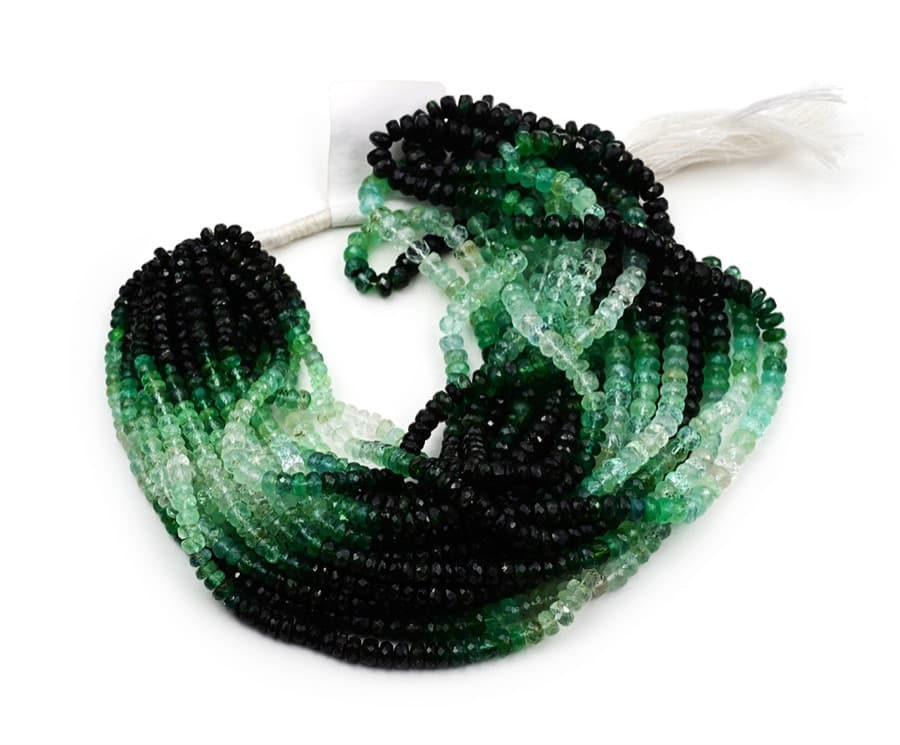
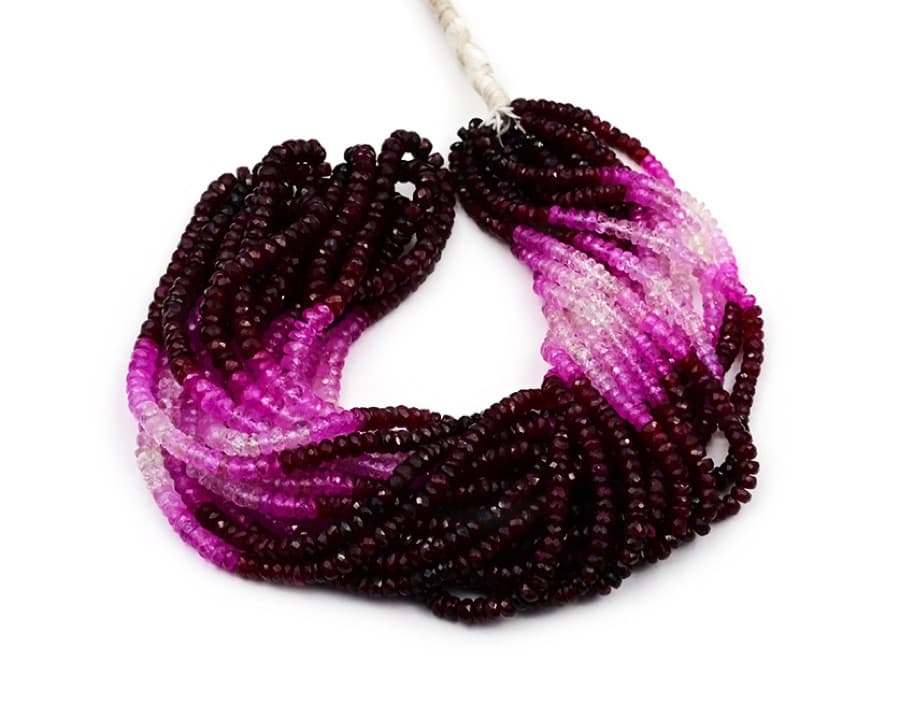
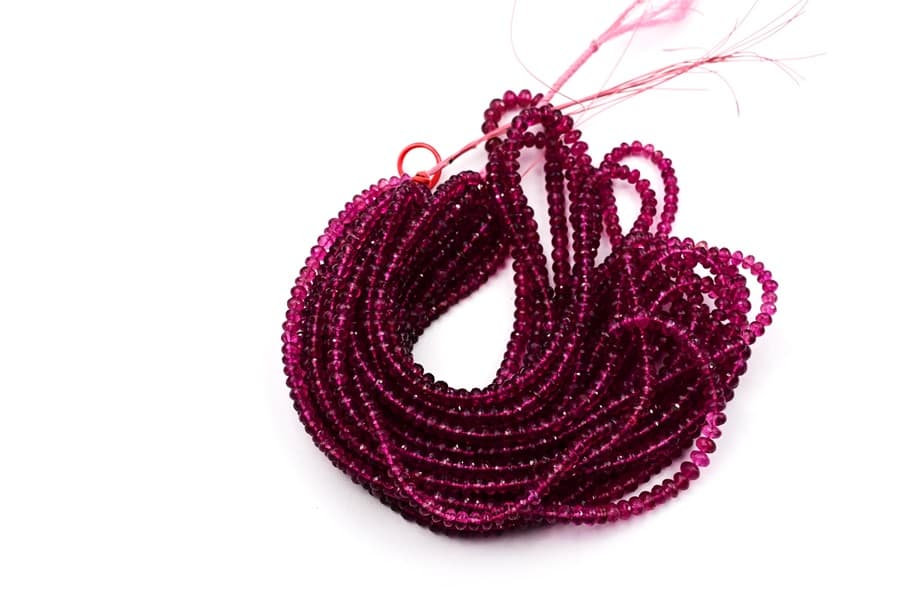
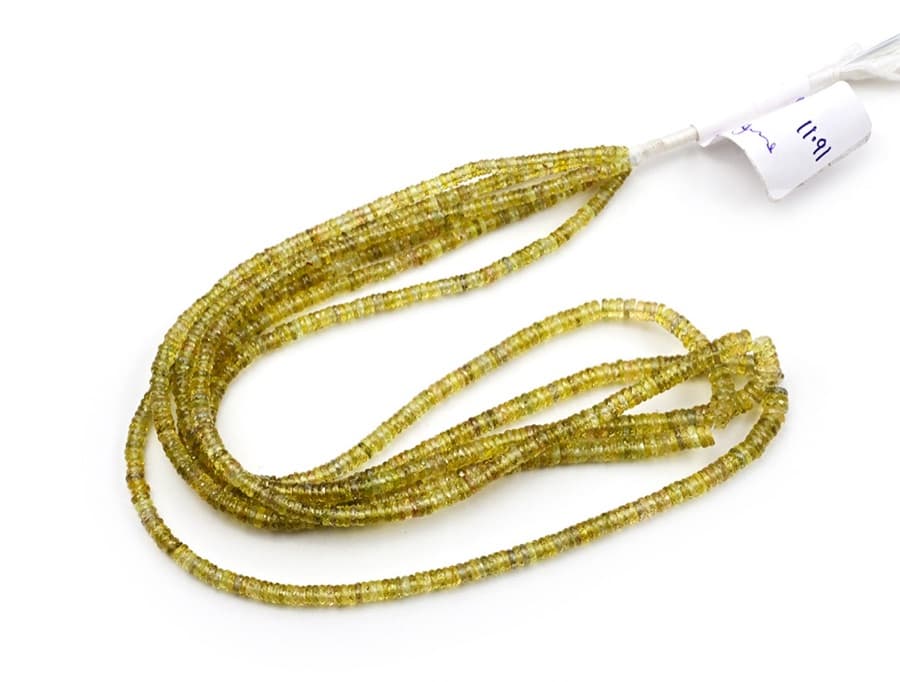
Rondelles are the workhorse for smooth gradients and spacers. Learn the drill style and measurements on our rondelle shape page. Heishi read as a solid column of color and make tight stacks.
Pears and hearts add movement as stations or for earrings. See drill orientations on our pear shape page. We stock micro faceted rondelles 2 to 4 mm, pear briolettes, hearts, ovals, tumbled cubes and heishi in sapphire.
- Rondelles, 2 to 4 mm, for fine gradients.
- Heishi for solid color bands and stacks.
- Pears or hearts for stations and earrings.
- Ovals or tumbled cubes add rests between color blocks.
How should I string and finish multi sapphire?
Use a beading wire or a strong thread that fits the drill without forcing. Check the first and last bead for sharp edges and add wire guards or small beads as bumpers at the clasp. Crimp neatly or knot in front of the clasp to protect your strand.
Sapphire handles ultrasonic cleaning and daily wear. Store strands apart from softer stones to avoid accidental scratching. Tradition links sapphire to wisdom and loyalty, which is why many clients gift these color mixes for September birthdays.
Where do these colors come from in one river valley?
The Umba River valley produces corundum with color zoning and a wide palette including pinks, greens, yellows and oranges. That mix lets us strand a natural rainbow from a single origin. We often sort parcels into confetti mixes, honey to olive bands, or pink to lavender runs so you can choose the mood you need.