How do labradorite and moonstone differ?
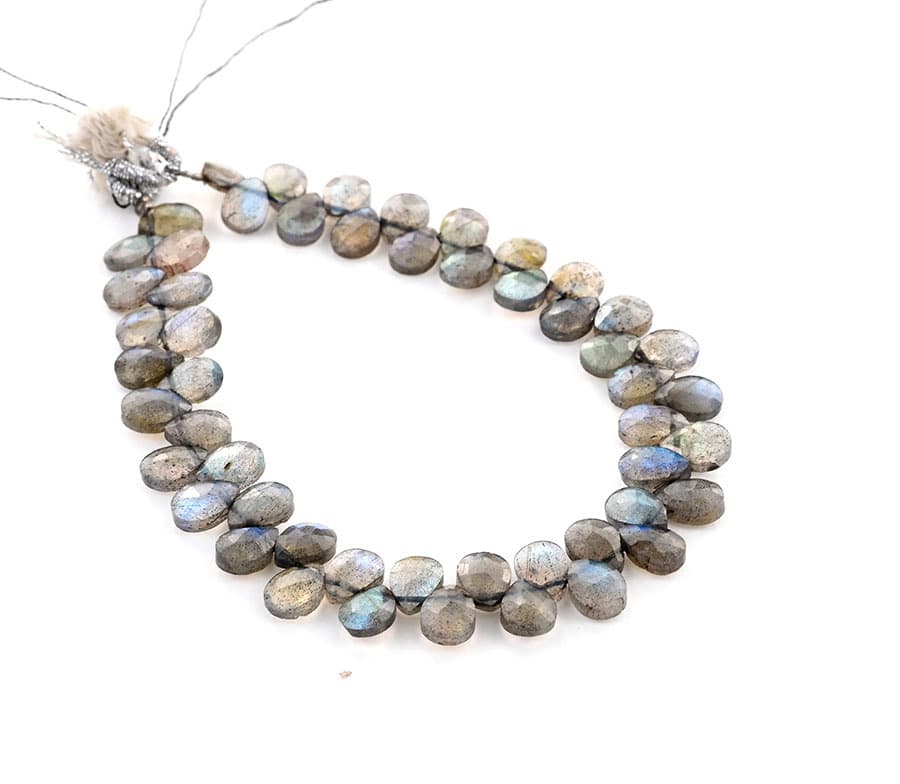
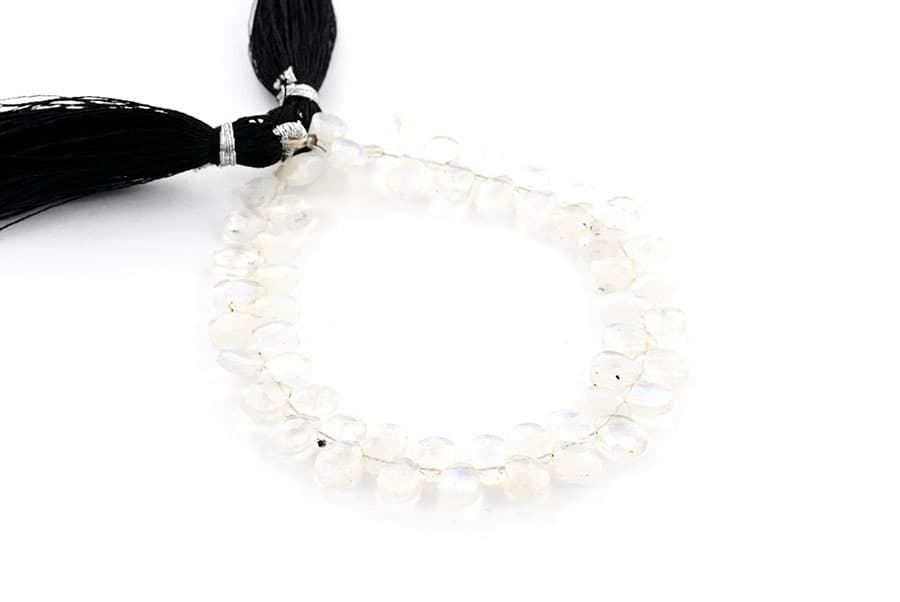
Both are feldspars. Labradorite shows vivid blue to gold flashes from a gray to nearly black body. Traditional moonstone has a milky body with a soft blue or white glow. Rainbow moonstone in beads is white labradorite, not orthoclase moonstone.
The effects have different names. Moonstone's glow is adularescence and labradorite's flash is labradorescence, both caused by light scattering in thin internal layers. See our stone pages for photos: Labradorite and Rainbow moonstone.
How can I tell them apart on a bead strand?
Sort by body color first. Dark gray beads with areas that fire blue or gold are labradorite. White to milky beads where a blue sheen rolls across are rainbow moonstone. Tilt slowly and watch the effect turn on and off as the angle changes.
Check how the sheen covers the bead. Labradorite often shows patches or planes of color. Rainbow moonstone reads as a glow that billows across the surface. Side lighting makes both effects easier to judge on the pad.
- Gray body + blue or gold planes = labradorite
- Milky body + billowy blue glow = rainbow moonstone
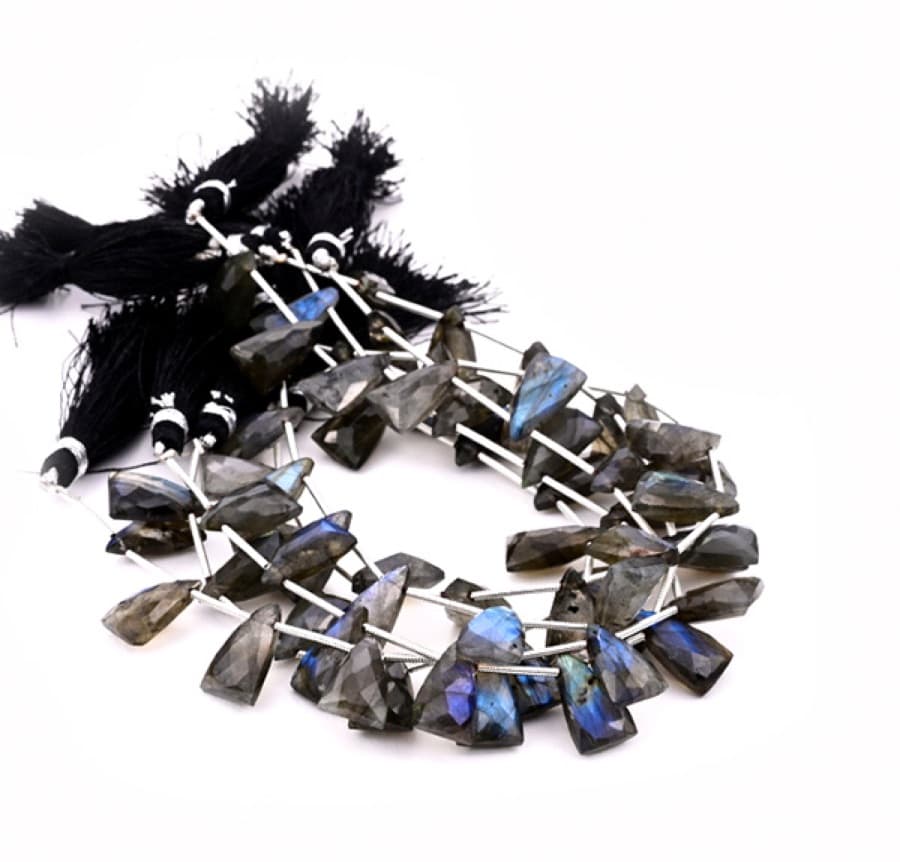
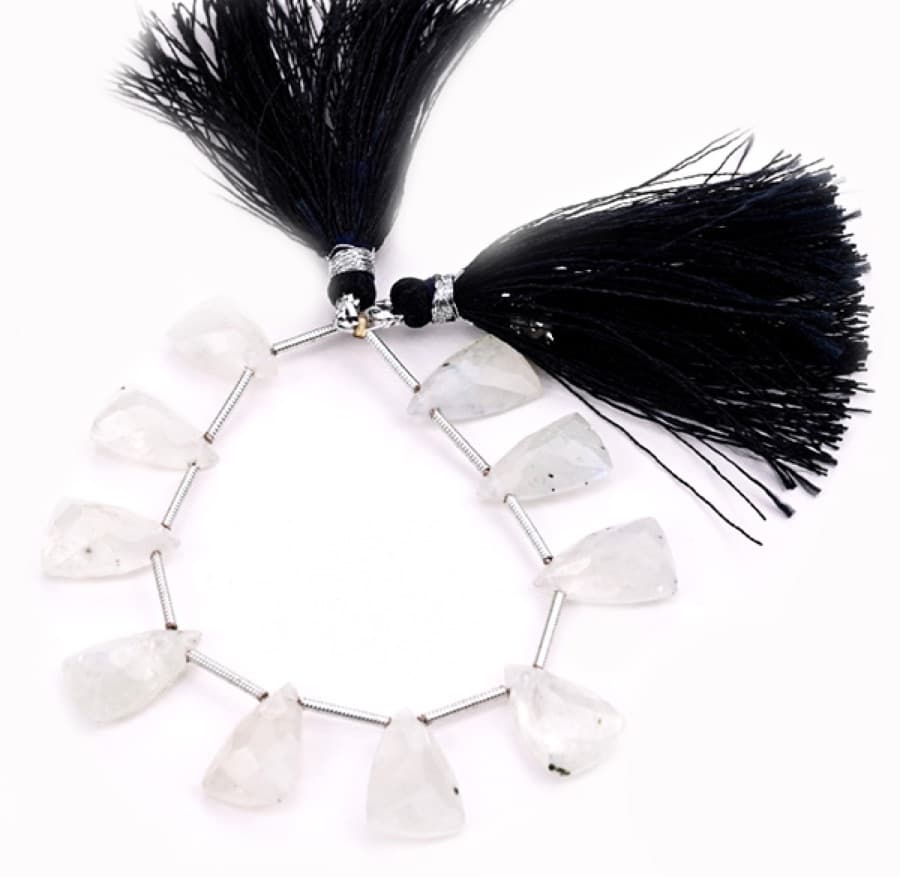
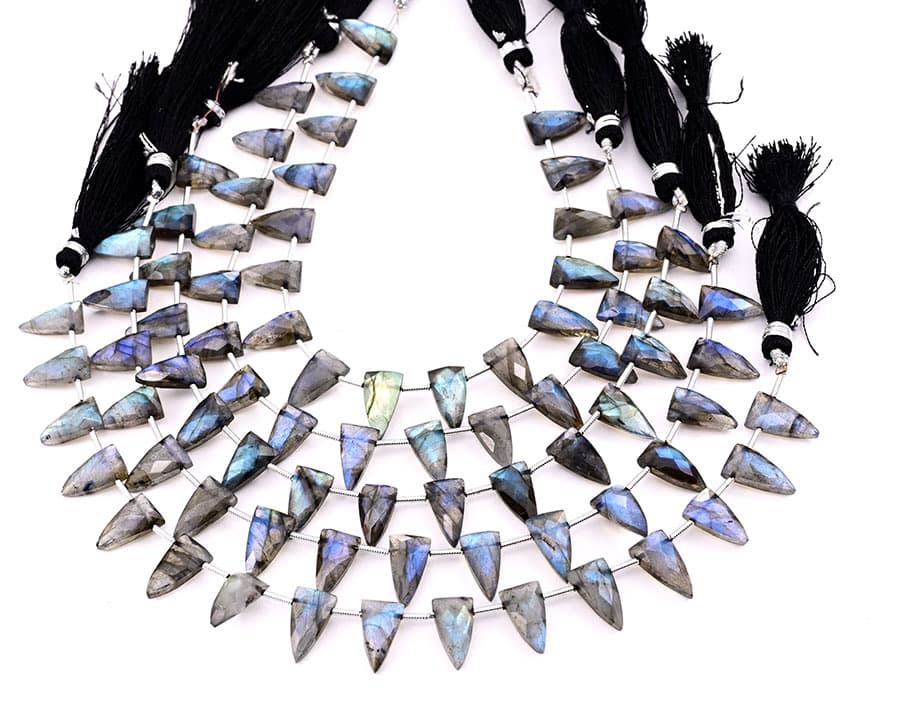
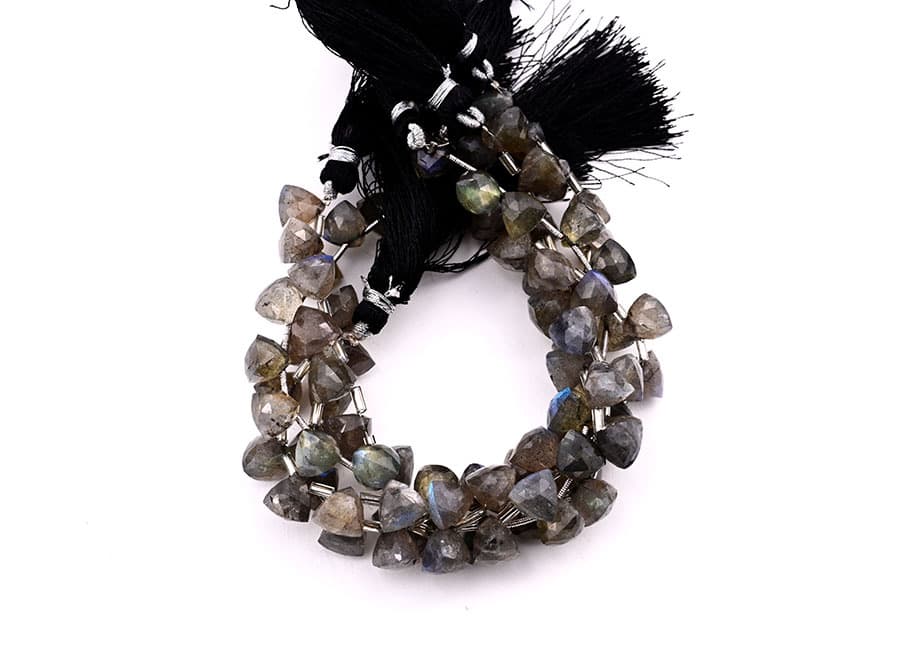
Which works best for my design?
We reach for labradorite when a neutral with fire is needed for silver, boho, and statement work. Daggers, pears, rectangles and nuggets make strong focal strands. Rainbow moonstone leans bridal, June-birthday, celestial, and airy boho. Rondelles and briolettes sell fastest for that look.
Need spacers that still show life? Small faceted rondelles in either stone add sparkle without weight. See what a rondelle is and how it measures on our rondelle shape page.
How many 6 mm beads do you need?
Plan by finished length and bead size. On a 7.5 in bracelet with a clasp, the beaded run is about 6 in. That uses about 25 beads in 6 mm, or about 19 in 8 mm. For a stretch 7 in bracelet, 6 mm runs about 29 and 8 mm about 22.
Necklaces add up fast. An 18 in uses about 70 beads in 6 mm and about 52 in 8 mm. A 16 in choker uses about 61 in 6 mm and about 46 in 8 mm. A 15 to 16 inch strand of 6 mm rondelles has about 65 to 70 beads, so one strand often covers a bracelet set.
How do we grade flash and pick a strand online?
For labradorite, we call blue across most of each bead standard AA. When gold, green, and purple ride alongside the blue on many beads, we grade it AAA, and the price runs about double for that tray. For rainbow moonstone, strong blue across most beads is the top grade, while chalkier lots sit lower.
We photograph actual strands unless marked representative, and every listing states stone, shape, size, and cut. Browse our guides for expectations on color and sheen: Labradorite and Rainbow moonstone.
What shapes do we stock right now?
We bring in Jaipur-cut strands and rotate shapes by tray. Pyramids and other facets really wake up the flash on both stones. Here are current trays we can invoice by WhatsApp or email and ship free in the US over $100.
- Labradorite 9x15 mm Faceted Pyramid, code GS109 (shop)
- Rainbow Moonstone 9x15 mm Faceted Pyramid, code GS113 (shop)
- Labradorite 7x13 mm Faceted Arrowhead, code GS142 (shop)
- Labradorite 9x10 mm Faceted Trilliant, code GS166 (shop)
How should I string and care for feldspar beads?
Both sit at Mohs 6 to 6.5 with perfect cleavage, so plan earrings, pendants, and loose necklaces over rough-wear bracelets. Seat facets gently and avoid hard knocks, especially on big nuggets and corners. Knotting between beads adds about 1 mm per knot and gives you a safety margin on silk or poly.
Clean with warm soapy water, rinse, and pat dry. Store strands padded so faces do not rub, and coil loosely in trays or bags between shows or jobs. We're at InterGem this month if you want to view flash under show lights, see our show schedule.