Emerald
Green beryl, Be3Al2Si6O18 colored by chromium and vanadium. Mohs 7.5 to 8 but brittle and usually fractured. Bead grades: Zambia, Brazil, lower-grade Colombian and Indian material.
At a glance
| Hardness (Mohs) | 7.5 to 8 |
|---|---|
| Family | Beryl |
| Where it is mined | See description |
| Shapes we carry | Hearts, Pears, Rondelles |
| Strands listed | 10 |
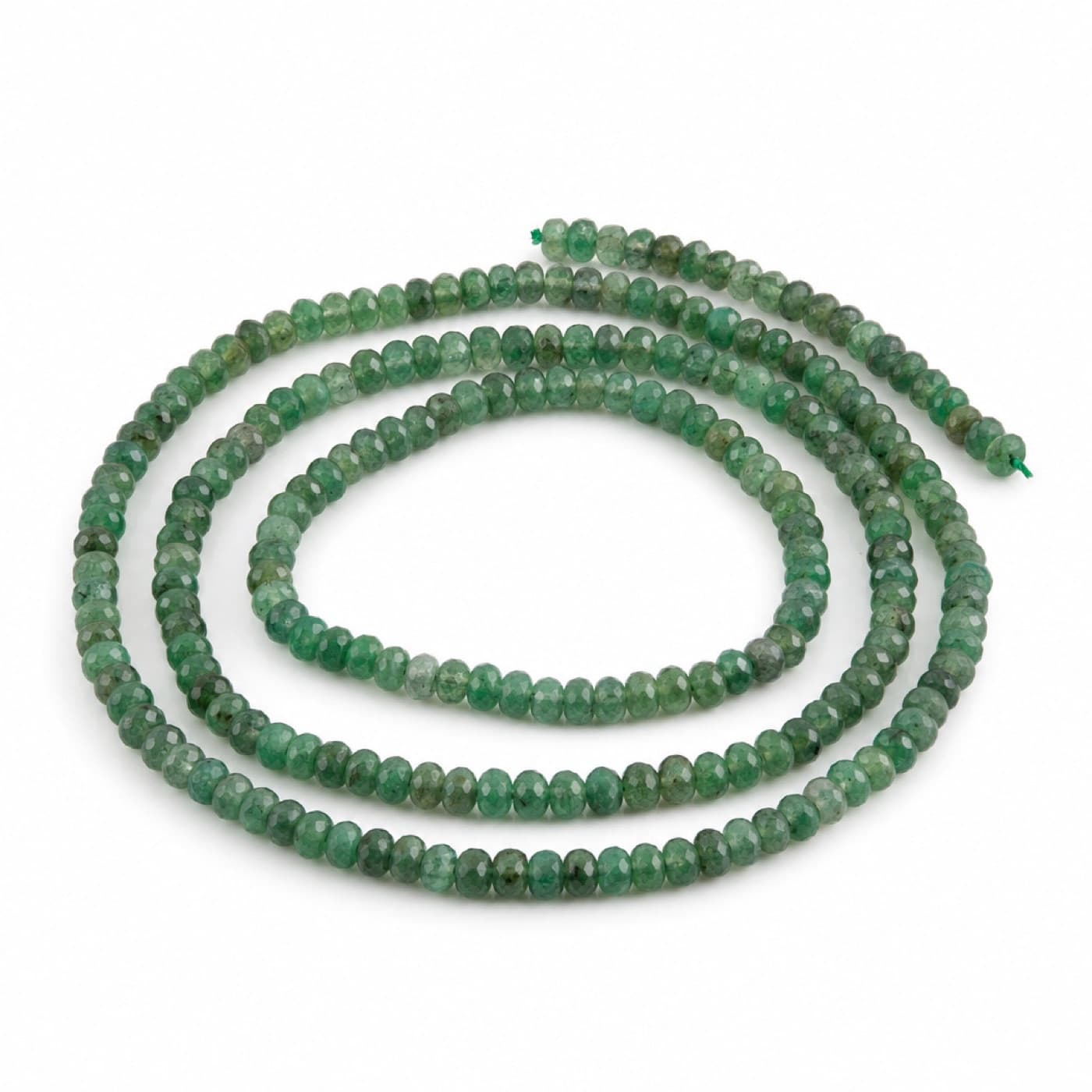
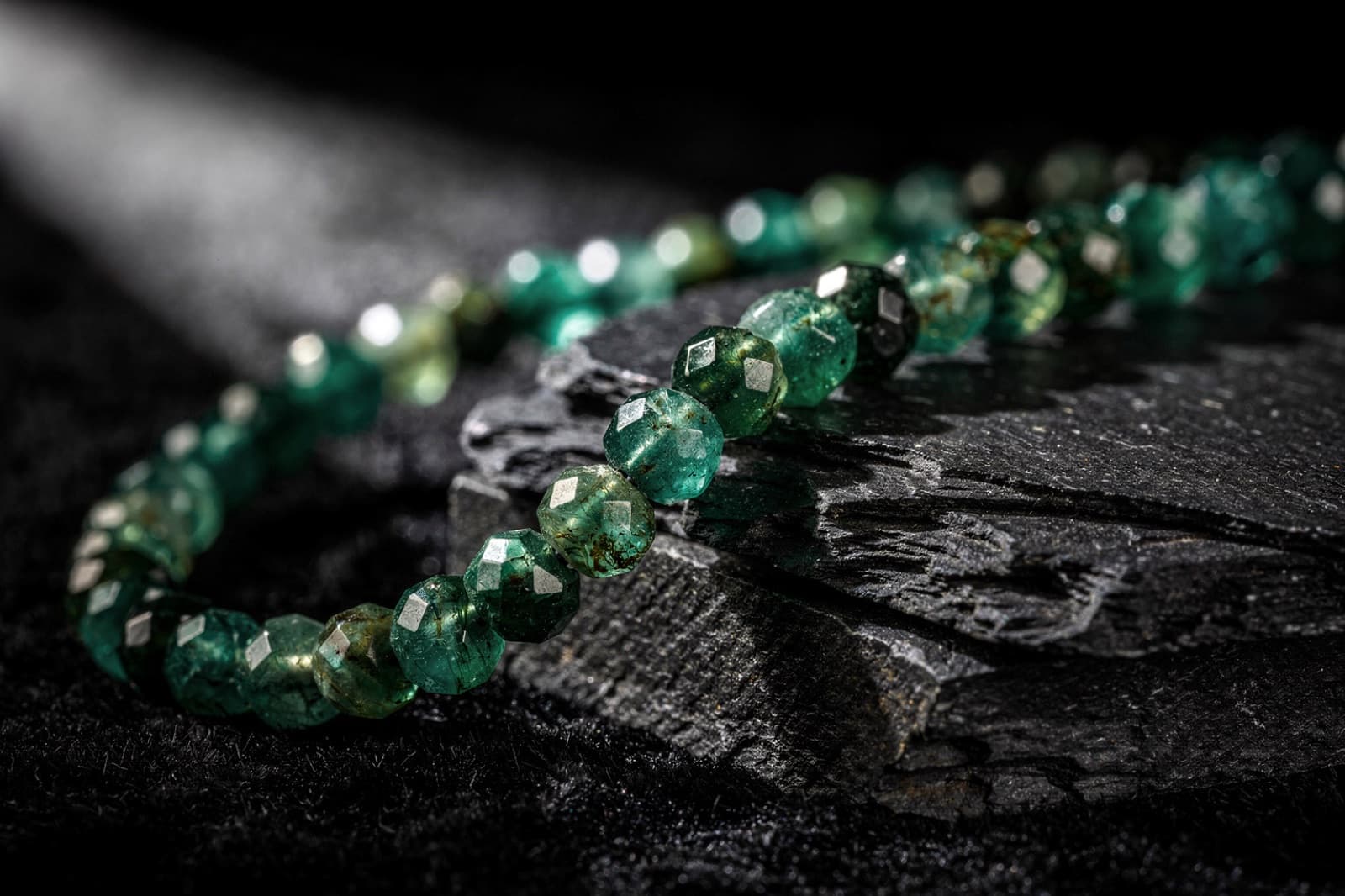
Film and illustrations are AI renders. Strand listings below show photographs of the actual material.
How to judge it
Judge color first: medium green that stays green in daylight, not gray or blackish, shaded evenly. The mossy "jardin" under a loupe confirms beryl.
What it's like to work with
Birthstone sellers, makers pairing green with yellow gold, layering designers. Rondelles are volume; hearts and pears are gifts.
Care
Warm water, mild soap, soft cloth. No ultrasonic, steam, jewelry dip or hot dashboards.
May birthstone; tradition ties it to rebirth and foresight (tradition, not fact).
Green first. Everything else comes after.
Small green points on the strand, not one big statement. The faceted rondelles are shaded: one end of the run sits pale as new grass, the other goes deep, and the color holds green in daylight instead of sliding toward gray. Turn a bead to the window. Inside is the mossy garden, the jardin, which is how you know you are looking at beryl. A little of that green does a lot next to yellow gold.
Where it comes from
Emerald is beryl that grew with chromium and vanadium in it. That trace chemistry marks the whole difference between an aquamarine and this green. The ancients took their emeralds from Upper Egypt, where the deposit is said to have been worked as early as 2000 BC, and mining there ran intermittently from around 500 BCE onward, continuing through Cleopatra's reign. Its name arrived by a long road from the Greek smaragdos. Pliny the Elder described the stone in his Natural History in the first century AD and settled the matter in three words: nothing greens greener. Colombia later became the classic source. The material that reaches us as beads comes mostly from Zambia and Brazil, with lower-grade Colombian and Indian stone as well. Zambian color at bead prices is a matter of size. Small pieces. Emerald all the same.
What tradition says
In crystal tradition, emerald is the gem of spring and of beginnings. People have long tied it to rebirth and to foresight. The Jewel of Kings, one old name has it. Pliny recorded a belief among early lapidaries that no green did more for tired eyes, and wrote of that green as a comfort people had known long before his own century. It is the birthstone for May, and the gem given for the twentieth and thirty-fifth wedding anniversaries. Famous stones carry that history forward. Among them is the 75.47-carat Hooker Emerald, worn by Ottoman Sultan Abdul Hamid II, the last sultan of the Ottoman Empire.
These are beliefs people have held about the stone, told as tradition. They are not claims, and not advice.
How makers use it
Shaded faceted rondelles at 2.5 to 3mm are the workhorse. They suit long single strands and wrapped bracelets, and layering where one green line sits under a chain. Figure 10 to 15 carats per 8 inches. A strand goes further than it looks. Smooth hearts and pears near 7mm get bought for gifts, often for a May birthday. Green next to yellow gold needs no help from anything else. We list ten strands, cut in Jaipur, India and chosen strand by strand in Cupertino, California.
Looking after it
Warm water, mild soap, a soft cloth. Emerald sits at 7.5 to 8 on the Mohs scale. It is also brittle, and nearly every stone carries internal fractures. Treat it like something softer than it is. Keep it away from ultrasonic cleaners and steam. No jewelry dip. No hot dashboards.
Sources: Emerald Gemstone | Emerald Stone – GIA, Emerald History and Lore - GIA, Emerald Origins: History and Identification - International Gem Society, Emerald gemstone
Emerald strands
All 10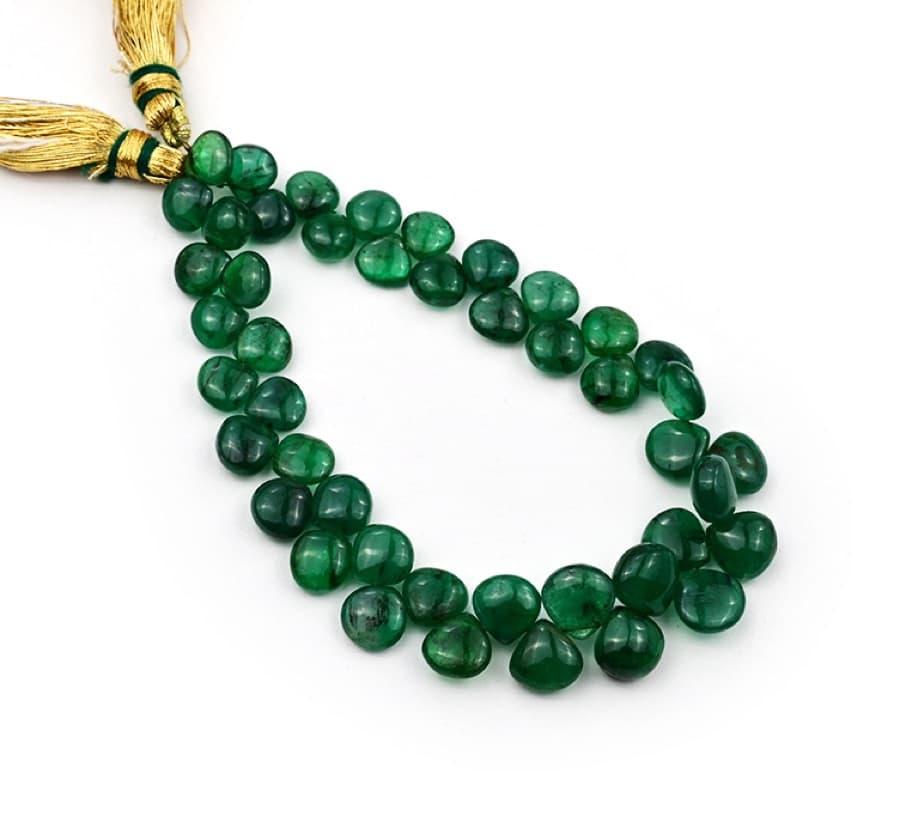 New
New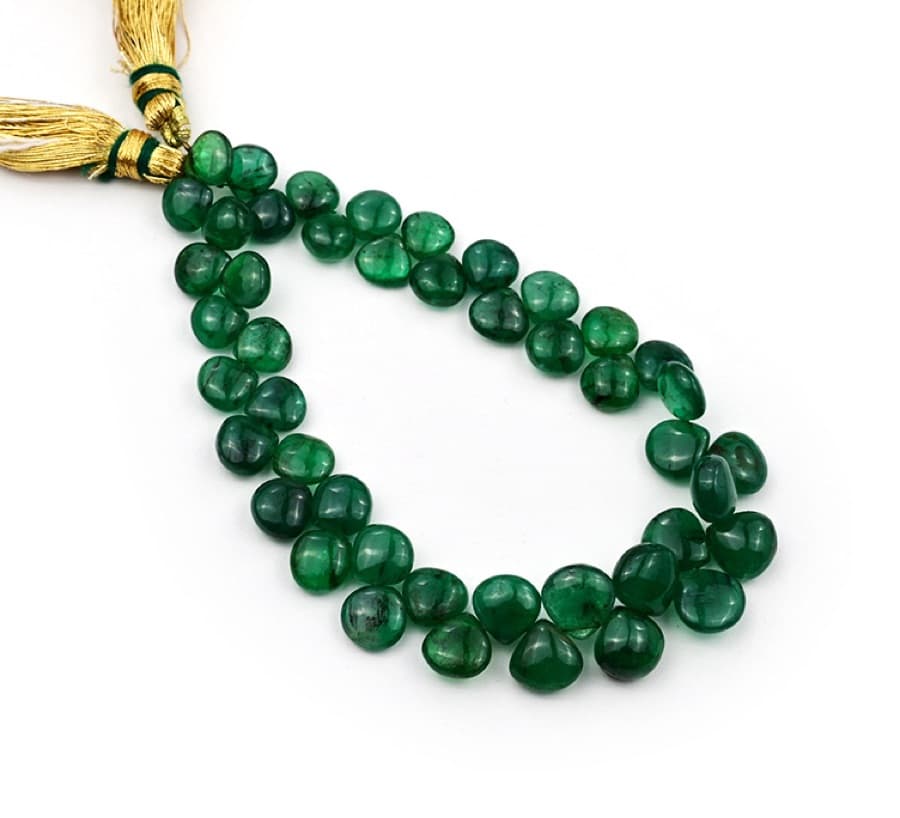 New
New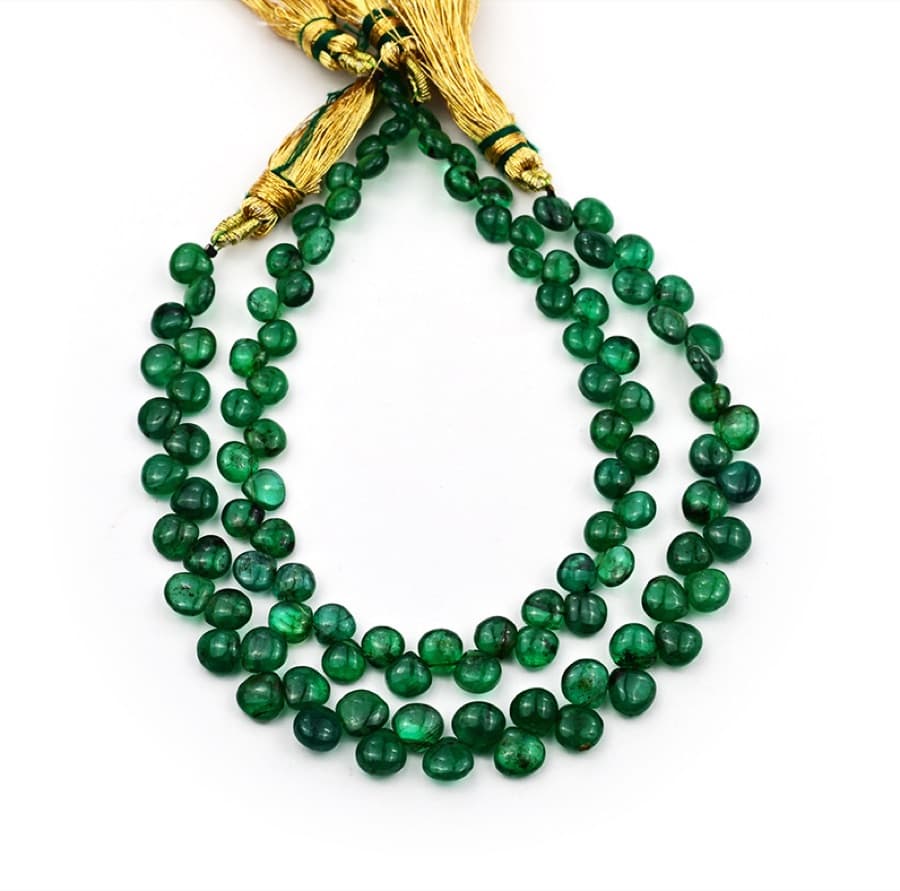 New
New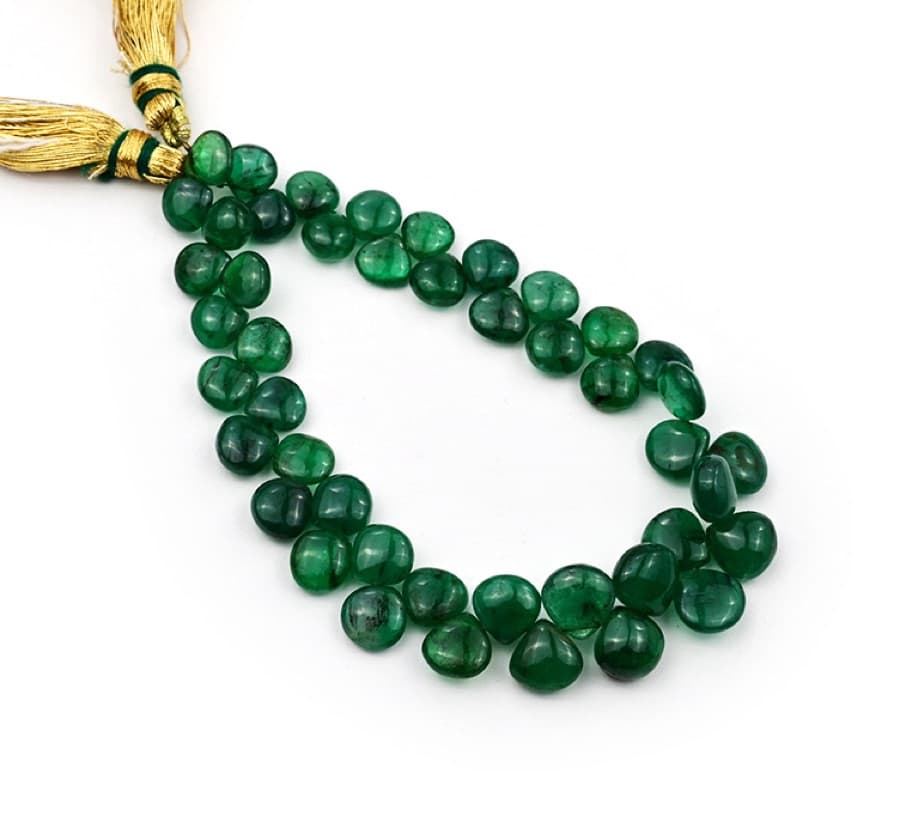 New
New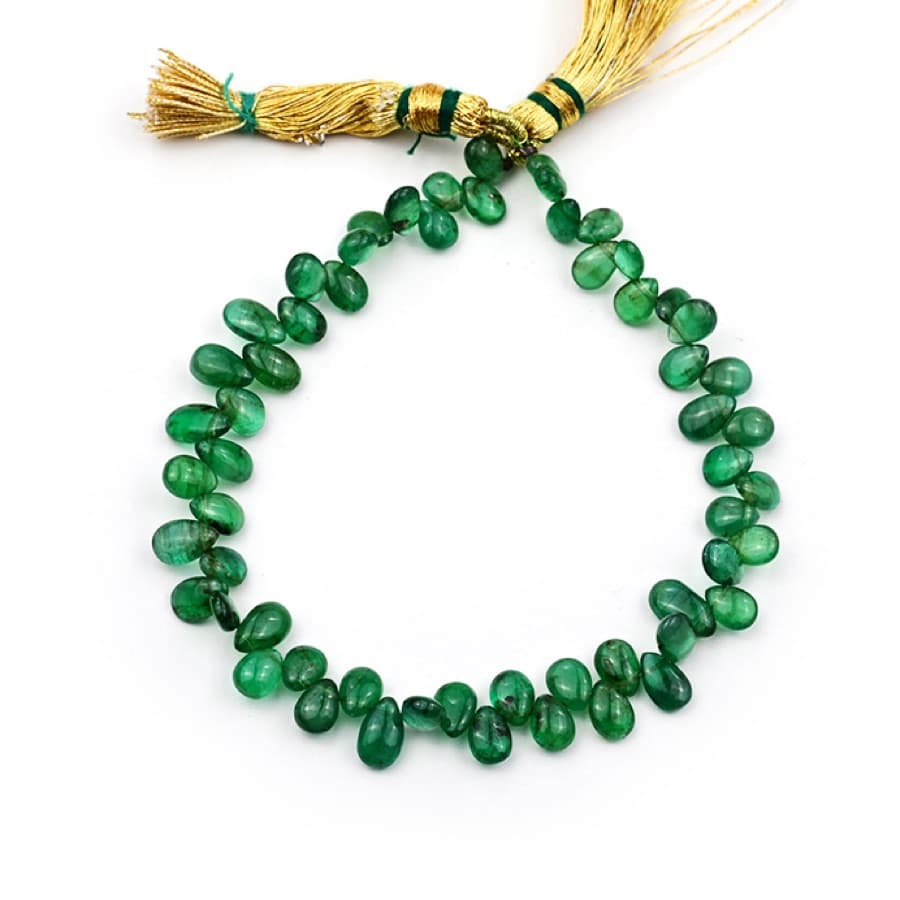 New
New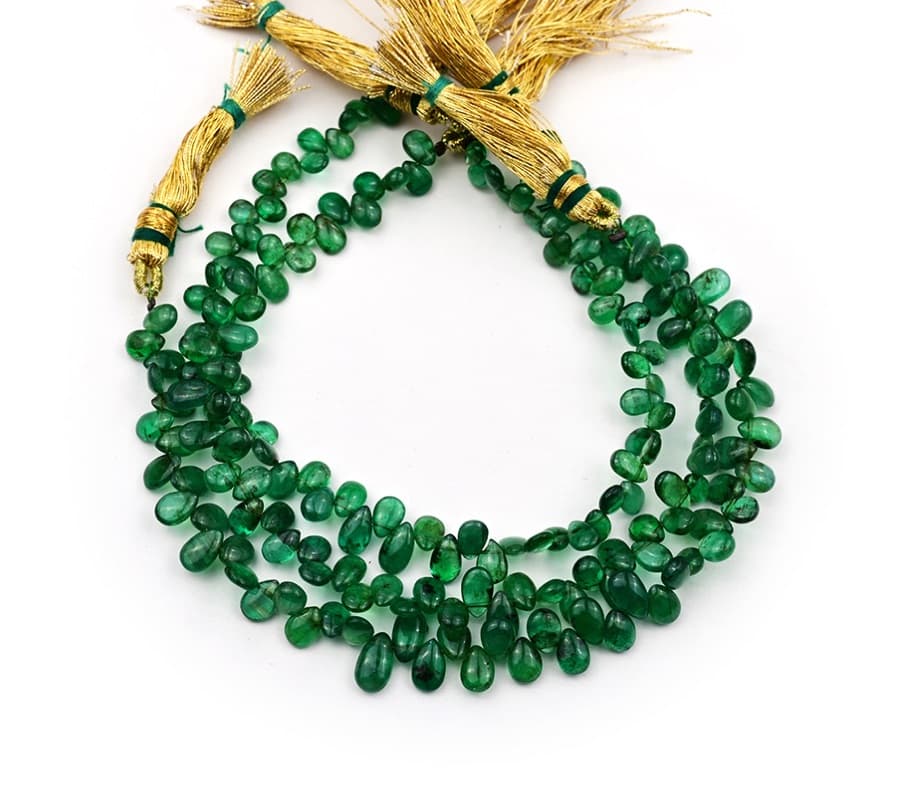 New
New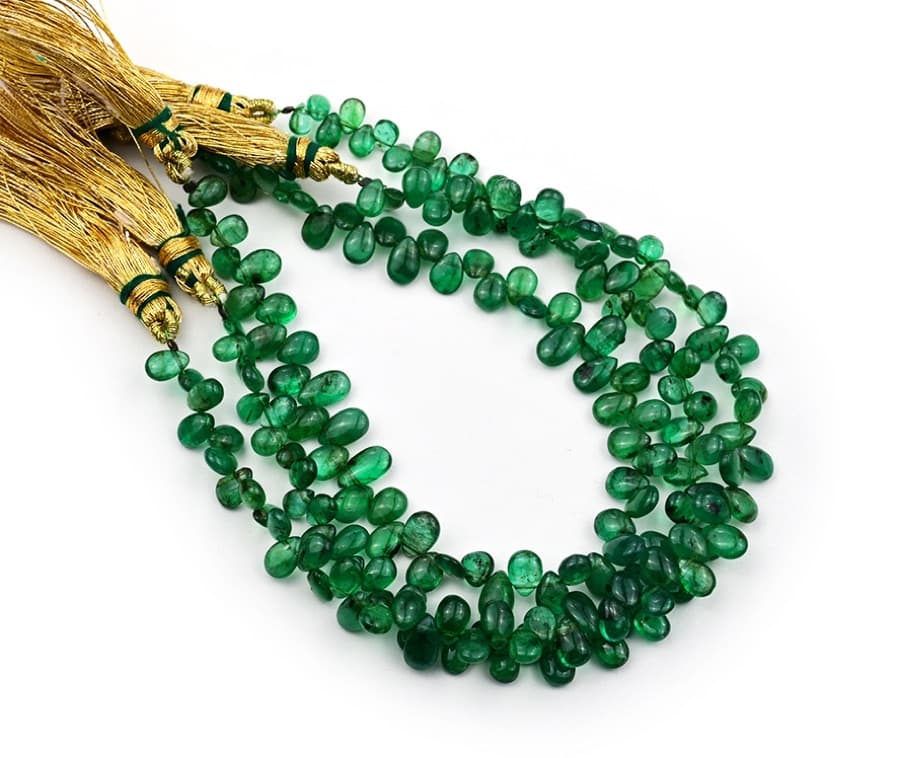 New
New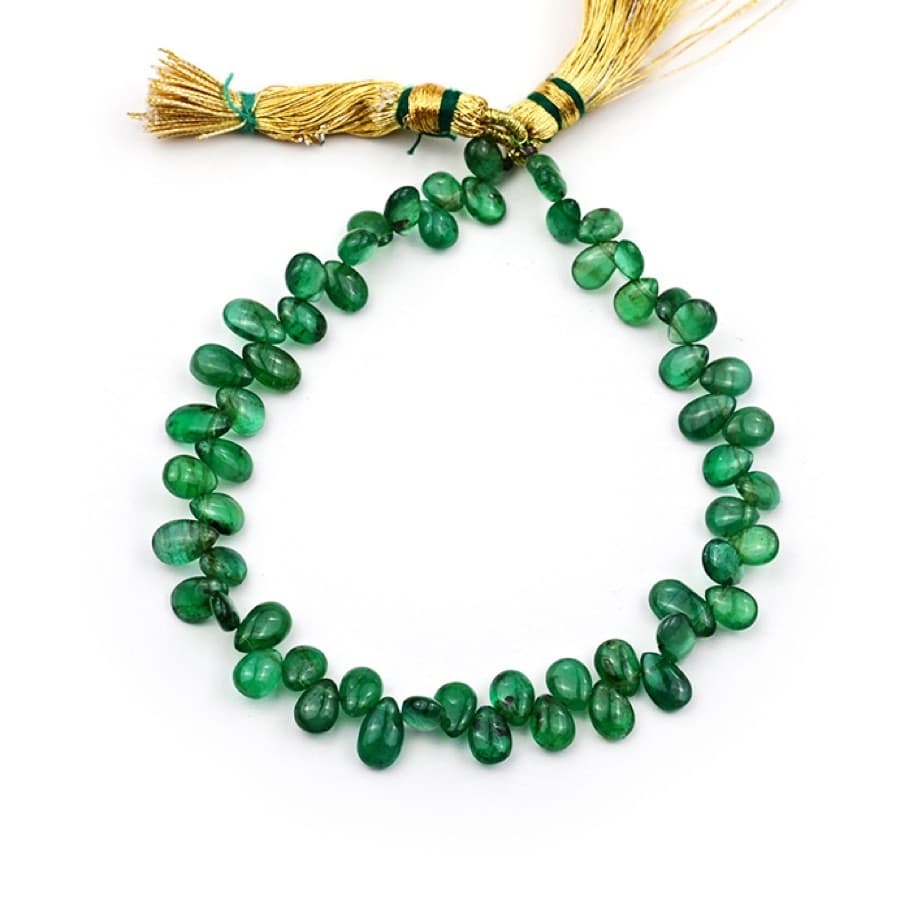 New
New