Aquamarine
Blue to green-blue beryl (beryllium aluminum silicate) colored by iron. Mohs 7.5 to 8. Bead rough: Brazil, Nigeria, Mozambique, Pakistan.
At a glance
| Hardness (Mohs) | 7.5 to 8 |
|---|---|
| Family | Beryl |
| Where it is mined | Brazil, Nigeria, Mozambique, Pakistan |
| Shapes we carry | Arrowheads, Diamond cuts, Half moons, Hearts, Marquise, Ovals, Pears, Pyramids, Rectangles, Tear drops, Trilliants |
| Strands listed | 21 |
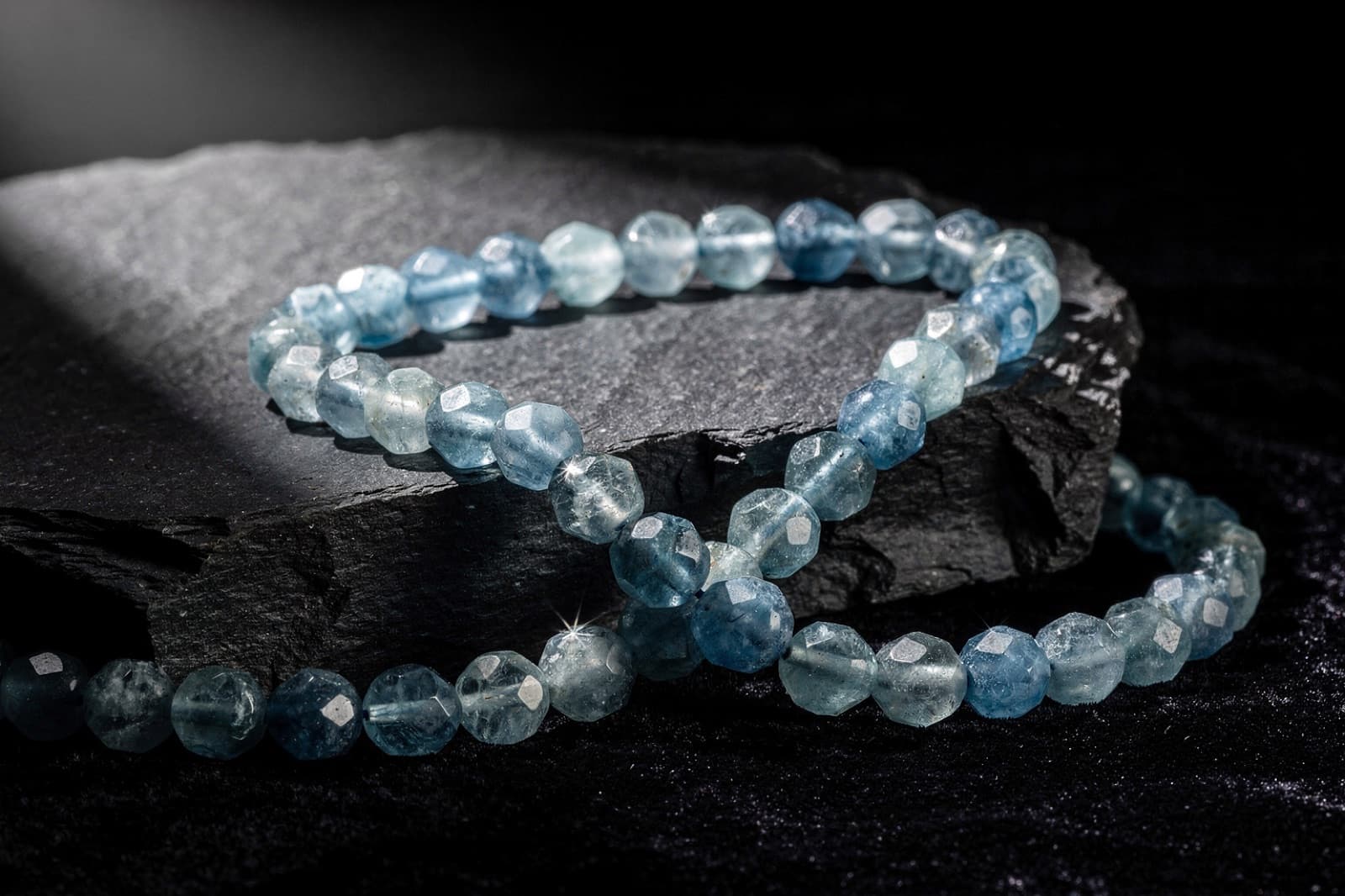
Film and illustrations are AI renders. Strand listings below show photographs of the actual material.
How to judge it
Even medium blue with no gray beats pale; moss inclusions should be spread evenly. Look-alikes: blue topaz (heavier, more saturated) and glass (round bubbles).
What it's like to work with
Bridal and March-birthday work; moss and milky feed boho and beach designs. Rondelles and briolettes sell best.
Care
Daily-wear durable. Warm soapy water; ultrasonic safe except on moss.
March birthstone; by tradition a sailor's stone.
Blue beryl, clear and steady.
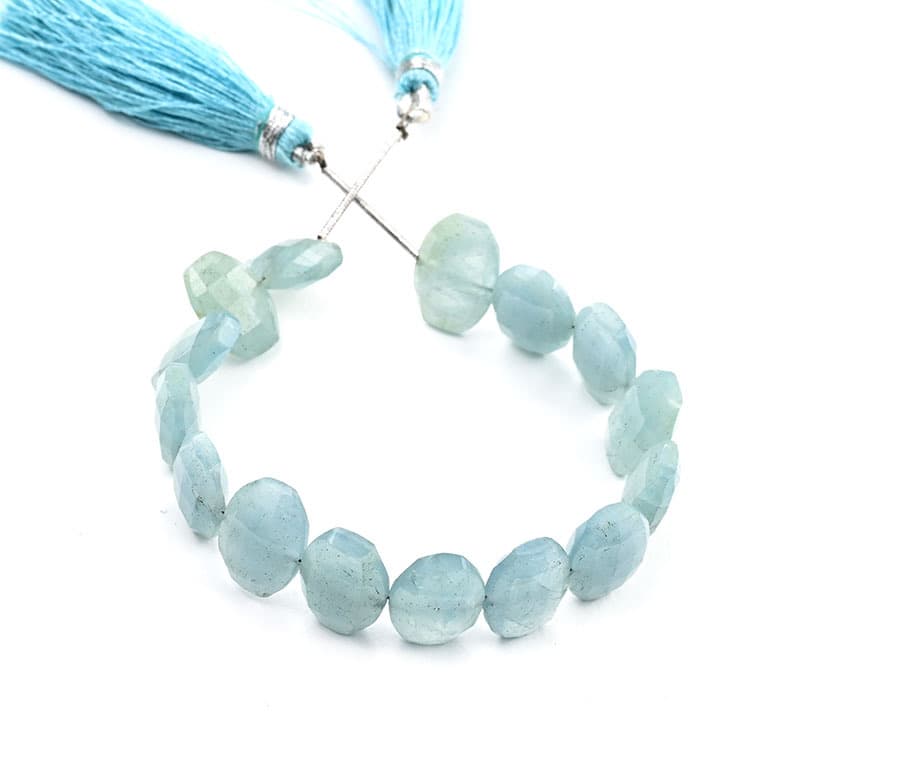
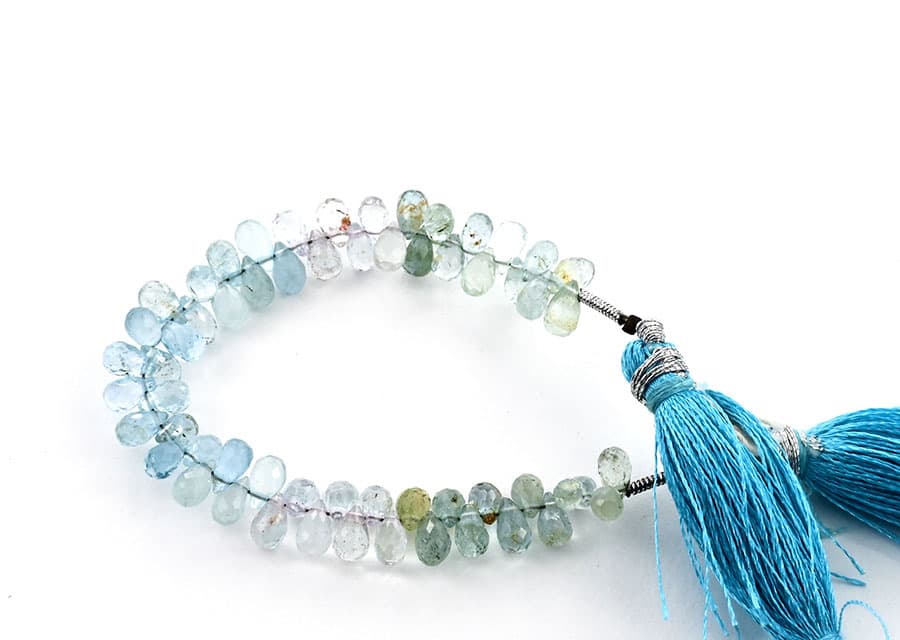
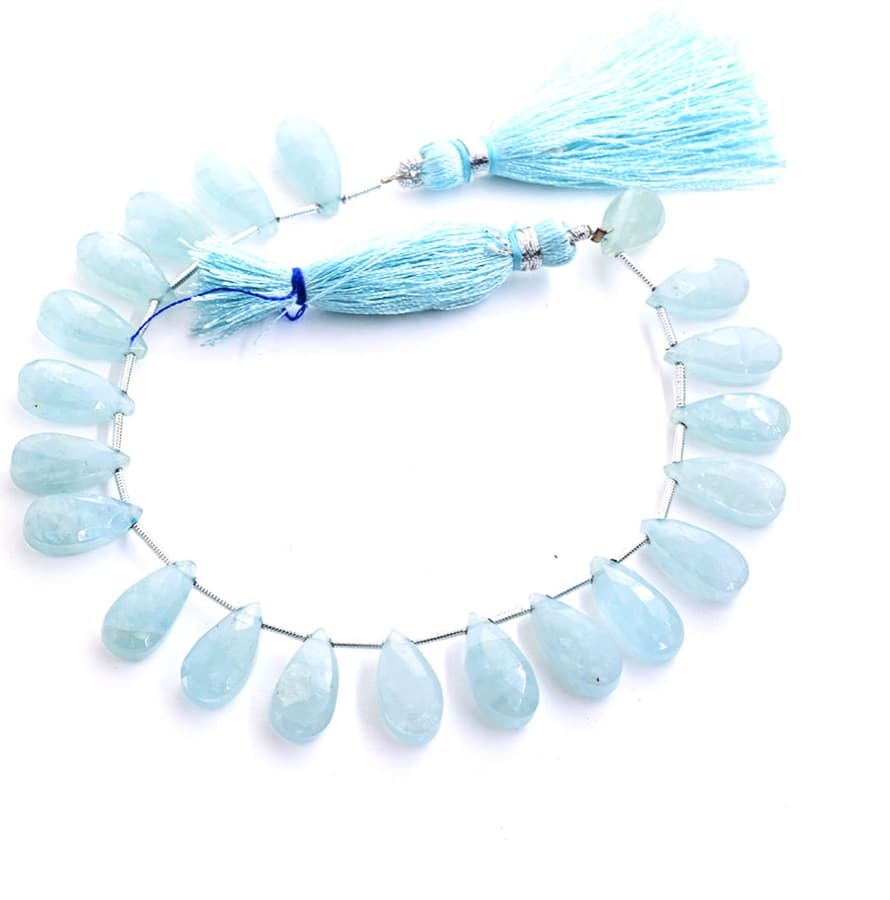
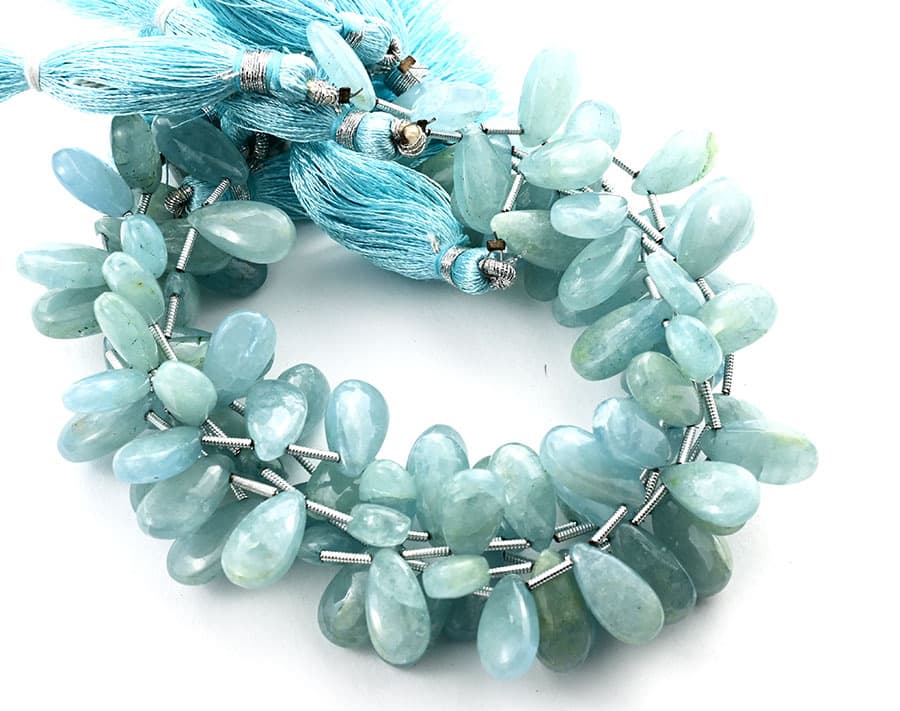
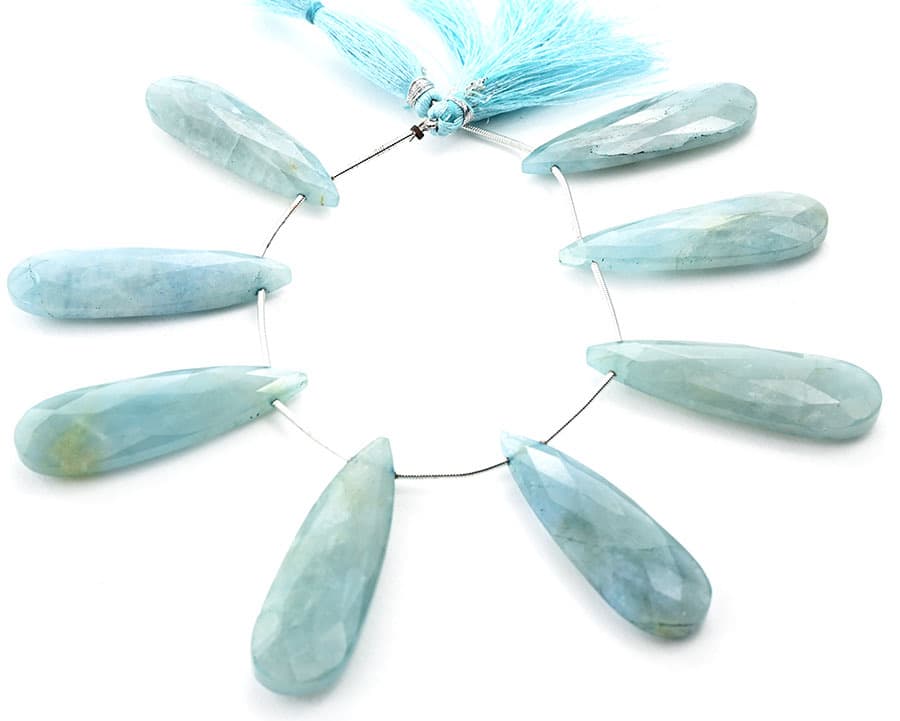
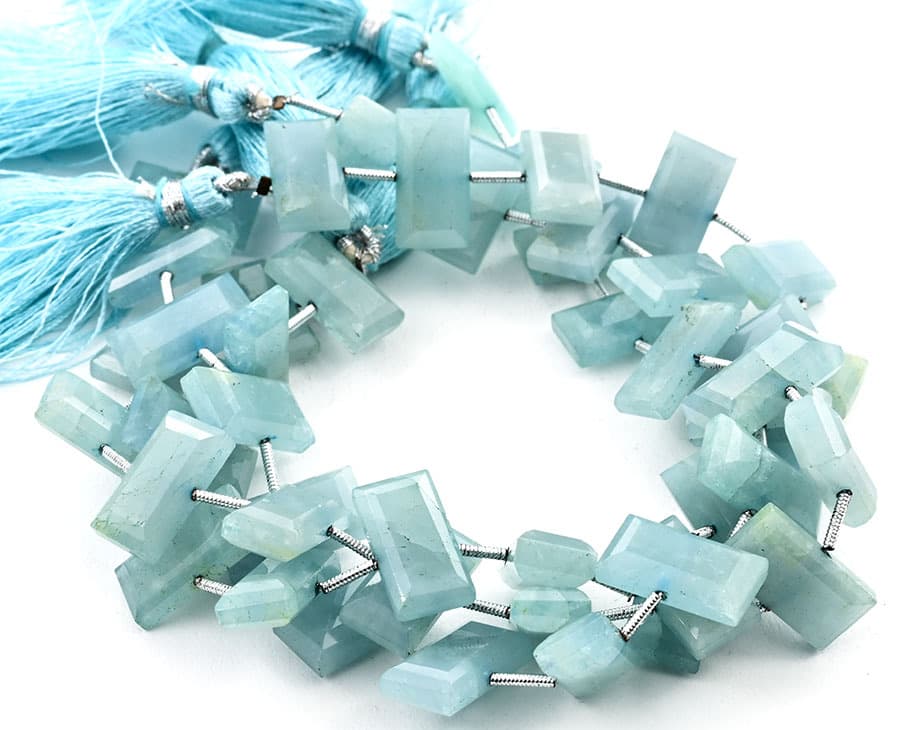
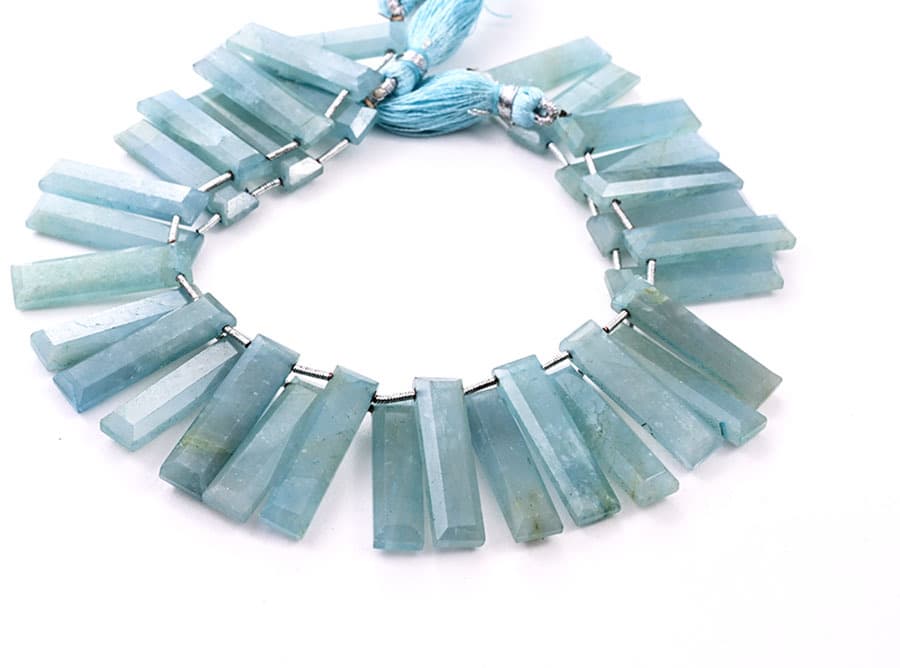
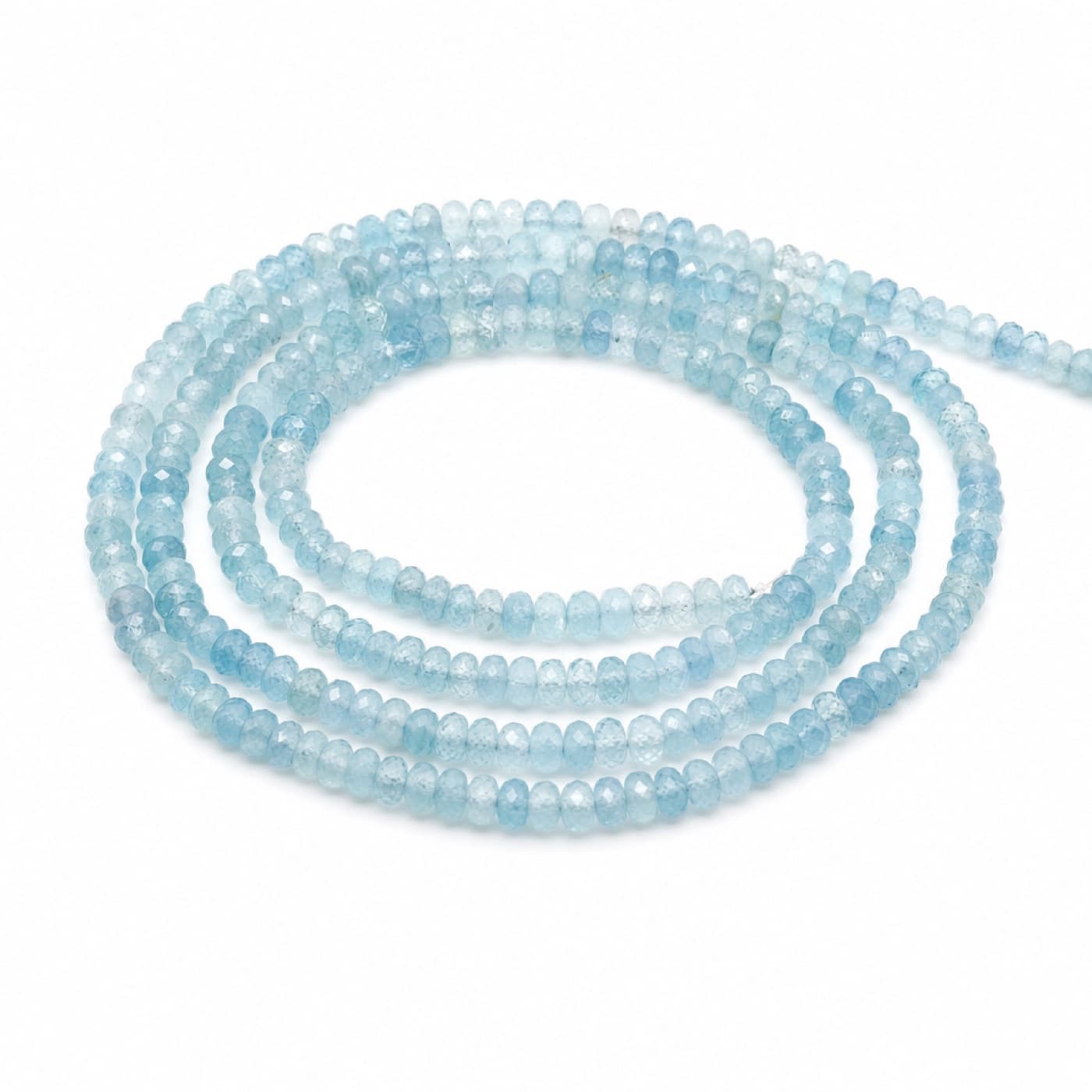
Strung in a line, aquamarine shows a clear, even blue that reads as water. Faceted rondelles throw quick, bright glints; smooth ovals carry the color in steady blocks. Milky strands glow soft. Mossy strands hold fine green threads and flecks that hint at the rock it grew in. On the neck the hue stays light, not heavy, and plays well with silver or gold. Makers reach for it for March gifts, bridal work, and pieces that want a calm blue.
Where it comes from
Aquamarine is blue to green-blue beryl colored by iron. On the Mohs scale it measures 7.5 to 8. It mainly forms in granite pegmatites and often grows as large, clean crystals suited to sizable cuts and carvings. The name comes from Latin: aqua for water and marina for of the sea; English use of aquamarine is recorded in 1677. Today bead rough comes from Brazil, Nigeria, Mozambique, and Pakistan. Aquamarine is the same mineral species as emerald, but in a different hue. Top stones are known for high clarity with transparent blue to slightly greenish blue color, a look that has long worked well for beads and pendants. Its durability and steady color have kept it in regular jewelry use.
What tradition says
In crystal tradition, aquamarine is March's birthstone and a sailor's stone, said to calm waves and help keep seafarers safe. It is also said to brighten marriages and bring happiness to partners. In Western lore its sea color links it to safe travel over water. Wider beryl lore holds that it brings protection in battle or litigation, makes the wearer amiable and unconquerable, and quickens the intellect. Modern custom names aquamarine as the 19th wedding anniversary gem. These are long-held beliefs about meaning, passed along with the stone.
These are beliefs people have held about the stone, told as tradition. They are not claims, and not advice.
How makers use it
Makers reach for faceted rondelles and pear briolettes for bridal and March-birthday pieces; milky and mossy strands lean into beach and boho work. We carry clean blue rondelles in 4 to 6 mm, pear briolettes, and smooth ovals, with multi-beryl mixes as well. Moss is aquamarine with its geology left in. When choosing, an even medium blue with no gray reads best, and moss is loveliest when inclusions are spread evenly. Rondelles and briolettes sell best. Blue topaz feels heavier and more saturated; glass shows round bubbles. Our strands are cut in Jaipur and chosen strand by strand in Cupertino.
Looking after it
Aquamarine is daily-wear durable. Clean with warm soapy water. Ultrasonic cleaning is safe for most pieces, but avoid it on moss material with inclusions. When in doubt about mossy strands, stick to warm soapy water.
Sources: Aquamarine Gemstone | Aquamarine Stone - GIA, Aquamarine History and Lore, Aquamarine: the blue gemstone and March birthstone, Aquamarine (gem)
Aquamarine strands
All 21