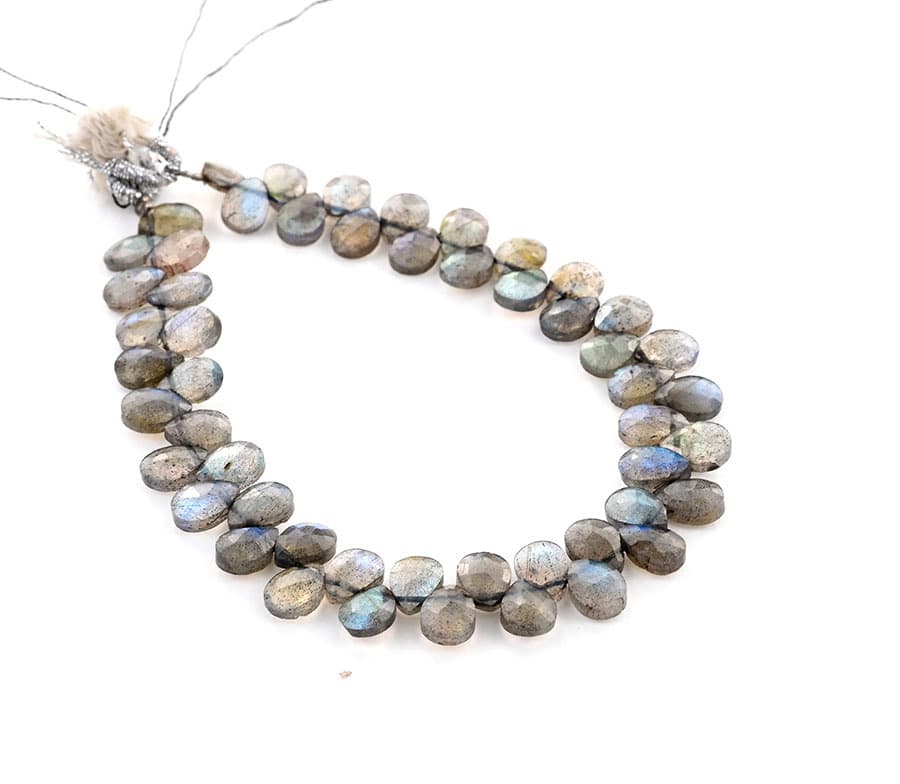
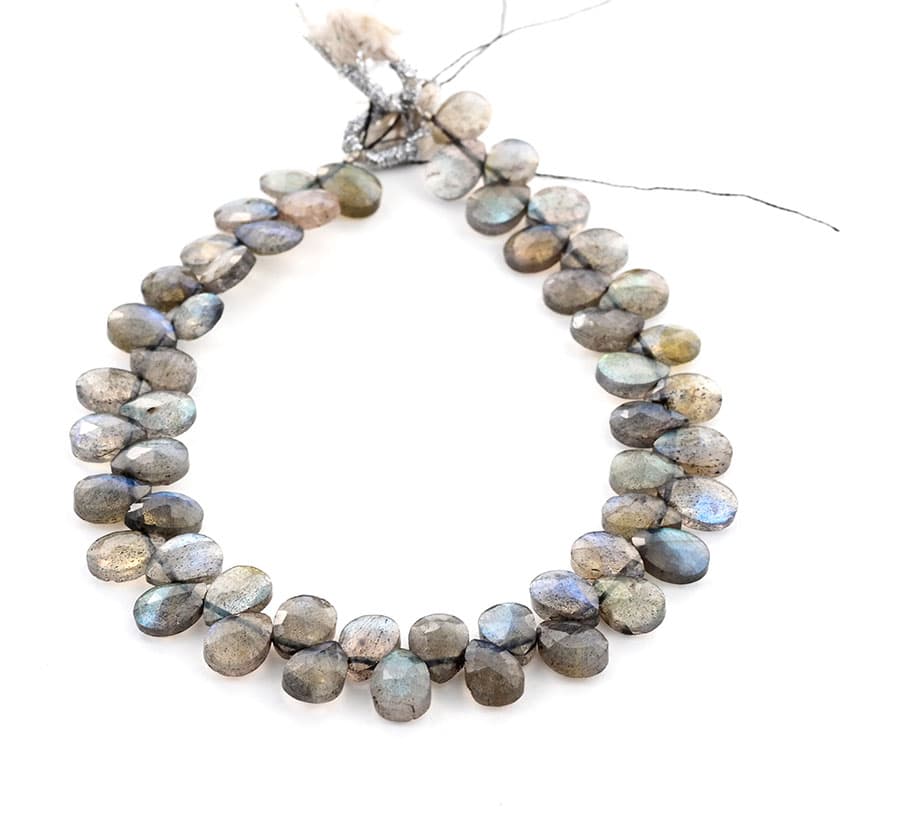
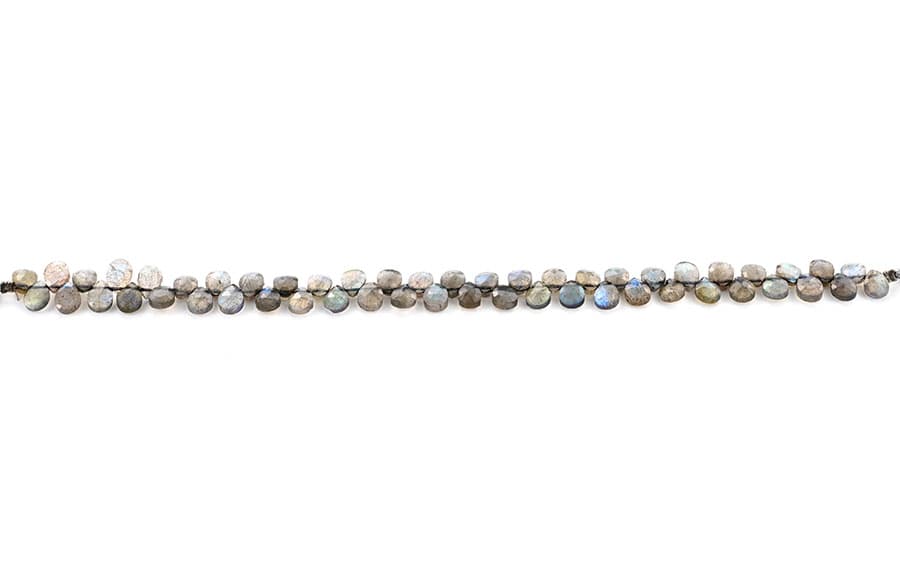
Natural stones vary. Your strand will match these photos in colour and size range, not bead for bead. Photographed under daylight-balanced light with no colour correction.
Labradorite 5X7mm Faceted Pear(Calibrated)
Specifications
| SKU | GS615 |
|---|---|
| Stone | Labradorite |
| Shape | Pear |
| Bead size | 5x7mm |
| Cut | Faceted |
| Color | — |
| Weight | On request |
| Hardness (Mohs) | 6 to 6.5 |
| Origin | Cut in Jaipur, India |
| Availability | In stock |
Labradorite is related to the feldspar group with calcium & sodium components. The stone is often used to create earrings, attractive pendants, and beaded jewelry. Labradorite gemstone is a durable material with a hardness of 6-6.5 (on Mohs scale), but softer than quartz. Color of Labradorite is gray/blue with colorful iridescence.
What it makes
Pears are used for earrings, pendants, graduated necklaces. Measured width by length, e.g. 6x9mm; usually drilled top-drilled across the point, or center-drilled lengthwise. More about pears.
Gray until it turns, then blue across the whole face.
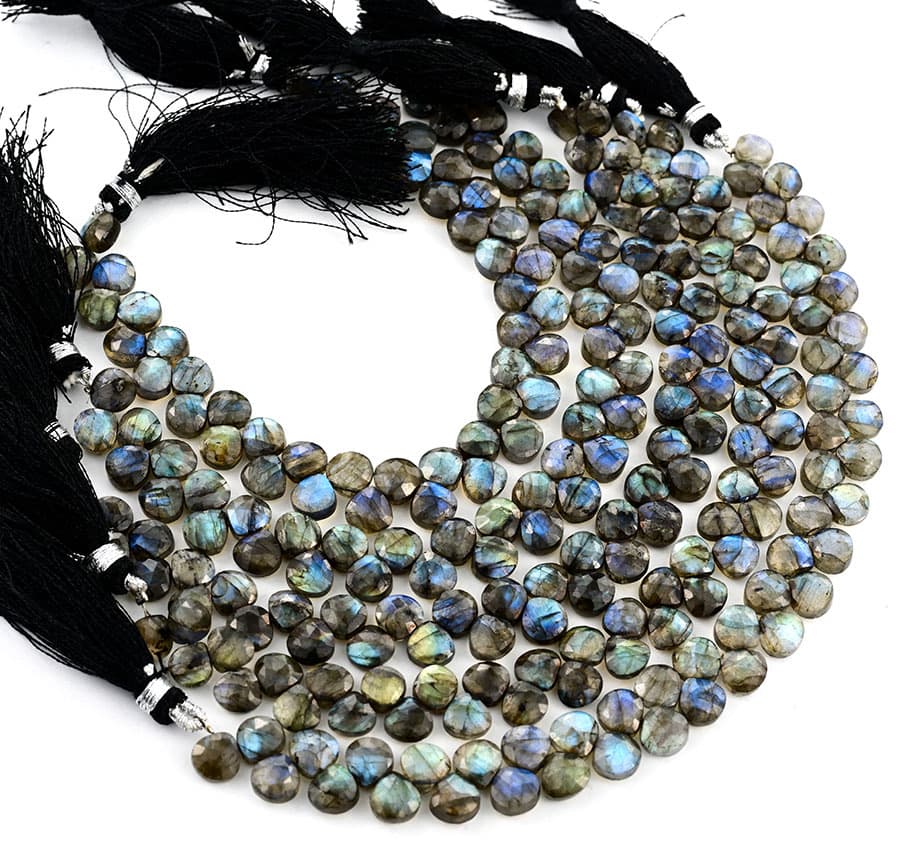
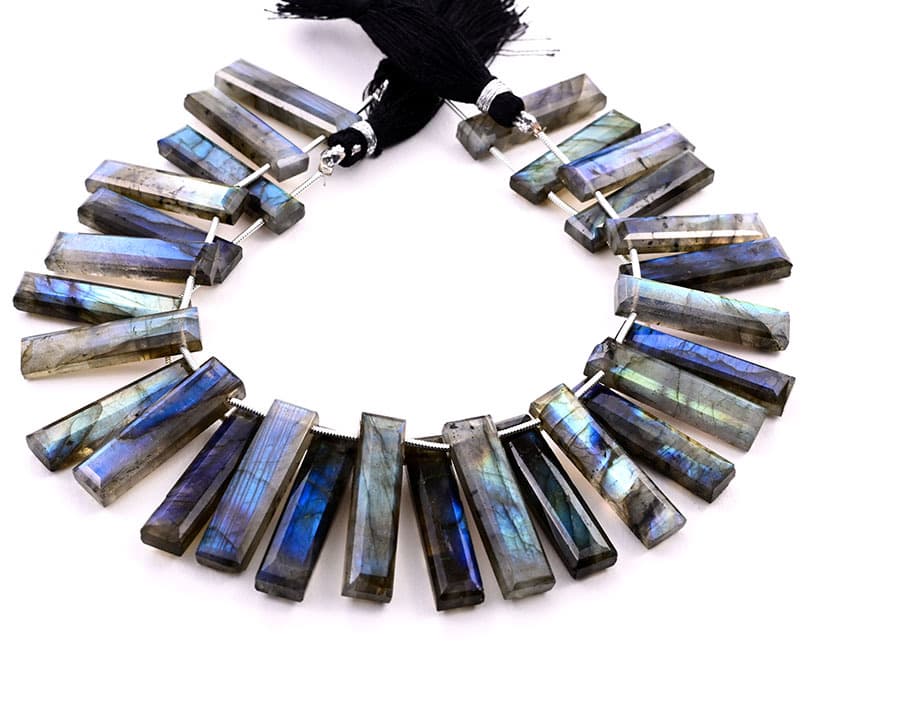
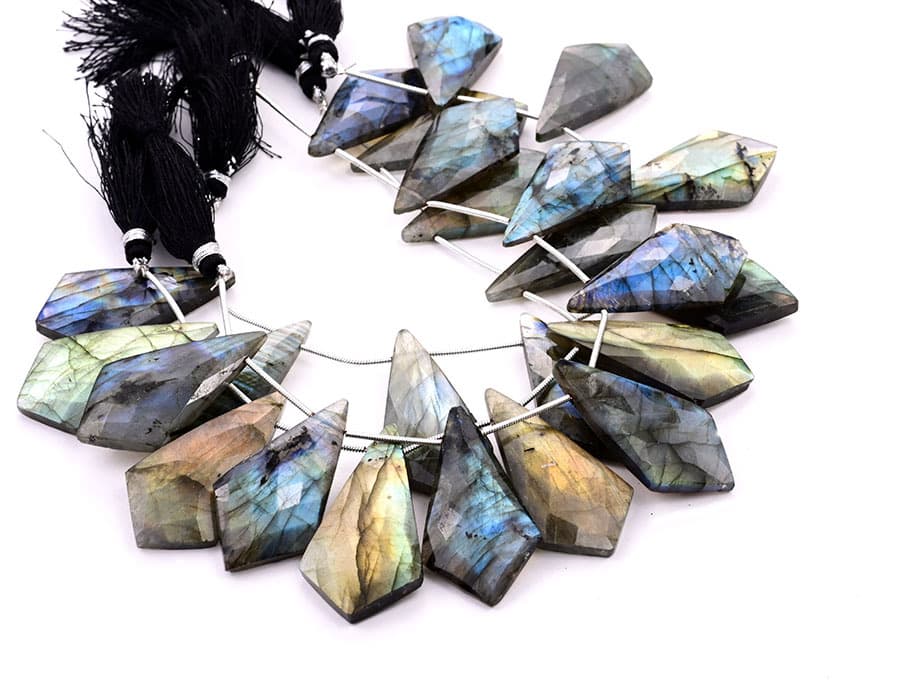
Hold a strand up and turn it slowly. One bead goes flat gray, the next throws a sheet of blue across its whole face, and a third gives you a thin edge of gold before it closes again. Faceted labradorite does this bead by bead, so no two strands look alike. The body color runs gray to near black, which is why people reach for it: a neutral that lights up when the wrist moves.
The color play has a name of its own, labradorescence, borrowed from the stone that made it famous. What makes it happen is ordinary enough: light reflecting off thin twin layers inside a gray to black body. What tradition made of it is less ordinary. Because the flash appears and disappears as the bead turns, labradorite has long been called a stone of transformation, and that is how crystal tradition still describes it. The observation behind the belief is one any maker makes at the bench: the light sits inside the stone all the time, and the angle is what decides whether you can see it.
Beliefs about stones are tradition, not advice. Watch the film and read the full story.
Plagioclase feldspar (sodium calcium aluminum silicate), Mohs 6 to 6.5, perfect cleavage. The flash (labradorescence) is light reflecting off thin twin layers inside a gray to black body. Bead rough is mostly Madagascan.
Earrings, pendants and loose necklaces; hard knocks cleave it; big nuggets chip at the edges. Warm soapy water only; no ultrasonic or steam.
Full stone guideMore labradorite
 Sold out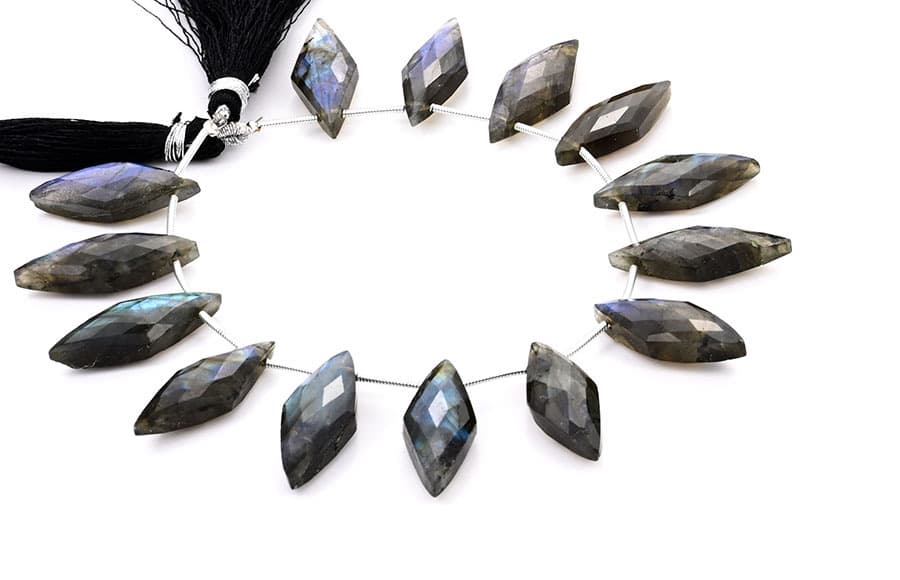
Same shape, other stones
 NewRepresentative photoNew
 New
New New
New