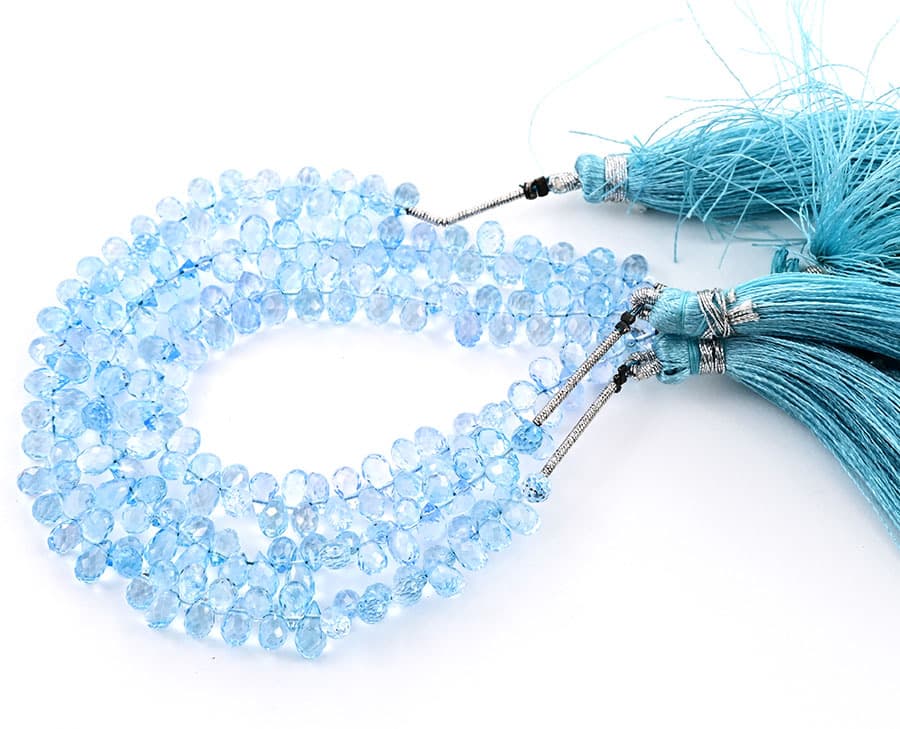
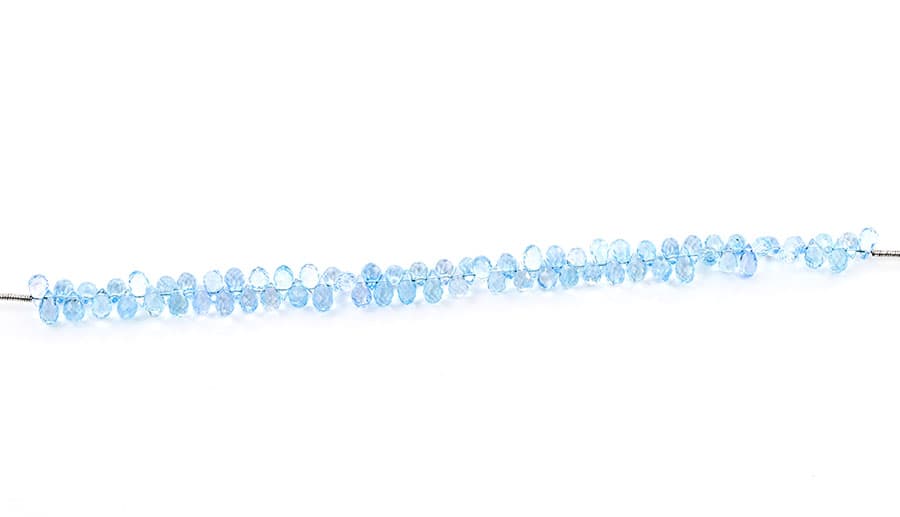
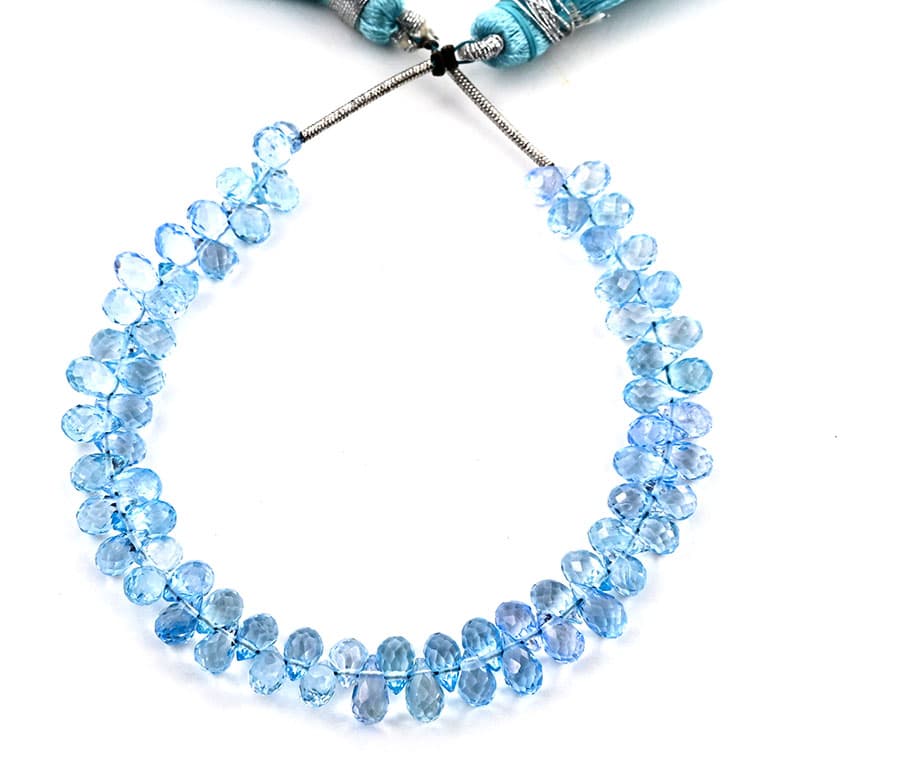
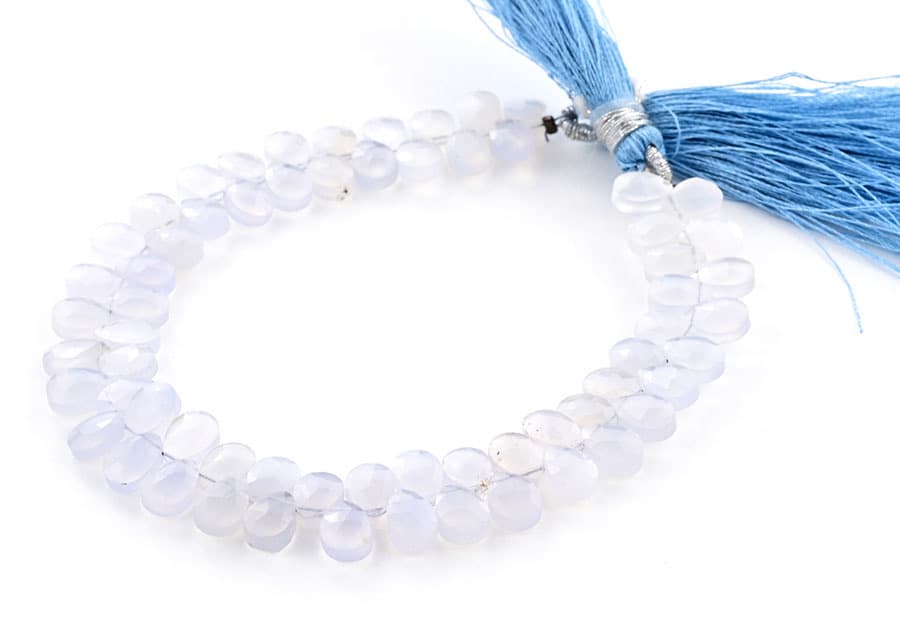
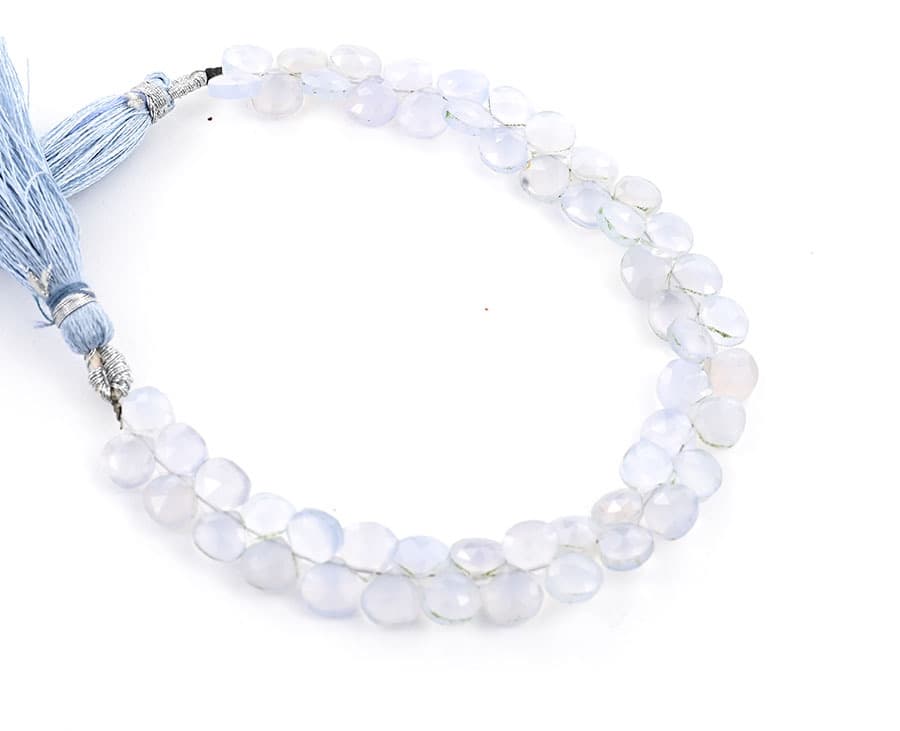
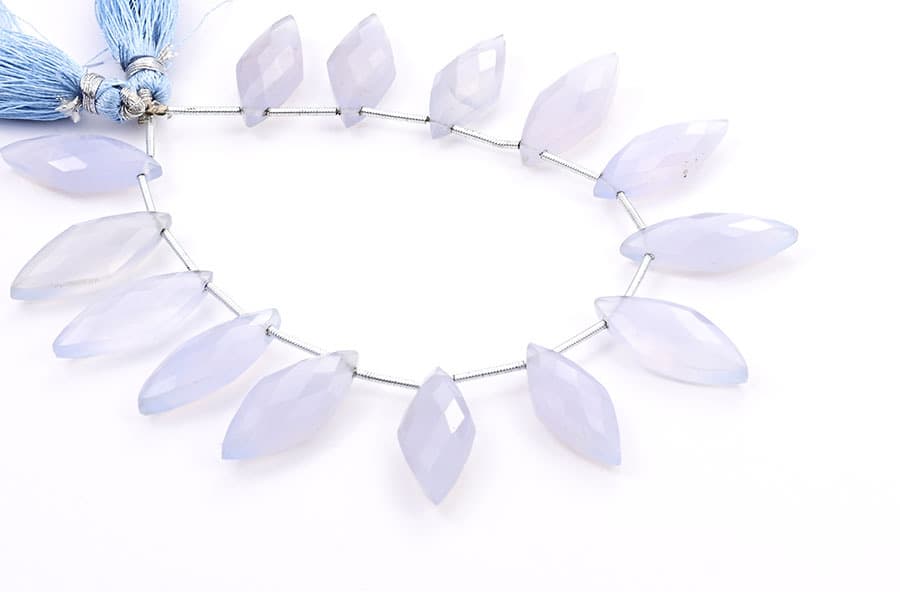
Natural stones vary. Your strand will match these photos in colour and size range, not bead for bead. Photographed under daylight-balanced light with no colour correction.
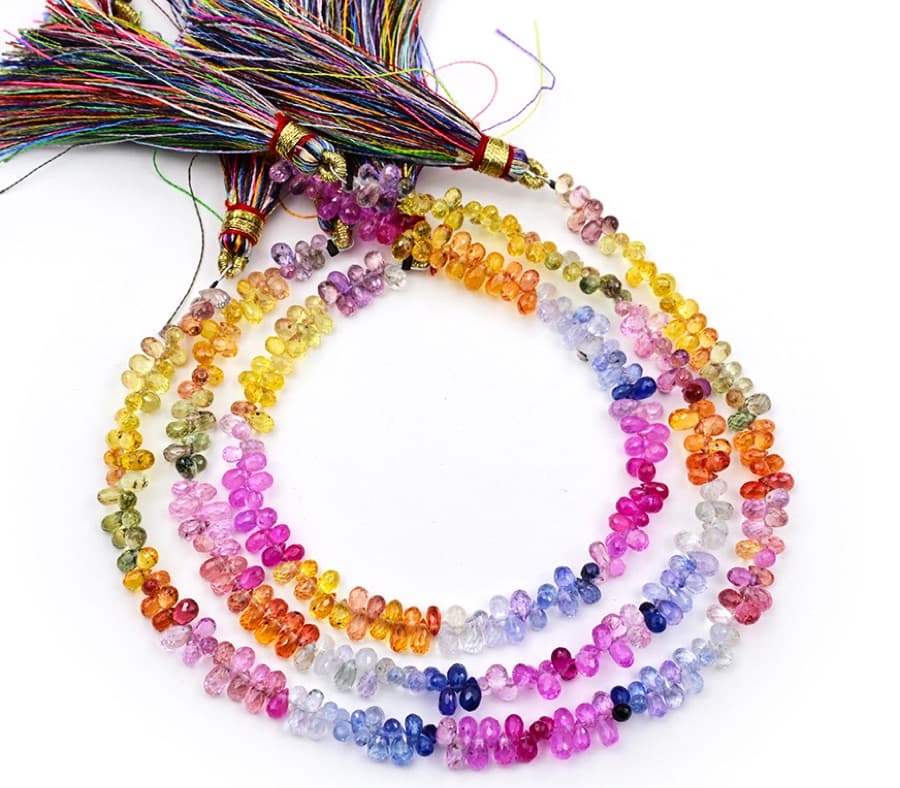
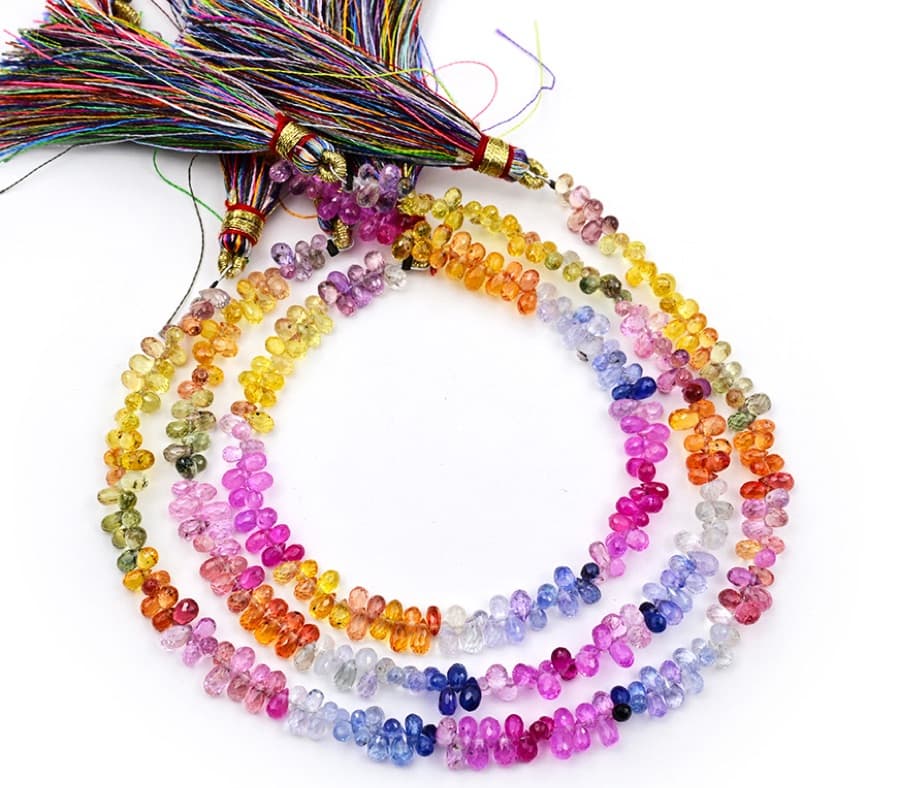
Blue Topaz 3X5mm Faceted Tear Drops (Calibrated)
Specifications
| SKU | GS594 |
|---|---|
| Stone | Blue and lavender chalcedony |
| Shape | Tear drop |
| Bead size | 3x5mm |
| Cut | Faceted |
| Color | — |
| Weight | On request |
| Hardness (Mohs) | 6.5 to 7 |
| Origin | Namibia, Turkey, Montana, Oregon |
| Availability | In stock |
Blue Topaz is a very hard material (8 on Mohs scale) and second most popular gemstone in the world. It is a beautiful and affordable gemstone available many shades of blue like light sky blue, darker London blue, and bright swiss blue. Blue Topaz is also available in different shapes, cutting styles, and sizes. Hence, it is ideal for any jewelry design. It is believed that the stone can improve communication and self-expression.
What it makes
Tear drops are used for earrings, pendant clusters, the front of a necklace. Measured width by length, e.g. 4x6mm; usually drilled top-drilled, side to side. More about tear drops.
Cloudy blue with the light held inside it.
Hold a strand of blue chalcedony to a window and the color seems to come from inside the bead rather than sit on it. Soft, cloudy, sometimes closer to gray or lilac than to sky. The blue is not pigment at all. It comes from light scattering off voids too small to see, which is why the surface reads as milk with a faint glow behind it. People reach for it when they want quiet color that still catches the eye across a room.
Blue chalcedony appears in old lists of the stones set in the high priest's breastplate, the twelfth in Exodus 28:18 and 39:11, standing for the tribe of Benjamin. In the Greek and Latin texts it falls sixth, as it does in Ezekiel 28:13, and it comes first in Revelation 21:19. In crystal tradition it is known as the speaker's stone, a name that ties it to words and to being heard. That is belief and custom rather than fact, but it is part of why the stone keeps turning up in gifts between friends, and why people who talk for a living tend to like wearing it.
Beliefs about stones are tradition, not advice. Read the full story.
Chalcedony whose blue comes from light scattering off microscopic voids, not pigment, so natural material looks milky, grayish or lilac. Mohs 6.5 to 7. Sources: Namibia, Turkey, Montana, Oregon.
Hard enough for bracelets.
Full stone guideMore blue and lavender chalcedony
Same shape, other stones
 NewSold out
 NewSold out
 New
New New
New