Sphene
Calcium titanium silicate, CaTiSiO5. Mohs 5 to 5.5 with cleavage, so a collector's gem, not a ring stone. Its dispersion (0.051) beats diamond's (0.044), so clean pieces throw real fire. Gem material: Madagascar, Pakistan (Skardu), Sri Lanka, Brazil, Mexico.
At a glance
| Hardness (Mohs) | 5 to 5.5 |
|---|---|
| Family | Sphene |
| Where it is mined | See description |
| Shapes we carry | Ask us |
| Strands listed | 0 |
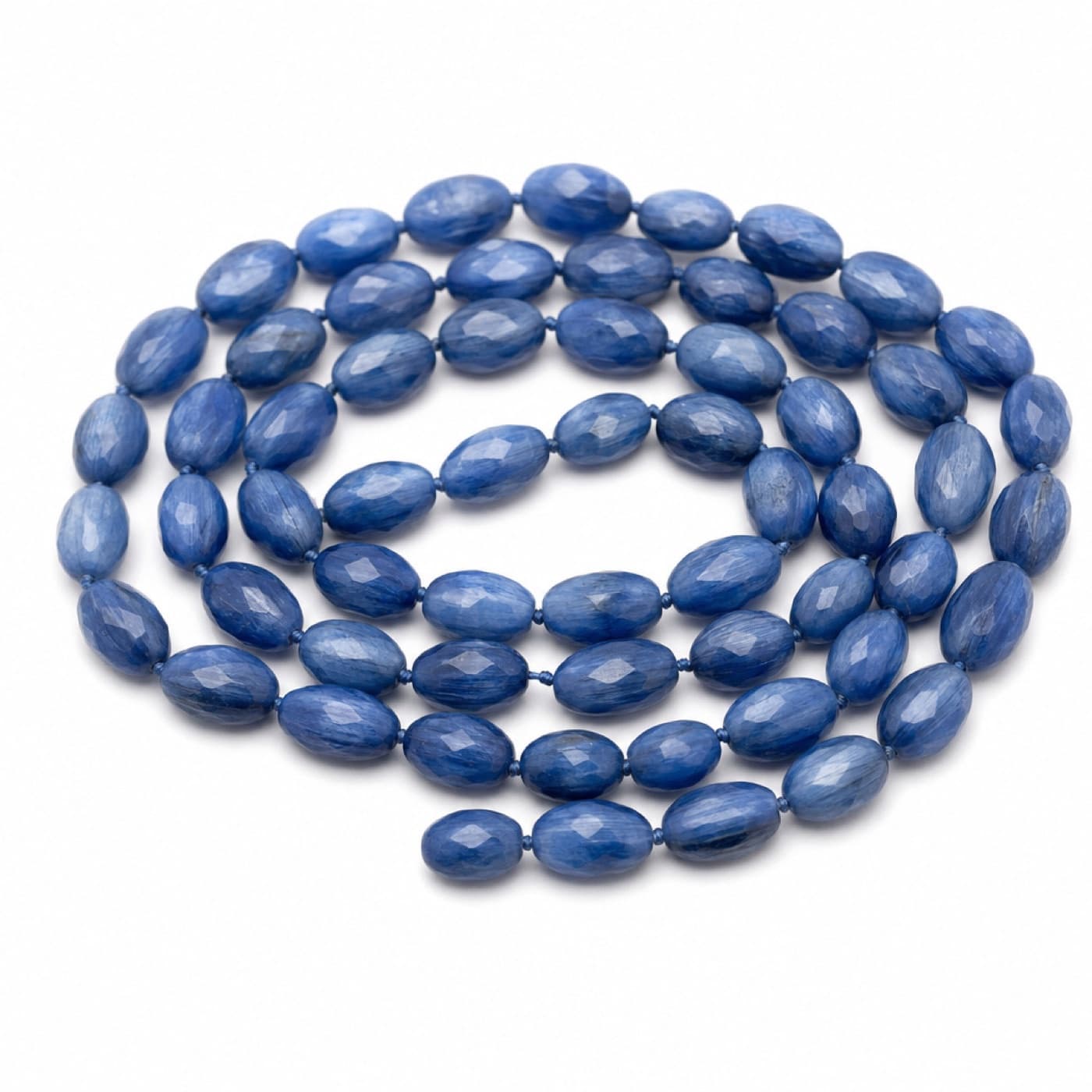
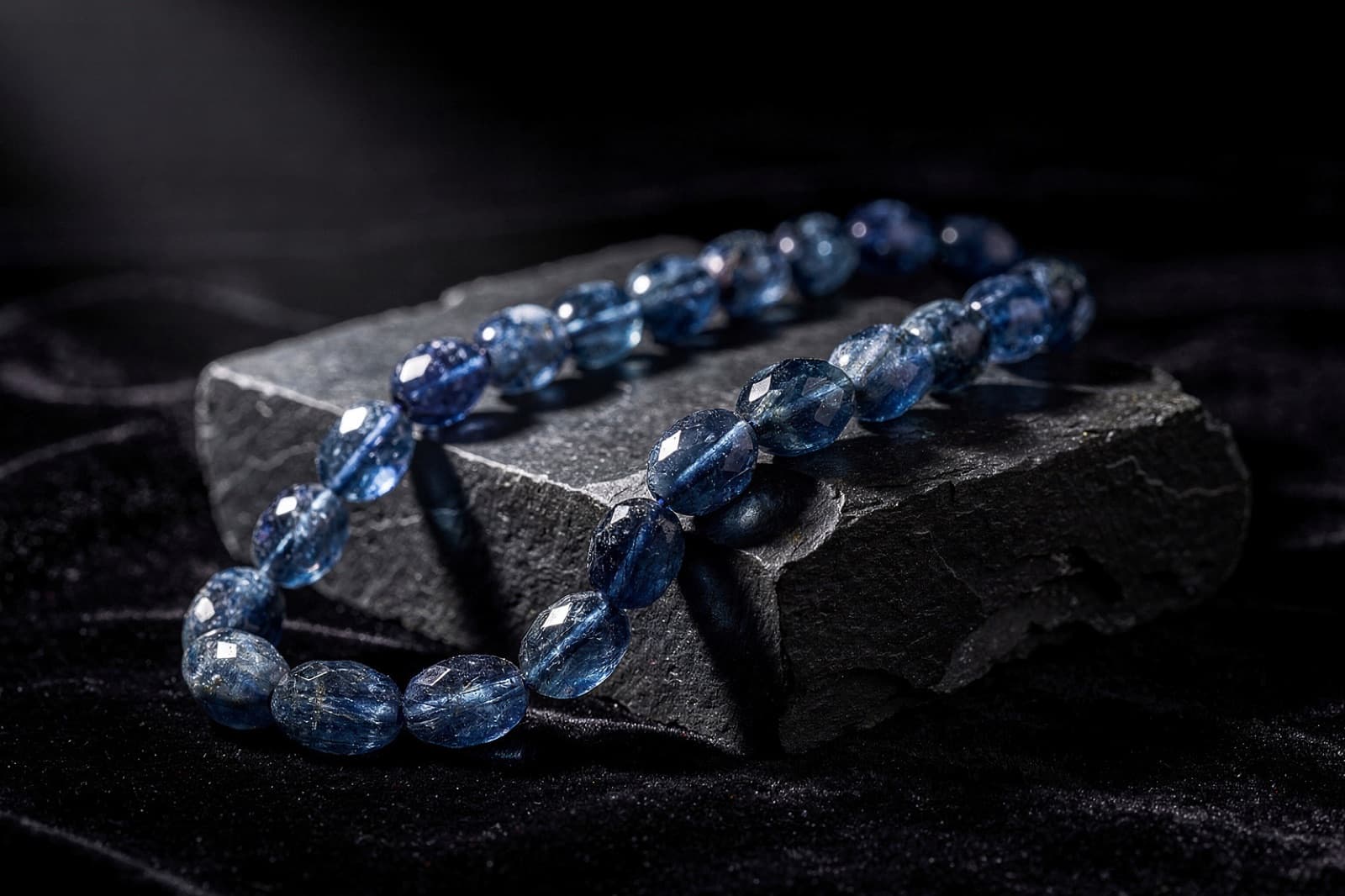
Film and illustrations are AI renders. Strand listings below show photographs of the actual material.
How to judge it
Color runs yellow-green, olive and brownish green; greener and more transparent is better. Transparent ovals show fire even polished smooth. Under a loupe, sphene shows very strong doubling and near-adamantine luster. Peridot is the closest color match but is harder, oily-looking and has no fire.
What it's like to work with
Collectors, gemologists, designers who want a stone nobody else at the show can name. Ovals as pendant focals.
Care
Pendants and earrings only. No ultrasonic, steam or bracelets. Store alone in a soft pouch; other beads will scratch it.
No birthstone and no long tradition; modern crystal lore only (tradition, not fact).
More fire than diamond, and few can name it.
On the strand, sphene reads olive at first, the color of a bay leaf held up to a window. Tilt it under a lamp and the smooth ovals throw small sparks of orange and green from somewhere inside. Its dispersion measures 0.051 against diamond's 0.044, so the fire is real, and it shows even on a rounded polish with no facets to help it. Most people who pick up the tray cannot name the stone. That is usually why they keep holding it.
Where it comes from
Titanite forms as an accessory mineral in granitic and calcium-rich metamorphic rocks. It is a minor ore of titanium and a minor gemstone, and gem-quality material comes from Madagascar, Skardu in Pakistan, Sri Lanka, Brazil and Mexico. The older name comes from the Ancient Greek word for wedge, after the shape of the crystals. In 1982 the International Mineralogical Association adopted titanite and discredited sphene. Geologists and mineralogists switched almost at once, while gemologists and gem dealers kept sphene, especially in Europe and especially for transparent and faceted material. Larger crystals tend to carry inclusions and flaws, so clean gems stay small and mostly reach collectors rather than production jewelry. Laboratories have grown titanite for work in geology, pigments and radioactive waste disposal, but no synthetic version is sold as a jewelry stone. Our strands are cut in Jaipur, India, and chosen strand by strand in Cupertino, California.
What tradition says
The lore attached to sphene is recent, written by modern crystal authors rather than handed down through generations. In that tradition it is described as a stone of clear thinking, something people like to keep on the desk or around the neck while they are studying, sorting out a problem or deciding what to say. Because of the way it flashes, it is said to lift a flat mood and to encourage plain speech and a little courage. Some who work with crystals also hold that it draws out creative energy that has gone quiet. All of this is belief and custom rather than anything measured, and it travels with the stone the way stories do.
These are beliefs people have held about the stone, told as tradition. They are not claims, and not advice.
How makers use it
This is a focal stone, not a full necklace. Smooth ovals around 6x8mm hang well from a simple bail on a fine chain, and 8x10mm gives you a single dramatic drop with room for the fire to show. Pairs make good earrings, where the beads swing and catch lamplight. Sphene is strongly pleochroic, so the color shifts as the bead turns. Greener, more transparent beads throw the strongest flash, and under a loupe you will see very strong doubling and a near-adamantine luster. Peridot is the closest color match, harder and oilier looking, with none of the fire. We carry smooth ovals from a single 950 carat lot, roughly sixteen to twenty eight-inch strands.
Looking after it
Keep sphene to pendants and earrings. At 5 to 5.5 on the Mohs scale, with cleavage, it does not belong in a bracelet or a ring. Skip the ultrasonic cleaner and the steamer. Store the strand alone in a soft pouch, since other beads will scratch it. The rough is small and fragile to begin with.
Sources: Titanite the mineral. Sphene the gemstone., Sphene (Titanite) Value, Price, and Jewelry Information - IGS, Sphene: The gemstone sphene (titanite) information and pictures · Minerals.net, Titanite
Sphene is in the stock room
We carry sphene at shows and it is not all listed online yet. Tell us the shape and size you want and we will send photos of what is in stock.
Ask on WhatsApp