Seraphinite
Trade name for clinochlore, a chlorite-group magnesium-iron aluminum silicate, in a form with silvery mica-like feathers on dark green. Mohs 2-2.5, among the softest beads sold. One source: the Korshunovskoye iron mine in Irkutsk Oblast, Eastern Siberia.
At a glance
| Hardness (Mohs) | 2 to 2.5 |
|---|---|
| Family | Clinochlore |
| Where it is mined | See description |
| Shapes we carry | Ask us |
| Strands listed | 0 |
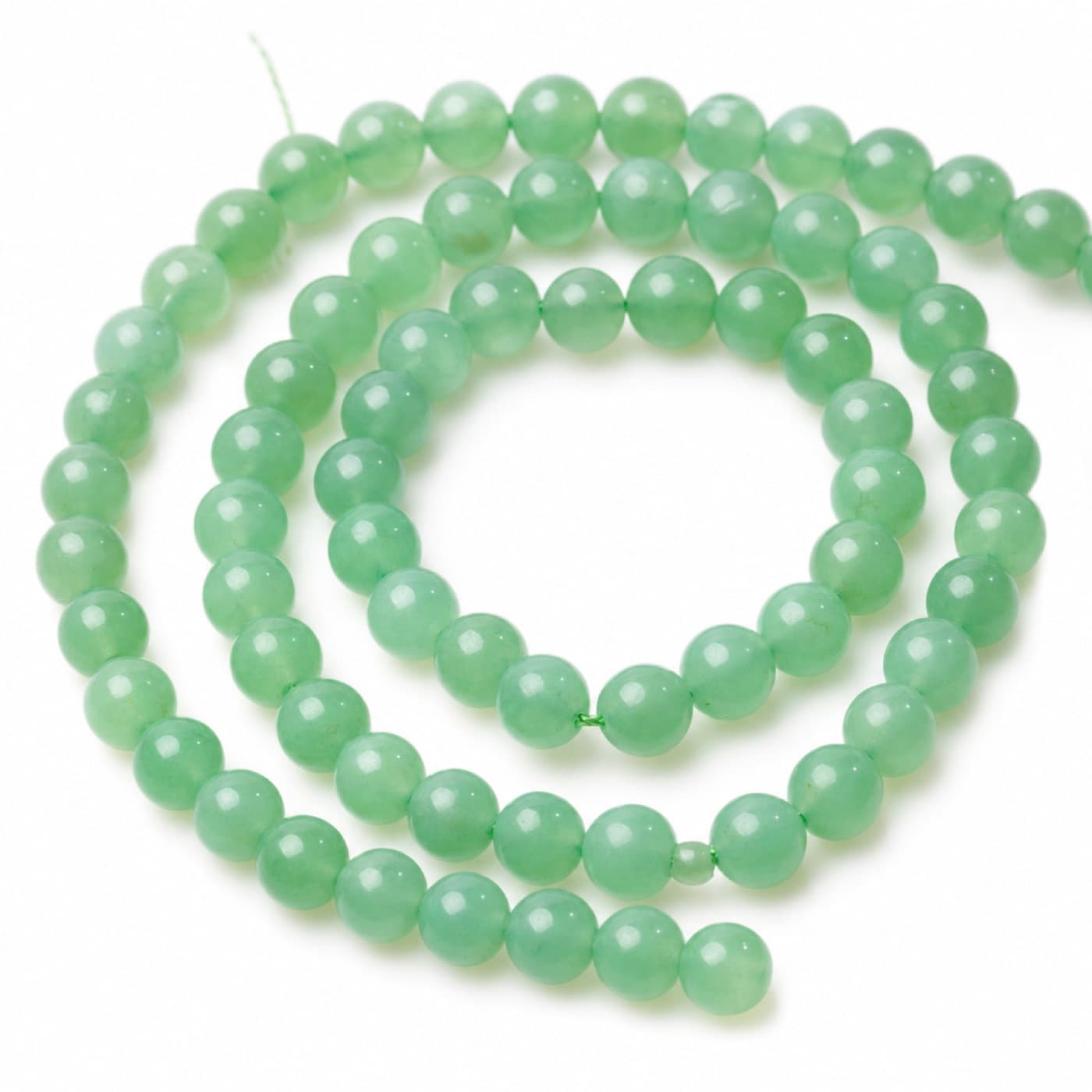
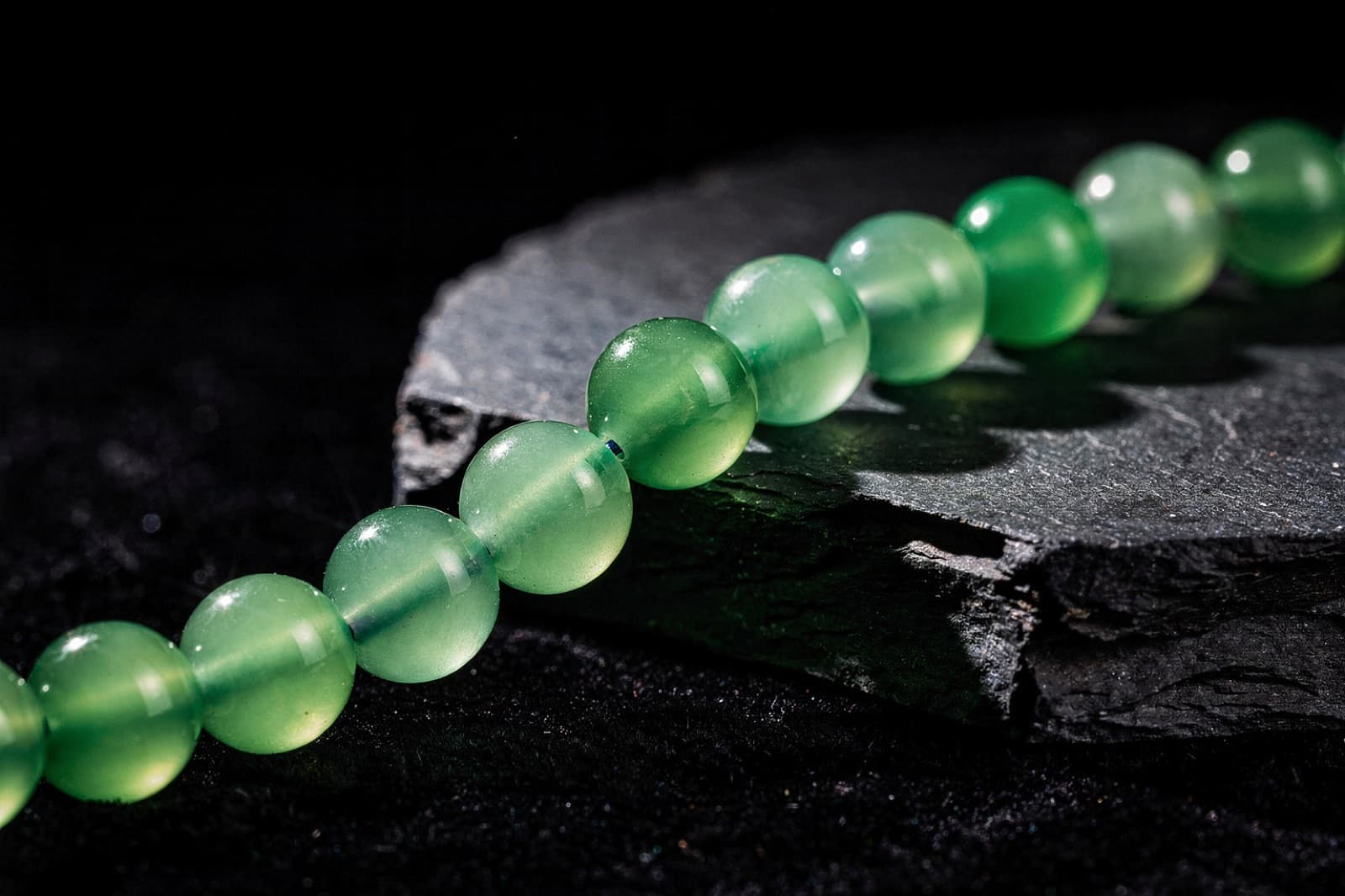
Film and illustrations are AI renders. Strand listings below show photographs of the actual material.
How to judge it
A strong silver "angel wing" shimmer that moves as you tilt the strand, on deep green rather than gray-green. Check for flaking at drill holes and edges; chlorite is layered and peels. Nothing else has the feather pattern.
What it's like to work with
Entry to mid tier. Crystal-shop and metaphysical buyers, earring makers. 4mm rondelles and heishi are the whole market; it's too soft for large beads.
Care
A fingernail can mark it. Earrings and short necklaces worn occasionally; never bracelets. Dry or barely damp cloth; no soaking or chemicals.
No birthstone month; tradition calls it an angel stone (tradition, not fact).
Silver feathers on deep green, from one Siberian mine.
Dark green, close to black in low light, with silver feathers laid across the surface. Tilt a strand of 4mm rondelles under a lamp and the feathers move: short downy tufts in one spot, long flight feathers in another. The green reads deep, not gray. Beads this small stack into a line that looks like plumage seen edge on. It is among the softest beads sold. Makers reach for it because nothing else on the tray has that pattern.
Where it comes from
Seraphinite is a trade name rather than a mineral name. The mineral is clinochlore, a member of the chlorite group, a magnesium iron aluminum silicate. What makes it a gem material is structure: fibers that radiate in plumes, with mica giving the silvery, feathery sheen over the dark green body. The material comes from the Korshunovskoye iron mine in Irkutsk Oblast, Eastern Siberia. One mine, nowhere else. The name points to the seraphim, described in tradition as the highest rank of angels, because on good pieces the growth reads as short down leading into longer flight feathers. Sellers have built phrases on that resemblance, including silver plume seraphinite. The stone is worked for carving and as a decorative material, and used as a minor gem. Our strands are cut in Jaipur, India, and chosen strand by strand in Cupertino, California.
What tradition says
Crystal tradition calls this an angel stone, and the name is the reason. The seraphim originate in ancient Judaism and go on to play a part in Judaism, Christianity and Islam, where tradition places them in the highest rank of celestial beings. Whoever first polished the material saw down and flight feathers in the fibers and named it for them, and crystal sellers and collectors have carried that association along ever since. It is said to be a stone of angelic company, and people keep it near for that reason more than any other. All of this is belief and folklore, attached to the stone by its name and its pattern rather than proven by it.
These are beliefs people have held about the stone, told as tradition. They are not claims, and not advice.
How makers use it
Small is the whole story here. We carry smooth 4mm rondelles and 4mm heishi, and those two shapes cover almost everything makers do with the stone, because larger beads chip and wear badly. Earrings are the natural home: a short drop, a cluster, a few beads above a hoop where they catch lamplight when the head turns. Short necklaces worn now and then work too. Keep the findings plain and let the feathers carry the piece. A stronger strand shows silver that travels as you tilt it, instead of sitting in fixed pale patches on gray-green.
Looking after it
A fingernail can mark it, so treat it as an occasional-wear stone: earrings and short necklaces, never bracelets, where cuffs and desk edges do their damage. Wipe with a dry or barely damp cloth. No soaking, no cleaners. Chlorite is layered and can peel, so handle the beads gently at the drill holes.
Sources: Seraphinite, Seraphinite gemstone information, Seraphinite: Mineral information, data and localities., Seraphinite - The Mineral and Gemstone Kingdom
Seraphinite is in the stock room
We carry seraphinite at shows and it is not all listed online yet. Tell us the shape and size you want and we will send photos of what is in stock.
Ask on WhatsApp