Larimar
Trade name for blue pectolite, a sodium calcium silicate hydroxide colored by copper. Mohs 4.5-5. One source: Los Chupaderos near Barahona, Dominican Republic.
At a glance
| Hardness (Mohs) | 4.5 to 5 |
|---|---|
| Family | Pectolite |
| Where it is mined | See description |
| Shapes we carry | Ask us |
| Strands listed | 0 |
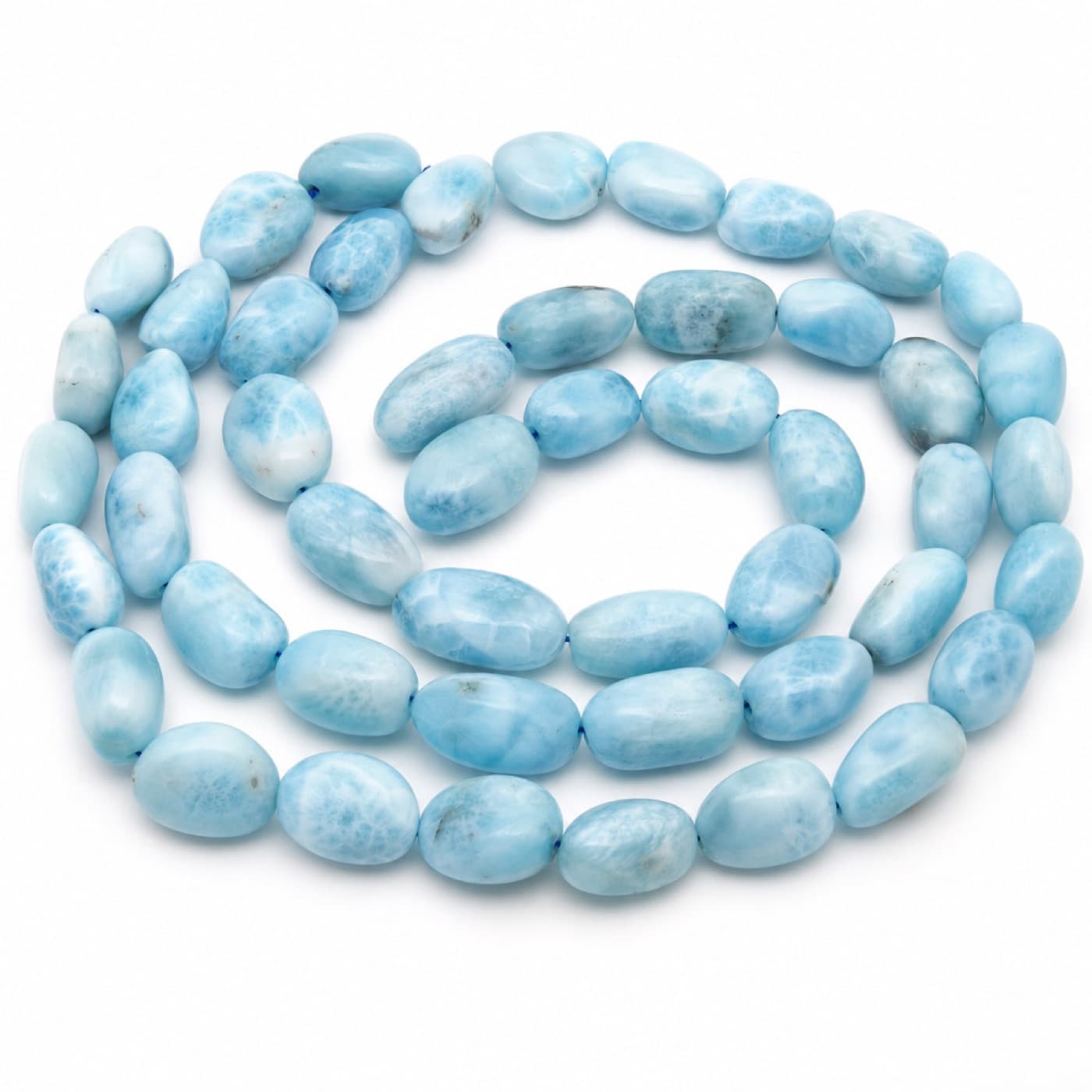
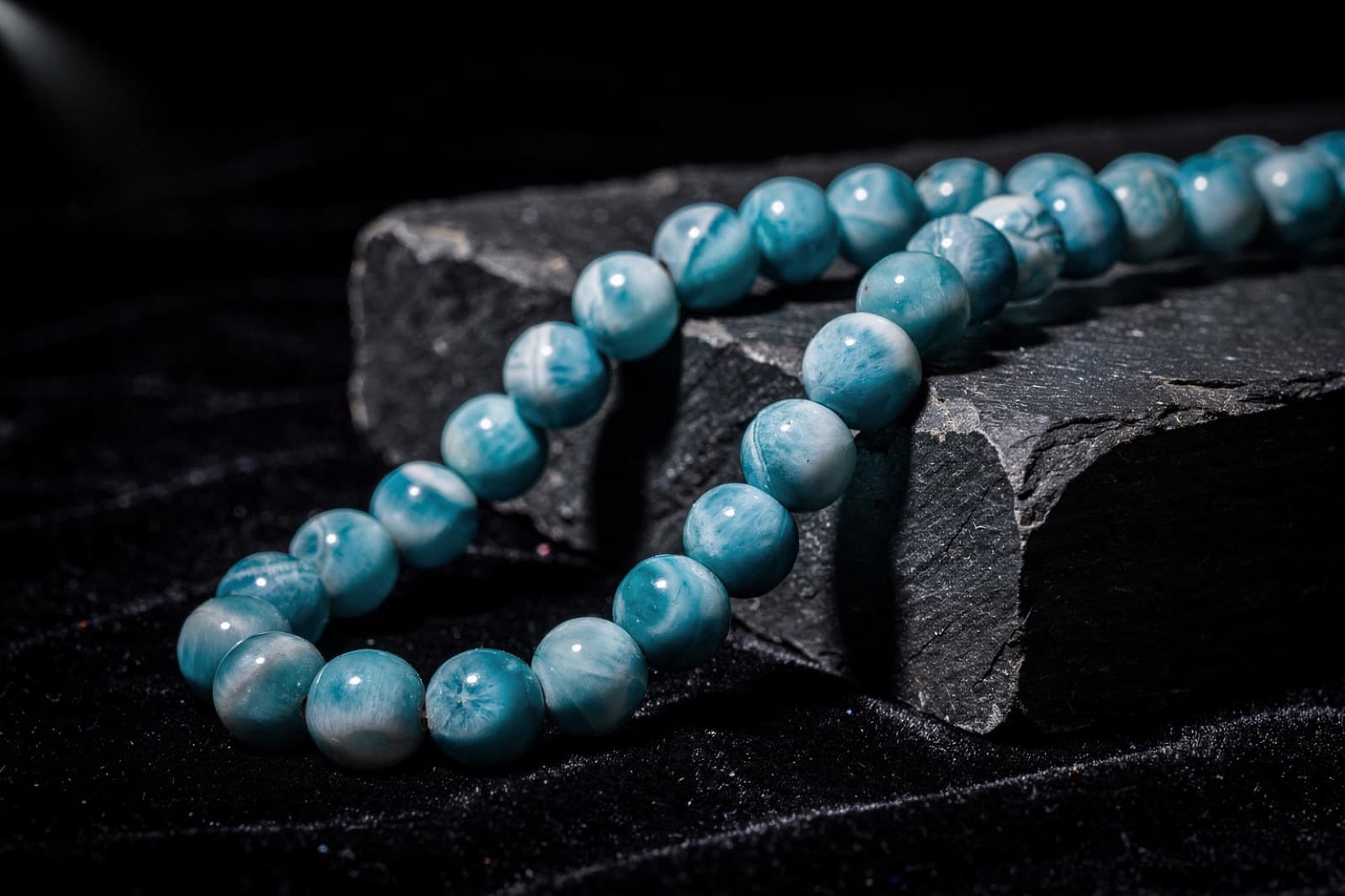
Film and illustrations are AI renders. Strand listings below show photographs of the actual material.
How to judge it
Top grade is sky to deep "volcanic" blue with white cloud pattern and no gray or green; the pattern follows radiating fibers, not flat patches. A copper coin won't scratch larimar; a steel pin will.
What it's like to work with
Upper-mid tier. Beach designers, wire wrappers, collectors of single-source stones. Nuggets and drops sell best; briolettes for earrings.
Care
Necklaces and earrings, careful bracelets. The blue can fade after years of sun; store dark. No ultrasonic or heat.
No birthstone month; tradition calls it the Atlantis stone (tradition, not fact).
One hill in the Dominican Republic, and blue like shallow water
Hold a strand of larimar up to a window. The blue shifts bead to bead: pale sky in one, something closer to deep water in the next, white cloud moving through both. Some lean green. Some go almost turquoise. The pattern comes from fibers that grew in radiating sprays, so the white spreads in feathered lines rather than flat patches. Makers reach for it because the color reads as water from across a room, and because the cloud gives a small bead something to look at.
Where it comes from
Larimar is the trade name for blue pectolite, a sodium calcium silicate hydroxide colored by copper. Pectolite itself is not rare and turns up worldwide. But its fibrous masses are usually too soft and fragile to cut. Where the fibers grow intertwined, the material becomes jade-like in toughness, and that is the stone worth cutting. The blue kind comes from one limited deposit at Los Chupaderos near Barahona in the Dominican Republic, virtually the only gem material to come out of the Caribbean. It was first described from the Filipinas Larimar Mine at Los Checheses, in the Sierra de Baoruco, and takes its name from that locality. Dominican Ministry of Mining records note a permission request from Father Miguel Domingo Fuertes Loren of the Barahona Parish. Compact material makes good cabochons. It has stood in for turquoise. One hill, one country. When it is worked out, that is the end of it.
What tradition says
Tradition calls larimar the Atlantis stone, on the idea that a blue stone from one Caribbean hill answers to a drowned island. That is folklore rather than history. Most people who repeat it know as much. The name has stuck all the same, and it colors how the stone is worn and given. In crystal tradition larimar is spoken of as a stone for calm, and people have long chosen it on that belief, keeping a piece close for quiet company rather than for anything they can point to. Others come to it for the color alone. Shallow water is restful to look at, and this is the color of shallow water. Collectors want it for a plainer reason: one deposit, and nowhere else.
These are beliefs people have held about the stone, told as tradition. They are not claims, and not advice.
How makers use it
Smooth nuggets sell best. They suit larimar's habit of varying bead to bead, and a strand at 10 to 15mm makes a necklace that needs nothing added. Faceted pear briolettes go straight to earrings, where the cloud pattern reads clearly against the ear. Rondelles fill in between metal spacers when you want the blue in a smaller dose. Designers working a beach theme keep coming back to it, as do collectors of single-source stones. The strongest strands run sky blue to deep volcanic blue, with white cloud and no gray or green cast. Ours are cut in Jaipur and chosen one at a time here in Cupertino.
Looking after it
Keep larimar to necklaces and earrings, and to bracelets you can be careful with. At 4.5 to 5 on the Mohs scale, a copper coin will not scratch it but a steel pin will. The blue can fade after years in sunlight, so store the piece in the dark. No ultrasonic cleaner. No heat.
Sources: Larimar, Larimar pectolite: The blue gemstone Larimar information and pictures · Minerals.net, Larimar: Mineral information, data and localities., Larimar gemstone information
Larimar is in the stock room
We carry larimar at shows and it is not all listed online yet. Tell us the shape and size you want and we will send photos of what is in stock.
Ask on WhatsApp