Apatite
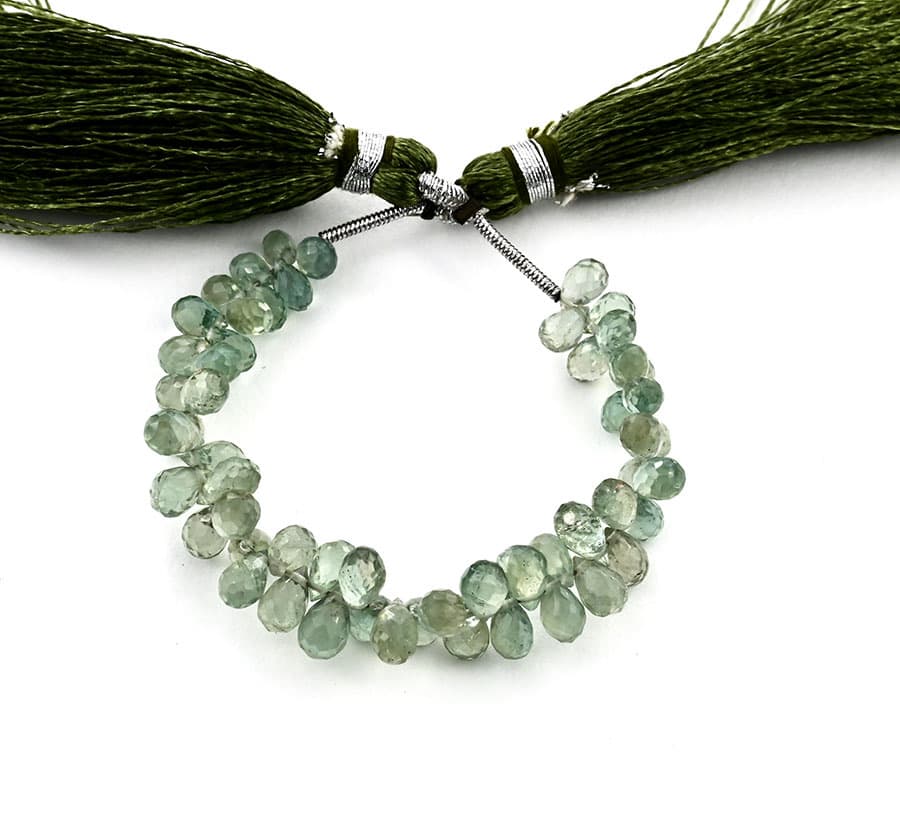
Calcium phosphate with fluorine, chlorine or hydroxyl. Mohs 5, brittle. Neon blue to teal bead material is from Madagascar.
At a glance
| Hardness (Mohs) | 5 |
|---|---|
| Family | Apatite |
| Where it is mined | See description |
| Shapes we carry | Tear drops |
| Strands listed | 1 |
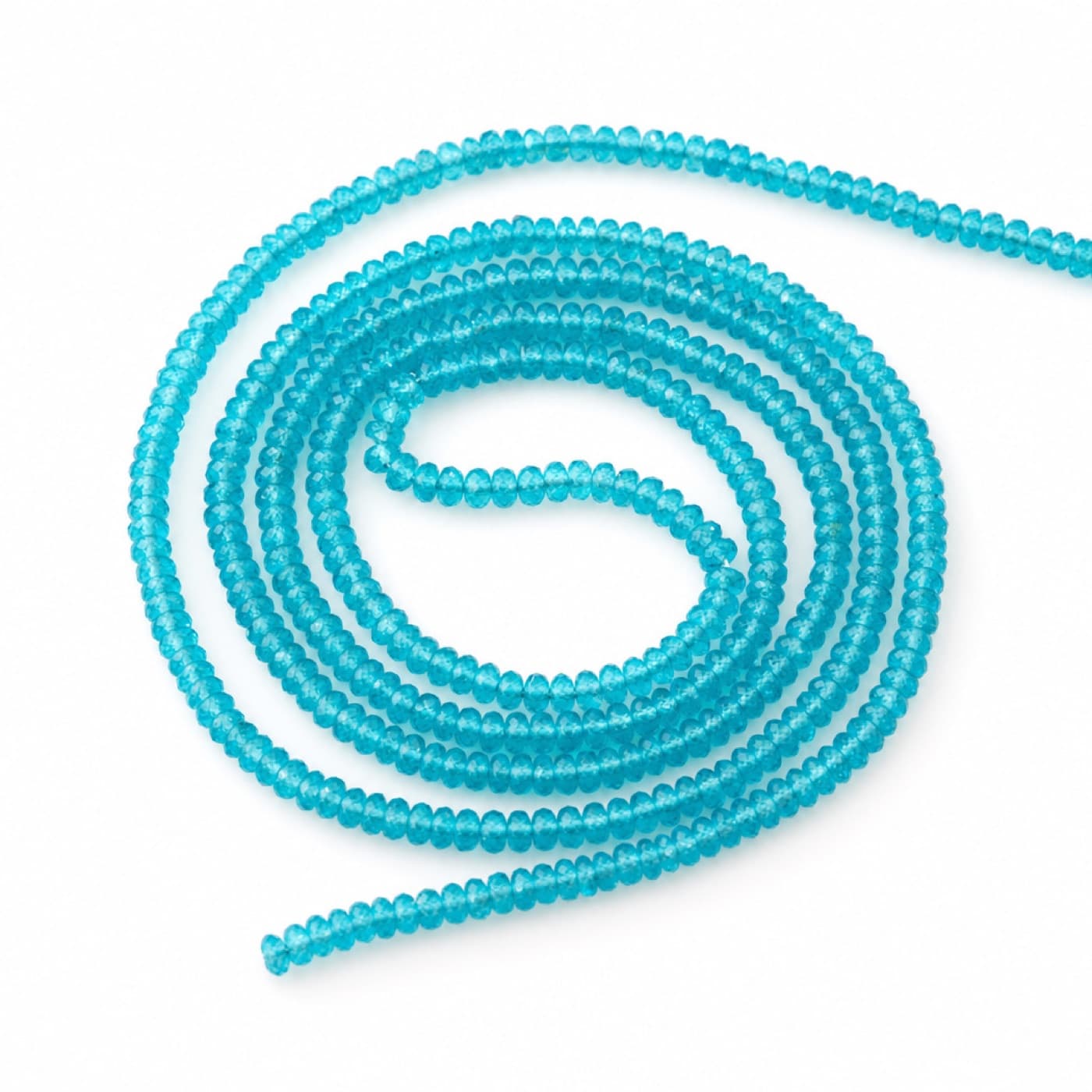
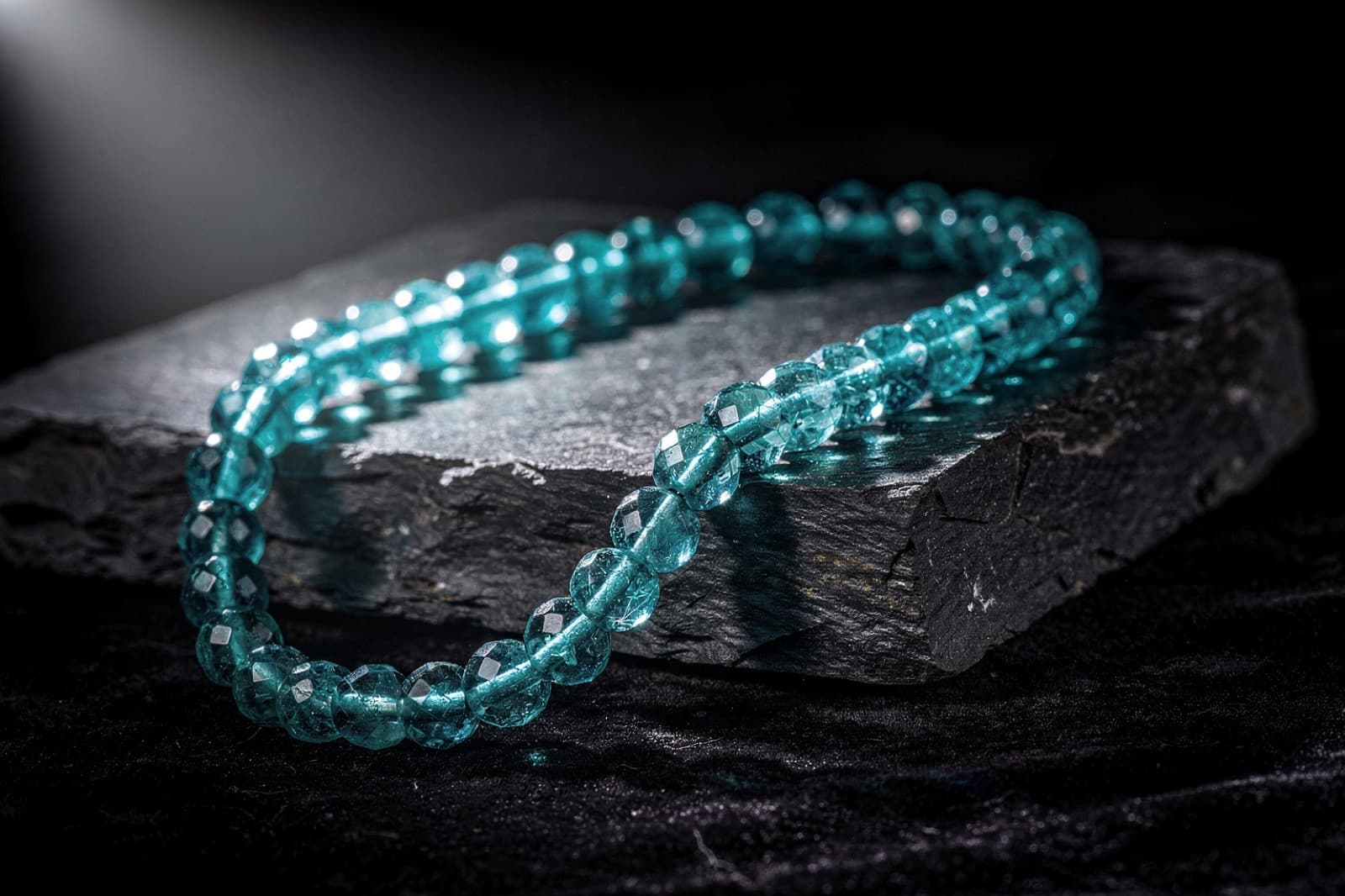
Film and illustrations are AI renders. Strand listings below show photographs of the actual material.
How to judge it
Saturated electric blue-green, translucent, not milky. Real apatite varies bead to bead, carries needle inclusions, and chips slightly at the holes. loupe for bubbles and swirl lines. Apatite (SG 3.2) is about 25 percent heavier than glass or quartz at the same size; a quartz point scratches it easily.
What it's like to work with
Upper-mid tier. Designers wanting Paraiba-tourmaline color without the price. Faceted rondelles and heishi sell best.
Care
Earrings and necklaces, not bracelets. Damp cloth only; no ultrasonic, heat or acids.
No birthstone month; tradition calls it a stone for motivation (tradition, not fact).
Neon blue-green from Madagascar, cut small and worn gently.
Apatite comes onto the strand in a blue-green so saturated it looks lit from inside, closer to pool water at night than to sky. Hold a strand up. The beads read translucent, not milky, with fine needle inclusions crossing the light. No two are quite alike. One bead leans teal, its neighbor leans blue. It has heft, noticeably more than glass or quartz of the same size. Makers reach for it when they want that electric color without a tourmaline budget.
Where it comes from
Apatite is not one mineral but a group of calcium phosphates, built with fluorine, chlorine or hydroxyl in the same crystal frame. It is common. Most of what comes out of the ground goes into phosphate for fertilizer and acids rather than into rings, and it also makes up much of the teeth and bones of vertebrate animals. The German geologist Abraham Gottlob Werner named it in 1786, borrowing the Greek word for deceiving, because good crystals are so easily mistaken for other stones. In 1860 the German mineralogist Karl Friedrich August Rammelsberg reclassified the material Werner had described as fluorapatite. Clear blue-green crystals have long been faceted for collectors. At Mohs 5, though, the stone stayed a specialist's gem. The neon blue to teal bead material we buy comes from Madagascar. Our strands are cut in Jaipur, India, then chosen strand by strand in Cupertino, California.
What tradition says
In crystal tradition apatite is kept as a stone for motivation. People are said to reach for it when a project has gone quiet and needs picking up again. Those who follow that tradition speak of it as encouragement rather than luck or protection, something to hold on a morning when you are deciding what to make next. The idea travels with the stone. Often someone hands over a strand and mentions it in the same breath, as though the color and the belief arrived together and cannot easily be separated now. None of this is offered as fact. It is folklore, held a long time and passed along as such.
These are beliefs people have held about the stone, told as tradition. They are not claims, and not advice.
How makers use it
Faceted rondelles do the most work here. The small facets catch light and push the color forward on a plain wire or a short chain. Our 4x6mm faceted teardrops suit earrings, one to a hook, or a single drop at the center of a necklace. Smooth 8mm rondelles give a weightier strand with less sparkle and more body, good against oxidized silver or brass. Designers come to apatite for Paraiba-tourmaline color at bead prices, and they accept that every strand varies a little; that variation is how you know it is stone. In a stronger strand the blue-green runs deep and even, and light passes through it.
Looking after it
Keep apatite in earrings and necklaces rather than bracelets. It is brittle, and at 5 on the Mohs scale a quartz point scratches it easily. Wipe with a damp cloth and nothing more. No ultrasonic cleaner, no heat, no acids. Slight chipping at the drill holes is normal in real stone.
Sources: Apatite Value, Price, and Jewelry Information - Gem Society, Apatite: Its uses as a mineral and gemstone, Apatite gemstone information, Apatite - Wikipedia